Home » Genetic Similarity Theory (Page 2)
Category Archives: Genetic Similarity Theory
Evolutionary Reasons for Suicide Bombings
2700 words
With all of these suicide bombings in the news recently, I figured I’d talk about some evolutionary reasons for suicide bombings. While reading JP Rushton’s paper Ethnic nationalism, evolutionary psychology and Genetic Similarity Theory, I came across a small part of the paper where he talks about evolutionary reasons for suicide bombings: mainly that it increases inclusive fitness. I know that biology doesn’t tell the whole story, but it tells a lot of it. Today I will argue that mainly, suicide bombings are driven by genetic similarity, as argued by Rushton in his paper. The data is there that this is a possibility and a worthwhile hypothesis to take note of.
Due to how inbred Muslims (Arabs) are, (as well as other Muslim populations, which are also inbred, such as the Chechens), they are more genetically similar to themselves than they are to other groups. The brain hormone oxytocin is conjectured to increase ethnocentrism, seeing as oxytocin is shown to increase in-group cooperation, and at the same time out-group derogation. This is also the case when two genetically distinct cultures meet up and live together. Their biology is so dissimilar, ethnic strife arises due to the far genetic distance between the two groups. So due to this increased genetic similarity, this causes those who are more similar to themselves, to favor those phenotypically similar to themselves, because if the phenotype is similar, more often than not, the genotype is as well. This is the basis for all ethnocentrism. To quote Rushton from the paper mentioned above:
Political issues are especially explosive when survival and reproduction are at stake. Consider the growth of Middle Eastern suicide bombers. Polls conducted among Palestinian adults from the Gaza Strip and the West Bank show that about seventy-five per cent support suicidal attacks, whereas only about twelve per cent are opposed (Margalit 2003). Many families state that they are proud of their kin who become martyrs.
Most analyses of the motives of suicide bombings emphasise unique aspects such as the Palestinian or Iraqi political situation, the teachings of radical Islam, or a popular culture saturated with the glorification of martyrs.
Political issues are especially explosive when survival and reproduction are at stake. Consider the growth of Middle Eastern suicide bombers. Polls conducted among Palestinian adults from the Gaza Strip and the West Bank show that about seventy-five per cent support suicidal attacks, whereas only about twelve per cent are opposed (Margalit 2003). Many families state that they are proud of their kin who become martyrs.
Most analyses of the motives of suicide bombings emphasise unique aspects such as the Palestinian or Iraqi political situation, the teachings of radical Islam, or a popular culture saturated with the glorification of martyrs.
These political factors play an indispensable role but from an evolutionary perspective aspiring to universality, people have evolved a ‘cognitive module’ for altruistic self-sacrifice that benefits their gene pool. In an ultimate rather than proximate sense, suicide bombing can be viewed as a strategy to increase inclusive fitness.
There is “altruistic self-sacrifice” for what suicide bombers do. Rushton then posits, that the self-sacrifice then, in turn, benefits their gene pool and that suicide bombing can be looked at as a strategy to increase inclusive fitness. Many people in the field have come to this conclusion. There is a reason, a genetic reason, for a lot of these suicide bombings. How could suicide bombings increase inclusive fitness if the individual is committing suicide? As I have said numerous times on my blog, evolution selects for genes, not individuals. So with selecting for genes, individuals who share similar genes with others who sacrifice themselves for other, more genetically similar people to themselves are actually increasing the proliferation of their genes. This is, yet again, is another answer to the people who argue that genetic similarity theory, which is predicated on self-sacrifice for those genetically similar to yourself, would select for selfishness, and not ethnic altruism. This is the case because those genes are being preserved. Individuals are basically just organisms to proliferate copies of their genes in to the next generation and nothing more.
Rushton then says:
What reasons do suicide bombers themselves give for their action? Many invoke the rhetoric of Islam while others appeal to political and economic grievances. Mahmoud Ahmed Marmash, a twenty-one-year-old bachelor from Tulkarm who blew himself up near Tel Aviv in May 2001 said in a videocassette recorded before he went on his mission (cited in Margalit, 2003):
I want to avenge the blood of the Palestinians, especially the blood of the women, of the elderly, and of the children, and in particular the blood of the baby girl Iman Hejjo, whose death shook me to the core. Many other national groups have produced suicide warriors. The term ‘zealot’ originates in a Jewish sect that existed for about 70 years in the first century CE. According to the classical historian Flavius Josephus (1981), an extreme revolutionary faction among them assassinated Romans and Jewish colla- borators with daggers; this likely reduced their chances of staying alive. A group of about 1,000 Zealots, including women and children, chose to commit suicide at the fortress of Masada rather than surrender to the Romans. Masada today is one of the Jewish people’s greatest symbols. Israeli soldiers take an oath there: ‘Masada shall not fall again’. Soldier armies – the Japanese kamikaze, or the Iranian basaji – have carried out suicide attacks against enemy combatants. Winston Churchill contemplated the use of suicide bombers against the Germans if they invaded Britain (see Cornwell 2003). Some of the Tamil Tigers of Sri Lanka, who are Hindus, have killed themselves in attacks on politicians and army installa- tions, and they have done so with utter disregard for the lives of civilians who happened to be around.
It’s clear that ethnic genetic interests were a main motivator for this attack. He also cites the Zealots, a Jewish sect from around 70 Ad, who committed suicide so that the Romans wouldn’t kill them. He cites the Japanese Kamikaze and the Iranian basaji, as well as saying that Churchill contemplated using suicide bombers against Germany if they invaded Britain, all of these examples serve as examples for genetic interests and altruistic self-sacrifice for you kin/co-ethnics. Rushton ends the paper as follows:
Genetic similarity, of course, is only one of many possible influences operating on political alliances. Causation is complex and there is no value in reducing relationships between ethnic groups to a single factor. Fellow ethnics will not always stick together, nor is conflict inevitable between groups any more than it is between genetically distinct individuals. In addition to reproductive success, individuals also work for motives such as economic success. However, as van den Berghe (1981) pointed out, from an evolutionary perspective, the ultimate measure of human success is not production but reproduction. Behavioural outcomes are always mediated by multiple causes. Nonetheless, genetic similarity can be expected to play a clear role in the social behaviour of small groups and even of large ones, both national and international. The hypothesis presented here is that because fellow ethnics carry copies of the same genes, ethnic consciousness is rooted in the biology of altruism and mutual reciprocity. Thus ethnic nationalism, xenophobia and genocide can become the ‘dark side’ of altruism. Moreover, shared genes can govern the degree to which an ideology is adopted (e.g. Rushton 1986 and 1989a). Some genes will replicate better in some cultures than in others. Religious, political and class conflicts become heated because they affect genetic fitness. Karl Marx did not take his analysis far enough: ideology may be the servant of economic interest, but genes influence both. Since individuals have a greater concentration of genetic interest (inclusive fitness) in their own ethnic group than they do in other ethnic groups, they can be expected to adopt ideas that proliferate their genes.
GST is a great argument that suicide bombers want to proliferate the genes of those genetically similar to themselves while at the same time getting rid of genes who didn’t pass kin on to the next generation, as well as getting rid of one individual who takes up resources without copulating kin to the next generation, by doing so this increases the fitness of his or her co-ethnics, and therefore, through altruistic self-sacrifice, spread on their genes in that manner. Because evolution is about reproduction, not production.
In this short paper, Suicide Bombers: Does an Evolutionary Perspective Make a Difference?, which is a review of a book called The Myth of Martyrdom, the author argues that suicide bombers have similarities to others who commit suicide as well as murder-suicide, he ends up positing that there is no altruistic self-sacrifice and that suicide bombings are a result of mental health issues and individual crisis. The linked paper expands the author of the book’s idea that suicide bombers are increasing the inclusive fitness of their people. Those who behave in ways to promote the reproductive success of close kin (kin selection), in turn, enhance their inclusive fitness. There is also evolutionary evidence that we humans have been programmed evolutionary history to promote reproductive success of their kin as well as those closely related to them (their co-ethnics).
Parents who sacrifice themselves for their children are doing so because of evolution. In saving their child, who shares 50 percent of their own genes, they are increasing the evolutionary success of their genes to continue to reproduce other generations. This is because the average similarity between people within a single population is on the magnitude of half-siblings. So co-ethnics are share 25 percent of their genes, on average. This is a cause for ethnocentrism, as I have argued many times here.
If an individual’s reproductive prospects are low, and they are not contributing to the welfare of those genetically similar to themselves, then removing their genes through suicide will not remove genes that already weren’t going to be removed due to not having any kin. The authors of the paper also argue that if the individual is taking up resources that could be better used by other kin to promote their best (ethnic) interests, then prolonging that individuals existence may diminish, rather than enhance, inclusive fitness for that group. Suicide is more common in those who are elderly as well as terminally ill, because those who are elderly or terminally ill have less of a chance of proliferating their genes, so they care less about their individual fitness, and in turn, care about inclusive fitness instead.
In the ASID (Adult Suicide Ideation Questionnaire), which is a 25 question self-report to measure suicide ideation and behavior in adults (Reynolds, 1991 b), those who participated in the study ranked feelings of suicide on a scale of zero to seven which include: “0 = Never had this thought; 1 = I had this thought before, but not in the last month; 2 = About once a month; 3 = Couple of times a month; 4 = About once a week; 5 = Couple of times a week; 6 = Almost every day). The ASIQ has extremely high, almost perfect correlations, .96, .96 and .97 in a sample of college students, community college students and a psychiatric sample using Cronbach’s Alpha Coefficients. Overall, the ASID correlates with depression (r=.60) and with hopelessness (r= .53) in a sample of college students (Reynolds, 1991 a).
There is also a positive correlation between suicide ideation and perceived burden to kin. The relationship was strengthened when participants were added for those with poor health as well as low interpersonal satisfaction, both of which indicate low inclusive fitness.
These reasons also show why Japanese Kamikaze Fighters did their suicide attacks: to protect their kin in their homeland as to better protect those genetically similar to themselves.
Many suicide bombers come from middle-class backgrounds, which further proves the case for genetic interests being the cause for this. The majority of Al-Qaeda members come from educated, middle-class backgrounds. Even for Palestinian suicide bombers, none of them were poor, uneducated, simple minded nor depressed. The myth of the suicide bomber being poor and destitute and, therefore, chooses to kill himself for the myth of 72 virgins, which a majority of Muslims don’t believe in and is pushed by the Jews, is just that, a myth. Most are driven for altruistic self-sacrifice for their co-ethnics, as all co-ethnics are around the world.
Satoshi Kanazawa argues that many suicide bombers are driven to suicide due to sexual repression. He also notes that most Western men who are tricked by porn movies, most Muslims are tricked by the Quran, which did not exist in their ancestral environment. He theorizes that in the same way that Western men who watch porn believe they can potentially copulate with the women they see in porn movies, the same reasoning can be said for Muslims who believe they can copulate with the 72 virgins in their Heaven. Kanazawa says:
If you are a likely reproductive loser in the United States, watching porn is your way of meeting women and having sex. If you are a likely reproductive loser in a Muslim society, committing suicide bombing is your ticket.
He also notes how most suicide bombers are slightly more wealthy as well as educated than the population they come from, which I have just referenced above:
Social scientists have recently noted that suicide bombers tend to be slightly more educated and wealthier than the general Muslim population from which they come (Atran, 2003; Berrebi, 2003; Krueger and Maleckova, 2003), in seeming contradiction to my suggestion here, because such men should have more reproductive opportunities on earth than their less educated and poorer competitors. Closer examination of these studies reveals, however, that they are not inconsistent with my evolutionary psychological explanation of suicide bombings. For example, a study of 129 Hezbollah shahids (martyrs), only three of whom were suicide bombers, shows that shahids are significantly more likely to have attended secondary school or higher, and significantly less likely to come from a poor family (Krueger & Maleckova, 2003, pp. 129-135). However, this is entirely because Hezbollah members are more likely to come from Beirut and South Lebanon, characterized by higher level of education and less poverty. Once the geographic origin is controlled, shahids are no more likely (albeit no less likely either) to come from privileged background. (emphasis his)
Though most Muslims don’t believe the hadiths involving 72 virgins, Kanazawa puts forth a great theory, which also goes along with what I’ve been talking about for this whole article: there is a subconscious thing in their brain, which motivates them to suicide bomb as a strategy for inclusive fitness. By doing so, they are not taking up any more resources, so their kin/co-ethnics can better use those resources in order to proliferate their genes to the next generation.
Ashkenazi Jews show the same nepotism as Arabs, but go about their goals in a different way. They are two different sides to ethnic genetic interests and genetic similarity theory, basically polar opposites. Looking into both groups’ motivations through history and learning why they do what they do shows a lot about how the world is today.
Inbreeding was introduced to the Arabs by the Jews around 200 BC near the Levant. With that much inbreeding happening for so long, this led to the aforementioned effect of lowered IQ by 2.5 to 10 points on average and increased clannishness.
Suicide bombings offer yet another window into the reality that is Ethnic Genetic interests, as well as Genetic Similarity Theory and Group-Selection. Without those drivers, suicide bombings would be less in number because a majority of suicide bombings happen to increase inclusive fitness in the group because many of the men/women are childless or terminally ill. So by stopping themselves from taking up resources, they also increase the inclusive fitness of their co-ethnics because they are not taking up any more resources. They are also eliminating their genes, which didn’t copulate more progeny to the next generation. By getting rid of genes that don’t make it to the next generation and strengthening the gene pool of those who reproduce.
Suicide bombings show yet more reasons for the existence of GST, because if they weren’t so genetically similar due to inbreeding, suicide attacks would be lessened.
Genetic Similarity Theory as a Cause for Ethnocentrism
1600 words
Genetic Similarity Theory evolved so we could better spread on shared genes in our immediate population, as well as those closest to ourselves. Meaning those of our race/ethnicity. People say “how could altruism evolve if it’s self-sacrifice, selfishness would win out”. Well, what’s being preserved is not the individual, obviously, but shared genes. To those who say (JayMan) that ethnic genetic interests don’t exist, there is a mountain of evidence that says otherwise.
Rushton and Nicholson (1988), tested predictions from genetic similarity theory and found that spouses select each other on the basis of more genetically influenced cognitive tests. It’s known since The Bell Curve came out in 1994 that spouses select each other based on IQ. What Rushton and Nicholson noted in the study was that estimates of genetic influence calculated on Koreans and Canadians predicted assortative mating in European Americans in Hawaii and California. Americans of mixed ancestry made up for ethnic dissimilarity by matching up on the more heritable traits, whereas the correlation is lower for those traits that are more influenced by the environment. The observations on genetic selection were weaker but still had a positive correlation, when the g factor was taken out of the equation. This suggests that we choose mates based on the general intelligence factor.
In studies on bereavement, it’s noted that those parents who believe their children resembled their side of the family grieved more than if they believed their child resembled the opposite side of their family (Littlefield and Rushton, 1986). This has huge implications for Genetic Similarity Theory.
Henry Harpending showed that against the background of worldwide genetic variance, the average similarity between people in a single population is on the order of magnitude of half siblings. To quote Rushton:
Political scientist Frank Salter calculated that compared to the Danes, any two random English people have a kinship of 1/32 of a cousin. Two English people become the equivalent of 3/8 of a cousin by comparison with people from the Near East, 1/2 cousin by comparison with people from India, half-siblings by comparison with people from China, and like full-siblings compared with people from sub-Saharan Africa.
Thus, the aggregate of genes people share with co-ethnics dwarfs those shared with extended families. Rather than being a poor relation of family nepotism, ethnic nepotism is virtually a proxy for it.
His conclusion being:
Conclusion: the reason people engage in ethnic nepotism, as well as marry similar others, and like, make friends with, and help the most similar of their neighbors, is that doing so benefits copies of their genes.
The sense of a common ethnicity remains a major focus of identification for individuals today. It is no more likely to diminish in the future than is that of the family.
Genetic similarity theory explains why.
In Rushton’s paper GENE-CULTURE COEVOLUTION AND GENETIC SIMILARITY THEORY: IMPLICATIONS FOR IDEOLOGY, ETHNIC NEPOTISM, AND GEOPOLITICS, two individuals will be, on average, more genetically similar to those of their own ethnicity than to those two from different ethnic groups. Therefore, it will be in the individual’s own self-interest to help one genetically similar to himself, and therefore, derogate the out-group, causing ethnic strife when two genetically dissimilar groups meet up and live together.
Jews that have been separated for thousands of years still show more genetic similarity to each other than to other populations. This shows in how ethnically nepotistic Ashkenazi Jews are to themselves. Jews from Iraq have more in common from a genetic viewpoint than do those 2 groups in comparison to other populations in the world. We can, therefore, expect Jews, as well as all populations in the world, to adopt ideologies that will proliferate their own genes, but come at the expense of derogating out-groups.
Genetic Similarity Theory may also explain how well and with how much tenacity the German military fought in WWII, as well as the lack of morale in the American Army during Vietnam.
He says that if genetic distance measures were calculated, that American liberals will be more genetically distant from the WASP average. The growth of white survivalism is also explained by genetic similarity theory. To quote Rushton:
The growth of “white survivalism” and militant “Christian Identity” groups such as the Aryan Nations, and the Covenant, the Sword, and the Arm of the Lord, represent a more extreme response to these perceived threats to the AngloSaxon gene pool. If this overall analysis is correct, one might expect similar correlations in deviations from both genetic and ideological norms in other groups. Preserving the “purity” of the ideology might be an attempt at preserving the “purity” of the gene pool. Are ideological “conservatives” typically more genetically homogeneous than the same ideology’s “liberals”?
This can be seen today, no matter where you look in the world. From the Rwandan genocide involving the Tutsis and the Hutus to La Raza in the American Southwest to Black Lives Matter to the KKK and other white interest groups, to even how East Asians and other Asian immigrants basically isolate themselves in areas with those who are culturally, as well as genetically like themselves. Genetic similarity manifests itself in our societies and makes itself evident every day.
We can also view conflicts from other parts of the world to see genetic causes for them as well. We can look at the Northern Ireland conflicts between the Irish Protestants and Catholics to see if it represents a thousand-year-old continuation of the war between the AngloSaxons and the Celts, to the conflict of the Babylonians and the Egyptians which could be manifesting itself today between the Jews and the Arabs, ethnic dissimilarity shows itself in world geopolitics, as well as showing that ethnic dissimilarity is a driving focus in most of our wars and problems.
Rushton then finally asks the question:
If the replication of genetically similar genes is as strong a biological imperative as sociobiological theorizing suggests, why are descendants of North European populations everywhere in the world currently experiencing negative growth, while concurrently allowing extensive immigration from genetically less similar gene pools? Why, at the same time have North European populations adopted an ideology of secular humanism which discourages racist attitudes and encourages antipathies toward religious sentiment proportional to the degree to which those ideologies combat the new orthodoxy?
Cultural and organic evolution are different, yet linked in many ways and may ultimately share certain properties. Both strive to replicate at the expense of other groups, so we can see how ideologies could evolve that dramatically decrease fitness for one group over another. This also goes back centuries. This is seen in classes, and sometimes race. Those at the top, i.e., the more intelligent, have fewer children than the people that they rule over. Then, it’s not too long until the ruled become the rulers and the cycle repeats itself. Rushton says:
There is indeed evidence that this trade off exists at a quite profound level and moreover is related to other characteristics, the whole complex being partly genetic in origin (Rushton, 1985). My own guess is that low fertility may be partly mediated by a psychological process in which the desire to be in control of both oneself and one’s environment is taken to an extreme.
This is one of the many reasons that Europeans today have such a low birth rate. I have written before on how to ameliorate this effect, i.e., positive things shown to women in the media such as being happy with babies. That was shown to increase the birth rate in pre-WWII Germany as well as having a positive benefit on the psyche of the German women seeing other women happy with children. The effects of media socialization, though, go both ways, which is one reason for low European birthrates.
Successful cultures ultimately arise in those that the top of the society limits its reproduction, which, in turn, didn’t give others more genetically similar the chance to replace them. This may be a cause, as Rushton says, for the fall of the Graeco-Roman Empire, stating that the Roman Empire and other similar cultures were, presumably, evolutionary dead ends. He then asks: “If this perspective is accurate, are North Europeans headed for the same fate as the ruling classes of ancient Greece and Rome?”
Rushton ends the paper as follows:
The question is: if that time comes, in whose image will it be shaped? People will differ in their moral prescriptions. The choices they make are likely to reflect both their genetic and their ideological interests.
This is why I say, that, on an individual level, morals are subjective. Society as a whole sets morals, but this says to me that on an individual level that morals are subjective, but that’s for another time.
There are many reasons why altruism and ethnocentrism evolved, as well as many reasons why that same altruism is being used against Europeans, as well as some more environmental factors. This is also seen in Non-Western people who are abnormal to our societies due to differing evolution and culture, which culture is a product of genetics.
It’s clear that we are more altruistic to people who look more phenotypically similar to ourselves, to pass on and benefit copies of our genes. This evolved in spite of the negative impact on behalf of the altruist. The altruist is helping copies of his shared genes survive so that they may be copied into the next generation of progeny. The tendency to favor co-ethnics is the tendency to attempt to help pass on shared genes, as if the phenotype is similar, more often than not, the genotype is as well. This is the basis for ethnocentrism.
The Evolution of Jewish Nepotism and High IQ
1300 words
(I touched on the connection between Ashkenazi Jews and Italians. This will be about evolution of Jewish nepotism as well as another part of the puzzle to the high Jewish IQ.)
Ashkenazi Jews are over-represented in many facets in America, as well as around the world. What is the cause of Jewish nepotism? What makes them stick together so much while derogating other ethnicities?
The evolution of nepotism in Ashkenazi Jewish communities goes back a few thousand years. They constantly got kicked out of nations, 109 times to be exact, so therefore, they needed to be more clannish, which comes with increased genetic similarity. They needed to stick together and always have each other’s backs. This is due to inbreeding, which as noted above leads to increased genetic similarity and therefore, individuals who inbreed closely become more related to one another than non-co-ethnics. When two groups who are so genetically distant live in one society together, strife happens. Which is going on in Europe at the moment. But with Jews, it’s different. They are more in the background, so to speak. They hide in the shadows while giving more favoritism to their own kind, ethnic nepotism.
Ethnic nepotism in the Jewish community evolved due to persecution over the thousands of years by non-Jews on Jews for things such as usury, which is defined as the illegal action of borrowing money at extremely high interest rates. In the middle ages in Europe, the Catholic Church forbade money lending. This is where the Jews came in and became bankers, lending money to the populace of the countries. Abnormal amounts of interest were given to the people in the country. In turn, the Jews got driven out due to preying on the populace of the country and taking advantage of them.
So when they got driven out, they had to stick together. As I noted in the linked article on the connection between Ashkenazi Jews and Southern Italians, male Jews migrated from the Levant to Rome during Greco-Roman times, which mass conversions led to 6 million ( =^) Roman women who then began to practice Judaism. The genetic proximity of Ashkenazi Jews and Syrian Jews to Northern Italians, Sardinians and French populations suggest that there is non-Semitic ancestry in Ashkenazi Jews. The findings also say that any theories of Ashkenazi Jews having ancestry in Khazaria or from Slavs are incompatible with genetic studies. The close genetic similarity of Ashkenazi Jews and Southern Europeans has been noted in many studies. Any theories of Ashkenazi Jews being converts from the Khazar empire got put to rest by this paper. Anyway, that’s part of the reason for their higher average IQ, breeding with beautiful Roman women a few thousand years ago.
Combined with selection pressures selecting against those less smart Jews, as brought up by Cochran, Hardy and Harpending, this led to those less intelligent Jews to be culled from the population. Due to this, this led to them only being in occupations in which they had to have high intellect. Therefore, those less intelligent Jews couldn’t make the money needed to survive, and, therefore, their genes got taken out of the gene pool. The more intelligent Jews, in turn, then had more kids, increasing the chances for more genetic mutations to positively affect IQ. So because those rich Jews in the middle ages had more kids, this led to even more selection for higher IQs in the Ashkenazi population. So because those more intelligent Jews had more money, and obviously more intelligence, they could be more nepotistic to others in their in-group while derogating those in the out-group.
In Rushton’s paper, Ethnic nationalism, evolutionary psychology and Genetic Similarity Theory, he posits that since ethnic groups are repositories of shared genes, xenophobia, as well as out-group derogation, is the “dark side of human altruism”. Which makes sense. If you care more for your own group than for others, that will make for a better chance for individuals, as well as groups, to pass on shared genes. Due to very close inbreeding. All Ashkenazi Jews are 30th cousins. So with that increased genetic similarity, this leads to increased altruism as well as a higher chance to shun others not in the ethnic group. This is a sound evolutionary strategy to keep the close genetic similarities. Though, with whites, as I have alluded to a few times on this blog, that doesn’t happen due to media socialization (owned BY the Jews).
So because the individual is the carrier of the genes, the close relatedness (Rushton says in the paper linked above the co-ethnics from around the world are related to each other on the order of first cousins!), we can see that how we protect our close family and want nothing bad to happen to them as well as favor them over other peoples/groups, the same holds true for those ethnicities that are extremely genetically close due to inbreeding.
The close inbreeding, however, leads to an increased chance for recessive genes to be given to the child. Therefore, genetic diseases developed. In their paper, Cochran, Hardy and Harpending say that Gaucher, Tay-Sach’s and Niemann-Pick heterozygotes lead to increased IQ. To quote from the paper:
We do have strong but indirect evidence that one of these, Gaucher disease, does indeed increase IQ. Professor Ari Zimran, who heads the Gaucher Clinic at the Shaare Zedek Medical Centre in Jerusalem, furnished us a list of occupations of 302 Gaucher patients. Because of the Israeli medical care system, these are essentially all the Gaucher patients in the country. Of the 255 patients who are not retired and not students, 81 are in occupations that ordinarily average IQ’s greater than 120. There are 13 academics, 23 engineers, 14 scientists, and 31 in other high IQ occupations like accountants, physicians, or lawyers. The government of Israel states that 1.35% of Israeli’s working age population are engineers or scientists, while in the Gaucher patient sample 37/255 or 15% are engineers or scientists. Since Ashkenazim make up 60% of the workforce in Israel, a conservative base rate for engineers and scientists among Ashkenazim is 2.25% assuming that all engineers and scientists are Ashkenazim. With this rate, we expect 6 in our sample and we observe 37. The probability of 37 or more scientists and engineers in our sample, given a base rate of 2.25%, is approximately 4 x 10-19 . There are 5 physicists in the sample, while there is an equal number, 5, of unskilled workers. In the United States the fraction of people with undergraduate or higher degrees in physics is about one in one thousand. If this fraction applies even approximately to Israel the expected number of physicists in our sample is 0.25 while we observe 5. Gaucher patients are clearly a very high IQ subsample of the general population
So those certain genetic diseases, which came about due to such close inbreeding, have negative effects on Ashkenazi health, but clearly not their intellect.
The reasons for high Ashkenazi nepotism are persecutions for the past few thousand years (which led to them needing to stick together more), the need for them to go in to high IQ occupations such as banking, which led to the culling of those Jews who weren’t as intelligent, therefore leading to the culling of those genes out of the gene pool, and finally genetic diseases most likely, with some pretty solid evidence that there is a rise in a few IQ points due to certain diseases they have. The biggest reason for Jewish nepotism is, of course, increased genetic similarity due to such close inbreeding for thousands of years which basically make Ashkenazi Jews 30th cousins.
Non-Western People are Abnormal to Our Societies
1600 words
Abnormal psychology is a facet of psychology that studies abnormalities in people compared to the average of the population. Abnormal psychology, therefore, has “the 4 d’s”, which are:
Deviance, dysfunction, distress and danger.
All 4 of those things that are involved with abnormal psych have to do with the mass immigration into all Western societies around the world. Their behavior is abnormal in the sense that it’s not normal for our societies. In this post today, I will explain how and why mass immigration falls under the umbrella of “the 4 d’s” of abnormal psychology and its consequences for our societies as a whole.
Now I will define the term “Western culture”, which is defined as:
Western culture, sometimes equated with Western civilization, Western lifestyle or European civilization, is a term used very broadly to refer to a heritage of social norms, ethical values, traditional customs, belief systems, political systems, and specific artifacts and technologies that have some origin or association with Europe.
The first “d” of abnormality is “deviance”. Deviance is defined as deviation from the norm. Different, extreme, unusual or bizarre.
A) Thoughts, behaviors and emotions are different from what is considered normal in a specific time or place by people. What I will describe below is how non-Western immigrants have thoughts, behaviors and emotions that are different from what is considered normal in our time, place and by our people.
B) the individual deviates from social norms which are stated and unstated rules for proper conduct in a given society or culture. Deviation from societal norms, i.e., sex with a minor is one major thing that these non-Western immigrants do. They deviate from our societal norms. Most non-Western immigrants do things such as this, along with more, but this is the easiest example to give for this.
C) judgments of abnormality vary from society to society as norms grow from a particular culture. So they depend on circumstance. This is true. Those actions that are considered deviant in our society are not deviant in other societies due to differing cultural norms (which culture is defined by IQ).
The average non-Western immigrant is deviant in comparison to our societal norms. Their morals and way of life differ from that of the average of our societies.
Some good examples are the mass immigration to Europe from Western Asia, as well as mass immigration to America from the South of the border. They bring their cultural values to our countries, then their deviant cultural values start to permeate our society as more and more of them come and they have more and more kids.
Both of those cultures do things that are huge taboos in our own Western societies: mainly courting and having sex with young children, as old as 12 years old.
Ages of consent differ in comparison to which society you look at. For instance in Egypt it’s 18, Northern Ireland is 17, Namibia is 16, Sweden is 15, Canada is 14, Korea is 13 (this is a contradictory law, with the AoC being 19) and Mexico is 12. These are all differing societies with differing racial populations with differing social norms for age of consent.
So those from the South of the border come here, and they bring their cultural values here with them. They then attempt to court and have sex with those same young girls where it would be legal where they come from, but it’s illegal in the US due to our societal norms. Therefore, it is deviant behavior as it goes away from the norm.
The average global age of consent is 16. Though, in those Muslim-Western Asian countries, the AoC is either 16 to 18 or you have to be married. This means they are not following the laws of their home countries when they attempt to court younger women.
This also has to do with their social structure and religion which marries child brides. They bring their culture and ways of life to Europe/America (the same as those from South of the American border), which in turn with more of them coming in, as well as their current birth rates (current birth rates never remain stable, so, to guesstimate what birth rates and trends will look like in 20 to 30 years isn’t good) if they become the majority in our countries, they will, in turn, make their current deviant behavior non-deviant because they then made themselves the majority and, in turn, making their actions the norm and not deviant. This, along with so many more reasons is why we cannot have mass non-Western immigration in to our countries. Their cultural values don’t line up with ours.
Seeing as IQ defines culture, culture doesn’t define IQ, we can see that, on average, those countries with cultures closer to ours have higher average IQs, whereas those countries with cultures further away from our own have lower IQs.
The second “d of abnormality” is dysfunction. Dysfunction is defined as the interference in a person’s ability to conduct daily activities. Their behavior interferes with their ability to conduct day to day activities, because their biology, from which their social structure derives from, doesn’t allow them to function without the dysfunction to be good citizens of our societies. For the behavior to be abnormal, it must be deviant, as well as cause dysfunction.
A) abnormal behavior leads to interference in daily functions. Culture and play a big role. Some examples of dysfunction are as follows:
Social isolation, fear, less sleep, increased appetite, not eating, depression, down mood, self-conscious, hygiene, thinking too much, joy, paranoia, hyperactivity, decrease in motor functions. Those non-Western immigrants are dysfunctional in our societies, due to how they evolved in their own area, which in turn led to their cultural values we see today. A lot of those definitions for “dysfunction” fit most immigrants in to our countries.
The third “d of abnormality” is distress. Distress is defined as being unpleasant or upsetting to the person.
A) according to clinical theorists, behaviors, thoughts, and ideas have to cause distress before they’re considered abnormal. Other theorists may not believe this. I agree with the clinical theorists. Behaviors are abnormal when behaviors, thoughts and ideas cause distress, which of course this distress is deviation from the norm due to their actions.
The non-Western immigrants cause distress by rape, assault, sexual assault, murder, etc. They (Arabs/Muslims) do so because they are so inbred, which in turn leads to them being more genetically similar to their own, which is the cause of strife and distress when they meet up with other ethnic groups when they migrate to other countries that don’t share their cultural norms.
So, behaviors are deviant when they cause distress and move away from societal norms, which then cause dysfunction.
The fourth and final “d of abnormality” is danger. Danger is defined as a person posing risk or harm to others or themselves.
A) abnormal behaviors become dangerous to one’s self or others – behaviors may become careless, hostile or even confused
B) dangerousness tends to be exception rather than rule
The average behavior of those non-Western immigrants is dangerous to us in the West. Their behavior is deviant, which leads to dysfunction, which in turn leads to distress of the people in the area and finally it is dangerous to the population.
They are dangerous to us because they don’t know how to live in our Western societies, they don’t know how to handle themselves around beautiful Western women (because their women are covered up from head to toe all day), so therefore when the average Western Asian sees the average Western woman, they cannot control their urges due to 1) low IQ and 2) higher testosterone. Those with lower IQs cannot control their urges like those with higher IQs. As seen here, those with higher IQs lost their virginity later than those with lower IQs, showing that the higher your IQ, the more you can hold back your urges to have sex.
That’s not to say that all non-Western immigrants act like this. As always, I’m talking about averages. There are those on the right side of The Bell Curve, who are not a representative of their population, so they can assimilate into our culture. But for the vast majority of those people, they cannot assimilate due to lower average IQ as well as their average behavioral patterns for their ethnic group, which causes the “4 d’s of abnormality” as I have listed above.
The same can be said for Negros in America as well. They are deviant, dysfunctional, they cause distress in our country and finally, they pose a danger to us, our families and societies as a whole. Just like those immigrants we have come into our countries who cannot assimilate because it’s not in their biology.
The “4 d’s of abnormality” and how they relate to our culture and the current culture/biology of those non-Western immigrants coming into our country is extremely telling. It’s clear that those people cannot assimilate into our societies because of differing biology and differing locations in which they evolved in. We chose our environments based on our biology. Environment increasingly depends on their genes, rather than being the cause of their exogenous behavior. That says it all. We chose the environments we put ourselves in based on our biology. I will now end with this Douglas Whitman quote, which I have heard called “Whitman’s Law” (great name):
Race is not a social construct. Society is a racial construct. Society and culture derive from race/biology
Altruism and Ethnocentrism
2000 words
(This is a compliment to my Genetic Similarity Theory article, as well as a compliment to my What’s the Cause of the Cucking of Europe? article.)
What are the evolutionary causes for altruism? The causes for ethnocentrism? Like most things, they’re driven by evolution/genetics. There are some environmental (social) causes that have altruistic and ethnocentric behaviors arise as well. Rushton has written a great book on the matter, Altruism, Socialization, and Society. I will also address groups in current-day America who are ethnocentrist/altruistic towards one another. Finally, I will address WHY whites are not as ethnocentric as other groups and veer more towards individualism rather than collectivism.
To begin, what are the evolutionary drivers for both altruism and ethnocentrism? To quote Rushton (1980):
How, then, is it possible that altruism could have arisen through the process of natural selection? The solution to such a paradox, Darwin (1859) suggested lay in some form of group selection, rather than selection on the individual, that is, groups that have the trait survive better than groups that do not have it. Darwin, although he raised the possibility of group selection, did not elaborate on it. Altruism remained something of an anomaly in his theory of evolution and was thus ignored, as was the whole question of selection at the level of the group. (pp 22, emphasis mine)
PumpkinPerson has an outstanding article on the matter.
Wynne-Edwards (1962) suggested that whole groups of animals collectively stopped breeding when population density got too high, even to the point of killing their own offspring. Wynn-Edwards says that the purpose of the above mention is to protect the animal’s ecology so that all of the animals may benefit from the self-sacrifice in the long run. Though, Williams (1966) found evidence against Wynne-Edwards’ hypothesis of group selection.
E.O. Wilson proposed in 1975 that the concept of selection by a group can be applied on differing levels to various individuals. Those levels just above individuals are parents, offspring and close-knit family (tribes). Wilson suggested to name it kin selection. Rushton ends up saying “It is that end of the continuum concerned with kin selection that solves the paradox of altruism. It does so through the notion of inclusive fitness (emphasis Rushton’s).”
The concept of inclusive fitness, which is an extension of Darwin’s individual fitness, is that unlike individual fitness which was based on the number of direct offspring left, inclusive fitness includes the individual’s own offspring, as well as the sum of all the offspring’s relatives. Because the GENES are surviving. Sacrificing your life for your nephew ensures that 25 percent of your genes are preserved, whereas sacrificing yourself for your offspring ensures that 50 percent of your genes survive and have the opportunity to reproduce. Clearly, the percentage of the shared amount of genes is a good predictor on whether or not an individual will act altruistically. It’s clear that what natural selection actually selects for is not individuals, but genes. Those genes that are advantageous to the group then pass on to the next generation, ensuring the group’s survival.
Evolution selects for any social behavior that increases the likelihood of whatever group/culture that will spread it’s genes on to the next generation.
What Rushton’s theory predicts is that we are most altruistic to those who are more genetically similar to ourselves, that is, family rather than friends and friends rather than strangers. Within families, mothers should be more altruistic than fathers to offspring. This is because mothers have a potentially larger genetic investment in any one child than does the father. (Rushton, 1980) The cause for more paternal investment in the mother in comparison to the father is simply explained by oxytocin and how it has us ‘create intergroup bias because oxytocin motivates in-group favoritism, and to a lesser extent, out-group derogation’.
The chemical oxytocin is released when a mother gives birth, as she is breastfeeding and more pivotal moments in the relationship between the child and the mother. Along with being in the mother’s womb for 9 months, it’s seen that oxytocin is one of the biological causes of what we call ‘racism’, or as I (we in the HBD community) like to call it ethnocentrism. In the same way, you see a mother’s reaction when someone says/does anything to her baby, you will see the same reaction in those individuals with high amounts of brain oxytocin when someone of their race/ethnic group is wronged. They are both genetically similar, so one helps the other out due to sharing a lot of genes with the other, ensuring that those shared genes pass on to the next generation.
I already explained how, in Rushton’s own words, altruism developed in humanity. Now I will explain the evolutionary advantages for oxytocin and how both oxytocin and altruism manifest to what we call ‘racism’ (ethnocentrism) today.
Someone with high levels of oxytocin will, on average, be more likely to be more altruistic to an individual who shares a higher percentage of his genes than another individual who doesn’t. This makes evolutionary sense as well. While evolving in the harsh winter of Europe/Asia, those who were more altruistic, e.g., shared more food, helped out more often, put themselves into harms way for a family/group member, passed on more of their genes. Those who they helped with the aforementioned examples had a better chance of survival. Due to sharing a lot of genes with the other, as well as learning to be altruistic (which Rushton calls ‘Social Learning Theory, which Rushton changed his view to sociobiology to challenge the Social Learning theory which I will cover in the future), he says that while there is a genetic component to altruism, altruism is a learned behavior. His theory explains how and why we are altruistic towards others.
Seeing as altruism, through self-assessments and questionnaires, is 50 percent heritable, the other half is environmental, or put another way, the social environment instills altruistic behaviors in those who have altruistic acts happen to them. When those who learn to become socially altruistic act, they are acting on the learned behavior of others who acted altruistically towards them. This, in turn, creates a snowball effect which carries on to the next person and before you know it, altruism becomes a learned behavior, on top of the genetic component.
We can see ethnocentrism in action in our very own society today. Black Lives Matter is one (extreme) definition of ethnocentrism. La Raza is yet another extreme example. The KKK is another. We can see that in these groups, the motivation to be altruistic to one’s own kind far outweighs being altruistic to those of a different race/ethnicity. Altruism/ethnocentrism is a huge part of the woes of America today.
Which finally brings me to this: why exactly do whites in America not have this same altruistic/ethnocentric behavior towards their own?
Rushton answers this question in one of his AmRen talks: Genetic Similarity Theory and Ethnic Nationalism.
He says that he has really thought about it before and has no definitive answer. But, we are a species who ‘follows the leader’ so to speak. He says to look at individual psychology and not anything to do with being more spineless. That we want to be liked and not disliked. We learn many of our social attitudes (social learning). So we look to people who are similar to ourselves (names some Presidents and others), and that those people tell us things, and since they are high status, we believe it. It’s difficult to go against what those at the top of our society say.
He says what is right and wrong is basically what our neighbors are doing. One outstanding example he gives is how when those at the top say “open your borders and allow more immigrants in” since we are social animals we take to it and want to do it because we ‘follow the leader’. With the majority though right now in America (liberalism/leftism/Marxism), that is the ‘societal norm’ for the country. Therefore, everyone follows that one societal norm, for the most part.
The mass media plays a huge role in this, as I have noted in my previous article on what is going on in Europe and why. Telling whites to hate themselves, that whites are the cause of all evils in the world, makes one begin to hate themselves, their families and, of course, their race/ethnic group. Rushton says many people have said that the media is the cause for many whites with the self-hate that they have. He says back in earlier times, the Jews were self-hating in their identity, because they have assimilated some of the disdain for the wider community. He says the black groups have historically hated themselves because they identified with the conception they have of themselves of the white slave masters/white majority have of them.
Though there is a genetic desire to construct (hi social constructs. =^) ) an identity, the positive cues of that identity has to be picked from the culture (notice anything?).
Finally, David Duke asks Rushton “How would one increase ethnic solidarity and ethnic nationalism”. He says it’s common sense when Goebbels had complete control of the media in Germany, ethnic nationalism shot up, ethnic solidarity increased, out-group hatred increased and the German birth rate shot up. He said the images being displayed on television is the cause for the rise in the aforementioned points. He says, for instance, if you show a lot of blonde haired, blue eyed white babies and women being happy with those white babies in the media, showing women that are happy being stay at home mothers and not working in turn, more women will want to go out and have more babies and be stay at home mothers. He says what you see portrayed on TV, what is portrayed by people who look like you in the media, will make you take to it more.
How is our media today? I noted, very briefly in my previous article, that the media is anti-white. Showing things to bring down the morale of American whites is a huge cause of the lack of altruism and ethnocentrism in American whites.All of these anti-white articles you see in the media daily, all of the anti-white things you see on TV every day, all compound to have what we have in our society today: Marxist whites who go along with groups such as BLM, going completely against their genetic interests, because of media socialization.
Altruism, as well as ethnocentrism, has an evolutionary answer. In turn, what we call ‘racism’ has an actual biological component in our brains that make us act altruistically towards those who look like ourselves. Evolving out of necessity to ensure the species survival, altruism and ethnocentrism are clearly why we humans as a species survived and thrived so long.
To get a sense of pride back for whites and to stop so many whites from being self-hating in America, we have to use the Lefts own weapon against them: media socialization.That is one of THE MAIN CAUSES OF THIS. Without that, of course, you’d still have the odd one who goes against the grain and has those radical views. You can even see this effect in how the media is towards other races/ethnic groups and how they are to whites. All other ethnic groups, except whites, have something to be proud of. Conversely, whites should be ashamed of their history and forefathers and ‘say sorry’ for things that transgressed while they weren’t even a thought.
To end this anti-white crusade, to end the low birth rates in America, as well as Europe, the media weapon that’s used against us needs to be turned against THEM and show pro-white things with positive messages (and NOT anything to make whites shame themselves) that will, in turn, lead to an awakening of Nationalism in America, as well as around the world where whites are allowing themselves to be cucked.
Science Magazine: “Taking race out of human genetics”
2500 words
I always love these. Refuting race-denialists has become sort of a past time for me. It’s interesting to see either the same things all the time (more likely), or something new, but still bullshit (Chanda Chisala’s attempt to put the cause for low IQ and intellectual achievement for blacks to redneck whites). But most of what is said by race-denialists and the egalitarian Left are easily refutable.
Taking race out of human genetics
In the wake of the sequencing of the human genome in the early 2000s, genome pioneers and social scientists alike called for an end to the use of race as a variable in genetic research. Unfortunately, by some measures, the use of race as a biological category has increased in the postgenomic age. Although inconsistent definition and use has been a chief problem with the race concept, it has historically been used as a taxonomic categorization based on common hereditary traits (such as skin color) to elucidate the relationship between our ancestry and our genes. We believe the use of biological concepts of race in human genetic research—so disputed and so mired in confusion—is problematic at best and harmful at worst. It is time for biologists to find a better way.
Race is a great variable in genetic research. Just because the HGP says human races differ by .1 percent of the genome doesn’t mean anything. The genetic distance between species isn’t what matters, what matters is how those genes that differ are EXPRESSED, and not how much genetic distance is between them. The use of race as a biological category has increased because it is a useful indicator of certain diseases and other things. Inconsistent definitions don’t mean anything as self-identified ancestry was correct 99.86 percent of the time in this study by Risch et al. Self-identified ancestry is good enough to show that what “has an inconsistent definition” has a basis in reality. Skin color is a good proxy for race, but not the only factor. What other better way is there?
Racial research has a long and controversial history. At the turn of the 20th century, sociologist and civil rights leader W. E. B. Du Bois was the first to synthesize natural and social scientific research to conclude that the concept of race was not a scientific category. Contrary to the then-dominant view, Du Bois maintained that health disparities between blacks and whites stemmed from social, not biological, inequality. Evolutionary geneticist Theodosius Dobzhansky, whose work helped reimagine the race concept in the 1930s at the outset of the evolutionary synthesis, wrestled with many of the same problems modern biologists face when studying human populations—for example, how to define and sample populations and genes (5). For much of his career, Dobzhansky brushed aside criticism of the race concept, arguing that the problem with race was not its scientific use, but its nonscientific misuse. Over time, he grew disillusioned, concerned that scientific study of human diversity had “floundered in confusion and misunderstanding”. His transformation from defender to detractor of the race concept in biology still resonates.
And these all don’t matter at all. Race does clearly exist in the biological sense.
Today, scientists continue to draw wildly different conclusions on the utility of the race concept in biological research. Some have argued that relevant genetic information can be seen at the racial level and that race is the best proxy we have for examining human genetic diversity.
Correct.
Others have concluded that race is neither a relevant nor accurate way to understand or map human genetic diversity
Incorrect. What is not relevant or accurate about seeing the genetic distances between populations that evolved separately for tens of thousands of years?
Several meetings and journal articles have called attention to a host of issues, which include (i) a proposed shift to “focus on racism (i.e., social relations) rather than race (i.e., supposed innate biologic predisposition) in the interpretation of racial/ethnic ‘effects’”; (ii) a failure of scientists to distinguish between self-identified racial categories and assigned or assumed racial categories ; and (iii) concern over “the haphazard use and reporting of racial/ethnic variables in genetic research” and a need to justify use of racial categories relative to the research questions asked and methods used. Several academic journals have taken up this last concern and, with mixed success, have issued guidelines for use of race in research they publish . Despite these concerns, there have been no systematic attempts to address these issues and the situation has worsened with the rise of large-scale genetic surveys that use race as a tool to stratify these data .
To see if there is a prevalence of certain disease in certain races/ethnicities seems pretty important to me. If it will better diagnose people and give faster care, that seems like a good thing to me.
It is important to distinguish ancestry from a taxonomic notion such as race. Ancestry is a process-based concept, a statement about an individual’s relationship to other individuals in their genealogical history; thus, it is a very personal understanding of one’s genomic heritage. Race, on the other hand, is a pattern-based concept that has led scientists and laypersons alike to draw conclusions about hierarchical organization of humans, which connect an individual to a larger preconceived geographically circumscribed or socially constructed group.
Seems to be the implication that there are no taxonomic differences between races. That’s funny. Hierarchal organizations of humans only exist really when you focus on certain traits, as all humans have strengths and weaknesses depending on the environment they evolved in.
Unlike earlier disagreements concerning race and biology, today’s discussions generally lack clear ideological and political antipodes of “racist” and “nonracist.” Most contemporary discussions about race among scientists concern examination of population-level differences between groups, with the goal of understanding human evolutionary history, characterizing the frequency of traits within and between populations, and using an individual’s self-identified ancestry to identify genetic risk factors of disease and to help determine the best course of medical treatments.
Population-level differences, race differences, whatever you want to call them, the effect is the same. Understanding human evolutionary history is understanding how and why races and ethnicities are so distinct from one another. As shown above in the Risch cite, self-identified ancestry is a good proxy to identify genetic risk factors to determine best medical treatments.
As a result, racial assumptions are not the biological guide-posts some believe them to be, as commonly defined racial groups are genetically heterogeneous and lack clear-cut genetic boundaries
They aren’t too heterogeneous. Ethnicities/races are homogenous enough to have enough as we evolved a level of genetic similarity to have us favor those more genetically similar to ourselves. Ah, the old ‘continuum fallacy’. Disregarded.
For example, hemoglobinopathies can be misdiagnosed because of the identification of sickle-cell as a “Black” disease and thalassemia as a “Mediterranean” disease
This is true. SCA isn’t just specifically an African disease. I covered SCA a bit on my disease, nutrition and parasitic load post. SCA comes up in populations in wet and warm climates. It’s from mosquitoes mostly. So those that live in those areas, for instance, Southern Italy, will be more susceptible to the disease. Though, these diseases are a pretty good proxy for racial identification.
Popular misinterpretations of the use of race in genetics also continue to fuel racist beliefs, so much so that, in 2014, a group of leading human population geneticists publicly refuted claims about the genetic basis of social differences between races.
A Troublesome Inheritance is a fine book.
Scientific journals and professional societies should encourage use of terms like “ancestry” or “population” to describe human groupings in genetic studies and should require authors to clearly define how they are using such variables. It is preferable to refer to geographic ancestry, culture, socioeconomic status, and language, among other variables, depending on the questions being addressed, to untangle the complicated relationship between humans, their evolutionary history, and their health. Some have shown that substituting such terms for race changes nothing if the underlying racial thinking stays the same.
The last sentence is right. you can call races ANYTHING you want. That doesn’t change the underlying reality of what is being spoken about. Call them red, blue and green. Call them any kind of weird name you can come up with, the underlying biological components do not change. This is what they don’t get. We can give you your definitions to certain words, but that doesn’t change the physiological/biological nature of HBD.
Having journals rationalize the use of classificatory terminology in studying human genetic diversity would force scientists to clarify their use and would allow researchers to understand and interpret data across studies. It would help avoid confusing, inconsistent, and contradictory usage of such terms.
Seeing as we have researchers like Risch et al doing the above, it’s clear that, no matter what you would like to call these clusters after DNA is sampled, that genetic variation among humans is 1) great and 2) extremely significant.
Phasing out racial terminology in biological sciences would send an important message to scientists and the public alike: Historical racial categories that are treated as natural and infused with notions of superiority and inferiority have no place in biology. We acknowledge that using race as a political or social category to study racism and its biological effects, although fraught with challenges, remains necessary. Such research is important to understand how structural inequities and discrimination produce health disparities in socioculturally defined groups.
It doesn’t matter!! Change the ‘historical racial categories’ if it will save your feelings, the fact that human biodiversity is still great among humans says otherwise. If you don’t want to group humanity into one of the things that make the most sense, it is you who’s being dishonest.
Biological effects between races are real and significant. I have covered them on this blog. How could ‘structural inequalities’ and ‘discrimination’ lead to health disparities?
The U.S. National Academies of Sciences, Engineering, and Medicine should convene a panel of experts from biological sciences, social sciences, and humanities to recommend ways for research into human biological diversity to move past the use of race as a tool for classification in both laboratory and clinical research. Such an effort would bring stakeholders together for a simple goal: to improve the scientific study of human difference and commonality. The committee would be charged with examining current and historical usage of the race concept and ways current and future technology may improve the study of human genetic diversity; thus, they could take up Dobzhansky’s challenge that “the problem that now faces the science of man [sic] is how to devise better methods for further observations that will give more meaningful results”. Regardless of where one stands on this issue, this is an opportunity to strengthen research by thinking more carefully about human genetic diversity.
The past and current identification of humans is clearly good enough for what we are discussing. Calling them anything else doesn’t matter and still doesn’t change anything in terms of this debate, whether it’s a Blank Slate argument, or anything like that, the repercussions of what is being discussed is still the same. The results we currently get are meaningful enough. Race clearly correlates with certain diseases and other mental and physical characteristics well enough to denote distinct racial categories.
Need I show what Sewall Wright, creator of the Fst (fixation index) has to say?
From my Race Is A Social Construct article:
Regardless of the method used in the analyses, all researchers reached estimated very close to that obtained by Lewontin: The differences observed by the subdivisions (populations, groups of populations, races) represented 10 to 15 percent of the total genetic variation found within the human species. Formally, these findings demonstrate, first, that the species is indeed subdivided into genetically definable groups of individuals and, second, that atleast some of these groups correspond to those defined by anthropologists as races on the basis of physical characters. They do not however, settle the arguments regarding the methods of racial classification. Unfortunately, Lewontin did not specify before initiating his analysis how large the difference has to be in order to call the groups “races”.
Consequently, the results of the studies have led population geneticists to two diametrically opposite conclusions. Lewontin called the observed differences trivial, and proclaimed that “racial classification is now seen to be of no genetic or taxonomic significance” so that “no justification can be offered for its continuance.” This view is echoed by authors of similar studies, who seem to be surprised that genetic variation within populations is greater than that between them. By contrast, Sewell Wright who can hardly be taken for a dilettante in questions of population genetics, has stated emphatically that if differences of this magnitude were observed in any other species, the groups they distinguish would be called subspecies.
One can extend Wright’s argument even further. The more than 200 species of haplochromine fishes in Lake Victoria differ from each other much less than the human races in their neural genes, although they are presumably distinguished by genes that control differences in their external appearances. The same can be said about atleast some of the currently recognized species of Darwin’s finches and other examples of recent adaptive radiations. In all these cases, reproductively isolated groups are impossible to tell apart by the methods used to measure differences in human races. Obviously, human races are not reproductively isolated (interracial marriages are common and the progenies of such marriages are fully fertile) but the external differences between them are comparable to cichlid fishes and Darwin’s finches. Under these circumstances, to claim that the genetic differences between the human races are trivial is a more political statement than a scientific argument. Trivial by what criterion? How much difference would Lewontin and those who side with him consider non-trivial?
By mixing science with politics, geneticists and anthropologists are committing the same infraction of which they are accusing other scientists, who they themselves label as racist. Even worse, by labelling the genetic differences as insignificant, they play into the hand of genuine racists who can demolish this claim and so further their own agenda. It is intellectually more honest to acknowledge and then point out that by no means imply supremacy of one race over others. This can be done by demonstrating that the differences are in genes that cannot be linked to any features that would be required for the preeminence of a particular race.
It’s clear that racial classification does exist. The creator of Fst, Sewall Wright, says that a Fst distance of .15 is more than enough for speciation (differing racial classifications). It directly refutes Lewontin, who put his political ideology of Marxism over science. Those cichlids in Lake Victoria are a perfect example though the definition of ‘species’ does change depending on which researcher you speak to, it doesn’t discount that there are real and physical genetic differences between races and ethnicities.
You can call race anything you’d like, the fact of the matter does not change that HBD is a real thing.
How Did Man Evolve to Eat?
1300 words
How did we evolve to eat? I’ve been through Paleo Diet two times, and briefly touched on intermittent fasting in the second Paleo refutation. That is how man, no matter where he evolved in the world, ate. We didn’t know when we would get our next meal, therefore, evolutionary mechanisms evolved in us to have intermittent fasting be beneficial to us.
Intermittent fasting is halting the consumption of food for at least 14 hours for women and 16 hours for men. We evolved gathering and eating our food intermittently. Ability to function at a high level, physically and mentally, during extended periods without food, were crucial to human evolution. Your body performs best in a fasted state.
While you’re in a fasted state, the amount of catecholamines (adrenaline and noradrenaline) increase. That is your fight or flight mechanism. Catecholamines also increase fat burning, binding to fat cells putting them out of the cell to be burned off.
With increased catecholamine production from being in a fasted state which burns off body fat, you are also more alert as well. This is another evolutionary advantage. When Man was hunting for food he was in a fasted state, as he didn’t have access to food like we do today. Due to being in a fasted state with increased catecholamine production, this was a great advantage to being better prepared to be ready in case of a surprise attack by a predator or to always be on the ready to attack prey when seen. The scientific literature, though new and growing, supports this thesis with the amount of catecholamine production increased 24 hours after a fast.
Intermittent fasting leads to a dramatic increase in neural autophagy. Autophagy deals with the destruction of cells in the body, controlled digestion of damaged organelles in the cell. The conclusion of the study is, fasting is a simple, easy way to increase neural autophagy. It’s good for keeping the brain healthy, by destroying bad cells, letting the body rejuvenate them.
In conjunction with the evolutionary advantages of intermittent fasting, along with Genetic Similarity Theory, which has those care for others more because they share more alleles in common, and are therefore more closely related, the two evolved hand in hand to better make sure humans survive extended periods of time without food.
Which brings me to ‘starvation mode’. When people bring up starvation mode, they completely misrepresent the Minnesota Starvation Experiment. When they say that metabolic slowdown occurs when food is not consumed for a certain amount of time, they are correct, but they’re only half right. It’s a process called adaptive thermogenesis. Adaptive thermogenesis is the regulated production of heat in response to environmental changes in temperature and diet, which lead to metabolic inefficiency. When they talk about ‘starvation mode’, they talk about not having consumed food within the past, say 2 or 3 hours. That is a completely ignorant statement, as there are no deleterious effects of no food consumption until around 24 hours of fasting. ‘Metabolic slow down’ is not significant enough to prevent weight loss.
Now you may be thinking “What about breakfast, isn’t that the most important meal of the day?” Yes, “breakfast” is the most important meal of the day, but it doesn’t need to be had in the morning, immediately upon waking. The average person sleeps for about 8 hours, during that time, the body enters the fasted state. The “breakfast is the most important meal of the day myth” was originally pushed by Kellog’s in the 50s. The problem with any of these studies in regards to weight loss and or any other conclusions is that they are observational studies. The actual cause cannot be quantified. The slogan was created to obviously give Kellog’s more business, which was based on observational studies. The main hormone behind post-breakfast hunger is cortisol. The term ‘breakfast’ means “break your fast”, therefor “breakfast” can be had anytime AFTER your body goes into the fasted state.
Cortisol is secreted in response to a stressor, in order to help you cope with that stressor efficiently. Exercise (hunting for our ancestors), disrupts homeostasis because of the stressors that are put on the body. The stressors then require an adaptive response, which is cortisol. Most anything our ancestors did disrupted homeostasis, causing cortisol to be secreted. Because of increased cortisol levels during times of need, you can push through certain things than if you didn’t have that cortisol increase due to the stressor that made your body secrete the extra cortisol.
The stressors that our ancestors had to survive in the past, though, had a clear-cut line in beginning and end. Therefore, the fight or flight mechanism (catecholamine production) was easily secreted to elicit the needed response in order to survive, get food, and ultimately what evolution is about, making sure your shared genes pass on to the next generation. All of these responses in regards to intermittent fasting increase Man’s success on the planet, as well as evolutionary fitness. The strong selection pressures then select for those traits which are more advantageous, which pass down through the generations, getting better or becoming obsolete through non-use, e.g. migrating to a new area where those selection pressures that had certain traits arise weren’t in the new area.
To talk about another hormone, there is a hormone called ghrelin, which is secreted by the stomach in anticipation for a meal. It decreases after meal consumption and also stimulates the release of the growth hormone.
An evolutionary advantage for ghrelin is that it let Man know when the last time he ate was, as our bodies are pretty much like clocks and tell us certain things when it needs them, e.g. releasing ghrelin when it needs nutrients and sustenance, so they can then go and hunt for food, ensuring that their genetic lineage survives.
The drive for food, the drive to make sure genes pass on to the next generation, intermittent fasting and evolution of man, all intertwine with each other to tell the story of how we got to where we are today. There are way more health benefits to restricting periods of being in a fed state, and the evolution of those adaptive processes in our bodies from thousands of years of eating intermittently which our bodies had to evolve the traits that had us succeed in order to pass our genes on to the next generation. Everything we do in life is, at the most basic level, driven by our biology and the release of certain chemicals/hormones that make us seek out or want certain things.
In summary, the release of catecholamines in response to lack of food after a certain amount of time is one such example that shows that those evolutionary processes evolved to better protect us from extended periods of time without food, as well as giving us great benefits due to how our bodies evolved in response to those adaptations. This also leads to increased altruism for those with close genetic similarity, e.g. more alleles in common than with other peoples. The increased catecholamine production leads one to be more alert of their surroundings, which is an evolutionary advantage due to the release of ghrelin making man hungry, which in turn led to searching for food. That then led to an increase in the catecholamines to increase those adrenaline hormones to make man better prepared for any attack by a predator, and to be ready for any perspective prey he saw. Intermittent fasting, including all hormonal advantages involved with it, evolved closely together with altruism for one’s own people. This led to an increase in genetic fitness, as well as having a better chance to pass your genes on to the next generation.
“Race is a Social Construct”: Part 1
3200 words
“Race is a social construct”. You may hear that a lot from uneducated people. They may say that since the definition of race is ‘ever-changing’, that race doesn’t exist and that it only exists in our minds. They obviously have no understanding of genetics and how we came to be today. If you want to get technical, everything is a social construct. The Universe is a social construct. We’re only giving definitions to what we perceive something to be, so with the logic of ‘race being a social construct’, then everything is a social construct. With that logic, the Universe doesn’t exist because it’s a social construct.
I will look at 3 articles in the first of many articles on this subject. One from Angela Onwuachi-Willig, Bill Nye and Ta-Nehisi Coates. All 3 have extremely wrong views on the biological reality of race, and I will prove that here. I will quote from each article and show how they are wrong with scientific studies as well as point out their bad logic.
I will begin with Angela Onwuachi-Willig. In her article for The New York Times, ‘Race and Racial Identities Are Social Constructs‘, she says that because of the ever-changing definition of the term race, that it is a social construct and not a biological one.
Race is not biological. It is a social construct. There is no gene or cluster of genes common to all blacks or all whites. Were race “real” in the genetic sense, racial classifications for individuals would remain constant across boundaries. Yet, a person who could be categorized as black in the United States might be considered white in Brazil or colored in South Africa.
Race is not biological, it is a construct. There are no clusters of genes or one gene that is common in blacks or whites. That is correct, but her statement about race being social and not a biological construct is clearly ignorant as I will show below.
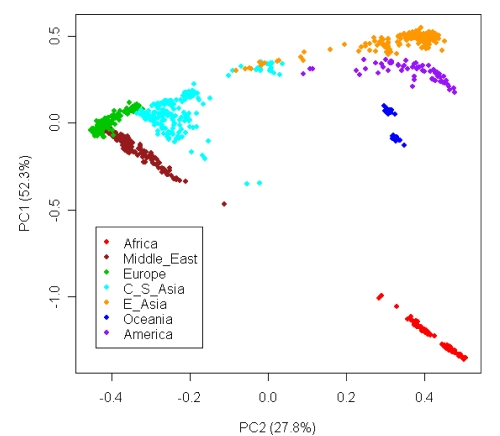
You can see in the picture above that races clearly do cluster in different clusters from other races. She is right about the changing definitions, especially Brazil, but Brazil is a special case. So much mixing has gone on in Brazil that there is evidence of skin color becoming independent of ancestry. One outlier example doesn’t make race a ‘social construct’. South Africa is also another one. They classify race in South Africa with four categories: black, colored, Indian/Asian or white. Obama would have been called ‘colored’ in South Africa today. But, again, just because there are changing definitions of race throughout the globe, doesn’t mean that race doesn’t exist.
Like race, racial identity can be fluid. How one perceives her racial identity can shift with experience and time, and not simply for those who are multiracial. These shifts in racial identity can end in categories that our society, which insists on the rigidity of race, has not even yet defined.
Is she making an argument for being ‘trans-racial’? I bet Rachel Dolezal would be happy.
In a society where being white (regardless of one’s socioeconomic class background or other disadvantages) means living a life with white skin privileges — such as being presumed safe, competent and noncriminal — whites who begin to experience discrimination because of their intimate connection with someone of another race, or who regularly see their loved ones fall prey to racial discrimination, may begin to no longer feel white. After all, their lived reality does not align with the social meaning of their whiteness.
I always hear about ‘white privilege’ but never get an actual definition of what it means. People complain about ‘white privilege’ because they, of course, don’t understand the biological reality of race. Anything that may prove innate differences between individuals or races they just can’t imagine exists because of what they’ve been taught their whole lives. She is talking about those whites who are in the BLM movement. The false ideals of egalitarianism are the cause of this.
More than 50 years ago, Congress enacted the most comprehensive antidiscrimination legislation in history, the Civil Rights Act of 1964. Half a century later in 2015, the same gaps in racial inequality remain or have grown deeper. Today, the unemployment rate for African-Americans remains more than double that for whites, public schools are more segregated now than they were in the 1950s and young black males are 21 times more likely to be shot and killed by the police than their white male peers. Even a white fourth-grade teacher in Texas, Karen Fitzgibbons, openly advocated for the racial segregation of the 1950s and 1960s on her Facebook page.
Right. IQ is the cause of the unemployment rate of African Americans. Not any imaginary forces such as ‘white privilege’. Public schools are more segregated today due to people wanting to be with others genetically similar to themselves. Blacks cause themselves to get shot and killed by police due to their actions during altercations with police officers. Oh no, someone has not politically correct opinions!! She should lose her job and never work a good job again!
That’s what the Left does. They attempt to shout you down with buzzwords so you can’t calmly and intellectually prove your case.
She is clearly wrong. Good thing this is called an ‘opinion piece’, there were few actual facts in it.
Now to touch on Bill Nye’s views on race. It’s funny. I loved his show when I was a kid. Now, knowing the truth about racial differences, hearing him say that made me lose all respect for him. He’s a mechanical engineer with a Bs from Cornell University. People only take what he says because he is ‘The Science Guy’ when he has no training in what he is talking about.
“We obsess about whether our dog is a pug-Jack Russell terrier mix with corgi overtones and an oaky finish. ‘An approachable little dog,’ whatever. They’re all dogs, okay? And so the idea of a purebred is just a human construct. There’s no such thing – in a sense there’s no such thing as a purebred dog.”
That right there is a fallacy. As with the woman’s article above, they both use the ‘continuum fallacy‘. The continuum fallacy is when someone rejects a vague claim because it’s not as precise as they want it to be. ‘There are no pure races’ or ‘there are no pure breeds of dog’, that doesn’t mean that genes don’t cluster differently, showing genetic differentiation.
“If a Papua New Guinean hooks up with a Swedish person all you get is a human. There’s no new thing you’re going to get. You just get a human. Japanese woman jumping the African guy, all you get is a human. They’re all humans. So this is a lesson to be learned. There really is, for humankind there’s really no such thing as race. There’s different tribes but not different races. We’re all one species.”
Right. That doesn’t mean there is no such thing as race. Grizzly bears and polar bears can mate to create a prizzly bear. Does that mean species doesn’t exist? (I will touch on speciation at the end of this article.) Once again, that statement doesn’t deny the biological reality of race, as you can see from the picture above.
Researchers have proven, scientifically, that humans are all one people. The color of our ancestors’ skin is a consequence of ultra-violet light, of latitude and climate.
We all belong to the same genus, Homo, but again, that doesn’t disprove race. He’s correct in saying that our ancestors’ skin is a consequence of UV light of latitude and climate, and right there he proves us correct in stating that sunlight differences depending on where your ancestors evolved in the world are the cause of racial differences.
Despite our recent sad conflicts here in the U.S., there really is no such thing, scientifically, as race. We are all one species. Each one of us more alike than different.
In this statement, he is saying the first sentence because of recent racial relations in the U.S. A clear politically-motivated statement.
“Each one of us more alike than different.’ That is correct, but, yet again, doesn’t disprove the reality of race. Geneticists estimate that humans will differ, on average, at 3 million base pairs in their DNA. That’s more than enough for distinct racial classification, as well as enough to differentiate us.
Is that supposed to mean anything? Cats have 90 percent homologous genes with humans, 82% with dogs, 80% with cows, 79% with chimpanzees, 69% with rats and 67% with mice.
90% of the mouse genome could be lined up with a region on the human genome.
99% of mouse genes turn out to have analogues in humans.
As you can see from the links above, we are all extremely genetically related to animals that are clearly extremely physically different from us humans. This shows, that the differences in humans are down to not how genetically distant we are from other animals in the animal kingdom, but how the differing genes we have are expressed.
We all came from Africa. We’re all made from the same star dust. We’re all going to live and die on the same planet – a pale blue dot in the vastness of space. We have to work together!
And finally, you can see his way of saying that racial differences mean nothing because ‘we all come from Africa’ and ‘ we’re all made from star dust’. That may be true, but that doesn’t do anything to acknowledge, or even show that racial differences are meaningless.
Bill Nye has absolutely no authority to speak on this matter. Liberals then eat this up and cite Bill Nye as proof that race doesn’t exist, which is clearly untrue as I have shown.
Finally, I will get to Ta-Nehisi Coates’ ‘The Social Construction of Race‘. He cites my favorite blogger/geneticist Razib Khan, so this should be good.
Ancestry — where my great-great-great-great grandparents are from — is a fact. What you call people with that particular ancestry is not. It changes depending on where you are in the world, when you are there, and who has power.
Right with the first sentence, and with the second. It seems he’s attempting to use what the first article I cited says: that due to ever-changing racial definitions that race doesn’t exist as we believe it to be. He says that ancestry is a fact, well wouldn’t that same ancestry be your racial classification? I am not following his logic. Just because there are differing views on the definition of race throughout the globe, doesn’t mean that there is no biological reality of race.
He cites someone else who states:
“Race” as a term is very nebulous. But human subgroups with similar ancestries can have group differences in DNA — and intelligence is highly unlikely to have no genetic basis at all (although most now believe its impact is greatly qualified by cultural and developmental differences).
Cultural and developmental differences. The cultural differences are thrown out. According to the editorial ‘Mainstream Science on Intelligence’, which came out shortly after The Bell Curve was published, one of their points is that IQ tests are not culturally biased if the individual speaks English. If they are not English speakers, they will either get a test in their native language or get Raven’s Progressive Matrices, which is a ‘culture free’ IQ test as it’s based on pattern recognition and has no writing involved. Developmental differences, yes. White mothers have a better prenatal environment then do black mothers, which is biological. Developmental differences are innate within the two populations.
I do not know. Andrew is more inclined to believe that there is some group-wide genetic explanation for the IQ difference. I am more inclined to believe that the difference lies in how those groups have been treated. One thing that I am not convinced by is controlling for income and education.
Oh, the old ‘Stereotype Threat‘ canard. The paper, which was cited more than 5000 times, states that African-Americans do worse on tests in which they are told that they are being judged on their race. Well, a meta-analysis of 55 published and unpublished studies came out and what was found that the it shows clear publication bias. Either due to people not knowing how to read scientific papers or more insidious tactics. The effect varies across studies and is small. Though elite university undergrads may underperform on tests of cognitive tests due to Stereotype Threat, this effect doesn’t generalize to non-adapted standardized tests, high-stakes settings and less academically gifted test takers. Stereotype Threat cannot explain the difference in mean cognitive test performance between African Americans and European Americans. (pg 68)
In the mid-20th century, as we have been documenting, it was the policy of this country to deny African-Americans access to the same methods of wealth-building, that it was making available to whites.
This is not merely a problem for your local diversity and sensitivity workshop. It is a problem of wealth and power. When you create a situation in which a community has a disproportionate number of poor people, and then you hyper-segregate that community, you multiply the problems of poverty for the entire community–poor or not. That is to say that black individuals are not simply poorer and less wealthier than white individuals. Because of segregation, black individuals and white individuals of the same income and same wealth, do not live in communities of equal wealth.
What bearing does segregation have on IQ differential? I don’t know. My skepticism of genetics is rooted in the fact that arguments for genetic inferiority among people of African ancestry are old, and generally have not fared well. My skepticism is also rooted in the belief that power generally seeks to justify itself. The prospect of actual equality among the races is frightening. If black and white people truly are equal on a bone-deep level, then the game might really be rigged, and we might actually have to do something about it. I think there’s much more evidence of that rigging, then there is evidence of cognitive deficiency .
I must add that I can not pretend to be a dispassionate, nor impartial observer. I come from a particular place. I’ve now been out in the world, and seen how other people in other places live. They don’t strike me as more intelligent. They strike me as better armed. There’s nothing scientific about that. But I think we all have core faiths. These are mine. You’ve been warned.
Regardless of the method used in the analyses, all researchers reached estimated very close to that obtained by Lewontin: The differences observed by the subdivisions (populations, groups of populations, races) represented 10 to 15 percent of the total genetic variation found within the human species. Formally, these findings demonstrate, first, that the species is indeed subdivided into genetically definable groups of individuals and, second, that atleast some of these groups correspond to those defined by anthropologists as races on the basis of physical characters. They do not however, settle the arguments regarding the methods of racial classification. Unfortunately, Lewontin did not specify before initiating his analysis how large the difference has to be in order to call the groups “races”.
Consequently, the results of the studies have led population geneticists to two diametrically opposite conclusions. Lewontin called the observed differences trivial, and proclaimed that “racial classification is now seen to be of no genetic or taxonomic significance” so that “no justification can be offered for its continuance.” This view is echoed by authors of similar studies, who seem to be surprised that genetic variation within populations is greater than that between them. By contrast, Sewell Wright who can hardly be taken for a dilettante in questions of population genetics, has stated emphatically that if differences of this magnitude were observed in any other species, the groups they distinguish would be called subspecies.
One can extend Wright’s argument even further. The more than 200 species of haplochromine fishes in Lake Victoria differ from each other much less than the human races in their neural genes, although they are presumably distinguished by genes that control differences in their external appearances. The same can be said about atleast some of the currently recognized species of Darwin’s finches and other examples of recent adaptive radiations. In all these cases, reproductively isolated groups are impossible to tell apart by the methods used to measure differences in human races. Obviously, human races are not reproductively isolated (interracial marriages are common and the progenies of such marriages are fully fertile) but the external differences between them are comparable to cichlid fishes and Darwin’s finches. Under these circumstances, to claim that the genetic differences between the human races are trivial is a more political statement than a scientific argument. Trivial by what criterion? How much difference would Lewontin and those who side with him consider non-trivial?
By mixing science with politics, geneticists and anthropologists are committing the same infraction of which they are accusing other scientists, who they themselves label as racist. Even worse, by labelling the genetic differences as insignificant, they play into the hand of genuine racists who can demolish this claim and so further their own agenda. It is intellectually more honest to acknowledge and then point out that by no means imply supremacy of one race over others. This can be done by demonstrating that the differences are in genes that cannot be linked to any features that would be required for the preeminence of a particular race.
It’s clear that racial classification does exist. The creator of Fst, Sewall Wright, says that a Fst distance of .15 is more than enough for speciation (differing racial classifications). It directly refutes Lewontin, who put his political ideology of Marxism over science. Those cichlids in Lake Victoria are a perfect example that though the definition of ‘species’ does change depending on which researcher you speak to, it doesn’t discount that there are real and physical genetic differences between races and ethnicities.
In conclusion, the term “race is a social construct” is a deliberately intellectually dishonest statement, or a statement used to hide the truth for more insidious things to happen due to the non-acknowledgement of race.
Genetic Similarity Theory
700 words
Genetic Similarity Theory is a theory, first though of by JP Rushton, that states that altruism is heritable. In Rushton’s beginning years in psychology, he began his research on altruism, having authored 2 books on the subject.
The theory itself holds that people will be more altruistic to genetically similar people than to people more genetically distant from themselves. European peoples are the most altruistic, having weathered the Ice Age for tens of thousands of years, leading to more group cooperation and more trust in the societies, that we still see today.
I have seen some people. like Jayman state that “Ethnic Genetic Interests Don’t Exist and Neither Does Group Selection”. That is so ridiculous, where do I start?
Well first off, we are genetically close to our friends, research shows that our close friends are as similar to us as 4th cousins. We also have altruistic behavior towards our friends, I would assume, because of genetic similarity. That same altruism for people with your genetics had our ancestors weather the Ice Age and led to the development of altruistic behavior and high trust societies.
We know that Europeans are the most altruistic peoples, so with that innate altruism, it obviously helped group selection in the Ice Age to select for more altruism, which led to high trust between them.
There are neurological reasons for having more altruistic behavior for your own people. To quote from the paper Oxytocin promotes human ethnocentrism:
Human ethnocentrism—the tendency to view one’s group as centrally important and superior to other groups—creates intergroup bias that fuels prejudice, xenophobia, and intergroup violence. Grounded in the idea that ethnocentrism also facilitates within-group trust, cooperation, and coordination, we conjecture that ethnocentrism may be modulated by brain oxytocin, a peptide shown to promote cooperation among in-group members.
…
Results show that oxytocin creates intergroup bias because oxytocin motivates in-group favoritism and, to a lesser extent, out-group derogation. These findings call into question the view of oxytocin as an indiscriminate “love drug” or “cuddle chemical” and suggest that oxytocin has a role in the emergence of intergroup conflict and violence.
There is a genetic basis for ‘racism’, it’s actually called human ethnocentrism, but that doesn’t stop people from creating new buzzwords in order to make a person appear like they’re unintelligent and barbaric for going against the hivemind of political correctness.
Now that we know the reasons for human ethnocentrism, let’s talk about the ‘selfish gene’.
George R Price, a physical chemist later turned science journalist, developed his theory with a math equation. He later had a conversion to Christianity and set out to disprove his theory. No matter what he did, people would take advantage of him. He later killed himself because he couldn’t disprove his theory.
Now, you may say that that disproves ethnic genetic interests as well as group selection, but, the Price Equation is still the widely held to be the best mathematical, biological and evolutionary representation of altruism.
In a paper in which Price was the co-author, he applied Game Theory to evolutionary biology. Game theory is a model that looks at relationships between people in a particular model and attempts to predict their optimal decisions. To quote from the paper he co-authored, The Logic of Animal Conflict:
Conflicts between animals of the same species usually are of “limited war” type, not causing serious injury. This is often explained as due to group or species selection for behaviour benefiting the species rather than individuals. Game theory and computer simulation analyses show, however, that a “limited war” strategy benefits individual animals as well as the species.
So we can see here, that conflicts between those of the same species are of ‘limited war’ and not causing serious injury. That is because of genetic similarity.
Price also stated that in the same way an organism might sacrifice itself to spread its genes, that same organism will sacrifice itself to eliminate those of the same species if it enabled closely related organisms to better spread their genes.
So, what Price stated right there, as well as his 2 papers, directly refute what Jayman says on this.
Altruism, ethnic genetic differences, and group selection all do exist within humanity, though at different rates in different populations.
 NotPoliticallyCorrect