Home » 2020 (Page 5)
Yearly Archives: 2020
Goddard Undefended
A recent YouTube video from the user “Modern Heresy” purports to critique Ken Richardson’s works in his 2017 book “Genes, Brains and Human Potential: The Science and Ideology of Intelligence” as well as some of his older works. I have addressed the claims most specifically about social class here, and RaceRealist has addressed the video as a whole here, but today I want to go more in detail on the issue of Goddard, since it took up basically a third of the video. I thought the section was fairly pedantic, as it’s barely two paragraphs of his book, but since the video creator thinks it to be so important [1], it must be addressed.
The issue of Goddard’s testing of immigrants on Ellis Island has long been the subject of academic controversy, being debated in the journal American Psychologist by Herrnstein, Kamin, Albee and others (Albee 1980; Dorfman 1982; Kamin 1982; Samelson 1985; Synderman & Herrnstein 1983). The most comprehensive rebuttal to Syndermann and Herrnstein’s erroneous paper can be found in Gelb et. al (1986), as noted by RaceRealist.
Basically, the issue that the video maker alleges is based around several small issues. The first relates to the proportion of the individuals tested that were found to be feeble-minded and the meaning of this result, and the other has to do with how Goddard tested immigrants on Ellis Island.
Richardson claims in his 2017 book that:
That was after long and trying journeys, using the tests in English through interpreters. By these means, the country came to be told that 83 percent of Jews, 80 percent of Hungarians, 79 percent of Italians, and 87 percent of Russians were feebleminded. Almost as bad were the Irish, Italians, and Poles and, bottom of the list, the blacks. Only the Scandinavians and Anglo- Saxons escaped such extremes of labeling.
Richardson (2017)
The video creator correctly notes that Goddard’s study was:
makes no determination of the actual percentage, even of these groups, who are feeble-minded.
Goddard (1917)
“Modern Heresy” then claims that this statement from the beginning of the Goddard paper demonstrates that Richardson was misrepresenting the paper. I agree that it is misrepresentation insofar as Richardson did not clarify that the primary purpose of the paper was not to determine the percentage of ‘feeble-minded’ individuals, but this is different than the primary claims that Richardson was making. Richardson’s broader point here is about the use of IQ tests to cause social harm, e.g. by the passage of the Immigration Act of 1924. Clearly, as Gelb et. al (1986) has shown, he is correct on this point. But the minutiae are what are interesting here, so let’s get into them
When Richardson states that:
83 percent of Jews, 80 percent of Hungarians, 79 percent of Italians, and 87 percent of Russians were feebleminded
Richardson (2017)
he is indeed accurately quoting a real statistic from one of Goddard’s paper (contra Herrnstein 1981), which occurs in Goddard’s Table II (Dorfman 1982). And again contra Herrnstein (and Cochran et. al 2006), this sample is not (entirely) a group of immigrants specifically chosen because of their feeblemindness, but includes a fairly representative sample. As noted by Goddard:
For the purpose of the first question an investigator selected 39 cases—20 were Italians and 19 were Russians—who appeared to her to be feeble-minded. These were then tested by the other investigator, the results being recorded for later study.
Goddard (1917)
Note that contra Cochran et. al (2006), there are no Jews in the sample that Goddard specifically selected of feebleminded individuals. But Goddard’s second selection is what is most relevant here, about which he states:
For the second question cases were picked who appeared to be representative of their respective groups. In this list we had 35 Jews, 22 Hungarians, 50 Italians and 45 Russians. (5 Jews, 2 Italians and 1 Russian were children under 12 years of age.
Goddard (1917)
Despite Goddard’s caution at the beginning of the article that “the study makes no determination of the actual percentage, even of these groups, who are feebleminded” (Goddard 1917, p. 243), he later notes that the sample is “representative”(Goddard 1917, p. 244) and that despite the selection involved in the sample due to the exclusion of “superior individuals”, the small number of them ” did not noticeably affect the character of the group” (Goddard 1917, p. 244). As such, he stated that to estimate the character of these national groups, one would only have to be “revised … by a relatively small amount” (Goddard 1917, p. 244). He finally concluded that “one can hardly escape the conviction that the intelligence of the average ‘third class’ immigrant is low, perhaps of moron grade”.
But the broader point that “the country came to be told that ….” that Richardson makes is equally both slightly misrepresentative but also broadly correct. A news article published in 1917 about Goddard’s paper noted that “the most favorable interpretation of their results is that two out of every five of the immigrants studied were feebleminded” (The Survey 1917). It also describes that 83 percent of Russians were found to be feebleminded using the typical criterion, meaning that Richardson’s note that the Amerikan was exposed to the claims of immigrant feeblemindedness is accurate, even if Goddard’s article itself can’t be used to make those conclusions. Indeed, it was Pioneer Fund president Harry Laughlin who cited Goddard’s figures in his testimony to Congress during the debate over the Immigration Act of 1924 (Swanson 1995). It is well known that science is commonly misrepresented by the public, and this example may be one of many (Dumas-Mallet et. al 2017). The video creator alleges that because Goddard attributed this low intelligence level to environment rather than heredity, Richardon’s discussion of Goddard is yet again incorrect. But Richardson does not name Goddard as an anti-immigrant xenophobe, he merely points out that these figures later became the basis for anti-immigration xenophobia, which is a historical fact as noted above. Again, the video creator confuses Richardon’s discussion of Goddard and the discussion of xenophobia and then conflate Richardson’s claims with the ones made by Kamin and Gould in the past.
There is one more issue brought up in the video as to Richardon’s portrayal of Goddard’s testing of immigrants, and it is Richardson’s claim that:
Amid distressing scenes at the infamous reception center on Ellis Island, he managed to ensure that all immigrants— men, women, and children of all ages— were given the IQ test as soon as they landed
Richardson (2017)
While it is unclear as to Goddard’s specific role in the development of the use of testing during immigration proceedings on Ellis Island, it is uncontested that there was widespread use of mental tests upon entry to the island (Mullan 1917; Zenderland 1998, p. 419 note 17), and that Goddard was the person who was sent out to inspect the mental testing procedures the immigration enforcement officers were engaging in in the first place (Goddard 1917; Sussman 2014, p. 84) following the US ban on “moronic immigrants” and subsequent fear that moronic immigrants were still getting through (Davis 1925, p. 218-219; Wilkes-Barre Record 1907). Again, while Richardson’s treatment of the issue is curt and may seem a bit reductive, it is not wholly inaccurate. He’s not writing a history textbook or publishing a paper in The American Historical Review, he’s writing a book that covers numerous topics about IQ.
[1] The author again brings up the Goddard issue in the comment reply to RR’s recent article.
Christianity and Sociobiology: Synthesizing Just-so Stories
1600 words
The story of Adam and Eve is critical to Christian thought. For many Christians, the story tells us how and why we fell from God’s grace and moved away from Him. Some Christians are Biblical literalists—they believe that the events in the Bible truly happened as described. Other Christians attempt to combine Christianity with ‘science’ in an attempt to explain the natural world. In the book Doing Without Adam and Eve: Sociobiology and Original Sin, Williams (2000) argues that Adam and Eve are symbolic figures and that they did not exist.
But suppose, as many Christians now do, that Adam and Eve are simply symbolic figures in an imaginary garden rather than the cause of all our woe. Suppose further that the idea od “the fall” from grace is not in Scripture? Does this destroy Christian theology? This book says no. This book says that doing without Adam and Eve while drawing on sociobiology improves Christian theology and helps us understand the origin and persistance of our own sinfulness. (Williams, 2000: 10)
How ironic is it for just-so storytellers to combine their doctrine with another doctrine of just-so stories? The Christian Bible is chock-full of just-so stories purporting to show the origin of how and why we do certain things. Stories such as those in the Christian Bible do serve a purpose—which explain why they are still told and why there are still so many believers today. In any case, Williams (2000) is replacing one way of storytelling with another: the combination of the doctrine of Christianity along with Sociobiology (SB), attempting to use ‘science’ to lend an air of respectability to Christian thought.
How ironic that Christian storytelling would be combined with another form of storytelling—one masquerading as science? SB was the precursor to what is now known as ‘Evolutionary Psychology’ (EP) (see Buller, 2005; Wallace, 2010). There, we see that what amounts to just-so stories today has its beginnings in E. O. Wilson’s (1975) book Sociobiology: The New Synthesis. Sociobiology is premised on the claim that both social and individual behaviors can become objects of selection which then become fixated as species-typical behaviors. SB, then, was crafted to explain human nature and how and why we behave the way we do today. If certain genes cause or influence certain behaviors and these behaviors increase group fitness, then the behavior in question will persist since it increases group fitness.
I have no qualms with the group selection claim (I think it is underappreciated, see Sterelny and Griffiths, 1999). But note that SB, like its cousin EP, attempts to explain the evolution of human behavior through Darwinian natural selection. But the problems with the assumption that traits persist because they are selected-for their contribution to fitness has already been shown to be highly flawed and wanting by Fodor (2008) and Fodor and Piattelli-Palmarini (2010; 2011). In a nutshell, if a behavior is correlated (coextensive) with another behavior (or a gene that causes/influences a behavior is coextensive with another that causes/influences a different behavior) that is not fitness-enhancing then selection has no way of knowing which of the correlated traits influences fitness and so, since both traits are selected, there is no fact of the matter (when it comes to evolution) about why a trait was selected-for. There can be to us humans, as we can attempt to find out which trait is fitness-enhancing and which takes a free-ride—but for our conception of ‘natural selection’, it cannot distinguish between the cause and the correlate since there is no mind doing the selecting nor laws of selection for trait fixation which hold in all ecologies.
In any case, even if we assume that natural selection is an explanatory mechanism, the Sociobiologist/Evolutionary Psychologist would still have a hard time explaining how and why humans behave the way they do (note that behavior is distinct from action in that behavior is dispositional and actions are intentional) as Hull (1986) notes. In fact, Hull has a very simple argument showing that if one believes in evolution, then they should not believe in a ‘human nature’:
If species are the things that evolve at least in large part through the action of natural selection, then both genetic and phenotypic variability are essential to biological species. If all species are variable, then Homo sapiens must be variable. Hence, it is very unlikely that the human species as a biological species can be characterized by a set of invariable traits.
This does not stop Sociobiologists/Evolutionary Psychologists, though, from attempting to carry out their framework premised under untenable assumptions (that traits can be ‘selected-for’ and that natural selection can explain trait fixation). This shows, though, that even accepting the Darwinian claims, they do not lead to the conclusion that Darwinists would like.
To explain human nature through scientific principles is the aim of SB/EP. Indeed, it was what E. O. Wilson wanted to do when he attempted his new synthesis. Though, Dorothy Nelkin—in the book Alas, Poor Darwin: Arguments Against Evolutionary Psychology (Rose and Rose, 2001)—has pointed out that Wilson was a religious man in his early years. This may have influenced his views on everything, from genetics to evolution.
When Harvard University entomologist Edward O. Wilson first learned about evolution, he experienced, in his words, an ‘epiphany’. He describes the experience: ‘Suddenly — that is not too strong a word — I saw the world in a wholly new way … A tumbler fell somewhere in my mind, and a door opened to a new world. I was enthralled, couldn’t stop thinking about the implications evolution has … for just about everything.’
Wilson, who was raised as a southern Baptist, believes in the power of revelation. Though he drifted away from the church, he maintained his religious feeling. ‘Perhaps science is a continuation on new and better tested ground to attain the same end. If so, then, in that sense science is religion liberated and writ large.’ (Nelkin, 2001)
The Sociobiological enterprise, though, was further kicked-off by Richard Dawkins’ publication of The Selfish Gene just one year after Wilson published Sociobiology: The New Synthesis. This is when such storytelling truly got its start—and it has plagued us ever since. How ironic that the start of what I would call ‘the disciplines of storytelling’ would be started by a religious man and an atheist? The just-so storytellers are no better than any other just-so storytellers—Christians included. They have a ‘religious bent’ to their thinking, though the may vehemently deny it (in the case of Dawkins). Nelkin claims that, though Dawkins rejects a religious kind of purpose in life, “Dawkins does [find] ultimate purpose in human existence — the propagation of genes.”
Nelkin goes on to argue that Dawkins is “an extreme reductionist” and that our bodies don’t matter but what really matters is our DNA sequences—what supposedly makes us who we are. Nelkin puts Dawkins’ view simply: our bodies don’t matter (the material doesn’t matter), but our genes are immortal and what explains behavior is our selfish genes attempting to propagate by causing/influencing certain behaviors. These kinds of metaphors are pushed by geneticists, too, with their claims that DNA is ‘the book of life’. Nelkin also quotes Wilson stating that “‘you get a sense of immortality’ as genes move on to future generations. Like the sacred texts of revealed religion, the ‘evolutionary epic’ explains our place in the world, our relationships, behaviour, morality and fate. It is indeed of truly epic proportions.”
Nelkin then claims that Evolutionary Psychologists are like missionaries attempting to proselytize people from one ‘religion’ to another. They have the answer to the meaning of life—and the meaning is in your genes and to propagate your genes.
[Evolutionary Psychologists] are convinced they have insights into the human condition that must be accepted as truth. And their insights often come through revelations. Describing his conversion experience, Wilson notes that his biggest ideas happened ‘within minutes … Those moments don’t happen very often in a career, but they’re climactic and exhilarating.’ He believes he is privy to ‘new revelations of great moral importance’, that from science ‘new intimations of immortality can be drawn and a new mythos evolved’. Convinced that evolutionary explanations should prevail over all other beliefs, he seeks conversions. (Nelkin, 2001)
Conclusion
It is ironic that Williams (2000) is attempting to reconcile Christian theology with Sociobiology. The parallels between the two are strikingly evident. Christian theology is based on faith just like SB/EP just-so stories are (since there can be no independent verification for the hypothesis). Christians have missionaries who attempt to proselytize new converts and so do those who push the doctrine of SB/EP. Anyone who agrees with my doctrine is wrong; I am right. ‘Natural selection’ cannot explain the propagation of behavior today. The attempt to explain human nature through evolution and by extension natural selection was inevitable ever since Darwin formulated the theory of natural selection in the 19th century. However, if one believes in evolution then it is illogical to believe that there IS a human nature; if one is a good evolutionist then they believe that human nature is fairy tale and that our species cannot be characterized by a set of invariable traits (Hull, 1986).
How ironic it is for theists and scientists to have similar kinds of beliefs and convictions about the beliefs they hold near and dear to their hearts. The attempted synthesis of Christian theology and Sociobiology (an attempted synthesis itself) is very telling: it shows that the two groups who propagate such explanations are, in actuality, cut from the same cloth with the same kinds of beliefs—though they use different language than the other.
Social Class, Ken Richardson and “Modern Heresy”
Note: I am new to this blog. I blog at https://developmentalsystem.wordpress.com and https://www.sillyolyou.com
As RaceRealist has already noted, a recent YouTube video purports to critique Ken Richardson’s work on IQ tests and their relationship with social class. Since he already covered a number of the relevant parts about Goddard, construct validity and a number of other topics, I wanted to focus more on the question of social class. This is one of the claims that RaceRealist brings up from Richardson’s work quite frequently, so it’s probably the most pertinent at this point in time.
Note: I watched the video about a week ago, so if I get any of the details mixed up, please let me know.
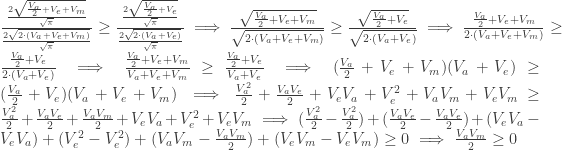
One of the claims that the author of the YouTube video makes is that because a large proportion of the variation in IQ is within-family, rather than between-families, it cannot be that IQ is a metric of social class. The logic here is quite simple: behavioral genetic studies tell us that the average difference between two siblings in the same family is about 12 IQ points, while the average difference between two randomly selected individuals in the population is 15 points. That means that, according to the creator of the video, “about 70% of the IQ variation in society is due to within-family differences”. We should note two things. The first is that the figure cited here is incorrect, even if we accept the values for the standard deviations within the family. The video creator seems to have calculated the percent of variation as a proportion of the standard deviations (


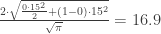



The other issue with the creators claims is the “assumption that social class varies between families but not within families”. While it may seem obvious at first, there are a number of issues. The first is that an individual’s attained social class during adulthood (and thus the social class in which they inhabit) is not identical within families. Two kids may have started off with very similar IQs due to their family environments, but due to various reasons (random chance, developed interests, etc), they moved into different social classes in adulthood, following which their IQs diverged due to the different social classes they now inhabit. The reason why this is relevant is because the statistic that the creator is using to (erroneously) claim that 70% of the variation is within families does not specify the age at which these measurements were taken – it is likely that they were taken in later life, meaning that the social class of the individuals has already diverged.
Moreover, even when children are within the same family at earlier ages, there is reason to argue that their social class is also not identical. Sociologists now understand that social class is a dynamic structure that is not only reproduced by aspects of economic access, resources and opportunity that individuals have access to, but that sociocultural signifiers, subjective experiences, interests and other aspects also contribute to ones social class. As noted by Richardson himself, one’s subjective SES may better reflect the sociocognitive environment that one develops in (Richardson & Jones 2019):
It is self-conscious social status in relation to others in a class structure – i.e. what has been called subjective as opposed to objective social class – that seems to influence a wide range of educational and cognitive outcomes. There is only moderate correlation between that and current SES
And this subjective SES can quite evidently differ between siblings and differentially impact their IQs. Moreover, there are numerous other aspects of social class that can vary within-family such as: school quality (e.g. school resources; Leon & Valdiva 2015), peer effects (Hoxby 2000), teacher and classroom effects (Boyd-Zaharias 1999; Chetty et. al 2015), and societal expectations (Jensen & McHale 2016). Small initial differences in these environmental variables can be magnified through phenotype-environment processes (Beam & Turkheimer 2013) that can create a seemingly large within-family variation that cannot be attributed to social class, but could in fact be the result of it.
Another vitally important thing to note is that even if we accept the concept of social class as measured by socioeconomic status as a simple standardized combination of income, parental education and occupational status, that doesn’t mean that this variable can’t differ in important ways within the family. First note that siblings are not always the same age (the exception is with twins). As a result, the developmental environment in which each child grows up with is not identical. As Richardson noted over a decade ago, children within the family do not experience the same environment (Richardson & Norgate 2005). This is not only because of perceptual experiences, phenotype→environment feedback loops, but because the importance of the timing of developmental experiences means that changes in parental socioeconomic status over the time means that children are exposed to different socioeconomic environments during these critical periods (Sylva 1997). For instance, parental socioeconomic status and as a result maternal stress can differ during the mother’s pregnancies (Richardson 2019), causing differences between the two children’s development.
Social Class or Sociocognitive Preparedness?
We should note that this critique is premised entirely on the idea that Richardson is positing that social class is a gigantic determinant of IQ, to the neglect of other environmental factors. This is an erroneous assumption, as the paper in which Richardson lays out his theory of what IQ tests are a proxy for (Richardson 2002; “What IQ Tests Test”), he argues that ” population variance in IQ scores can be described in terms of a nexus of sociocognitive-affective factors that differentially prepares individuals for the cognitive, affective and performance demands of the test”, that in effect, makes the test a measure of social class. Note that he does not quantify the specific amount of variation that is explained by social class, and that over 50% of the variation (as a minimum using the assumptions questioned above) explainable by social class (meaning a correlation of 0.7) could definitely qualify under his meaning. Regardless, Richardson’s primary explication is in terms of the “nexus of sociocognitive-affective factors” is perfectly compatible with the within vs between population variance described in the video.
There are numerous factors that influence intelligence that Richardson describes that can differ within families, such as “individuals’ psychological proximity to that set” of cultural tools, parental interactions with children (Hart & Risley 1995; Jensen & McHale 2016), affective preparedness, etc. All of these factors can additionally explain the IQ variance, meaning that the critique of Richardson’s explanation of IQ variance does not go through.
Predictive (In)Validity?
The creator of the video also claims that the Bell Curve demonstrated that IQ remains predictive once SES is controlled for and that IQ is a much better predictor that SES. Despite this common claim by Bell Curve fanatics, it has been demonstrated to be incorrect more times than one can count (Fischer et. al 1996; Ragin & Fiss 2016). In fact, a closer analysis of the model Murray and Herrnstein fit shows that they predicted NOT ONE of their poverty cases correctly (Krenz n.d.; see also Dickens et. al 1995, Goldberger & Manski 1995). A more thorough examination of the claims related to the alleged predictive validity of IQ can be found here.

Response to “A Critique of Ken Richardson: Initial Impressions and Social Class”
3700 words
I am now going on my fifth year blogging. In that time, my views have considerably shifted to what I would term HBD racial realism (reductionism of the Neo-Darwinian type which is refuted by a holistic perspective of the organism) to a more holistic, systems approach of the organism and how it interacts with its environment—the gene-environment system.
Many long-time readers may know that I used to be a staunch hereditarian especially when it came to IQ. However, back in the Spring of 2017, I read DNA is Not Destiny (Heine, 2017) and Genes, Brains, and Human Potential (Richardson, 2017a) (in the same month, no less). Heine had me questioning my views while Richardson completely changed them. I would say that the biggest catalysts were chapters 4 and 5 on genes, what they are and how they work in concert with the physiological system were imperative to my view changes. Further, learning more about the history of IQ testing also further lead to these view changes. (See my article “Why Did I Change My Views?” for more information.)
This then leads me to someone on Twitter by the name of “ModernHeresy” who, back in October, asked me which books best represent my views on IQ:
I replied, Genes, Brains, and Human Potential (Ken Richardson), On Intelligence (Stephen Ceci) and Inventing Intelligence (Elaine Castles). He then said that he thinks that Jensen et al are right about IQ, but that he will give Richardson’s book an honest chance. Well, I was heavily biased against anti-hereditarian arguments before I read Richardson’s book almost 3 years ago, and now look at me.
In any case, ModernHeresy (MH) had responded to some of Richardson’s arguments in his latest book in a video titled “A Critique of Ken Richardson: Initial Impressions and Social Class“. It seems like a well-researched video with four topics that I will also cover today. MH covers Goddard’s use of the Binet-Simon scales in turning away prospective immigrants who scored lower; the construct validity argument; IQ as a measure of social class; and IQ ‘predicts’ only through test construction. I will respond to each point per section.
Goddard
Goddard was the man who translated Binet’s original test and brought it to America, translating it to English in 1910. He was the director of the Vineland Training School of Feebleminded Boys and Girls in Vineland, New Jersey and he believed that one’s intellectual potential was biologically determined. Goddard used his translated-Binet to attempt to turn away those who he deemed “feebleminded” or “morons” (indeed, he was the one to coin the term; see Castles, 2012; Wilson, 2017; Dolmage, 2018). Goddard is of Kallikak family fame—a pseudonymous name for a family of “feebleminded people”, see Smith and Wehmeyer (2014) for an exposition on how Goddard was wrong about the Kallikaks and telling Deoborah Kallikaks true identity. To Goddard’s credit, though, he did recant some of his views in 1928 stating that “feeblemindedness” was not incurable, as he once thought.
MH then cites Snyderman and Herrnstein (1983) stating that they “thoroughly review the congressional record and testimony is almost no evidence that intelligence tests had any influence over the content or the passage of the 1924 immigration act.” MH then goes on to say that the claim that IQ testing had anything to do with the 1924 immigration act had its roots in the 70s, specifically in Leon Kamin’s The Science and Politics of IQ, which Gould then reiterated in both versions of Mismeasure of Man. (See here for a defense from Kamin and also see Dorfman.) MH then says that
Richardson’s book was published in 2017 this is completely inexcusable and I would argue an indication that Richardson’s work has a lot of its roots and arguments that originated in the 1970s and the formulation of these arguments have basically ignored or at best extremely selectively referenced any work in the almost 50 years since that have challenged them.
This is ridiculous. Snyderman and Herrnstein did nothing of the sort. Gelb et al (1986) write:
The historical record clearly documents that mental testing played a part in the national immigration debate between 1921 and 1924, though certainly in a less direct manner than Snyderman and Herrnstein purportedly sought to uncover.
[…]
In their distorted and simplistic account of the period, Snyderman and Herrnstein failed to account for the interconnections between psychometric, eugenic and political communities. While some historians of psychology have exxagerated the influence of the mental testers on the passage of the Immigration Act of 1924, Snyderman and Herrnstein’s attempt to exonerate the early testers contains flaws at least as serious as any of those they criticize. Important mental testers of the 1910s and 1920s were willing to use their fledgling science to promote immigration restriction. One cannot examine the relevant historical material without concluding that prominent testers promoted eugenic and racist interests and sought to, and in some degree succeeded in, providing those interests with a mantle of scientific respectability.
While Ford (1985) writes that “If the long-standing acceptance of racial, ethnic, and sexual bias with intellectual circles prior to 1924 is considered, Snyderman and Herrnstein’s conclusion becomes invalid.” We know that there is racial, ethnic, and sex bias which are built into the test to get the score distributions the researchers want (Mensh and Mensh, 1991; Hilliard, 2012).
Dolmage (2018: 119) states that “Whenever [Henry Laughlin] testified [to the U.S. Congress], he brought charts, graphs, pedigree charts, and the results of hundreds of IQ tests as evidence of “the immigrant menace. Laughlin plastered the Congress committee room with charts and graphs showing ethnic differences in rates of institutionalization for various degenerative conditions, and he presented data about the mental and physical inferiority of recent immigrant groups.” So, IQ tests were, quite clearly, used to stifle immigration from Eastern and Southern Europe (though this was not specifically on Goddard, this was due directly to his bringing the Binet-Simon test to America and translating it into English).
MH then cites Richardson’s (2002) paper What IQ Tests Test, stating that Richardson cited Leila Zenderland’s (1998) book Measuring Minds, a biography of Goddard. MH cites a passage from Zenderland on Goddard:
While Goddard believed that most of these immigrants were indeed mentally weak, he wondered about the cause. “Are these immigrants of low mentality cases of hereditary defect”, Goddard now asked pointedly, “or cases of apparent mental defect by deprivation?” If the former, they still posed a threat to posterity; if the latter, then Americans need have no fears about the succeeding generations. While Goddard knew of no data to settle this “vital question”, he himself believed it “far more probably that their condition is due to environment than it is due to heredity. Their “environment has been poor” and “seems to account for the result,” he decided.
Such conclusions could hardly be said to support those calling for more restrictive legislation.
MH then says “As we will see later, Richardson cites sources that if read in their entirety frequently contradict his claims.” This is ridiculous. In his 2002 paper, he does indeed cite Zenderland 6 times, but here’s the thing: five of the citations are about Binet; one for the claim that IQ tests are ‘intelligence’ tests like Galton claimed. As I showed above, IQ testing was indeed used to attempt to curtail the number of immigrants into America.
MH then claims that, due to a quote with ellipses in Richardson’s 2002 paper that he was being deceptive not giving the whole quote and that he was
trying to dig up stuff where spearman or Charles Murray or somebody is admitting that something he’s arguing against has major weaknesses. So he finds that quote and thinks ‘Hm pervasive. That makes it sound as if there is a lot of evidence for this, I don’t like that. But I like the part where he says the evidence is circumstantial and the reality remains arguable. So I’ll just cut that part out. Who’s actually going to check this? The vast majority of my readers wouldn’t be caught dead owning The Bell Curve, much less actually reading it in any detail. Besides, I put ellipses, it’s all legal and above board.’
I personally have read The Bell Curve a few times and I’m familiar with the quote; I don’t think that the ellipses, in any way, diminishes Richardson’s point.
Construct Validity
I’ve written in-depth on this subject so I will be quick here. MH states that “it cannot be claimed that IQ tests have construct validity in the strict definitional sense.” He “partially agrees with the criticism” but he only “partially agrees” due to the “correlations” with regard to job performance and scholastic achievement.
Back in September, I wrote an article on test construction, item bias and item analysis. More recently, I wrote on the history of IQ testing and how tests are constructed with the presuppositions of the test’s constructors. Finally, in my most recent article on the ‘meaasurment’ of ‘intelligence’ I noted that first, IQ-ists need to provide a definition for intelligence, then they need to prove that IQ tests measure intelligence (they assume the tests measure what needs to be defined); then, after all is said and done, can IQ-ists then posit about “genetic” causes of intelligence and other psychological traits and variation between racial and ethnic groups. I have also created a syllogism in the modus tollens form showing that IQ tests cannot be construct valid:
Premise 1: If the claim “IQ tests test intelligence” is true, then IQ tests must be construct valid.
Premise 2: IQ tests are not construct valid.
Conclusion: Therefore, the claim “IQ tests test intelligence” is false. (modus tollens, P1, P2)
IQ ‘predicts’ things through test construction; it’s not really a ‘prediction’, in any case. Since IQ tests are related to other kinds of achievement tests—indeed, they are different versions of the same test—the claim that IQ is a predictor of future success is therefore circular (Richardson, 2017b). Indeed, all of the claims that IQ specifically are predictive can be explained by other, less ‘mystical’ ways.
Social class and IQ
MH states that a problem for the “IQ as a measure of social class” argument is the fact that “most of the IQ variation in society is within families … about 70 percent of IQ variation is due to with-in family differences.” MH then quotes Richardson stating that correlations between .6 and .7 have been reported between IQ and maternal encouragement, for example, then stating that Richardson did “not mention the strong caveats Mackintosh presents following his summaries of these studies.” MH then quotes Mackintosh stating that while the correlations between a developing child’s IQ and variables like parental involvement and attitudes and the presence of books, toys and games in the home “the establishment of these correlations alone will never prove that one is direct cause of the other.” MH then states that there are two possibilities: how the child acts can influence elicits certain responses from the parent or that parents influence child development at least as much through their actions toward their children along with the genes they pass on to them.
MH then invokes the “sociologists fallacy” which is the tendency to think of a correlation between a social variable and a phenotype as causal without thinking that genetics mediates the relationship between the social variable and the phenotype in question—which is known as “genetic confounding”, where genes confound the relationship between two variables. However, for the “genetic confounding” claim to have any weight, there must be a mechanism that produces psychological variation, so in lieu of that, the “genetic confounding” claim, and along with it the “sociologist’s fallacy” charge are irrelevant until a mechanism is identified.
Other aspects of social class can, as well, differ between siblings such as teacher quality, teacher treatment, school quality and so on—all of which influence IQ (Ceci, 1990). Furthermore, Richardson never claimed that social class accounts for all of the variations in IQ. Richardson (2002) writes:
It suggests that all of the population variance in IQ scores can be described in terms of a nexus of sociocognitive-affective factors that differentially prepares individuals for the cognitive, affective and performance demands of the test—in effect that the test is a measure of social class background, and not one of the ability for complex cognition as such.
Richardson’s main claim (and which he successfully argues for) is that variation in the sociocognitive affective preparedness nexus accounts for the variation in IQ. IQ is “in effect” (to use Richardson’s words) a measure of social class since social class is a significant determinant of the variables that make up the sociocognitive affective preparedness nexus.
MH then cites Korenman and Winship (1995) who write that:
incredible as it may seem, our sibling analysis suggest that, even though Herrnstein and Murray’s parental SES index is poorly measured and narrowly conceived, it appears in most cases adequate for producing unbiased estimates of the effect of AFQT scores on socioeconomic outcomes.
MH then states that the AFQT (Armed Forces Qualifying Test) “is really just an IQ test” but, as Mensh and Mensh (1991) note, such tests were biased from their beginnings due to how they were constructed and how items were chosen to go along with the presupposed biases of the test’s constructors.
MH then brings up the Wilson Effect, which “is the observation that the heritability of IQ increases by age and by adulthood, the effect of the home environment has almost zero contribution to individual differences in IQ on average” (MH). The Wilson Effect, too, is an artifact of test construction. Richardson (2000: 36) writes:
Another assumption adopted in the construction of tests for IQ is that, as a supposed physical measure like height, it will steadily “grow” with age, tailing off at around late puberty. This property was duly built into the tests by selecting items which a steady proportion of subjects in each age group passed. Of course, there are many reasons why intelligence, however we definne it, may not develop like this. More embarrassing, though, has been the undesired, and unrealistic, side effect in which intelligence appeared to improve steadily up to the age of around eighteen years, and then start to decline. Again, this is all a matter of item selection, the effect easily being reversed by adding items on which older people perform better and reducing those on which younger people perform better. […] That [IQ score differences] are allowed to persist is a matter of prior assumption, not scientific fact. In all these ways, then, we find that the IQ-testing movement is not merely describing properties of people: rather, the IQ test has largely created them.”
In response to the claim that Richardson has never “operationalized” social class, this claim is false. In his most recent paper, Richardson and Jones (2019) cite a whole slew of more recent research to buttress Richardson’s (2002) sociocognitive affective nexus, noting that social class is more about money, cars and things, but also is how we think and feel. Richardson and Jones (2019: 39) write:
Finally, different social conditions also lead to different affective orientations, such as self-confidence and achievement expectancies, that impact on school learning and test performances (Frankenhuis & de Weerth, 2013; Odgers, 2015; Schmader, Johns, & Forbes, 2008). The effects of test anxiety on cognitive performance are well known, and have been estimated to affect up to 15%–20% of school children (Chin, Williams, Taylor, & Harvey, 2017). In addition, feelings of social rejection effect test performances and self-regulation (Stillman & Baumeister, 2013).
In sum, whatever else CA and EA scores measure, they at least partly reflect a socio-psychological population structure in ways probably unrelated to any general cognitive or learning ability.
MH then quotes Richardson citing Hoge and Coladarci (1989) who states that teacher judgments have a higher correlation between teacher’s assessment and future success in life. MH states that since the teachers were presumably well-acquainted with the children and their academic aptitudes that this explains the higher correlation than IQ tests have with future success of students in their life.
… the marginal time cost is small, nearly every child is already in school, but if you’re a parent being told your child needs to be placed in remedial classes, what are you more likely to trust? The judgment of a single random teacher or an IQ test standardized on thousands of children from a representative sample of the population with a test-retest reliability of .9?
The claim that teacher’s judgments can be done in a “fraction of the time” compared to IQ tests is indeed true. I have noted that this is how these tests were constructed originally in the early 1900s, and early test constructors related teacher’s judgments on ‘intelligence’ to their subjective presuppositions, constructing the test on the basis of teacher’s judgments and their own biases.
What explains professional success? IQ or social class? Ceci (1990: 87) notes that “the effects of IQ as a predictor of adult income were totally eliminated … when we entered parental social status, and years of schooling as covariates.” Ceci goes on to write that since education and social class were signficant and positive indicators of adult income “this indicates that the relationship between IQ and adult income is illusory … Thus, it appears that the IQ-income relationship is really the result of schooling and family background, not IQ.” (pg 87). So it one’s social standing (access to schooling and family background) that mediates the IQ-income relationship.
Mensh and Mensh (1991) note that Gould held contradictory views on IQ testing. He noted the racist and social origins of the testing movement, but accepted IQ tests for their utility for certain uses—most likely because they helped to identify his son that had a learning disability. IQ tests are not objective scientific instruments; indeed, how can a human mind (in all of its subjectivity) create an unbiased test? That IQ tests are standardized on thousands of people are irrelevant; the IQ test constructors can build what they want into and out of the test, so claiming that a parent should trust a (biased) IQ test over the judgment of “a single teacher” who has had years of teaching experience is superior—as Hoge and Coladeri (1989) do indeed show.
Lastly, MH cites brain imaging/head measuring studies showing correlations between IQ and the measures (Rushton and Ankney, 2009), while also purportedly showing that this holds among siblings as well (Lee et al, 2019). Schonemann et al (2000) show that brain size does not predict general cognitive ability within families, while pre-registered studies show lower correlations between .12 and .24 (Pietschnig et al, 2015; Nave et al, 2018).
Indeed, a parent’s belief about their child’s GPA (grade point average) remain even “after controlling for siblings’ average grades and prior differences in performance, parents’ beliefs about sibling differences in academic ability predicted differences in performance such that youth rated by parents as relatively more competent than their sibling earned relatively higher grades the following year” (Jensen and McHale, 2015: 469). More arguments showing why these things would differ within families can be found in Richardson and Jones (2019). MH then cites a table of motor vehicle fatalities in Australian army personnel under 40, noting that the death rate in motor vehicle accidents sharply increased the lower one’s IQ score (O’Toole, 1990). I don’t contest the data, I contest MH’s interpreation of it: am I supposed to accept IQ as causal in regard to motor vehicle fatalities? That one is just dumber than average which then causes such fatalities? Or is the social class explanation much stronger—in that one’s access to resources and education influences their IQ scores? MH finally discusses reaction time (RT) in the context of its relationship to IQ. But Richardson’s (2002: 34) sociocognitive affective nexus, too, explains the relationship:
… low-IQ subjects regularly produce RTs equal to those of high-IQ subjects, but with less consistency over trials. This lack of consistency may well reflect poor self-confidence and high test anxiety and their effects on information processing, incursions of extraneous cognitions, sensory distractions and so on.
All in all, MH is implying that IQ’s correlations with brain imaging/skull measurement, the relationship between motor vehicle fatalities and the relationship between RT and IQ all point to the claim that IQ measures intelligence and not social class. This is a strange claim. For the structure and items on IQ (and similar) tests reflect that of the middle class. Indeed, the Flynn Effect rising as the middle-class increases is yet more evidence that IQ is a measure of social class. MH then claims that assuming that IQ=intelligence explains these things better than the assumption that IQ=social class. However, there has been much sociological research into how social class affects health and, along with it would affect scores on achievement tests (which are inherently biased by race, class, and sex; Mensh and Mensh, 1991; Au, 2007, 2008). IQ tests do not measure learning (what many IQ-ists use as a stand-in for ‘intelligence’); what IQ tests do is “sort human populations along socially, culturally, and economically determined lines” (Au, 2008: 151; c.f., Mensh and Mensh, 1991).
Conclusion
I think the video was well-researched and well-cited (to a point, he didn’t discuss all of the critiques that Snyderman and Herrnstein received on their Immigration Act paper), but he failed to prove his ultimate claim: that IQ tests measure intelligence and not social class. Goddard was one of the most well-known eugenicists in the 19th century, and his views had a devastating social impact, not only on European immigrants vying to emigrate to America, on the populace of ‘morons’ and those who were ‘feebleminded’ in America: they were sterilized as they were deemed ‘unfit’ to have and care for children (Wilson, 2017). IQ tests are not construct valid (which MH agrees with) but he still is possessed by the delusion that success at jobs is causally related to IQ (see Richardson and Norgate, 2015). The ‘sociologist’s fallacy’ claim and the genetic confounding claim both fail as you need to identify a causal (genetic) mechanism that is responsible for variation in psychological traits. The observation that IQ score heritability increases as children age is, too, built into the test through item selection. The claim that Richardson does not operationalize social class is false (see Richardson and Jones, 2019). Neuroimaging analyses show lower relationships between brain size and IQ when they are pre-registered; his citation to vehicle fatalities and IQ is irrelevant as is the part about RT and IQ—as social class, too explains the outcomes.
IQ most definitely is a measure of social class, as an analysis of the items on the test will show (see Mensh and Mensh, 1991; Richardson, 2002; Castles, 2012) and not a ‘measure’ of ‘intelligence.’
 NotPoliticallyCorrect