Home » HBD (Page 8)
Category Archives: HBD
I Am Not A Phrenologist
1500 words
People seem to be confused on the definition of the term ‘phrenology’. Many people think that just the measuring of skulls can be called ‘phrenology’. This is a very confused view to hold.
Phrenology is the study of the shape and size of the skull and then drawing conclusions from one’s character from bumps on the skull (Simpson, 2005) to overall different-sized areas of the brain compared to others then drawing on one’s character and psychology from these measures. Franz Gall—the father of phrenology—believed that by measuring one’s skull and the bumps etc on it, then he could make accurate predictions about their character and mental psychology. Gall had also proposed a theory of mind and brain (Eling, Finger, and Whitaker, 2017). The usefulness of phrenology aside, the creator Gall contributed a significant understanding to our study of the brain, being that he was a neuroanatomist and physiologist.
Gall’s views on the brain can be seen here (read this letter where he espouses his views here):
1.The brain is the organ of the mind.
2. The mind is composed of multiple, distinct, innate faculties.
3. Because they are distinct, each faculty must have a separate seat or “organ” in the brain.
4. The size of an organ, other things being equal, is a measure of its power.
5. The shape of the brain is determined by the development of the various organs.
6. As the skull takes its shape from the brain, the surface of the skull can be read as an accurate index of psychological aptitudes and tendencies.
Gall’s work, though, was imperative to our understanding of the brain and he was a pioneer in the inner workings of the brain. They ‘phrenologized’ by running the tips of their fingers or their hands along the top of one’s head (Gall liked using his palms). Here is an account of one individual reminiscing on this (around 1870):
The fellow proceeded to measure my head from the forehead to the back, and from one ear to the other, and then he pressed his hands upon the protuberances carefully and called them by name. He felt my pulse, looked carefully at my complexion and defined it, and then retired to make his calculations in order to reveal my destiny. I awaited his return with some anxiety, for I really attached some importance to what his statement would be; for I had been told that he had great success in that sort of work and that his conclusion would be valuable to me. Directly he returned with a piece of paper in his hand, and his statement was short. It was to the effect that my head was of the tenth magnitude with phyloprogenitiveness morbidly developed; that the essential faculties of mentality were singularly deficient; that my contour antagonized all the established rules of phrenology, and that upon the whole I was better adapted to the quietude of rural life rather than to the habit of letters. Then the boys clapped their hands and laughed lustily, but there was nothing of laughter in it for me. In fact, I took seriously what Rutherford had said and thought the fellow meant it all. He showed me a phrenological bust, with the faculties all located and labeled, representing a perfect human head, and mine did not look like that one. I had never dreamed that the size or shape of the head had anything to do with a boy’s endowments or his ability to accomplish results, to say nothing of his quality and texture of brain matter. I went to my shack rather dejected. I took a small hand- mirror and looked carefully at my head, ran my hands over it and realized that it did not resemble, in any sense, the bust that I had observed. The more I thought of the affair the worse I felt. If my head was defective there was no remedy, and what could I do? The next day I quietly went to the library and carefully looked at the heads of pictures of Webster, Clay, Calhoun, Napoleon, Alexander Stephens and various other great men. Their pictures were all there in histories.
This—what I would call skull/brain-size fetishizing—is still evident today, with people thinking that raw size matters (Rushton and Ankney, 2007; Rushton and Ankney, 2009) for cognitive ability, though I have compiled numerous data that shows that we can have smaller brains and have IQs in the normal range, implying that large brains are not needed for high IQs (Skoyles, 1999). It is also one of Deacon’s (1990) fallacies, the “bigger-is-smarter” fallacy. Just because you observe skull sizes, brain size differences, structural brain differences, etc, does not mean you’re a phrenologist. you’re making easy and verifiable claims, not like some of the outrageous claims made by phrenologists.
What did they get right? Well, phrenologists stated that the most-used part of the brain would become bigger, which, of course, was vindicated by modern research—specifically in London cab drivers (McGuire, Frackowiak, and Frith, 1997; Woolett and McGuire, 2011).
It seems that phrenologists got a few things right but their theories were largely wrong. Though those who bash the ‘science’ of phrenology should realize that phrenology was one of the first brain ‘sciences’ and so I believe phrenology should at least get some respect since it furthered our understanding of the brain and some phrenologists were kind of right.
People see the avatar I use which is three skulls, one Mongoloid, the other Negroid and the other Caucasoid and then automatically make that leap that I’m a phrenologist based just on that picture. Even, to these people, stating that races/individuals/ethnies have different skull and brain sizes caused them to state that what I was saying is phrenology. No, it isn’t. Words have definitions. Just because you observe size differences between brains of, say either individuals or ethnies, doesn’t mean that you’re making any value judgments on the character/mental aptitude of that individual based on the size of theur skull/brain. On the other hand, noting structural differences between brains like saying “the PFC is larger here but the OFC is larger in this brain than in that brain” yet no one is saying that and if that’s what you grasp from just the statement that individuals and groups have different sized skulls, brains, and parts of the brain then I don’t know what to tell you. Stating that one brain weighs more than another, say one is 1200 g and another is 1400 g is not phrenology. Stating that one brain is 1450 cc while another is 1000 cc is not phrenology. For it to be phrenology I have to outright state that differences in the size of certain areas of the brain or brains as a whole cause differences in character/mental faculties. I am not saying that.
A team of neuroscientists just recently (recently as in last month, January, 2018) showed, in the “most exhaustive way possible“, tested the claims from phrenological ‘research’ “that measuring the contour of the head provides a reliable method for inferring mental capacities” and concluded that there was “no evidence for this claim” (Jones, Alfaro-Almagro, and Jbabdi, 2018). That settles it. The ‘science’ is dead.
It’s so simple: you notice physical differences in brain size between two corpses. That one’s PFC was bigger than OFC and with the other, his OFC was bigger than his PFC. That’s it. I guess, using this logic, neuroanatomists would be considered phrenologists today since they note size differences between individual parts of brains. Just noting these differences doesn’t make any type of judgments on potential between brains of individuals with different size/overall size/bumps etc.
It is ridiculous to accuse someone of being a ‘phrenologist’ in 2018. And while the study of skull/brain sizes back in the 17th century did pave the way for modern neuroscience and while they did get a few things right, they were largely wrong. No, you cannot see one’s character from feeling the bumps on their skull. I understand the logic and, back then, it would have made a lot of sense. But to claim that one is a phrenologist or is pushing phrenology just because they notice physical differences that are empirically verifiable does not make them a phrenologist.
In sum, studying physical differences is interesting and tells us a lot about our past and maybe even our future. Stating that one is a phrenologist because they observe and accept physical differences in the size of the brain, skull, and neuroanatomic regions is like saying that physical anthropologists and forensic scientists are phrenologists because they measure people’s skulls to ascertain certain things that may be known in their medical history. Chastizing someone because they tell you that one has a different brain size than the other by calling them outdated names in an attempt to discredit them doesn’t make sense. It seems that even some people cannot accept physical differences that are measurable again and again because it may go against some long-held belief.
Responding to Jared Taylor on the Raven Progressive Matrices Test
2950 words
I was on Warski Live the other night and had an extremely short back-and-forth with Jared Taylor. I’m happy I got the chance to shortly discuss with him but I got kicked out about 20 minutes after being there. Taylor made all of the same old claims, and since everyone continued to speak I couldn’t really get a word in.
A Conversation with Jared Taylor
I first stated that Jared got me into race realism and that I respected him. He said that once you see the reality of race then history etc becomes clearer.
To cut through everything, I first stated that I don’t believe there is any utility to IQ tests, that a lot of people believe that people have surfeits of ‘good genes’ ‘bad genes’ that give ‘positive’ and ‘negative’ charges. IQ tests are useless and that people ‘fetishize them’. He then responded that IQ is one of, if not the, most studied trait in psychology to which JF then asked me if I contended that statement and I responded ‘no’ (behavioral geneticists need to work to ya know!). He then talked about how IQ ‘predicts’ success in life, e.g., success in college,
Then, a bit after I stated that, it seems that they painted me as a leftist because of my views on IQ. Well, I’m far right (not that my politics matters to my views on scientific matters) and they made it seem like I meant that Jared fetishized IQ, when I said ‘most people’.
Then Jared gives a quick rundown of the same old and tired talking points how IQ is related to crime, success, etc. I then asked him if there was a definition of intelligence and whether or not there was consensus in the psychological community on the matter.
I quoted this excerpt from Ken Richardson’s 2002 paper What IQ Tests Test where he writes:
Of the 25 attributes of intelligence mentioned, only 3 were mentioned by 25 per cent or more of respondents (half of the respondents mentioned `higher level components’; 25 per cent mentioned ‘executive processes’; and 29 per cent mentioned`that which is valued by culture’). Over a third of the attributes were mentioned by less than 10 per cent of respondents (only 8 per cent of the 1986 respondents mentioned `ability to learn’).
Jared then stated:
“Well, there certainly are differing ideas as to what are the differing components of intelligence. The word “intelligence” on the other hand exists in every known language. It describes something that human beings intuitively understand. I think if you were to try to describe sex appeal—what is it that makes a woman appealing sexually—not everyone would agree. But most men would agree that there is such a thing as sex appeal. And likewise in the case of intelligence, to me intelligence is an ability to look at the facts in a situation and draw the right conclusions. That to me is one of the key concepts of intelligence. It’s not necessarily “the capacity to learn”—people can memorize without being particularly intelligent. It’s not necessarily creativity. There could be creative people who are not necessarily high in IQ.
I would certainly agree that there is no universally accepted definition for intelligence, and yet, we all instinctively understand that some people are better able to see to the essence of a problem, to find correct solutions to problems. We all understand this and we all experience this in our daily lives. When we were in class in school, there were children who were smarter than other children. None of this is particularly difficult to understand at an intuitive level, and I believe that by somehow saying because it’s impossible to come up with a definition that everyone will accept, there is no such thing as intelligence, that’s like saying “Because there may be no agreement on the number of races, that there is no such thing as race.” This is an attempt to completely sidetrack a question—that I believe—comes from dishonest motives.”
(“… comes from dishonest motives”, appeal to motive. One can make the claim about anyone, for any reason. No matter the reason, it’s fallacious. On ‘ability to learn’ see below.)
Now here is the fun part: I asked him “How do IQ tests test intelligence?” He then began talking about the Raven (as expected):
“There are now culture-free tests, the best-known of which is Raven’s Progressive Matrices, and this involves recognizing patterns and trying to figure out what is the next step in a pattern. This is a test that doesn’t require any language at all. You can show an initial simple example, the first square you have one dot, the next square you have two dots, what would be in the third square? You’d have a choice between 3 dots, 5 dots, 20 dots, well the next step is going to be 3 dots. You can explain what the initial patterns are to someone who doesn’t even speak English, and then ask them to go ahead and go and complete the suceeding problems that are more difficult. No language, involved at all, and this is something that correlates very, very tightly with more traditonal, verbally based, IQ tests. Again, this is an attempt to measure capacity that we all inherently recognize as existing, even though we may not be able to define it to everyone’s mutual satisfaction, but one that is definitely there.
Ultimately, we will be able to measure intelligence through direct assessment of the brain, that it will be possible to do through genetic analysis. We are beginning to discover the gene patterns associated with high intelligence. Already there have been patent applications for IQ tests based on genetic analysis. We really aren’t at the point where spitting in a cup and analyzing the DNA you can tell that this guy has a 140 IQ, this guy’s 105 IQ. But we will eventually get there. At the same time there are aspects of the brain that can be analyzed, repeatedly, with which the signals are transmitted from one part of the brain to the other, the density of grey matter, the efficiency with which white matter communicates between the different grey matter areas of the brain.
I’m quite confident that there will come a time where you can just strap on a set of electrodes and have someone think about something—or even not think about anything at all—and we will be able to assess the power of the brain directly through physical assessment. People are welcome to imagine that this is impossible, or be skeptical about that, but I think we’re defintely moving in that direction. And when the day comes—when we really have discovered a large number of the genetic patterns that are associated with high intelligence, and there will be many of them because the brain is the most complicated organ in the human body, and a very substantial part of the human genome goes into constructing the brain. When we have gotten to the bottom of this mystery, I would bet the next dozen mortgage payments that those patterns—alleles as they’re called, genetic patterns—that are associated with high intelligence will not be found to be equally distributed between people of all races.”
Then immediately after that, the conversation changed. I will respond in points:
1) First off, as I’m sure most long-time readers know, I’m not a leftist and the fact that (in my opinion) I was implied to be a leftist since I contest the utility of IQ is kind of insulting. I’m not a leftist, nor have I ever been a leftist.
2) On his points on definitions of ‘intelligence’: The point is to come to a complete scientific consensus on how to define the word, the right way to study it and then think of the implications of the trait in question after you empirically verify its reality. That’s one reason to bring up how there is no consensus in the psychological community—ask 50 psychologists what intelligence is, get numerous different answers.
3) IQ and success/college: Funny that gets brought up. IQ tests are constructed to ‘predict’ success since they’re similar already to achievement tests in school (read arguments here, here, and here). Even then, you would expect college grades to be highly correlated with job performance 6 years after graduation from college right? Wrong. Armstrong (2011: 4) writes: “Grades at universities have a low relationship to long-term job performance (r = .05 for 6 or more years after graduation) despite the fact that cognitive skills are highly related to job performance (Roth, et al. 1996). In addition, they found that this relationship between grades and job performance has been lower for the more recent studies.” Though the claim that “cognitive skills are highly related to job performance” lie on shaky ground (Richardson and Norgate, 2015).
4) My criticisms on IQ do not mean that I deny that ‘intelligence exists’ (which is a common strawman), my criticisms are on construction and validity, not the whole “intelligence doesn’t exist” canard. I, of course, don’t discard the hypothesis that individuals and populations can differ in ‘intelligence/intelligence ‘genes’, the critiques provided are against the “IQ-tests-predict-X-in-life” claims and ‘IQ-tests-test-‘intelligence” claims. IQ tests test cultural distance from the middle class. Most IQ tests have general knowledge questions on them which then contribute a considerable amount to the final score. Therefore, since IQ tests test learned knowledge present in some cultures and not in others (which is even true for ‘culture-fair’ tests, see point 5), then learning is intimately linked with Jared’s definition of ‘intelligence’. So I would necessariliy state that they do test learned knowledge and test learned knowledge that’s present in some classes compared to others. Thusly, IQ tests test learned knowledge more present in some certain classes than others, therefore, making IQ tests proxies for social class, not ‘intelligence’ (Richardson, 2002; 2017b).
5) Now for my favorite part: the Raven. The test that everyone (or most people) believe is culture-free, culture-fair since there is nothing verbal thusly bypassing any implicit suggestion that there is cultural bias in the test due to differences in general knowledge. However, this assumption is extremely simplistic and hugely flawed.
For one, the Raven is perhaps one of the most tests, even more so than verbal tests, reflecting knowledge structures present in some cultures more than others (Richardson, 2002). One may look at the items on the Raven and then proclaim ‘Wow, anyone who gets these right must be ‘intelligent”, but the most ‘complicated’ Raven’s items are not more complicated than everyday life (Carpenter, Just, and Shell, 1990; Richardson, 2002; Richardson and Norgate, 2014). Furthermore, there is no cognitive theory in which items are selected for analysis and subsequent entry onto a particular Raven’s test. Concerning John Raven’s personal notes, Carpenter, Just, and Shell (1990: 408) show that John Raven—the creator of the Raven’s Progressive Matrices test—used his “intuition and clinical experience” to rank order items “without regard to any underlying processing theory.”
Now to address the claim that the Raven is ‘culture-free’: take one genetically similar population, one group of them are foraging hunter-gatherers while the other population lives in villages with schools. The foraging people are tested at age 11. They score 31 percent, while the ones living in more modern areas with amenities get 72 percent right (‘average’ individuals get 78 percent right while ‘intellectually defective’ individuals get 47 percent right; Heine, 2017: 188). The people I am talking about are the Tsimane, a foraging, hunter-gatherer population in Bolivia. Davis (2014) studied the Tsimane people and administered the Raven test to two groups of Tsimane, as described above. Now, if the test truly were ‘culture-free’ as is claimed, then they should score similarly, right?
Wrong. She found that reading was the best predictor of performance on the Raven. Children who attend school (presumably) learn how to read (with obviously a better chance to learn how to read if you don’t live in a hunter-gatherer environment). So the Tsimane who lived a more modern lifestyle scored more than twice as high on the Raven when compared to those who lived a hunter-gatherer lifestyle. So we have two genetically similar populations, one is exposed to more schooling while the other is not and schooling is the most related to performance on the Raven. Therefore, this study is definitive proof that the Raven is not culture-fair since “by its very nature, IQ testing is culture bound” (Cole, 1999: 646, quoted by Richardson, 2002: 293).
6) I doubt that we will be able to genotype people and get their ‘IQ’ results. Heine (2017) states that you would need all of the SNPs on a gene chip, numbering more than 500,000, to predict half of the variation between individuals in IQ (Davies et al, 2011; Chabris et al, 2012). Furthermore, since most genes may be height genes (Goldstein, 2009). This leads Heine (2017: 175) to conclude that “… it seems highly doubtful, contra Robert Plomin, that we’ll ever be able to estimate someone’s intelligence with much precision merely by looking at his or her genome.”
I’ve also critiqued GWAS/IQ studies by making an analogous argument on testosterone, the GWAS studies for testosterone, and how testosterone is produced in the body (its indirectly controlled by DNA, while what powers the cell is ATP, adenosine triphosphate (Kakh and Burnstock, 2009).
7) Regarding claims on grey and white matter: he’s citing Haier et al’s work, and their work on neural efficiency, white and grey matter correlates regarding IQ, to how different networks of the brain “talk” to each other, as in the P-FIT hypothesis of Jung and Haier (2007; numerous critiques/praises). Though I won’t go in depth on this point here, I will only say that correlations from images, correlations from correlations etc aren’t good enough (the neural network they discuss also may be related to other, noncognitive, factors). Lastly, MRI readings are known to be confounded by noise, visual artifacts and inadequate sampling, even getting emotional in the machine may cause noise in the readings (Okon-Singer et al, 2015) and since movements like speech and even eye movements affect readings, when describing normal variation, one must use caution (Richardson, 2017a).
8) There are no genes for intelligence (I’d also say “what is a gene?“) in the fluid genome (Ho, 2013), so due to this, I think that ‘identifying’ ‘genes for’ IQ will be a bit hard… Also touching on this point, Jared is correct that many genes—most, as a matter of fact—are expressed in the brain. Eighty-four percent, to be exact (Negi and Guda, 2017), so I think there will be a bit of a problem there… Further complicating these types of matters is the matter of social class. Genetic population structures have also emerged due to social class formation/migration. This would, predictably, cause genetic differences between classes, but these genetic differences are irrelevant to education and cognitive ability (Richardson, 2017b). This, then, would account for the extremely small GWAS correlations observed.
9) For the last point, I want to touch briefly on the concept of heritability (because I have a larger theme planned for the concept). Heritability ‘estimates’ have both group and individual flaws; environmental flaws; genetic flaws (Moore and Shenk, 2017), which arise due to the use of the highly flawed CTM (classical twin method) (Joseph, 2002; Richardson and Norgate, 2005; Charney, 2013; Fosse, Joseph, and Richardson, 2015). The flawed CTM inflates heritabilities since environments are not equalized, as they are in animal breeding research for instance, which is why those estimates (which as you can see are lower than the sky-high heritabilities that we get for IQ and other traits) are substantially lower than the heritabilities we observe for traits observed from controlled breeding experiments; which “surpasses almost anything found in the animal kingdom” (Schonemann, 1997: 104).
Lastly, there are numerous hereditarian scientific fallacies which include: 1) trait heritability does not predict what would occur when environments/genes change; 2) they’re inaccurate since they don’t account for gene-environment covariation or interaction while also ignoring nonadditive effects on behavior and cognitive ability; 3) molecular genetics does not show evidence that we can partition environment from genetic factors; 4) it wouldn’t tell us which traits are ‘genetic’ or not; and 5) proposed evolutionary models of human divergence are not supported by these studies (since heritability in the present doesn’t speak to what traits were like thousands of years ago) (Bailey, 1997). We, then, have a problem. Heritability estimates are useful for botanists and farmers because they can control the environment (Schonemann, 1997; Moore and Shenk, 2017). Regarding twin studies, the environment cannot be fully controlled and so they should be taken with a grain of salt. It is for these reasons that some researchers call to end the use of the term ‘heritability’ in science (Guo, 2000). For all of these reasons (and more), heritability estimates are useless for humans (Bailey, 1997; Moore and Shenk, 2017).
Still, other authors state that the use of heritability estimates “attempts to impose a simplistic and reified dichotomy (nature/nurture) on non-dichotomous processes.” (Rose, 2006) while Lewontin (2006) argues that heritability is a “useless quantity” and that to better understand biology, evolution, and development that we should analyze causes, not variances. (I too believe that heritability estimates are useless—especially due to the huge problems with twin studies and the fact that the correct protocols cannot be carried out due to ethical concerns.) Either way, heritability tells us nothing about which genes cause the trait in question, nor which pathways cause trait variation (Richardson, 2012).
In sum, I was glad to appear and discuss (however shortly) with Jared. I listened to it a few times and I realize (and have known before) that I’m a pretty bad public speaker. Either way, I’m glad to get a bit of points and some smaller parts of the overarching arguments out there and I hope I have a chance in the future to return on that show (preferably to debate JF on IQ). I will, of course, be better prepared for that. (When I saw that Jared would appear I decided to go on to discuss.) Jared is clearly wrong that the Raven is ‘culture-free’ and most of his retorts were pretty basic.
(Note: I will expand on all 9 of these points in separate articles.)
Race, Testosterone, Aggression, and Prostate Cancer
4050 words
Race, aggression, and prostate cancer are all linked, with some believing that race is the cause of higher testosterone which then causes aggression and higher rates of crime along with maladies such as prostate cancer. These claims have long been put to bed, with a wide range of large analyses.
The testosterone debate regarding prostate cancer has been raging for decades and we have made good strides in understanding the etiology of prostate cancer and how it manifests. The same holds true for aggression. But does testosterone hold the key to understanding aggression, prostate cancer and does race dictate group levels of the hormone which then would explain some of the disparities between groups and individuals of certain groups?
Prostate cancer
For decades it was believed that heightened levels of testosterone caused prostate cancer. Most of the theories to this day still hold that large amounts of androgens, like testosterone and it’s metabolic byproduct dihydrotestosterone, are the two many factors that drive the proliferation of cells and therefore, if a male is exposed to higher levels of testosterone throughout their lives then they are at a high risk of prostate cancer compared to a man with low testosterone levels, so the story goes.
In 1986 Ronald Ross set out to test a hypothesis: that black males were exposed to more testosterone in the womb and this then drove their higher rates of prostate cancer later in life. He reportedly discovered that blacks, after controlling for confounds, had 15 percent higher testosterone than whites which may be the cause of differential prostate cancer mortality between the two races (Ross et al, 1986) This is told in a 1997 editorial by Hugh McIntosh. First, the fact that black males were supposedly exposed to more testosterone in the womb is brought up. I am aware of one paper discussing higher levels of testosterone in black women compared to white women (Perry et al, 1996). Though, I’ve shown that black women don’t have high levels of testosterone, not higher than white women, anyway (see Mazur, 2016 for discussion). (Yes I changed my view on black women and testosterone, stop saying that they have high levels of testosterone it’s just not true. I see people still link to that article despite the long disclaimer at the top.)
Alvarado (2013) discusses Ross et al (1986), Ellis and Nyborg (1992) (which I also discussed here along with Ross et al) and other papers discussing the supposed higher testosterone of blacks when compared to whites and attempts to use a life history framework to explain higher incidences of prostate cancer in black males. He first notes that nutritional status influences testosterone production which should be no surprise to anyone. He brings up some points I agree with and some I do not. For instance, he states that differences in nutrition could explain differences in testosterone between Western and non-Western people (I agree), but that this has no effect within Western countries (which is incorrect as I’ll get to later).
He also states that ancestry isn’t related to prostate cancer, writing “In summation, ancestry does not adequately explain variation among ethnic groups with higher or lower testosterone levels, nor does it appear to explain variation among ethnic groups with high or low prostate cancer rates. This calls into question the efficacy of a disease model that is unable to predict either deleterious or protective effects.”
He then states that SES is negatively correlated with prostate cancer rates, and that numerous papers show that people with low SES have higher rates of prostate cancer mortality which makes sense, since people in a lower economic class would have less access to and a chance to get good medical care to identify problems such as prostate cancer, including prostate biopsies and checkups to identify the condition.
He finally discusses the challenge hypothesis and prostate cancer risk. He cites studies by Mazur and Booth (who I’ve cited in the past in numerous articles) as evidence that, as most know, black-majority areas have more crime which would then cause higher levels of testosterone production. He cites Mazur’s old papers showing that low-class men, no matter if they’re white or black, had heightened levels of testosterone and that college-educated men did not, which implies that the social environment can and does elevate testosterone levels and can keep them heightened. Alvarado concludes this section writing: “Among Westernized men who have energetic resources to support the metabolic costs associated with elevated testosterone, there is evidence that being exposed to a higher frequency of aggressive challenges can result in chronically elevated testosterone levels. If living in an aggressive social environment contributes to prostate cancer disparities, this has important implications for prevention and risk stratification.” He’s not really wrong but on what he is wrong I will discuss later on this section. It’s false that testosterone causes prostate cancer so some of this thesis is incorrect.
I rebutted Ross et al (1986) December of last year. The study was hugely flawed and, yet, still gets cited to this day including by Alvarado (2013) as the main point of his thesis. However, perhaps most importantly, the assay times were done ‘when it was convenient’ for the students which were between 10 am and 3 pm. To not get any wacky readings one most assay the individuals as close to 8:30 am as possible. Furthermore, they did not control for waist circumference which is another huge confound. Lastly, the sample was extremely small (50 blacks and 50 whites) and done on a nonrepresentative sample (college students). I don’t think anyone can honestly cite this paper as any evidence for blacks having higher levels of testosterone or testosterone causing prostate cancer because it just doesn’t do that. (Read Race, Testosterone and Prostate Cancer for more information.)
What may explain prostate cancer rates if not for differences in testosterone like has been hypothesized for decades? Well, as I have argued, diet explains a lot of the variation between races. The etiology of prostate cancer is not known (ACA, 2016) but we know that it’s not testosterone and that diet plays a large role in its acquisition. Due to their dark skin, they need more sunlight than do whites to synthesize the same amount of vitamin D, and low levels of vitamin D in blacks are strongly related to prostate cancer (Harris, 2006). Murphy et al (2014) even showed, through biopsies, that black American men had higher rates of prostate cancer if they had lower levels of vitamin D. Lower concentrations of vitamin D in blacks compared to whites due to dark pigmentation which causes reduced vitamin D photoproduction and may also account for “much of the unexplained survival disparity after consideration of such factors as SES, state at diagnosis and treatment” (Grant and Peiris, 2012).
Testosterone
As mentioned above, testosterone is assumed to be higher in certain races compared to others (based on flawed studies) which then supposedly exacerbates prostate cancer. However, as can be seen above, a lot of assumptions go into the testosterone-prostate cancer hypothesis which is just false. So if the assumptions are false about testosterone, mainly regarding racial differences in the hormone and then what the hormone actually does, then most of their claims can be disregarded.
Perhaps the biggest problem is that Ross et al is a 32-year-old paper (which still gets cited favorably despite its huge flaws) while our understanding of the hormone and its physiology has made considerable progress in that time frame. So it’s in fact not so weird to see papers like this that say “Prostate cancer appears to be unrelated related to endogenous testosterone levels” (Boyle et al, 2016). Other papers also show the same thing, that testosterone is not related to prostate cancer (Stattin et al, 2004; Michaud, Billups, and Partin, 2015). This kills a lot of theories and hypotheses, especially regarding racial differences in prostate cancer acquisition and mortality. So, what this shows is that even if blacks did have 15 percent higher serum testosterone than whites as Ross et al, Rushton, Lynn, Templer, et al believed then it wouldn’t cause higher levels of prostate cancer (nor aggression, which I’ll get into later).
How high is testosterone in black males compared to white males? People may attempt to cite papers like the 32-year-old paper by Ross et al, though as I’ve discussed numerous times the paper is highly flawed and should therefore not be cited. Either way, levels are not as high as people believe and meta-analyses and actual nationally representative samples (not convenience college samples) show low to no difference, and even the low difference wouldn’t explain any health disparities.
One of the best papers on this matter of racial differences in testosterone is Richard et al (2014). They meta-analyzed 15 studies and concluded that the “racial differences [range] from 2.5 to 4.9 percent” but “this modest difference is unlikely to explain racial differences in disease risk.” This shows that testosterone isn’t as high in blacks as is popularly misconceived, and that, as I will show below, it wouldn’t even cause higher rates of aggression and therefore criminal behavior. (Rohrmann et al 2007 show no difference in testosterone between black and white males in a nationally representative sample after controlling for lifestyle and anthropometric variables. Whereas Mazur, 2009 shows that blacks have higher levels of testosterone due to low marriage rates and lower levels of adiposity, while be found a .39 ng/ml difference between blacks and whites aged 20 to 60. Is this supposed to explain crime, aggression, and prostate cancer?)
However, as I’ve noted last year (and as Alvarado, 2013 did as well), young black males with low education have higher levels of testosterone which is not noticed in black males of the same age group but with more education (Mazur, 2016). Since blacks of a similar age group have lower levels of testosterone but are more highly educated then this is a clue that education drives aggression/testosterone/violent behavior and not that testosterone drives it.
Mazur (2016) also replicated Assari, Caldwell, and Zimmerman’s (2014) finding that “Our model in the male sample suggests that males with higher levels of education has lower aggressive behaviors. Among males, testosterone was not associated with aggressive behaviors.” I know this is hard for many to swallow that testosterone doesn’t lead to aggressive behavior in men, but I’ll cover that in the last and final section.
So it’s clear that the myth that Rushton, Lynn, Templer, Kanazawa, et al pushed regarding hormonal differences between the races are false. It’s also with noting, as I did in my response to Rushton on r/K selection theory, that the r/K model is literally predicated on 1) testosterone differences between races being real and in the direction that Rushton and Lynn want because they cite the highly flawed Ross et al (1986) and 2) testosterone does not cause higher levels of aggression (which I’ll show below) which then lead to higher rates of crime along with higher rates of incarceration.
A blogger who goes by the name of ethnicmuse did an analysis of numerous testosterone papers and he found:
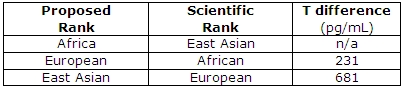 Which, of course, goes against a ton of HBD theory, that is, if testosterone did what HBDers believed it does (it doesn’t). This is what it comes down to: blacks don’t have higher levels of testosterone than whites and testosterone doesn’t cause aggression nor prostate cancer so even if this relationship was in the direction that Rushton et al assert then it still wouldn’t cause any of the explanatory variables they discuss.
Last year Lee Ellis published a paper outlining his ENA theory (Ellis, 2017). I responded to the paper and pointed out what he got right and wrong. He discussed strength (blacks aren’t stronger than whites due to body type and physiology, but excel in other areas); circulating testosterone, umbilical cord testosterone exposure; bone density and crime; penis size, race, and crime (Rushton’s 1997 claims on penis size don’t ‘size up’ to the literature as I’ve shown two times); prostate-specific antigens, race, and prostate cancer; CAG repeats; intelligence and education and ‘intelligence’; and prenatal androgen exposure. His theory has large holes and doesn’t line up in some places, as he himself admits in his paper. He, as expected, cites Ross et al (1986) favorably in his analysis.
Testosterone can’t explain all of these differences, no matter if it’s prenatal androgen exposure or not, and a difference of 2.5 to 4.9 percent between blacks and whites regarding testosterone (Richard et al, 2014) won’t explain differences in crime, aggression, nor prostate cancer.
Other authors have attempted to also implicate testosterone as a major player in a wide range of evolutionary theories (Lynn, 1990; Rushton, 1997; Rushton, 1999; Hart, 2007; Rushton and Templer, 2012; Ellis, 2017). However, as can be seen by digging into this literature, these claims are not true and therefore we can discard the conclusions come to by the aforementioned authors since they’re based on false premises (testosterone being a cause for aggression, crime, and prostate cancer and r/K meaning anything to human races, it doesn’t)
Finally, to conclude this section, does testosterone explain racial differences in crime? No, racial differences in testosterone, however small, cannot be responsible for the crime gap between blacks and whites.
Testosterone and aggression
Testosterone and aggression, are they linked? Can testosterone tell us anything about individual differences in aggressive behavior? Surprisingly for most, the answer seems to be a resounding no. One example is the castration of males. Does it completely take away the urge to act aggressively? No, it does not. What is shown when sex offenders are castrated is that their levels of aggression decrease, but importantly, they do not decrease to 0. Robert Sapolsky writes on page 96 of his book Behave: The Biology of Humans at Our Best and Worst (2017) (pg 96):
… the more experience a male has being aggressive prior to castration, the more aggression continues afterward. In other words, the less his being aggressive in the future requires testosterone and the more it’s a function of social learning.
He also writes (pg 96-97):
On to the next issue that lessens the primacy of testosterone: What do individual levels of testosterone have to do with aggression? If one person higher testosterone levels than another, or higher levels this week than last, are they more likely to be aggressive?
Initially the answer seemed to be yes, as studies showed correlation between individual differences in testosterone levels and levels of aggression. In a typical study, higher testosterone levels would be observed in those male prisoners with higher rates of aggression. But being aggressive stimulates testosterone secretion; no wonder more aggressive individuals had higher levels. Such studies couldn’t disentangle chickens and eggs.
Thus, a better question is whether differences in testosterone levels among individuals predict who will be aggressive. And among birds, fish, mammals, and especially other primates, the answer is generally no. This has been studied extensively in humans, examining a variety of measures of aggression. And the answer is clear. To quote British endocrinologist John Archer in a definitive 2006 review, “There is a weak and inconsistent association between testosterone levels and aggression in [human] adults, and . . . administration of testosterone to volunteers typically does not increase aggression.” The brain doesn’t pay attention to testosterone levels within the normal range.
[…]
Thus, aggression is typically more about social learning than about testosterone, differing levels of testosterone generally can’t explain why some individuals are more aggressive than others.
Sapolsky also has a 1997 book of essays on human biology titled The Trouble With Testosterone: And Other Essays On The Biology Of The Human Predicament and he has a really good essay on testosterone titled Will Boys Just Be Boys? where he writes (pg 113 to 114):
Okay, suppose you note a correlation between levels of aggression and levels of testosterone among these normal males. This could be because (a) testosterone elevates aggression; (b) aggression elevates testosterone secretion; (c) neither causes the other. There’s a huge bias to assume option a while b is the answer. Study after study has shown that when you examine testosterone when males are first placed together in the social group, testosterone levels predict nothing about who is going to be aggressive. The subsequent behavioral differences drive the hormonal changes, not the other way around.
Because of a strong bias among certain scientists, it has taken do forever to convince them of this point.
[…]
As I said, it takes a lot of work to cure people of that physics envy, and to see interindividual differences in testosterone levels don’t predict subsequent differences in aggressive behavior among individuals. Similarly, fluctuations in testosterone within one individual over time do not predict subsequent changes in the levels of aggression in the one individual—get a hiccup in testosterone secretion one afternoon and that’s not when the guy goes postal.
And on page 115 writes:
You need some testosterone around for normal levels of aggressive behavior—zero levels after castration and down it usually goes; quadruple it (the sort of range generated in weight lifters abusing anabolic steroids), and aggression typically increases. But anywhere from roughly 20 percent of normal to twice normal and it’s all the same; the brain can’t distinguish among this wide range of basically normal values.
Weird…almost as if there is a wide range of ‘normal’ that is ‘built in’ to our homeodynamic physiology…
So here’s the point: differences in testosterone between individuals tell us nothing about individual differences in aggressive behavior; castration and replacement seems to show that, however broadly, testosterone is related to aggression “But that turns out to not be true either, and the implications of this are lost on most people the first thirty times you tell them about it. Which is why you’d better tell them about it thirty-one times, because it’s the most important part of this piece” (Sapolsky, 1997: 115).
Later in the essay, Sapolsky discusses a discusses 5 monkeys that were given time to form a hierarchy of 1 through 5. Number 3 can ‘throw his weight’ around with 4 and 5 but treads carefully around 1 and 2. He then states to take the third-ranking monkey and inject him with a ton of testosterone, and that when you check the behavioral data that he’d then be participating in more aggressive actions than before which would imply that the exogenous testosterone causes participation in more aggressive behavior. But it’s way more nuanced than that.
So even though small fluctuations in the levels of the hormone don’t seem to matter much, testosterone still causes aggression. But that would be wrong. Check out number 3 more closely. Is he now raining aggression and terror on any and all in the group, frothing in an androgenic glaze of indiscriminate violence. Not at all. He’s still judiciously kowtowing to numbers 1 and 2 but has simply become a total bastard to number 4 and 5. This is critical: testosterone isn’t causing aggression, it’s exaggerating the aggression that’s already there.
The correlation between testosterone and aggression is between .08 and .14 (Book, Starzyk, and Quinsey, 2001; Archer, Graham-Kevan, and Davies, 2005; Book and Quinsey, 2005). Therefore, along with all of the other evidence provided in this article, it seems that testosterone and aggression have a weak positive correlation, which buttresses the point that aggression concurrent increases in testosterone.
Sapolsky then goes on to discuss the amygdala’s role in fear processing. The amygdala has its influence on aggressive behavior through the stria terminalis, which is a bunch of neuronal connections. How the amygdala influences aggression is simple: bursts of electrical excitation called action potentials go up and down the stria terminalis which changes the hypothalamus. You can then inject testosterone right into the brain and will it cause the same action potentials that surge down the stria terminalis? No, it does not turn on the pathway at all. This only occurs only if the amygdala is already sending aggression-provoking action potentials down the stria terminalis with testosterone increasing the rate of action potentials you’re shortening the rest time between them. So it doesn’t turn on this pathway, it exaggerates the preexisting pattern, which is to say, it’s exaggerating the response to environmental triggers of what caused the amygdala to get excited in the first place.
He ends this essay writing (pg 119):
Testosterone is never going to tell us much about the suburban teenager who, in his after-school chess club, has developed a particularly aggressive style with his bishops. And it certainly isn’t going to tell us much about the teenager in some inner-city hellhole who has taken to mugging people. “Testosterone equals aggression” is inadequate for those who would offer a simple solution to the violent male—just decrease levels of those pesky steroids. And “testosterone equals aggression” is certainly inadequate for those who would offer a simple excuse: Boys will be boys and certain things in nature are inevitable. Violence is more complex than a single hormone. This is endocrinology for the bleeding heart liberal—our behavioral biology is usually meaningless outside of the context of social factors and the environment in which it occurs.
Injecting individuals with supraphysiological doses of testosterone as high as 200 and 600 mg per week does not cause heightened anger or aggression (Tricker et al, 1996; O’Connor et, 2002). This, too, is a large blow for the testosterone-induces-aggression hypothesis. Because aggressive behavior heightens testosterone, testosterone doesn’t heighten aggressive behavior. (This is the causality that has been looked for, and here it is. The causality is not in the other direction.) This tells us that we need to be put into situations for our aggression to rise and along with it, testosterone. I don’t even see how people could think that testosterone could cause aggression. It’s obvious that the environmental trigger needs to be there first in order for the body’s physiology to begin testosterone production in order to prepare for the stimulus that caused the heightened testosterone production. Once the trigger occurs, then it can and does stay heightened, especially in areas where dominance contests would be more likely to occur, which would be low-income areas (Mazur, 2006, 2016).
(Also read my response to Batrinos, 2012, my musings on testosterone and race, and my responses to Robert Lindsay and Sean Last.)
Lastly, one thing that gets on my nerves that people point to to attempt to show that testosterone and its derivatives cause violence, aggression etc is the myth of “roid rage” which is when an individual objects himself with testosterone, anabolic steroids or another banned substance, and then the individual becomes more aggressive as a result of more free-flowing testosterone in their bloodstream.
The problem here is that people believe what they hear on the media about steroids and testosterone, and they’re largely not true. One large analysis was done to see the effects of steroids and other illicit drug use on behavior, and what was found was that after controlling for other substance use “Our results suggest that it was not lifetime steroid use per se, but rather co-occurrring polysubstance abuse that most parsimoniously explains the relatively strong association of steroid use and interpersonal violence” (Lundholm et al, 2015). So after controlling for other drugs used, men who use steroids do not go to prison and be convicted of violence after other polysubstance use was controlled for, implying that is what’s driving interpersonal violence, not the substance abuse of steroids.
Conclusion
Numerous myths about testosterone have been propagated over the decades, which are still believed in the new millennium despite numerous other studies and arguments to the contrary. As can be seen, the myths that people believe about testosterone are easily debunked. Numerous papers (with better methodology than Ross et al) attest to the fact that testosterone levels aren’t as high as was believed decades ago between the races. Diet can explain a lot of the variation, especially vitamin D intake. Injecting men with supraphysiological doses of testosterone does not heighten anger nor aggression. It does not even heighten prostate cancer severity.
Racial differences in testosterone are also not as high as people would like to believe, there is even an opposite relationship with Asians having higher levels and whites having lower (which wouldn’t, on average, imply femininity) testosterone levels. So as can be seen, the attempted r/K explanations from Rushton et al don’t work out here. They’re just outright wrong on testosterone, as I’ve been arguing for a long while on this blog.
Testosterone doesn’t cause aggression, aggression causes heightened testosterone. It can be seen from studies of men who have been castrated that the more crime they committed before castration, the more crime they will commit after which implies a large effect of social learning on violent behavior. Either way, the alarmist attitudes of people regarding testosterone, as I have argued, are not needed because they’re largely myths.
Responding to Criticisms on IQ
2250 words
My articles get posted on the Reddit board /r/hbd and, of course, people don’t like what I write about IQ. I get accused of reading ‘Richardson n=34 studies’ even though that was literally one citation in a 32 page paper that does not affect his overall argument. (I will be responding to Kirkegaard and UnsilencedSci in separate articles.) I’ll use this time to respond to criticisms from the Reddit board.
He’s peddling BS, say this:
“But as Burt and his associates have clearly demonstrated, teachers’ subjective assessments afford even more reliable predictors.”
Well, no, teachers are in fact remarkably poor at predicting student’s success in life. Simple formulas based on school grades predict LIFE success better than teachers, notwithstanding the IQ tests.
You’re incorrect. As I stated in my response to The Alternative Hypothesis, the correlation between teacher’s judgement and student achievement is .66. “The median correlation, 0.66, suggests a moderate to strong correspondence between teacher judgements and student achievement” (Hoge and Coladarci, 1989: 303). This is a higher correlation than what was found in the ‘validation studies’ from. Hunter and Schmidt.
He cherry-picks a few bad studies and ignores entire bodies of evidence with sweeping statements like this:
“This, of course, goes back to our good friend test construction. ”
Test construction is WHOLLY IRRELEVANT. It’s like saying: “well, you know, the ether might be real because Michelson-Morley experiment has been constructed this way”. Well no, it does not matter how MM experiment has been constructed as long as it tests for correct principles. Both IQ and MM have predictive power and it has nothing to do with “marvelling”, it has to do whether the test, regardless of its construction, can effectively predict outcomes or not.
This is a horrible example. You’re comparing the presuppositions of the test constructors who have in their mind who is or is not intelligent and then construct the test to confirm those preconceived notions to an experiment that was used to find the presence and properties of aether? Surely you can think of a better analogy because this is not it.
More BS: “Though a lot of IQ test questions are general knowledge questions, so how is that testing anything innate if you’ve first got to learn the material, and if you have not you’ll score lower?”
Of course the IQ tests do NOT test much of general knowledge. Out of 12 tests in WAIS only 2 deal with general knowledge.
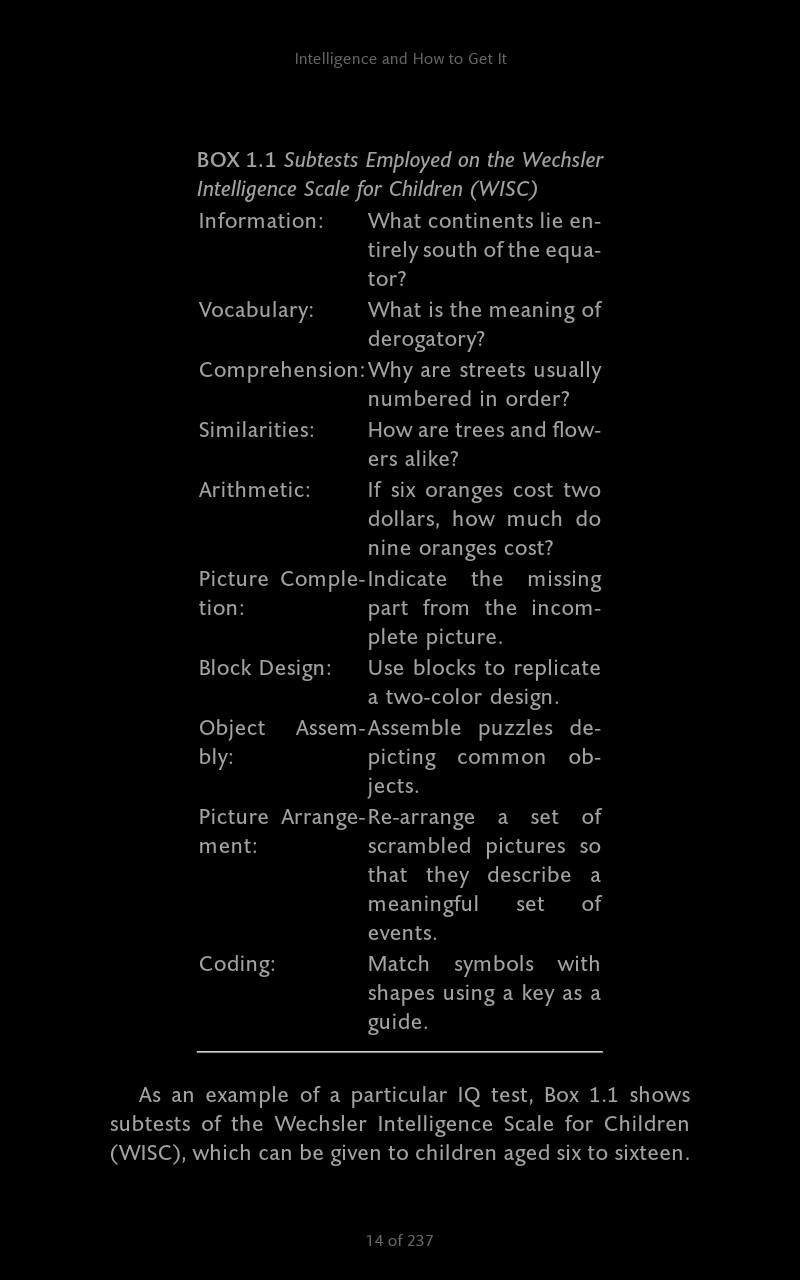
The above screenshot is from Nisbett (2012: 14) (though it’s the WISC, not WAIS they’re similar, all IQ tests go through item analysis, tossing items that don’t conform to the test constructors’ presuppositions).
Either way, our friend test construction makes an appearance here, too. This is how these tests are made and they are made to conform to the constructor’s presuppositions. The WISC and WAIS have similar subtests, either way. Test anxiety, furthermore, leads to a lessened performance on the block design and picture arrangement subtests (Hopko et al, 2005) and moderate to severe stress, furthermore, is related to social class and IQ test performance. Stress affects the growth of the hippocampus and PFC (prefrontal cortex) (Davidson and McEwing, 2012) so does it seem like an ‘intellectual’ thing here? Furthermore, all tests and batteries are tried out on a sample of children, with items not contributing to normality being tossed out, therefore ‘item analysis’ forces what we ‘see’ regarding IQ tests.
Even the great Jensen said in his 1980 book Bias in Mental Testing (pg 71):
It is claimed that the psychometrist can make up a test that will yield any type of score distribution he pleases. This is roughly true, but some types of distributions are easier to obtain than others.
This holds for tbe WAIS, WISC, the Raven, any type of IQ test. This shows how arbitrary the ‘item selection’ is. No matter what type of ‘IQ test’ you attempt to use to say ‘It does test “intelligence” (whatever that is)!!’ the reality of test construction and constructing tests to fit presuppositions and distributions cannot be ran away from.
The other popular test, Raven’s Progressive Matrices does not test for general knowledge at all.
This is a huge misconception. People think that just because there are no ‘general knowledge questions’ or anything verbal regarding the Matrices then it must test an innate power, thus mysterious ‘g’. However, this is wrong and he clearly doesn’t keep up with recent data:
Reading was the greatest predictor of performance Raven’s, despite controlling for age and sex. Attendance was so strongly related with Raven’s performance [school attendance was used as a proxy for motivation]. These findings suggest that reading, or pattern recognition, could be fundamentally affecting the way an individual problem solves or learns to learn, and is somehow tapping into ‘g’. Presumably the only way to learn to read is through schooling. It is, therefore, essential that children are exposed to formal education, have the mother to go/stay in school, and are exposed to consistent, quality training in order to develop the skills associated with your performance. (pg 83) Variable Education Exposure and Cognitive Task Performance Among the Tsimane, Forager- Horticulturalists.
Furthermore, according to Richardson (2002): “Performance on the Raven’s test, in other words, is a question not of inducing ‘rules’ from meaningless symbols, in a totally abstract fashion, but of recruiting ones that are already rooted in the activities of some cultures rather than others.”
The assumption that the Raven is ‘culture free’ because it’s ‘just shapes and rote memory’ is clearly incorrect. James Thompson even said to me that Linda Gottfredson said that people only think the Raven is a ‘test of pure g’ because Jensen said it, which is not true.
This is completely wrong in so many ways. No understanding of normalization. Suggestion that missing heritability is discovering environmentally. I think a distorted view of the Flynn Effect. I’ll just stick to some main points.
I didn’t imply a thing about missing heritability. I only cited the article by Evan Charney to show how populations become stratified.
RR: There is no construct validity to IQ tests
First, let’s go through the basics. All IQ tests measure general intelligence (g), the positive manifold underlying every single measure of cognitive ability. This was first observed over a century ago and has been replicated across hundreds of studies since. Non-g intelligences do not exist, so for all intents and purposes it is what we define as intelligence. It is not ‘mysterious’
Thanks for the history lesson. 1) we don’t know what ‘g’ is. (I’ve argued that it’s not physiological.) So ‘intelligence’ is defined as ‘g’ yet which we don’t know what ‘g’ is. His statement here is pretty much literally ‘intelligence is what IQ tests test’.
It would be correct to say that the exact biological mechanisms aren’t known. But as with Gould’s “reification” argument, this does not actually invalidate the phenomenon. As Jensen put it, “what Gould has mistaken for “reification” is neither more nor less than the common practice in every science of hypothesizing explanatory models or theories to account for the observed relationships within a given domain.” Poor analogies to white blood cells and breathalyzer won’t change this.
It’s not a ‘poor analogy’ at all. I’ve since expanded on the construct validity argument with more examples of other construct valid tests like showing how the breathalyzer is construct valid and how white blood cell count is a proxy for disease. They have construct validity, IQ tests do not.
RR: I said that I recall Linda Gottfredson saying that people say that Ravens is culture-fair only because Jensen said it
This has always been said in the context of native, English speaking Americans. For example it was statement #5 within Mainstream Science on Intelligence. Jensen’s research has demonstrated this. The usage of Kuwait and hunter gatherers is subsequently irrelevant.
Point 5 on the Mainstream Science on Intelligence memo is “Intelligence tests are not culturally biased against American blacks or other native-born, English-speaking peoples in the U.S. Rather, IQ scores predict equally accurately for all such Americans, regardless of race and social class. Individuals who do not understand English well can be given either a nonverbal test or one in their native language.”
This is very vague. Richardson (2002) has noted how different social classes are differentially prepared for IQ test items:
I shall argue that the basic source of variation in IQ test scores is not entire (or even mainly) cognitive, and what is cognitive is not general or unitary. It arises from a nexus or sociocognitive-affective factors determining individuals: relative preparedness for the demands of the IQ test.
The fact of the matter is, all social classes aren’t prepared in the same way to take the IQ test and if you read the paper you’d see that.
RR: IQ test validity
I’ll keep this short. There exist no predictors stronger than g across any meaningful measures of success. Not education, grades, upbringing, you name it.
Yes there are. Teacher assessment which has a higher correlation than the correlation between ‘IQ’ and job performance.
RR: Another problem with IQ test construction is the assumption that it increases with age and levels off after puberty.
The very first and most heavily researched behavioral trait’s heritability has been intelligence. Only through sheer ignorance could the term “assumption” describe findings from over a century of inquiry.
Yes the term ‘assumption’ was correct. You do realize that, of course, the increase in IQ heritability is, again, due to test construction? You can also build that into the test as well, by putting more advanced questions, say high school questions for a 12 year old, and heritability would seem to increase due to just how the test was constructed.
Finally, IanTichszy says:
That article is thoroughly silly.
First, the IQ tests predict real world-performance just fine: http://thealternativehypothesis.org/index.php/2016/04/15/the-validity-of-iq/
I just responded to this article this week. They only ‘predicts real-world performance just fine’ because they’re constructed to and even then, high-achieving children in achievement rarely become high achieving adults whereas low-achieving adults tend to become successful adults. There are numerous problems with TAH’s article which I’ve already covered.
That is the important thing, not just correlation with blood pressure or something biological. Had g not predicted real-world performance from educational achievement to job performance with very high reliability, it would be useless, but it does predict those.
Test construction. You can’t get past that by saying ‘it does predict’ because it only predicts because it’s constructed to (I’d call it ‘post-dict’).
Second, on Raven’s Progressive Matrices test: the argument “well Jensen just said so” is plain silly. If RPM is culturally loaded, a question: just what culture is represented on those charts? You can’t reasonably say that. Orangutans are able to solve simplified versions of RPM, apparently they do not have a problem with cultural loading. Just look at the tests yourself.
Of course it’s silly to accept that the Raven is culture free and tests ‘g’ the best just ‘because Jensen said so’. The culture loading of the Raven is known, there is a ‘hidden structure’ in them. Even the constructors of the Raven have noted this where they state that they transposed the items to read from left to right, not right to left which is a tacit admission of cultural loading. “The reason that some people fail such problems is exactly the same reason some people fail IQ test items like the Raven Matrices tests… It simply is not the way the human cognitive system is used to being engaged” (Richardson, 2017: 280).
Furthermore, when items are familiar to all groups, even young children are capable of complex analogical reasoning. IQ tests “test for the learned factual knowledge and cognitive habits more prominent in some social classes than in others. That is, IQ scores are measures of specific learning, as well as self-confidence and so on, not general intelligence“ (Richardson, 2017: 192).
Another piece of misinformation: claiming that IQs are not normally distributed. Well, we do not really know the underlying distribution, that’s the problem, only the rank order of questions by difficulty, because we do not have absolute measure of intelligence. Still, the claim that SOME human mental traits, other than IQ, do not have normal distribution, in no way impacts the validity of IQ distribution as tests found it and projected onto mean 100 and standard dev 15 since it reflects real world performance well.
Physiological traits important for survival are not normally distributed (of course it is assumed that IQ both tests innate physiological differences and is important for survival so if it were physiological it wouldn’t be normally distributed either since traits important for survival have low heritabilities). It predicts real world performance well because, see above and my other articles on thus matter.
If you know even the basic facts about IQ, it’s clear that this article has been written in bad faith, just for sake of being contrarian regardless of the truth content or for self-promotion.
No, people don’t know the basic facts of IQ (or its construction). My article isn’t written in bad faith nor is it being contrarian regardless of the truth content or for self-promotion. I can, clearly, address criticisms to my writing.
In the future, if anyone has any problems with what I write then please leave a comment here on the blog at the relevant article. Commenting on Reddit on the article that gets posted there is no good because I probably won’t see it.
The Native American Genome and Dubious Interpretations
1100 words
A recent paper was published on the origins of Native Americans titled Terminal Pleistocene Alaskan genome reveals first founding population of Native Americans (Moreno-Mayar et al, 2018). An infant genome was studied and it was found that group of people the infant belonged to was similar to modern Native Americans but not a direct ancestor. The infant’s group and modern Native Americans share the same common ancestors, however. This, of course, supports the hypothesis that Native Americans are descended from Asian migrants.
The infant is also related to both North and South Natives, which implies they’re descended from a single migration. (Though I am aware of a hypothesis that states that there were three waves of migration into the Americas from Beringia, along with back migrations from South America back into Asia.)
Moreno-Mayar et al (2018) write in the abstract: “Our findings further suggest that the far-northern North American presence of northern Native Americans is from a back migration that replaced or absorbed the initial founding population of Ancient Beringians.” And they conclude (pg 5):
The USR1 results provide direct genomic evidence that all Native Americans can be traced back to the same source population from a single Late Pleistocene founding event. Descendants of that population were present in eastern Beringia until at least 11.5 ka. By that time, however, a separate branch of Native Americans had already established itself in unglaciated North America, and diverged into the two basal groups that ultimately became the ancestors of most of the indigenous populations of the Americas.
This is a highly interesting paper which shows that, as we’ve known for decades, that the ancestors of the Native Americans crossed the Bering Land Bridge around 11 kya. Though, my reason for writing this article is not for this very interesting paper, but the ‘conclusions’ that people that people are drawing from it.
Dubious ‘interpretations’
Of course, whenever a study like this gets published you get a whole slew of people who read the popular articles on the matter and don’t read the actual journal article. The problem here is that some people took the chance to attempt to say that this paper showed that the origins of Man were in Europe, not Africa as can be seen in the tweet below.
Black Pigeon Speaks, YouTuber, purportedly shows a quotation from the Nature article which said:
“…represent a growing body of evidence being discovered across the world that suggests the origins of the human race may have been Europe and not Africa as once believed.”
So I read the paper, read it again and even cntrl f’d it and didn’t see the phrase. So where did the phrase come from?
I did some digging and I found the source for the quote, which, of course, was not in the Nature article. The quote in question comes from an article titled Scientists discover DNA proving original Native Americans were White. Oh, wow. Isn’t that interesting? Maybe he read a different paper then I did.
The author stated that the infant was “more closely related to modern white Europeans“, though of course this too wasn’t stated anywhere in the article. He also quoted an evolutionary biologist who stated “This is a new population of Native Americans — the white Native American.” Wow, this is interesting. Now let’s look at what else this author writes:
Working with scientists at the University of Alaska and elsewhere, Willerslev compared the genetic makeup of the baby, named Xach’itee’aanenh t’eede gaay or “sunrise child-girl” by the local community, with genomes from other ancient and modern people. They found that nearly half of the girls DNA came from the ancient North Europeans who lived in what is no Scandinavia. The rest of her genetic makeup was a roughly even mixed of DNA now carried by northern and southern Native Americans. Using evolutionary models, the researchers showed the ancestors of the first Native Americans started to emerge as a distinct population about 35,000 years ago.
Isn’t that weird? This is nowhere in the original article. So I did some digging and what do I find? I found that the author of this article literally plagiarized almost word for word from another article from The Guardian!
Working with scientists at the University of Alaska and elsewhere, Willerslev compared the genetic makeup of the baby, named Xach’itee’aanenh t’eede gaay or “sunrise child-girl” by the local community, with genomes from other ancient and modern people. They found that nearly half of the girls DNA came from the ancient north Eurasians who lived in what is now Siberia. The rest of her genetic makeup was a roughly even mixed of DNA now carried by northern and southern Native Americans.
Using evolutionary models, the researchers showed the ancestors of the first Native Americans started to emerge as a distinct population about 35,000 years ago.
This is not only an example of straight up plagiarism, the author of the other article literally only switched “Siberia” with “Scandinavia” and “ancient north Eurasians” with “ancient North Europeans”. Ancient north Eurasians are NOT WHITE! Where do you gather this from?! There is NO INDICATION that they were ‘ancient north Europeans!
In sum, if you ever see articles like this that purport to show that Native Americans were white European and that it supposedly calls the OoA model into question, always ALWAYS check the claims and don’t fall for plagiarist bullshit. This is truly incredible that not only did the author literally copy and past a full article, he also snipped a few words to fit the narrative he was pushing! I will be notifying the author of the Guardian article of this plagiarism. You can check it out yourself, read the first article cited above then read the Guardian article. Do people really think they can get away with literally plagiarizing and article like that word for word?
This article is on a whole other level compared to the claims that modern Man began in Europe and that a few teeth upend the OoA model. This guy didn’t even read the paper, it seems like he read the Guardian article and then copy and pasted it and changed a few words for his own ‘gain’ to ‘show’ that the first Native Americans were white. There is no way that one can interpret this paper in this manner if they’ve truly read and understood it. Always, always read original journal articles and, if you must read popular science articles then read it from a reputable website, not kooky websites with an agenda to push who literally plagiarize other people’s work. You can tell who’s gullible and who’s not just by what they say about new papers that can possibly be misinterpreted.
People Should Stop Thinking IQ Measures ‘Intelligence’: A Response to Grey Enlightenment
1700 words
I’ve had a few discussions with Grey Enlightenment on this blog, regarding construct validity. He has now published a response piece on his blog to the arguments put forth in my article, though unfortunately it’s kind of sophomoric.
People Should Stop Saying Silly Things About IQ
He calls himself a ‘race realist’yet echoes the same arguments used by those who oppose such realism.
1) One doesn’t have to believe in racial differences in mental traits to be a race realist as I have argued twice before in my articles You Don’t Need Genes to Delineate Race and Differing Race Concepts and the Existence of Race: Biologically Scientific Definitions of Race. It’s perfectly possible to be a race realist—believe in the reality of race—without believing there are differences in mental traits—‘intelligence’, for instance (whatever that is).
2) That I strongly question the usefulness and utility of IQ due to its construction doesn’t mean that I’m not a race realist.
3) I’ve even put forth an analogous argument on an ‘athletic abilities test’ where I gave a hypothetical argument where a test was constructed that wasn’t a true test of athletic ability and that it was constructed on the basis of who is or is not athletic, per the constructors’ presuppositions. In this hypothetical scenario, am I really denying that athletic differences exist between races and individuals? No. I’d just be pointing out flaws in a shitty test.
Just because I question the usefulness and (nonexistent) validity of IQ doesn’t mean that I’m not a race realist, nor that I believe groups or individuals are ‘the same’ in ‘intelligence’ (whatever that may be; which seems to be a common strawman for those who don’t bow to the alter of IQ).
Blood alcohol concentration is very specific and simple; human intelligence by comparison is not . Intelligence is polygenic (as opposed to just a single compound) and is not as easy to delineate, as, say, the concentration of ethanol in the blood.
It’s irrelevant how ‘simple’ blood alcohol concentration is. The point of bringing it up is that it’s a construct valid measure which is then calibrated against an accepted and theoretical biological model. The additive gene assumption is false, that is, genes being independent of the environment giving ‘positive charges’ as Robert Plomin believes.
He says IQ tests are biased because they require some implicit understanding if social constructs, like what 1+1 equals or how to read a word problem, but how is a test that is as simple as digit recall or pattern recognition possibly a social construct.
What is it that allows individuals to be better than others on digit recall or pattern recognition (what kind of pattern recognition?)? The point of my 1+1 statement is that it is construct valid regarding one’s knowledge of that math problem whereas for the word problem, it was a quoted example showing how if the answer isn’t worded correctly it could be indirectly testing something else.
He’s invoking a postmodernist argument that IQ tests do not measure an innate, intrinsic intelligence, but rather a subjective one that is construct of the test creators and society.
I could do without the buzzword (postmodernist) though he is correct. IQ tests test what their constructors assume is ‘intelligence’ and through item analysis they get the results they want, as I’ve shown previously.
If IQ tests are biased, how is then [sic] that Asians and Jews are able to score better than Whiles [sic] on such tests; surely, they should be at a disadvantage due to implicit biases of a test that is created by Whites.
If I had a dollar for every time I’ve heard this ‘argument’… We can just go back to the test construction argument and we can construct a test that, say, blacks and women score higher than whites and men respectively. How well would that ‘predict’ anything then, if the test constructors had a different set of assumptions?
IQ tests aren’t ‘biased’, as much as lower class people aren’t as prepared to take these tests as people in higher classes (which East Asians and Jews are in). IQ tests score enculturation to the middle class, even the Flynn effect can be explained by the rise in the middle class, lending credence to the aforementioned hypothesis (Richardson, 2002).
Regarding the common objection by the left that IQ tests don’t measures [sic] anything useful or that IQ isn’t correlated with success at life, on a practical level, how else can one explain obvious differences in learning speed, income or educational attainment among otherwise homogeneous groups? Why is it in class some kids learn so much faster than others, and many of these fast-learners go to university and get good-paying jobs, while those who learn slowly tend to not go to college, or if they do, drop out and are either permanently unemployed or stuck in low-paying, low-status jobs? In a family with many siblings, is it not evident that some children are smarter than others (and because it’s a shared environment, environmental differences cannot be blamed).
1) I’m not a leftist.
2) I never stated that IQ tests don’t correlate with success in life. They correlate with success in life since achievement tests and IQ tests are different versions of the same test. This, of course, goes back to our good friend test construction. IQ is correlated with income at .4, meaning 16 percent of the variance is explained by IQ and since you shouldn’t attribute causation to correlations (lest you commit the cum hoc, ergo propter hoc fallacy), we cannot even truthfully say that 16 percent of the variation between individuals is due to IQ.
3) Pupils who do well in school tend to not be high-achieving adults whereas children who were not good pupils ended up having good success in life (see the paper Natural Learning in Higher Education by Armstrong, 2011). Furthermore, the role of test motivation could account for low-paying, low-status jobs (Duckworth et al, 2011; though I disagree with their consulting that IQ tests test ‘intelligence’ [whatever that is] they show good evidence that in low scorers, incentives can raise scores, implying that they weren’t as motivated as the high scorers). Lastly, do individuals within the same family experience the same environment the same or differently?
As teachers can attest, some students are just ‘slow’ and cannot grasp the material despite many repetitions; others learn much more quickly.
This is evidence of the uselessness of IQ tests, for if teachers can accurately predict student success then why should we waste time and money to give a kid some test that supposedly ‘predicts’ his success in life (which as I’ve argued is self-fulfilling)? Richardson (1998: 117) quotes Layzer (1973: 238) who writes:
Admirers of IQ tests usually lay great stress on their predictive power. They marvel that a one-hour test administered to a child at the age of eight can predict with considerable accuracy whether he will finish college. But as Burt and his associates have clearly demonstrated, teachers’ subjective assessments afford even more reliable predictors. This is almost a truism.
Because IQ tests test for the skills that are required for learning, such as short term memory, someone who has a low IQ would find learning difficult and be unable to make correct inferences from existing knowledge.
Right, IQ tests test for skills that are required for learning. Though a lot of IQ test questions are general knowledge questions, so how is that testing anything innate if you’ve first got to learn the material, and if you have not you’ll score lower? Richardson (2002) discusses how people in lower classes are differentially prepared for IQ tests which then affects scores, along with psycho-social factors that do so as well. It’s more complicated than ‘low IQ > X’.
All of these sub-tests are positively correlated due to an underlying factor –called g–that accounts for 40-50% of the variation between IQ scores. This suggests that IQ tests measure a certain factor that every individual is endowed with, rather than just being a haphazard collection of questions that have nothing to do with each other. Race realists’ objection is that g is meaningless, but the literature disagrees “… The practical validity of g as a predictor of educational, economic, and social outcomes is more far-ranging and universal than that of any other known psychological variable. The validity of g is greater the complexity of the task.[57][58]”
I’ve covered this before. It correlates with the aforementioned variables due to test construction. It’s really that easy. If the test constructors have a different set of presuppositions before the test is constructed then completely different outcomes can be had just by constricting a different test.
Then what about ‘g’? What would one say then? Nevertheless, I’ve heavily criticized ‘g’ and its supposed physiology, and if physiologists did study this ‘variable’ and if it truly did exist, 1) it would not be rank ordered because physiologists don’t rank order traits, 2) they don’t assume normal variations, they don’t estimate heritability and attempt to untangle genes from environment, 3) they don’t assume that normal variation is related to genetic variation (except in rare cases, like down syndrome, for instance), and 4) nor do they assume within the normal range of physiological differences that a higher level is ‘better’ than a lower. My go-to example here is BMR (basal metabolic rate). It has a similar heritability range as IQ (.4 to .8; which is most likely overestimated due to the use of the flawed twin method, just like the heritability of IQ), so is one with a higher BMR somehow ‘better’ than one with a lower BMR? This is what logically follows from assuming that ‘g’ is physiological and all of the assumptions that come along with it. It doesn’t make logical, physiological sense! (Jensen, 1998: 92 further notes that “g tells us little if anything about its contents“.)
All in all, I thank Grey Enlightenment for his response to my article, though it leaves a lot to be desired and if he responds to this article then I hope that it’s much more nuanced. IQ has no construct validity, and as I’ve shown, the attempts at giving it validity are circular, and done by correlating it with other IQ tests and achievement tests. That’s not construct validity.
Race/Ethnicity and the Microbiome
1800 words
The microbiome is the number and types of different microorganisms and viruses in the human body. Racial differences are seen everywhere, most notably in the phenotype and morphology. Though, of course, there are unseen racial differences that then effect bodily processes of different races and ethnic groups. The microbiome is one such difference, which is highly heritable (Goodrich et al, 2014; Beaumont et al, 2016; Hall, Tolonen, and Xavier, 2017) (though they use the highly flawed twin method, so heritabilities are most likely substantially lower). They also show that certain genetic variants predispose individuals to microbial dysbiosis. However, diet, antibiotics and birth mode can also influence the diversity of microbiota in your biome (Conlon and Bird, 2015; Bokulich et al, 2017; Singh et al, 2017) and so while the heritability of the microbiome is important (which is probably inflated due to the twin method), diet can and does change the diversity of the biome.
It used to be thought that our bodies contained 90 percent bacteria and only 10 percent human cells (Collen, 2014), however that has been recently debunked and the ratio is 1.3 to 1, human to microbe (Sender, Fuchs, and Milo, 2016). (Collen’s book is still an outstanding introduction to this subject despite the title of her book being incorrect.) Though the 10:1 microbe/human cell dogma is debunked, in no way does that lessen the importance of the microbiome regarding health, disease and longevity.
Lloyd-Price, Abu-Ali, and Huttenhower (2016) review definitions for the ‘healthy human microbiome’ writing “several population-scale studies have documented the ranges and diversity of both taxonomic compositions and functional potentials normally observed in the microbiomes of healthy populations, along with possible driving factors such as geography, diet, and lifestyle.” Studies comparing the biomes of North and South America, Europe and Africa, Korea and Japan, and urban and rural communities in Russia and China have identified numerous different associations that are related to differences in the microbiome between continents that include (but are not limited to) diet, genetics, lifestyle, geography, and early life exposures though none of these factors have been shown to be directly causal regarding geographic microbiome diversity.
Gupta, Paul, and Dutta (2017) question the case of a universal definition of a ‘healthy microbiome’ since it varies by geographic ancestry. Of course, ancestry and geographic location influence culture which influences diet which influences microbiome diversity between populations. This, of course, makes sense. why have a universal healthy microbiome with a reference man that doesn’t reflect the diversity of both the individual and group differences in the microbiome? This will better help different populations with different microbiomes lose weight and better manage diseases in certain populations.
The microbiome of athletes also differs, too. Athletes had enhanced microbiome diversity when compared to non-athletes (Clarke et al, 2016). In a further follow-up study, it was found that microbial diversity correlated with both protein consumption and creatine kinase levels in the body (Clarke et al, 2017) are proxies for exercise, and since they’re all associations, causality remains to be untangled. Nevertheless, these papers are good evidence that both lifestyle and diet leads to changes in the microbiome.
Fortenberry (2013: 165) notes that American racial and ethnic classifications are “social and political in origin and represent little meaningful biologic basis of between-group racial/ ethnic diversity“. It is also known that eating habits, differing lifestyles and metabolic levels also influence the diversity of the microbiome in the three ‘races’* studied (Chen et al, 2016), while deep sequencing of oral microbiota has the ability to classify “African Americans with a 100% sensitivity and 74% specificity and Caucasians with a 50% sensitivity and 91% specificity” (Mason et al, 2014). The infant microbiome, furthermore, is influenced by maternal diet and breastfeeding as well as the infant’s diet (Stearns et al, 2017). This is why differences in race/ethnicity call into question the term of ‘healthy human microbiota’ (Gupta, Paul, and Dutta, 2017). These differences in the microbiome also lead to increased risk for colorectal cancer in black Americans (Goyal et al, 2016; Kinross, 2017).
Further, the healthy vagina “contains one of the most remarkably structured microbial ecosystems, with at least five reproducible community types, or “community state types” (Lloyd-Price, Abu-Ali, and Huttenhower 2016). The diversity of the microbiome in the vagina also varies by race. It was found that 80 percent of Asian women and 90 percent of white women harbored a microbiota species named Lactobacillus, whereas only about 60 percent of ‘Hispanics’ and blacks harbored this species. The pH level, too, varied by race with blacks and ‘Hispanics’ averaging 4.7 and 5.0 and Asians and whites averaging 4.4 and 4.2. So, clearly, since Asians and whites have similar vaginal pH levels, then it is no surprise that they have similar levels of vaginal Lactobacillus, whereas blacks and ‘Hispanics’, with similar pH levels have similar vaginal levels of Lactobacillus.
White subjects also have more diverse species of microbiota than non-white subjects while also having a different microbiota structure (Chen et al, 2015). Caucasian ethnicity/race was also shown to have a lower overall microbiome diversity, but higher Bacteroidetes scores, while white babes also had lower scores of Proteobacteria than black Americans (Sordillo et al, 2017). This comes down to both diet and genetic factors (though causation remains to be untangled).
Differences in the skin microbiome also exist between the US population and South Americans (Blaser et al, 2013). They showed that Venezuelan Indians had a significantly different skin biome when compared to US populations from Colorado and New York, having more Propionibacterium than US residents. Regarding the skin microbiota in the Chinese, Leung, Wilkins, and Lee (2015) write “skin microbiomes within an individual is more similar than that of different co-habiting individuals, which is in turn more similar than individuals living in different households.” Skin microbiota also becomes similar in cohabitating couples (Ross, Doxey, and Neufeld, 2017) and even cohabitating family members and their dogs (Song et al, 2013; Cusco et al, 2017; Torres et al, 2017).
Differences between the East and West exist regarding chronic liver disease, which may come down to diet which may influence the microbiota and along with it, chronic liver disease. (Nakamoto and Schabl, 2016). The interplay between diet, the microbiome and disease is critical if we want to understand racial/ethnic differentials in disease acquisition/mortality, because the microbiome influences so many diseases (Cho and Blaser, 2012; Guinane and Cotter, 2013; Bull and Plummer, 2014; Shoemark and Allen, 2015; Zhang et al, 2015; Shreiner, Kao, and Young, 2016; Young, 2017).
The human microbiome has been called our ‘second genome’ (Zhu, Wang, and Li, 2010; Grice and Seger, 2012) with others calling it an ‘organ’ (Baquero and Nombela, 2012; Clarke et al, 2014; Brown and Hazen, 2015). This ‘organ’, our ‘second genome’ can also influence gene expression (Masotti, 2012; Maurice, Haiser, and Turnbaugh, 2013; Byrd and Seger, 2015) which could also have implications for racial differences in disease acquisition and mortality. This is why the study of the microbiome is so important; since the microbiome can up- and down-regulate gene expression—effectively, turning genes ‘on’ and ‘off’—then understanding the intricacies that influence the microbiome diversity along with the diet that one consumes will help us better understand racial differences in disease acquisition. Diet is a huge factor not only regarding obesity and diabetes differences within and between populations, but a ‘healthy microbiome’ also staves off obesity. This is important. The fact that the diversity of microbiota in our gut can effectively up- and down-regulate genes shows that we can, in effect, influence some of this ourselves by changing our diets, which would then, theoretically, lower disease acquisition and mortality once certain microbiome/diet/disease associations are untangled and shown to be causative.
Finally, the Hadza have some of the best-studied microbiota, and since they still largely live a hunter-gatherer lifestyle, this is an important look at what the diversity of microbiota may have looked like in our hunter-gatherer ancestors (Samuel et al, 2017). The fact that they noticed such diverse changes in the microbiome—some species effectively disappearing during the dry season and reappearing during the wet season—is good proof that what drives these changes in the diversity of the microbiota in the Hadza are seasonal changes in diet which are driven by the wet and dry seasons.
Gut microbiota may also influence our mood and behavior, and it would be interesting to see which types of microbiota differ between populations and how they would be associated with certain behaviors. The microbes are a part of the unconscious system which regulates behavior, which may have causal effects regarding cognition, behavioral patterns, and social interaction and stress management; this too makes up our ‘collective unconscious’ (Dinan et al, 2015). It is clear that the microbes in our gut influence our behavior, and it even may be possible to ‘shape our second genome’ (Foster, 2013). Endocrine and neurocrine pathways may also be involved in gut-microbiota-to-brain-signaling, which can then alter the composition of the microbiome and along with it behavior (Mayer, Tillisch, and Gupta, 2015). Gut microbiota also plays a role in the acquisition of eating disorders, and identifying the specific microbiotal profiles linked to eating disorders, why it occurs and what happens while the microbiome is out of whack is important in understanding our behavior, because the gut microbiome also influences our behavior to a great degree.
The debate on whether or not racial/ethnic differences in microbiome diversity differs due to ‘nature’ or ‘nurture’ (a false dichotomy in the view of developmental systems theory) remains to be settled (Gupta, Paul, and Dutta, 2017). However, like with all traits/variations in traits, it is due to a complex interaction of the developmental system in question along with how it interacts with its environment. Understanding these complex disease/gene/environment/microbiotal pathways will be a challenge, as will untangling direct causation and what role diet plays regarding the disease/microbiota/dysbiosis factor. As we better understand our ‘second genome’, our ‘other organ’, and individual differences in the genome and how those genomic differences interact with different environments, we will then be able to give better care to both races/ethnies along with individuals. Just like with race and medicine—although there is good correlative data—we should not jump to quick conclusions based on these studies on disease, diet, and microbiotal diversity.
The study of ethnic/racial/geographic/cultural/SES differences in the diversity of the microbiome and how it influences disease, behaviors and gene expression will be interesting to follow in the next couple of years. I think that there will be considerable ‘genetic’ (i.e., differences out of the womb; I am aware that untangling ‘genetic’ and ‘environmental’ in utero factors is hard, next to impossible) differences between populations regarding newborn children, and I am sure that even the microbiota will be found to influence our food choices in the seas of our obesogenic environments. The fact that our microbiota is changeable with diet means that, in effect, we can have small control over certain parts of our gene expression which may then have consequences for future generations of our offspring. Nevertheless, things such as that remain to be uncovered but I bet more interesting things never dreamed of will be found as we look into the hows and whys of both individual and populational differences in the microbiome.
IQ and Construct Validity
1550 words
The word ‘construct’ is defined as “an idea or theory containing various conceptual elements, typically one considered to be subjective and not based on empirical evidence.” Whereas the word ‘validity’ is defined as “the quality of being logically or factually sound; soundness or cogency.” Is there construct validity for IQ tests? Are IQ tests tested against an idea or theory containing various conceptual elements? No, they are not.
Cronbach and Meehl (1955) define construct validity, which they state is “involved whenever a test is to be interpreted as a measure of some attribute or quality which is not “operationally defined.”” Though, the construct validity for IQ tests has been fleeting to investigators. Why? Because there is no theory of individual IQ differences to test IQ tests on. It is even stated that “there is no accepted unit of measurement for constructs and even fairly well-known ones, such as IQ, are open to debate.” The ‘fairly well-known ones’ like IQ are ‘open to debate’ because no such validity exists. The only ‘validity’ that exists for IQ tests is correlations with other tests and attempted correlations with job performance, but I will show that that is not construct validity as is classicly defined.
Construct validity can be easily defined as the ability of a test to measure the concept or construct that it is intended to measure. We know two things about IQ tests: 1) they do not test ‘intelligence’ (but they supposedly do a ‘good enough job’ so that it does not matter) and 2) it does not even test the ‘construct’ that it is intended to measure. For example, the math problem ‘1+1’ is construct valid regarding one’s knowledge and application of that math problem. Construct validity can pretty much be summed up as the proof that it is measuring what the test intends…but where is this proof? It is non-existent.
Richardson (1998: 116) writes:
Psychometrists, in the absence of such theoretical description, simply reduce score differences, blindly to the hypothetical construct of ‘natural ability’. The absence of descriptive precision about those constructs has always made validity estimation difficult. Consequently the crucial construct validity is rarely mentioned in test manuals. Instead, test designers have sought other kinds of evidence about the valdity of their tests.
The validity of new tests is sometimes claimed when performances on them correlate with performances on other, previously accepted, and currently used, tests. This is usually called the criterion validity of tests. The Stanford-Binet and the WISC are often used as the ‘standards’ in this respect. Whereas it may be reassuring to know that the new test appears to be measuring the same thing as an old favourite, the assumption here is that (construct) validity has already been demonstrated in the criterion test.
Some may attempt to say that, for instance, biological construct validity for IQ tests may be ‘brain size’, since brain size is correlated with IQ at .4 (meaning 16 percent of the variance in IQ is explained by brain size). However, for this to be true, someone with a larger brain would always have to be ‘more intelligent’ (whatever that means; score higher on an IQ test) than someone with a smaller brain. This is not true, so therefore brain size is not and should not be used as a measure of construct validity. Nisbett et al (2012: 144) address this:
Overall brain size does not plausibly account for differences in aspects of intelligence because all areas of the brain are not equally important for cognitive functioning.
For example, breathalyzer tests are construct valid. There is a .93 correlation (test-retest) between 1 ml/kg bodyweight of ethanol in 20, healthy male subjects. Furthermore, obtaining BAC through gas chromatography of venous blood, the two readings were highly correlated at .94 and .95 (Landauer, 1972). Landauer (1972: 253) writes “the very high accuracy and validity of breath analysis as a correct estimate of the BAL is clearly shown.” Construct validity exists for ad-libitum taste tests of alcohol in the laboratory (Jones et al, 2016).
There is a casual connection between what one breathes into the breathalyzer and his BAC that comes out of the breathalyzer and how much he had to drink. For example, for a male at a bodyweight of 160 pounds, 4 drinks would have him at a BAC of .09, which would make him unfit to drive. (‘One drink’ being 12 oz of beer, 5 oz of wine, or 1.25 oz of 80 proof liquor.) He drinks more, his BAC reading goes up. Someone is more ‘intelligent’ (scores higher on an IQ test), then what? The correlations obtained from so-called ‘more intelligent people’, like glucose consumption, brain evoked potentials, reaction time, nerve conduction velocity, etc have never been shown to determine higher ‘ability’ to score higher on IQ tests. That, too, would not even be construct validation for IQ tests, since there needs to be a measure showing why person A scored higher than person B, which needs to hold one hundred percent of the time.
Another good example of the construct validity of an unseen construct is white blood cell count. White blood cell count was “associated with current smoking status and COPD severity, and a risk factor for poor lung function, and quality of life, especially in non-currently smoking COPD patients. The WBC count can be used, as an easily measurable COPD biomarker” (Koo et al, 2017). In fact, the PRISA II test has white blood cell count in it, which is a construct valid test. Even elevated white blood cell count strongly predicts all-cause and cardiovascular mortality (Johnson et al, 2005). It is also an independent risk factor for coronary artery disease (Twig et al, 2012).
A good example of tests supposedly testing one thing but testing another is found here:
As an example, think about a general knowledge test of basic algebra. If a test is designed to assess knowledge of facts concerning rate, time, distance, and their interrelationship with one another, but test questions are phrased in long and complex reading passages, then perhaps reading skills are inadvertently being measured instead of factual knowledge of basic algebra.
Numerous constructs have validity—but not IQ tests. It is assumed that they test ‘intelligence’ even though an operational definition of intelligence is hard to come by. This is important, as if there cannot be an agreement on what is being tested, how will there be construct validity for said construct in question?
Richardson (2002) writes that Detterman and Sternberg sent out a questionnaire to a group of theorists which was similar to another questionnaire sent out decades earlier to see if there was an agreement on what ‘intelligence’ is. Twenty-five attributes of intelligence were mentioned. Only 3 were mentioned by more than 25 percent of the respondents, with about half mentioning ‘higher level components’, one quarter mentioned ‘executive processes’ while 29 percent mentioned ‘that which is valued by culture’. About one-third of the attributes were mentioned by less than 10 percent of the respondents with 8 percent of them answering that intelligence is ‘the ability to learn’. So if there is hardly any consensus on what IQ tests measure or what ‘intelligence’ is, then construct validity for IQ seems to be very far in the distance, almost unseeable, because we cannot even define the word, nor actually test it with a test that’s not constructed to fit the constructors’ presupposed notions.
Now, explaining the non-existent validity of IQ tests is very simple: IQ tests are purported to measure ‘g’ (whatever that is) and individual differences in test scores supposedly reflect individual differences in ‘g’. However, we cannot say that it is differences in ‘g’ that cause differences in individual test scores since there is no agreed-upon model or description of ‘g’ (Richardson, 2017: 84). Richardson (2017: 84) writes:
In consequence, all claims about the validity of IQ tests have been based on the assumption that other criteria, such as social rank or educational or occupational acheivement, are also, in effect, measures of intelligence. So tests have been constructed to replicate such ranks, as we have seen. Unfortunately, the logic is then reversed to declare that IQ tests must be measures of intelligence, because they predict school acheivement or future occupational level. This is not proper scientific validation so much as a self-fulfilling ordinance.
Construct validity for IQ does not exist (Richardson and Norgate, 2015), unlike construct validity for breathalyzers (Landauer, 1972) or white blood cell count as a disease proxy (Wu et al, 2013; Shah et al, 2017). So, if construct validity is non-existent, then that means that there is no measure for how well IQ tests measure what it’s ‘purported to measure’, i.e., how ‘intelligent’ one is over another because 1) the definition of ‘intelligence’ is ill-defined and 2) IQ tests are not validated against agreed-upon biological models, though some attempts have been made, though the evidence is inconsistent (Richardson and Norgate, 2015). For there to be true validity, evidence cannot be inconsistent; it needs to measure what it purports to measure 100 percent of the time. IQ tests are not calibrated against biological models, but against correlations with other tests that ‘purport’ to measure ‘intelligence’.
(Note: No, I am not saying that everyone is equal in ‘intelligence’ (whatever that is), nor am I stating that everyone has the same exact capacity. As I pointed out last week, just because I point out flaws in tests, it does not mean that I think that people have ‘equal ability’, and my example of an ‘athletic abilities’ test last week is apt to show that pointing out flawed tests does not mean that I deny individual differences in a ‘thing’ (though athletic abilities tests are much better with no assumptions like IQ tests have.))
You Don’t Need Genes to Delineate Race
2100 words
Most race deniers say that race isn’t real because, as Lewontin (1972) and Rosenberg (2002) state, the within-group variation is larger than the between-group variation. Though, you can circumvent this claim by not even looking at genes/allele frequencies between races, you can show that race is real by looking at morphology, phenotype and geographic ancestry. This is one of Michael Hardimon’s race categories, the minimalist concept of race. This concept does not entail anything that we cannot physically ‘see’ with our eyes (e.g., mental and psychological traits are off the table). Using these concepts laid out by Hardimon can and does prove that race is real and useful without even arguing about any potential mental and psychological differences between human races.
Morphology
Morphology is one of the most simple tells for racial classification. Just by looking at average morphology between the races we can use attempt to use this data point as a premise in the argument that races exist.
East Asians are shorter with shorter limbs and have an endomorphic somatype. This is due to evolving in cold climate, as a smaller body and less surface area can be warmer much quicker than a larger body. This is a great example of Allen’s rule: that animals in colder climates will be smaller than animals in warmer climates. Using average morphology, of course, can show how the population in question evolved and where they evolved.
Regarding Europeans, they have an endomorphic somatype as well. This, again, is due to where they evolved. Morphology can tell us a lot about the evolution of a species. Though, East Asians and Europeans have similar morphologies due to evolving in similar climates. Like East Asians, Europeans have a wider pelvis in comparison to Africans, so this is yet another morphological variable we can use to show that race exists.
Finally, the largest group is ‘Africans’ who have the largest phenotypic and genetic diversity on earth. Generally, you can say that they’re tall, have long limbs and a short torso, which is due to evolving in the tropics. Furthermore, and perhaps most important, Africans have narrower pelves than East Asians and Europeans. This character is one of the most important regarding the reality of race because it’s one of the most noticeable, and we do notice in when it comes to sports competition because that certain type of morphology is conducive to athletic success. (Also read my recent article on strength and race and my article on somatype and race for more information on morphologic racial differences.)
Phenotype
Morphology is a part of the phenotype too, obviously, but there is a reason why it’s separated. As is true with morphology, different characters evolved due to cultural evolution (whether or not they adopted farming early) or evolution through natural selection, drift and mutation. Though, of course, favorable mutations in a certain environment will be passed on and eventually become a part of the characteristics of the population in question.
East Asians have the epicanthic fold, which probably evolved to protect the eye from the elements and UV rays on the Mongolian steppes. They also have softer features than Europeans and Africans, but this is not due to lower testosterone as is popularly stated. (Amusingly enough, there is a paper that stated that East Asians have Down Syndrome-like qualities due to their epicanthic folds to bring up one reason.) Even then, what some races find attractive or not can show how and why certain facial phenotypes evolved. To quote Gau et al (2018):
Compared with White women, East Asian women prefer a small, delicate and less robust face, lower position of double eyelid, more obtuse nasofrontal angle, rounder nose tip, smaller tip projection and slightly more protruded mandibular profile.
And they conclude:
The average faces are different from the attractive faces, while attractive faces differ according to race. In other words, the average facial and aesthetic criteria are different. We should use the attractive faces of a race to study that races aesthetic criteria.
We can use studies such as this to discern different facial phenotypes, which, again, proves that race exists.
The climate one’s ancestors evolved in dictates nose shape. In areas where it is extremely dry and also has a lot of heat, a larger mucous area is required to moisten inspired (inhaled) air, which is why a more flat and narrow nose is needed.
Zaidi et al (2017) write:
We find that width of the nares is correlated with temperature and absolute humidity, but not with relative humidity. We conclude that some aspects of nose shape may have indeed been driven by local adaptation to climate.
Though climate, of course, isn’t the only reason for differences in nose shape; sexual selection plays a part too, as seen in the above citation on facial preferences in East Asian and European women.
There are also differences in hirsutism between the races. Racial differences exist regarding upper lip hair, along with within-race differences (Javorsky et al, 2014). The self-reported races of African American, East Asian, Asian Indian, and ‘Hispanic’ predicted facial hair differences in women, but not how light their skin was. The women were from Los Angeles, USA; Rome, Italy; Akita, Japan; and London, England. Indian women had more hair than any other race, while European women had the least. Regarding within-race variation, Italian women had more hair on their upper lip than American and British women. Skin lightness was related to hair on the upper lip. (Also read my article The Evolution of Human Skin Variation for more information on racial differences in skin color.)
In 2012, an interesting study was carried out on hair greying on a sample population of a large number of the world’s ethnies titled Greying of the human hair: a worldwide survey, revisiting the ‘50’ rule of thumb. The objective of the study was to test the ’50-50-50′ rule; that at age 50, 50 percent of the population has at least 50 percent of their hair grey. Africans and Asians showed fewer grey hairs than whites who showed the most. The results imply that hair greyness varies by ethnicity/geographic origin, which is perfect for the argument laid out in this article. The global range for people over 50 with 50 percent or more of their hair grey was between 6 and 23 percent, far lower than what was originally hypothesized (Panhard, Lozano, and Loussouarn, 2012). They write on page 870:
With regard to the intensity of hair greying, the lowest values were found among African and Asian groups, especially Thai and Chinese, whereas the highest values were in subjects with the blondest hair (Polish, Scottish, Russian, Danish, CaucasianAustralian and French).
…
Altogether, these analyses clearly illustrate that the lowest incidences and intensities of grey hair are found in populations of the darkest hair whereas the highest intensities are found in populations with the lightest hair tones.
Actual hair diversity is much more concentrated in Europeans, however (Frost, 2005). (See Peter Frost’s article Why Do Europeans Have So Many Hair and Eye Colors?) It is largely due to sexual selection, with a few climatic factors thrown in. Dark hair, on the other hand, is a dominant trait, which is found all over the world.
Zhuang et al (2010) found significant differences in facial morphology between the races, writing:
African-Americans have statistically shorter, wider, and shallower noses than Caucasians. Hispanic workers have 14 facial features that are significantly larger than Caucasians, while their nose protrusion, height, and head length are significantly shorter. The other ethnic group was composed primarily of Asian subjects and has statistically different dimensions from Caucasians for 16 anthropometric values.
…
Statistically significant differences in facial anthropometric dimensions (P < 0.05) were noted between males and females, all racial/ethnic groups, and the subjects who were at least 45 years old when compared to workers between 18 and 29 years of age.
Blacks had statistically significant differences in lip and face length when compared to whites (whites had shorted lips than blacks who had longer lips than whites).
Brain size and cranial morphology, too, differs by geographic ancestry which is directly related to the climate where that population evolved (Beals, Smith, and Dodd, 1984). Most every trait that humans have—on average of course—differs by geographic location and the cause of this is evolution in these locations along with being a geographically isolated breeding population.
Geographic ancestry
The final piece to this argument is using where one’s recent ancestors came from. There are five major populations from a few geographic locales: Oceania, the Americas (‘Native Americans), Europe, Africa and East Asia. These geographic locales have peoples that evolved there and underwent different selective pressures due to their environment and their bodies evolved to better suit their environment, and so racial differences in morphology and phenotype occurred so the peoples could survive better in that location. No one part of this argument is more important than any other, though geographic ancestry is the final piece of the puzzle that brings everything together. Because race is correlated with morphology and phenotype, the geographic ancestry dictates what these characteristics look like.
Conclusion
Thus, this is the basic argument:
P1: Differing populations have differing phenotypes, including (but not limited to) facial structure, hair type/color, lip structure, skull size, brain size etc.
P2: Differing populations have differing morphology which, along with this population’s phenotype, evolved in response to climatic demands along with sexual selection.
P3: This population must originate from a distinct geographic location.
C: If all three of the above premises are true, then race—in the minimalist sense—exists and is biologically real.
This argument is extremely simple, and along with the papers cited above in support of the three premises and the ultimate conclusion, it will be extremely hard for race deniers to counter. We can say that P1 is logically sound because geographically isolated populations differ in the above-mentioned criteria. We can say that P2 is logically sound since differing populations have differing morphology (as I have discussed numerous times which leads to racial differences in sporting competition) such as differing trunk lengths, leg lengths, arm lengths and heights which are largely due to evolution in differing climates. We can say that P3 is logically sound because the populations that would satisfy P1 and P2 do come from geographically distinct locations; that is, they have a peculiar ancestry that they only share.
This concept of minimalist race from Michael Hardimon is (his) the racialist concept of race “stripped down to its barest bones” (Hardimon, 2017: 3). The minimalist concept of race, then, does not discuss any differences between populations that cannot be directly discerned with the naked eye. (Note: You can also use the above arguments/data laid out for the populationist concept of race, which, according to Hardimon (2017: 3) is: “A nonracialist (nonessentialist, nonhierarchical) candidate scientific concept that characterizes races as groups of populations belonging to biological lines of descent, distinguished by patterns of phenotypic differences, that trace back to geographically separated and extrinsically reproductively isolated founder populations.)
Minimalist race is biologically sound, grounded in genetics (though I have argued here that you don’t need genetics to define race), and is grounded in biology. Minimalist race is defined as characteristics of the group, not of the individual. Minimalist race are biologically real. Minimalist races exist because, as shown with the data presented in this article, phenotypic and morphologic traits are unevenly distributed throughout the world which then correlates with geographic ancestry. It cannot get any more simpler than that: race exists because differences in phenotype and morphology exist which then corresponds with geographic ancestry.
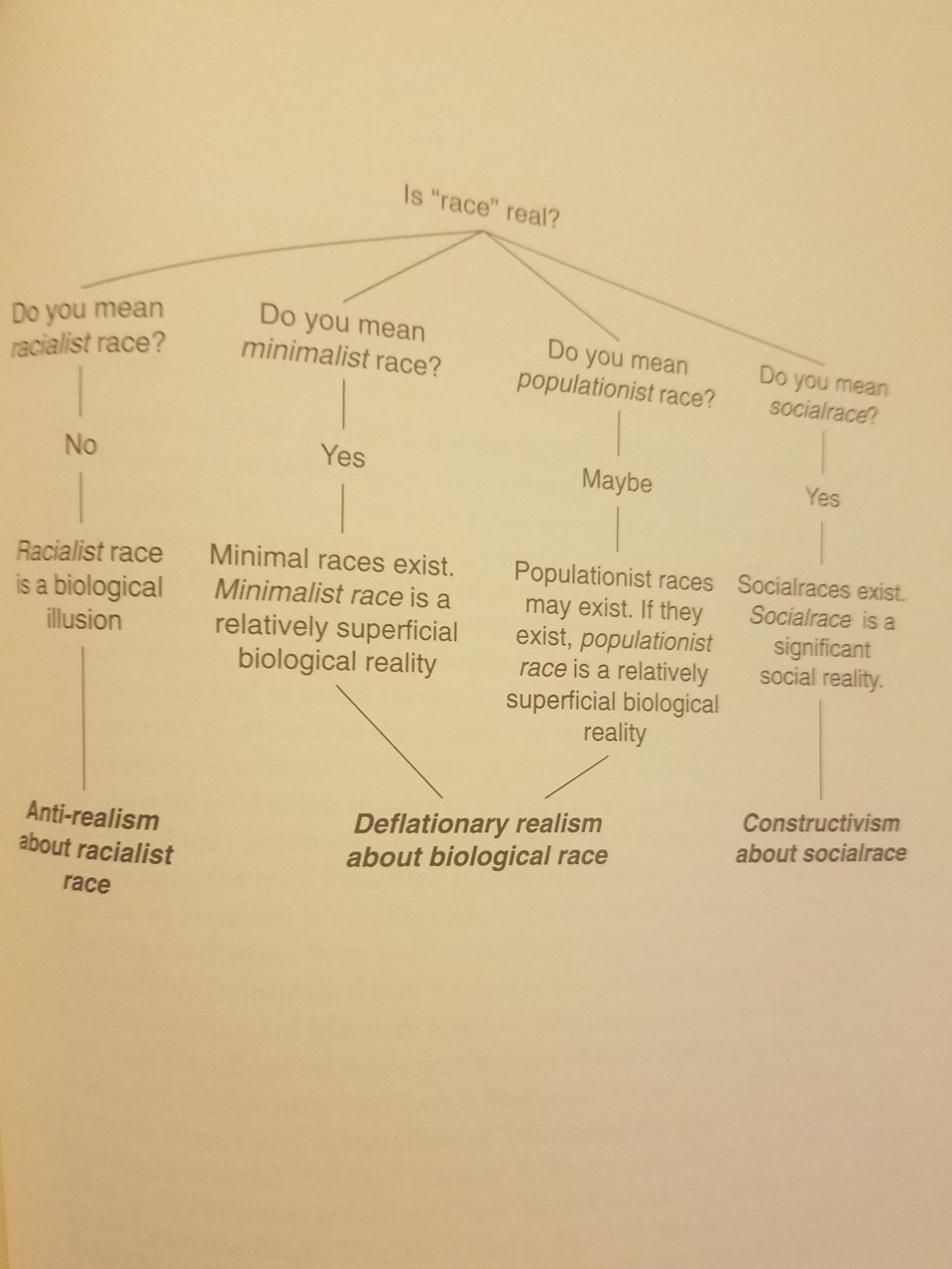
From Hardimon (2017: 177)\
No sane or logical person would deny the existence of race based on the criteria laid out in this article. We can also make another leap in logic and state that since minimalist races exist and are biologically real then geographic ancestry should be a guide when dealing with medicine and different minimalist races.
It is clear that race exists in the minimal sense; you do not need genes to show that race is real, nor that race has any utility in a medical context. This is important for race deniers to understand: genes are irrelevant when talking about the reality of race; you only need to just use your eyes and you’ll see that certain morphologies and phenotypes are distributed across geographic locations. It is also very easy to get someone to admit that races exist in this minimalist-biological sense. No one denies the existence of Africans, Europeans, ‘Native’ Indians, East Asians and Pacific Islanders. These populations differ in morphology and other physical characters which are unevenly distributed by geographic ancestry, so, therefore: minimialist races exist and are a biological reality.
Explaining African Running Success Through a Systems View
2100 words
Last year I bought The Genius in All of Us: New Insights Into Genetics, Talent, and IQ (Shenk, 2010) and while the book is interesting and I agree with a few things he says, he gets it horribly wrong on athleticism and ethnicity. Some of it I may be able to forgive since the book was written in 2010, but he does make some glaring errors. Chapter 6—pages 100-111—is titled Can White Men Jump? Ethnicity, Genes, Culture, and Success.
In the beginning of the chapter, Shenk writes that after the 2008 Beijing Summer Olympics, many articles were written about the Jamaican women who took the top three spots in the 100 and 200m races, with the emergence of Usain Bolt and his record-setting performance. Shenk (2010: 101) writes:
The powerful protein [alpha-actinin-3] is produced by a special gene variant called ACTN3, at least one copy of which is found in 98 percent of Jamaicans—far higher than in many other ethnic populations.
An impressive fact, but no one stopped to do the math. Eighty percent of Americans also had at least one copy of ACTN3—that amounts to 240 million people. Eighty-two percent of Europeans have it as well—that tacks on another 597 million potential sprinters. “There’s simply no clear relationship between the frequency of this variant in a population and its capacity to produce sprinting superstars,” concluded geneticist Daniel MacArthur.
I have written about MacArthur’s thoughts on the ACTN3 variant—that he helped discover, no less—in an article on Jamaicans, Kenyans, and Ethiopians and the explanatory factors in regard to their success in running competitions. Though, the article from MacArthur was written in 2008 and Shenk’s book was written in 2010, considerable advances have been made in this field. It was found that “combined effects of morphological and contractile properties of individual fast muscle fibers attribute to the enhanced performance observed in RR genotypes during explosive contractions” (Broos et al, 2016). Of course when talking about sprinting and morphology, you must think of the somatype. The somatype that is conducive to running success is a tall, lanky body with long limbs, as longer limbs can cover more distance. So European runners don’t have the right somatype, nor are the XX genotype for the ACTN3 variant high in Jamaicans (this genotype is present in ~2 percent of the Jamaican population; Scott et al, 2010). This—among other reasons I have laid out in the past—are why Jamaicans excel in sprinting competitions compared to other ethnic groups.
Shenk (2014: 10) further writes that sports success seem to come in ‘geographic clusters’, and the field of sports geography has been developed to understand it. “What they’ve discovered is that there’s never a single cause for a single cluster,” Shenk writes. “Rather, the success comes from many contributions of climate, media, demographics, politics, training, spirituality, education, economics and folklore. In short, athletic clusters are not genetic, but systemic.” Shenk then discusses the fact that these explanations are not good enough and that some ‘sports geographers’ have transformed themselves into ‘sports geneticists’ and then cites Jon Entine’s 2002 book Taboo: Why Black Athletes Dominate Sports and Why We’re Afraid to Talk About It where Shenk quotes Entine who quotes geneticist and physiologist Claude Bouchard who says that “these biological characteristics are not unique to West or East African blacks. These populations are seen in all populations, including whites” (Shenk, 2010: 102). Of course they’re not unique to one population and I don’t think that anyone has ever claimed that. Though the frequencies of these biological, morphological and physiological characteristics are not distributed evenly amongst populations and this explains how and why certain populations excel in certain sports when compared to others.
Shenk (2010: 102) also quotes Entine (2002), writing: “Entine also acknowledges that we haven’t actually found the actual genes he’s alluding to. “These genes will likely be identified early in the [twenty-first century],” he predicts.” We have ‘found some genes’ that aid in athletic performance, the ACTN3 genotype combined with type II fibers and the right morphology, as mentioned above for one. (Though a systems view—one of holism—makes much more sense here than a reducionist view. You must look at the whole system, not reduce things down, but that’s for another day.) That, in my opnion, is a large driver for ethnic differences in sports like this, because you need certain traits if you want to excel in these types of competitions.
He then discusses the success of the Kenyans in distance running—stating that 90 percent of Kenyan runners come from a small subset of Kenyans called the Kalenjin. He cites a few stories of some Kalenjin who talk about their experiences with no running water in their homes and that they had to “run to the river, to take your shower, run home, change, [run] to school . . . Everything is running” (Keino, a Kalenjin boy, quoted from Shenk, 2010: 104). Of course this is attributed to a multitude of factors, all of which have to work in concert to get the desired effect. For instance, sports psychologists have found that strong cultural achievement and the ability to work hard, compete, outdo others and seek new challenges drives their running dominance.
Shenk (2010: 106-107) then writes:
1.DESPITE APPEARANCES TO THE CONTRARY, RACIAL AND ETHNIC GROUPS ARE NOT GENETICALLY DISCRETE.
Skin color is a great deceiver; actual genetic differences between ethnic and geographic groups are very, very limited. All human beings are descended from the same African ancestors … [blah blah blah] … By no stretch of the imagination, then, does any ethnicity or region have an exclusive lock on a particular body type or secret high-performance gene. Body shapes, muscle fiber types, etc., are actually quite varied and scattered, and true athletic potential is widespread and plentiful.
Of course, I don’t think I have ever read anyone who denies this. However, as I’ve noted too many times to count, certain body types and muscle fiber distributions are more likely to be found in certain populations due to where their ancestors evolved recently, and so the fact that ‘actual genetic differences between ethnic and geographic groups are very, very, limited’ does not mean much when talking about dominance by a few populations in elite sporting competition. It just so happens to be the case that the somatypes and muscle fiber distributions that are conducive to running success are more likely to be found in populations of West and East African descent. This is an undeniable fact. (Also note how these ‘appearances to the contrary’ show how race is real.)
2.GENES DON’T DIRECTLY CAUSE TRAITS; THEY ONLY INFLUENCE THE SYSTEM.
Consistent with other lessons of GxE [Genes x Environment], the surprising finding of the $3 billion Human Genome Project is that only in rare instances do specific gene variants directly cause specific traits or diseases. …
As the search for athletic genes continues, therefore, the overwhelming evidence suggests that researchers will instead locate genes prone to certain types of interactions: gene variant A in combination with gene variant B, provoked into expression by X amount of training + Y altitude + Z will to win + a hundred other life variables (coaching, injuries, etc.), will produce some specific result R. What this means, of course, What this means, of course, is that we need to dispense rhetorically with thick firewall between biology (nature) and training (nurture). The reality of GxE assures that each persons genes interacts with his climate, altitude, culture, meals, language, customs and spirituality—everything—to produce unique lifestyle trajectories. Genes play a critical role, but as dynamic instruments, not a fixed blueprint. A seven- or fourteen- or twenty-eight-year-old is not that way merely because of genetic instruction. (Shenk, 2010: 107)
Nothing really wrong here. He is correct, which is why you need to look at the whole biological system, which also includes the culture, climate, environment and so on that the biological, developmental system finds itself in. However, Shenk then gets it wrong again writing that Jamaicans are a ‘quite heterogenous genetic group’ due to being a transport between North and South America. He states—correctly—that Jamaicans ancestry is about equal to that of African-Americans, but the individual variation in ancestry varies by “46.8 to 97.0 percent” (Shenk, 2010: 108).
Shenk gets a lot wrong here. For example. African-American and Jamaicans—despite both being descended from slave populations—have differing maternal ancestry which somehow influences athletic success. Deason (2017) found that 1) modern Jamaicans are descended from slaves and, who had considerable selective pressure on the population; 2) maternal ancestry could either influence sports success or be a false positive; 3) maternal lineages were different in Jamaicans and African-Americans, implying that the same maternal lineage is not distributed evenly between both sprinting populations; 4) some evidence exists that the genetic histories of Jamaicans and African-Americans are different based on their maternal haplotypes; 5) low SES and low access to healthcare—classic indicators of high African ancestry—were not directly linked to elite athletic success; 6) comparisons of the genomes of African-Americans and Jamaicans did not significantly differ since the estimated number of generations since admixture occurred, which implies that controls were not more likely to have more recent European ancestry than athletes; and 7) the regions of the genome that influence sprinting performance may be different in both populations. This is the best evidence to date against Shenk’s simplistic notions of the genetics between Jamaicans and African-Americans.
Differences in fast twitch fibers between Europeans and West Africans explain a large amount of the variance between Europeans and West African descendants in regard to sprinting success, while those with more symmetrical knees and ankles tend to run faster in the 100m dash (Trivers et al, 2014). This would also imply that Jamaicans have more symmetry in their knees and ankles than Europeans, though I am not aware of data that makes this comparison.
Shenk finally discusses the psycho-social-cultural aspects behind the phenomenon, stating that Roger Bannister, the first person to break the four minute mile, stated that while “biology sets limits to performance, it is the mind that plainly determines how close individuals come to those absolute limits” (Shenk, 2010: 110-111). Numerous psychological factors do, indeed, need to combine in order for the individual in question to excel in sports—along with the requisite anatomical/physiological/morphological traits too. Sasaki and Sekiya note that “changes in physiological arousal and movement velocuty induced by mild psychological pressure played a significant role in the sprint performance.” (See also Bali, 2015.)
Lippi, Favaloro, and Guidi, (2008) note how “An advantageous physical genotype is not enough to build a top-class athlete, a champion capable of breaking Olympic records, if endurance elite performances (maximal rate of oxygen uptake, economy of movement, lactate/ventilatory threshold and, potentially, oxygen uptake kinetics) (Williams & Folland, 2008) are not supported by a strong mental background.” I have argued this for months, even if the beneficial somatype is there in the athlete in question, if he/she does not have the will to win they will not succeed in their goals. Psychosocial factors, of course, matter just as much as the physical but all of these factors work in concert to get the outcomes that occur in these sports.
Attempting to pinpoint one or a few traits—while it may help us to understand better physilogic and anatomic processes—tells us nothing about the entire system. This is why, for instance, the whole athletes system needs to be looked at—call it the ‘systems view of the athlete’, where all of these aforementioned variables work in concert to express elite athletic performance, with no one variable being higher than another as an explanatory factor in sports success. Though Shenk gets a few things right (like his point on genes not causing traits on their own, they just influence the system, and I’d take it a step further to note that genes are passive in their relationship to the physiological system as a whole and are only activated by the system as needed, not being ’causes’ on their own; Noble, 2008), he’s largely misguided on how certain aspects of Jamaican ancestry and morphology help propel them to running success in comparison to other ethnies.
When explaining elite athletic performance in certain areas of sports, you must take a view of the whole system, with each known variable influencing the next in the chain, if you want to explain why certain ethnies or racial groups do better in a given sport than other groups. A systems view is the only view to take when comparing populations in different athletic competitions. So the influence of culture, psychology, social effects, morphology, ancestry, anatomy, physiology, muscle fibers, etc all work in concert to produce elite athletic phenotypes that then excel in these sports, and reducing this down to certain variables—while it may help us understand some of the inner mechanics—it does nothing to help advance the hows and whys of elite success in sports competition when comparing different populations.
 NotPoliticallyCorrect