Home » 2016 (Page 13)
Yearly Archives: 2016
Refuting Richard Nisbett
3100 words
The environmental model on IQ in the debate on not only IQ as a whole, but in racial differences in intelligence has led to horrible policies throughout the world. Thinking that we are all equal and everyone is the same and has the same potential as the next person has really hurt us as a society.
Richard Nisbett is of the egalitarian (nurture) side of the debate on the black-white IQ gap. His main research has focused primarily on how laypeople reason and make presumptions about the world. His more recent work has focused on comparing East Asians and Westerners, and how and if they think differently. He says that the arguments have been made that Westerners learn analytically, focusing on the object and its attributes, use its attributes to categorize it and apply rules based on the category to explain and predict behavior. He says that East Asians reason holistically, focusing on the object in its surrounding field. There is little concern with categories or universal rules and behavior is explained on the basis of the forces presumed to be operative for the individual case at that particular time. This goes with white’s higher verbal IQ, as well as going with East Asian’s higher visio-spatial IQ. He says that his lab has found evidence for both.
Now that there is some background on Nisbett and his research interests, let’s turn to the B-W IQ gap.
Rushton and Jensen have refuted him multiple times. In their paper Race and IQ: A Theory-Based Review of the Research in Richard Nisbett’s Intelligence and How to Get It, they provide more than sufficient evidence that the B-W IQ gap, as well as other racial differences in intelligence, are genetic in origin. They propose that the hereditarian model (50/50 genetics/culture) better explains group differences than the culture-only model (0/100 genetics environment). They review 14 topics of contention which are: (1) data to be explained; (2) malleability of IQ test scores; (3) culture-loaded versus g-loaded tests; (4) stereotype threat, caste, and “X” factors; (5) reaction-time measures; (6) within-race heritability; (7) between-race heritability; (8) subSaharan African IQ scores; (9) race differences in brain size; (10) sex differences in brain size; (11) trans-racial adoption studies; (12) racial admixture studies; (13) regression to the mean effects; and (14) human origins research and life-history traits. They conclude that the preponderance of evidence concludes that differences in intelligence, as well as other life-history traits between the races, are genetic (50 to 80 percent) in origin.
I will be quoting from this article Nisbett wrote for the New York Times, All Brains Are the Same Color.
JAMES WATSON, the 1962 Nobel laureate, recently asserted that he was “inherently gloomy about the prospect of Africa” and its citizens because “all our social policies are based on the fact that their intelligence is the same as ours — whereas all the testing says not really.”
Ah yes. What a great day that was when Watson said that. It needed to be said. The conversation on exactly why Africans are starving needs to be had. No, the answer is not colonialism. It’s intelligence. I’ve touched on how Kanazawa got attacked for stating that Africa’s woes are due to low intelligence, where the average is 70. Just as how Watson got attacked. Except since Watson is more well-known than Kanazawa, the PC crowd attempted to run him out of town. Watson is 100 percent correct with that statement.
Dr. Watson’s remarks created a huge stir because they implied that blacks were genetically inferior to whites, and the controversy resulted in his resignation as chancellor of Cold Spring Harbor Laboratory. But was he right? Is there a genetic difference between blacks and whites that condemns blacks in perpetuity to be less intelligent?
Blacks are genetically inferior to whites in intelligence, on average, just as West African blacks and their descendants are genetically superior in sprinting competitions and East Africans and their descendants are superior in distance running (the same as whites as both have the same muscle fiber type that allows for endurance running). Are we really to think that East Asians are superior nowhere? Clearly ridiculous. We know of Rushton’s Rule of Three, which holds through most all of the variables between races. Yes, there is a genetic difference in intelligence that will condemn blacks in perpetuity to be less intelligent.
The first notable public airing of the scientific question came in a 1969 article in The Harvard Educational Review by Arthur Jensen, a psychologist at the University of California, Berkeley. Dr. Jensen maintained that a 15-point difference in I.Q. between blacks and whites was mostly due to a genetic difference between the races that could never be erased. But his argument gave a misleading account of the evidence. And others who later made the same argument — Richard Herrnstein and Charles Murray in “The Bell Curve,” in 1994, for example, and just recently, William Saletan in a series of articles on Slate — have made the same mistake.
One of my favorite papers, the one that reignited the B-W IQ debate. Titled How Much Can We Boost IQ and Scholastic Achievement, he argues that scholastic achievement and IQ can’t be boosted to any meaningful level. He says prenatal effects such as nutrition, the length of pregnancy, maternal stress and environment within the uterus has an effect on IQ, whereas any postnatal (environmental) explanations have not been found to show a lowered IQ, except those kept in isolation. Let’s see what the ‘misleading account of the evidence’ he is talking about.
In fact, the evidence heavily favors the view that race differences in I.Q. are environmental in origin, not genetic.
See the Rushton and Jensen paper, as well as the Jensen paper I linked above. Any environmental explanation for racial differences in IQ can easily be explained away due to bad study design, or simply not testing the children again at adulthood, as any instances where blacks showed they had higher IQs than whites, they were never tested again at adulthood. Just so happens, that around age 10-12, where most of these tests get administered, is when the racial gap starts to become extremely noticeable. To think that race differences in IQ are environmental and not genetic is laughable.
The hereditarians begin with the assertion that 60 percent to 80 percent of variation in I.Q. is genetically determined. However, most estimates of heritability have been based almost exclusively on studies of middle-class groups. For the poor, a group that includes a substantial proportion of minorities, heritability of I.Q. is very low, in the range of 10 percent to 20 percent, according to recent research by Eric Turkheimer at the University of Virginia. This means that for the poor, improvements in environment have great potential to bring about increases in I.Q.
Rushton and Jensen state in the refutation of Nisbett I linked that non-white samples show the same heritabilities as white samples.There is little evidence of any cultural, or hardship differences, such as being raised as a visible minority, in one group and not the other. If blacks had heritabilities that were consistently lower than white heritabilities, then we could conclude that racism and poverty were responsible for a lower IQ in blacks. Though when a researcher compared black and white IQs on 3 tests, he found that heritabilities were 50 percent in each group. “The heritabilities in the Basic, Primary, and Cattell tests were, respectively: Whites—.61, .37, and .71; Blacks—.75, .42, and .19.”
On Turkheimer, they say that he was right that he did find gene x environment interactions that made genetic influences weaker and shared environment stronger for those from poorer homes in comparison to those from more affluent homes. Though most studies show no interaction effects, or interactions vary significantly.
Other studies have shown that heritabilities are the same both within as well as between white and black samples. That led Jensen to label this the ‘default hypothesis’. Researchers analyzed full and half siblings from the NLSY on three Peabody Achievement Tests. 161 black full siblings, 106 pairs of black half siblings, 314 pairs of full white siblings and 53 pairs of white half-siblings. with measures in math and reading. The best fitting model for all of the data was by which the sources of the sources of the differences between those within race and the differences between races were the same, at 50 percent genetic and environmental. The combined model (50/50) best explains it, whereas the culture-only and genetics-only models are inadequate.
In any case, the degree of heritability of a characteristic tells us nothing about how much the environment can affect it. Even when a trait is highly heritable (think of the height of corn plants), modifiability can also be great (think of the difference growing conditions can make).
Skewed perception on only working with young children. Heritabilities range from 20 percent to 90 percent from the time someone is a toddler to adulthood. He wouldn’t see the same in adult populations.
There is, for example, the evidence that brain size is correlated with intelligence, and that blacks have smaller brains than whites. But the brain size difference between men and women is substantially greater than that between blacks and whites, yet men and women score the same, on average, on I.Q. tests. Likewise, a group of people in a community in Ecuador have a genetic anomaly that produces extremely small head sizes — and hence brain sizes. Yet their intelligence is as high as that of their unaffected relatives.
Men and women don’t score the same on average. Rushton and Jackson found that on average, men had an edge on IQ tests, scoring 3.63 points higher than women. The people from Ecuador are dwarfs, encephalization quotient explains that, as well as brain size to non-fat mass being most important. Back to Rushton’s Rule of Three, East Asians have bigger brains and more neurons, whites intermediate and blacks last.
About 25 percent of the genes in the American black population are European, meaning that the genes of any individual can range from 100 percent African to mostly European. If European intelligence genes are superior, then blacks who have relatively more European genes ought to have higher I.Q.’s than those who have more African genes. But it turns out that skin color and “negroidness” of features — both measures of the degree of a black person’s European ancestry — are only weakly associated with I.Q. (even though we might well expect a moderately high association due to the social advantages of such features).
Funny. Rushton and Jensen refuted this 2 years before Nisbett wrote this article. Rushton and Jensen say that in certain areas of the Deep South, black IQ is around 70, consistent with the hereditarian explanation of effects of hybridization. An average IQ of 71 was found for all black children in one district, whereas it was 101 for whites (Jensen, 1977). Also, Lynn (2002) and Rowe (2002) analyzed IQ scores for those that are mixed black and white and found scores in between 100 and 85, around 93. Though they do say that evidence isn’t conclusive on the matter. They say Cape Coloreds and African Americans may have better nutrition, or are treated better in society. The Minnesota Study held many variables constant, and still the mixed race children had higher IQs. That supports the genetic hypothesis.
During World War II, both black and white American soldiers fathered children with German women. Thus some of these children had 100 percent European heritage and some had substantial African heritage. Tested in later childhood, the German children of the white fathers were found to have an average I.Q. of 97, and those of the black fathers had an average of 96.5, a trivial difference.
Nope. Doesn’t work that way, Nisbett.
If European genes conferred an advantage, we would expect that the smartest blacks would have substantial European heritage. But when a group of investigators sought out the very brightest black children in the Chicago school system and asked them about the race of their parents and grandparents, these children were found to have no greater degree of European ancestry than blacks in the population at large.
Strawman. No one says there aren’t any smart blacks.
Most tellingly, blood-typing tests have been used to assess the degree to which black individuals have European genes. The blood group assays show no association between degree of European heritage and I.Q. Similarly, the blood groups most closely associated with high intellectual performance among blacks are no more European in origin than other blood groups.
Correct. Though, the studies failed to choose genetic markers with large allele frequencies between Europeans and Africans (Jensen, 1998b pg 480).
A superior adoption study — and one not discussed by the hereditarians — was carried out at Arizona State University by the psychologist Elsie Moore, who looked at black and mixed-race children adopted by middle-class families, either black or white, and found no difference in I.Q. between the black and mixed-race children. Most telling is Dr. Moore’s finding that children adopted by white families had I.Q.’s 13 points higher than those of children adopted by black families. The environments that even middle-class black children grow up in are not as favorable for the development of I.Q. as those of middle-class whites.
“Superior”. I touched on Moore here in my ‘Blank Slate’ article:
Another is the Moore study, which tested 23 black adopted children and 23 black children adopted by middle class black families. Their findings indicated that blacks adopted to black families scored at 104 compared to the blacks adopted by white families who scored at 117. People may point to this and say “Well, they didn’t differ in their environment and not their genes, so therefor the B-W IQ gap is 100 percent environmental.” Ridiculous. As with the other 2 studies, they were not tested again at adulthood. To say that any of these 3 studies mentioned above prove a 100 percent environmental cause is intellectually dishonest.
Not worth talking about either.
Important recent psychological research helps to pinpoint just what factors shape differences in I.Q. scores. Joseph Fagan of Case Western Reserve University and Cynthia Holland of Cuyahoga Community College tested blacks and whites on their knowledge of, and their ability to learn and reason with, words and concepts. The whites had substantially more knowledge of the various words and concepts, but when participants were tested on their ability to learn new words, either from dictionary definitions or by learning their meaning in context, the blacks did just as well as the whites.
Nothing strange here. Blacks have a high verbal IQ in comparison to their visio-spatial. Rushton thought that black rappers and entertainers had high verbal IQs.Also, people from the same Community College would have, on average, around the same intelligence.
Whites showed better comprehension of sayings, better ability to recognize similarities and better facility with analogies — when solutions required knowledge of words and concepts that were more likely to be known to whites than to blacks. But when these kinds of reasoning were tested with words and concepts known equally well to blacks and whites, there were no differences. Within each race, prior knowledge predicted learning and reasoning, but between the races it was prior knowledge only that differed.
That environment can markedly influence I.Q. is demonstrated by the so-called Flynn Effect. James Flynn, a philosopher and I.Q. researcher in New Zealand, has established that in the Western world as a whole, I.Q. increased markedly from 1947 to 2002. In the United States alone, it went up by 18 points. Our genes could not have changed enough over such a brief period to account for the shift; it must have been the result of powerful social factors. And if such factors could produce changes over time for the population as a whole, they could also produce big differences between subpopulations at any given time.
In fact, we know that the I.Q. difference between black and white 12-year-olds has dropped to 9.5 points from 15 points in the last 30 years — a period that was more favorable for blacks in many ways than the preceding era. Black progress on the National Assessment of Educational Progress shows equivalent gains. Reading and math improvement has been modest for whites but substantial for blacks.
Nope. The data that Murray uses only shows those of the same age, which is the accurate model. Others use those from all age groups, skewing the findings due to different heritabilities at different ages.
Most important, we know that interventions at every age from infancy to college can reduce racial gaps in both I.Q. and academic achievement, sometimes by substantial amounts in surprisingly little time. This mutability is further evidence that the I.Q. difference has environmental, not genetic, causes. And it should encourage us, as a society, to see that all children receive ample opportunity to develop their minds.
Yes, interventions from infancy all the way to the end of grade school help, as genes explained only 22 percent of the variance in those at age 5, 40 percent at age 7 and 82 percent at age 18. IQ differences can be changed in younger children, as they are more malleable at younger ages as I have just noted. But as they age, to quote Jensen, their genes “turn on” and fall to the average for that racial grouping.
People like us need to refute these lies that attempt to say that we are all the same and that any and all intelligence and scholastic achievements are environmental in origin and not largely genetic, as Rushton and Jensen have argued vehemently over the years. I will close with the final paragraph of the paper that Rushton and Jensen refuted Nisbett on sums up this situation perfectly:
There is no value in denying reality. While improving opportunities and removing arbitrary barriers is a worthy ethical goal, we must realize that equal opportunity will result in equitable, though unequal outcomes. Expanding on the application of his “default hypothesis” that group differences are based on aggregated individual differences, themselves based on both genetic and environmental contributions, Jensen [59] proposed “two laws of individual differences”—(1) individual differences in learning and performance increase as task complexity increases, and (2) individual differences in performance increase with practice and experience (unless there is a low ceiling on proficiency). We must recognize that the more environmental barriers are ameliorated and everybody’s intellectual performance is improved, the greater will be the relative influence of genetic factors (because the environmental variance is being removed). This means that equal opportunity will result in unequal outcomes, within-families, between-families, and between population groups. The fact that we have learned to live with the first, and to a lesser degree the second, offers some hope we can learn to do so for the third.
People like us need to defend men who are no longer here to defend their work, in Rushton and Jensen. The environmental explanation for IQ, as well as racial differences in IQ, is preposterous. To think that a full environmental causality actually means anything to intelligence is clearly a pipe dream.
HBD and Sports: Baseball
1350 words
Racial differences in sports also prove HBD. The differences are extremely clear to the naked eye, but there are many physiological differences between races that lead to disparities of one being over-represented over another race. I will touch on the three main races (Europeans, Asians and Africans), what they excel in and what they are below average in. Sports, as does academic achievement, prove HBD right. Sports prove innate athletic differences, whereas academic achievement proves innate differences in the brain, as well as intelligence. This is on average of course.
The word ‘sport’ is defined as an athletic activity requiring skill or physical ability, often of competitive nature. The sports I will touch on are baseball, basketball, soccer, football, weightlifting, bodybuilding, chess, gaming and hockey.
Baseball is predominantly white (MLB’s 2015 Racial/Gender Report Card), at 58.8 percent white (down from 60.9 in 2014), 8.3 percent black (up from 8.2 percent in 2014), 29.3 percent ‘Latino’ (up from 28.4 percent in 2014), and 1.2 percent Asian (down from 2 percent in 2014). Baseball is actually one of the only sports in America to be close enough to the ethnic mix of the country. According to the SABR (Society for American Baseball Research), the highest rate for black players in the MLB was in 1981 at 18.7 percent.
Before getting in to why the disparity is that large, I need to touch on ‘Latinos’ in baseball.
According to MLB.com, in 2014, 224 out of 853 players (750 active 25-man roster players and 103 disabled or restricted Major League players) were foreign-born, accounting for 26.3 percent of the players that year. Highest is the Dominican Republic with 83 players, followed by Venezuela with 59 players, Cuba with 19, Puerto Rico with 11, Mexico with 9, Colombia with 4, Panama with 4 and Nicaragua with 3. That makes 192 ‘Latino’ baseball players.
This article talks about how ‘black Latinos’ don’t get treated as black, but as ‘Latino’, when they are racially black (I will show some notable examples below). People like to think that it’s its own separate racial category when that’s not true at all.
Using 2014’s numbers, 520 players were white, 72 were black, 243 were ‘Latinos’, and 18 were Asians. We know that all ‘Latinos’ aren’t black, so using 2014’s numbers by country I will try to estimate the number of black ‘Latino’ players to try to get a real look at the racial breakdown in the MLB.
For brevity, I will just add each country up as what the majority mix of that particular country is. So, adding to the 72 black players I will add 83 from D.R., Cuba with 19, I’ll split P.R. with 5. Venezuela has a mix of blacks, whites and mulattoes, so I will just say 25 percent are black. That’s 15. Adding those up you get 194 black players. Keep in mind, a conservative estimate. So that makes the MLB about 23 percent black (this is only for those from foreign-born countries, I may make a comprehensive list one day if I feel up to it about this).
(I will just group mestizos as white for brevity to only have 3 categories.) So with that being said, 641 white players, 194 black players, and 18 Asian players. So with my guesstimate, baseball is 75 percent white, 23 percent black and 2 percent Asian in 2014.
Why the huge disparity? Simple. Baseball, at its core, is about reaction time. To quote Rushton and Jensen from their magnum opus Thirty Years of Research on Race Differences in Cognitive Ability (pg 244):
Reaction time is one of the simplest culture-free cognitive measures. Most reaction time tasks are so easy that 9- to 12-year-old children can perform them in less than 1 s. But even on these very simple tests, children with higher IQ scores perform faster than do children with lower scores, perhaps because reaction time measures the neurophysiological efficiency of the brain’s capacity to process information accurately—the same ability measured by intelligence tests (Deary, 2000; Jensen, 1998b). Children are not trained to perform well on reaction time tasks (as they are on certain paper-and-pencil tests), so the advantage of those with higher IQ scores on these tasks cannot arise from practice, familiarity, education, or training.
And from pg 245:
The same pattern of average scores on these and other reaction time tasks (i.e., East Asians faster than Whites faster than Blacks) is found within the United States. Jensen (1993) and Jensen and Whang (1994) examined the time taken by over 400 schoolchildren ages 9 to 12 years old in California to retrieve overlearned addition, subtraction, or multiplication of single digit numbers (from 1 to 9) from long-term memory. All of the children had perfect scores on paper-andpencil tests of this knowledge, which was then reassessed using the Math Verification Test. The response times significantly correlated (negatively) with Raven Matrices scores, whereas movement times have a near-zero correlation. The average reaction times for the three racial groups differ significantly (see Figure 2). They cannot be explained by the groups’ differences in motivation because the East Asian children averaged a shorter response time but a longer movement time than did the Black children.
Those with higher IQs average faster times on the simple RT, choice RT and odd-man-out RT. They follow Rushton’s Rule of Three, in which blacks will be at the bottom, whites in the middle and Asians at the top.
In this article, Mind Games: What Makes a Great Baseball Player Great, they say that studies done by Columbia University on Babe Ruth while he was playing showed that he could react to visual and sound cues better than the normal population, as well as having better hand-eye coordination than 98.8 percent of the population. A great proportion of MLB players have 20/20 vision or better. Within higher-skilled players, even then there are huge differences in reaction time (IQ differences). Hitters also have to predict where the ball will be, all within a 4/10ths of a second. This infographic explains it well. So you need an extremely high reaction time to hit a fastball coming at you at 95 miles per hour. All of this proves that, on average, baseball players have high IQs because of a lot of the things associated with baseball, also correlate highly with IQ.
Personality also is a factor. According to the previously linked article, with the example of Darryl Strawberry and Billy Beane, Strawberry handled the pressure well, while Beane folded under pressure. Seems this has to do with extroversion and introversion. Strawberry says that self-confidence and mental toughness come in to play because they fail 66 percent of the time they come up to hit.
Athletic ability is also important. The top two record holders for stolen bases in the MLB are blacks. Has to do with fast twitch muscle fibers (muscle fibers that exert force faster, but tire out more quickly than slow twitch). So you can see how natural fast twitch muscle fibers help blacks on the field, as well as the base pads, in baseball.
To touch on a previous point, even in the upper end of hitters (the elite ones), there are still marked differences in reaction time (IQ). That makes sense, seeing as I alluded to before that it takes 4/10ths of a second for a 95 MPH fastball to reach home plate.
Why the low rate for Asians? Well, natural athletic ability for one. The second reason is myopia. Those with myopia do have a higher IQ on average (as the correlation is .25), but those that are nearsighted are often late in their reactions to higher speed pitches. For something anecdotal, I’ve noticed that most Asians are pitchers, either starters of relievers. This article talks about the critical vision skills that pitchers need, and all though Asians are only 2 percent of the MLB, their high visio-spatial ability, along with high reaction times, they are able to succeed as good pitchers in the MLB.
Outfielders are generally fast and quick. Blacks round out a good amount of outfielders, whereas whites round out catcher, as well as a majority of the infield, due to a lot of line-drive hits coming at them, which the player needs high reaction times to be able to catch/field the ball.
Sports prove HBD, just like academic/monetary achievement. Intelligence, as well as physical differences, are pretty much innate. They show in all facets of life. Even though they are obvious to most, no one ever speaks out on it.
“Race is a Social Construct”: Part 1
3200 words
“Race is a social construct”. You may hear that a lot from uneducated people. They may say that since the definition of race is ‘ever-changing’, that race doesn’t exist and that it only exists in our minds. They obviously have no understanding of genetics and how we came to be today. If you want to get technical, everything is a social construct. The Universe is a social construct. We’re only giving definitions to what we perceive something to be, so with the logic of ‘race being a social construct’, then everything is a social construct. With that logic, the Universe doesn’t exist because it’s a social construct.
I will look at 3 articles in the first of many articles on this subject. One from Angela Onwuachi-Willig, Bill Nye and Ta-Nehisi Coates. All 3 have extremely wrong views on the biological reality of race, and I will prove that here. I will quote from each article and show how they are wrong with scientific studies as well as point out their bad logic.
I will begin with Angela Onwuachi-Willig. In her article for The New York Times, ‘Race and Racial Identities Are Social Constructs‘, she says that because of the ever-changing definition of the term race, that it is a social construct and not a biological one.
Race is not biological. It is a social construct. There is no gene or cluster of genes common to all blacks or all whites. Were race “real” in the genetic sense, racial classifications for individuals would remain constant across boundaries. Yet, a person who could be categorized as black in the United States might be considered white in Brazil or colored in South Africa.
Race is not biological, it is a construct. There are no clusters of genes or one gene that is common in blacks or whites. That is correct, but her statement about race being social and not a biological construct is clearly ignorant as I will show below.
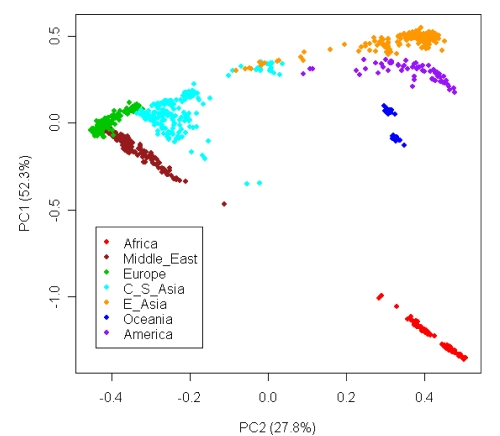
You can see in the picture above that races clearly do cluster in different clusters from other races. She is right about the changing definitions, especially Brazil, but Brazil is a special case. So much mixing has gone on in Brazil that there is evidence of skin color becoming independent of ancestry. One outlier example doesn’t make race a ‘social construct’. South Africa is also another one. They classify race in South Africa with four categories: black, colored, Indian/Asian or white. Obama would have been called ‘colored’ in South Africa today. But, again, just because there are changing definitions of race throughout the globe, doesn’t mean that race doesn’t exist.
Like race, racial identity can be fluid. How one perceives her racial identity can shift with experience and time, and not simply for those who are multiracial. These shifts in racial identity can end in categories that our society, which insists on the rigidity of race, has not even yet defined.
Is she making an argument for being ‘trans-racial’? I bet Rachel Dolezal would be happy.
In a society where being white (regardless of one’s socioeconomic class background or other disadvantages) means living a life with white skin privileges — such as being presumed safe, competent and noncriminal — whites who begin to experience discrimination because of their intimate connection with someone of another race, or who regularly see their loved ones fall prey to racial discrimination, may begin to no longer feel white. After all, their lived reality does not align with the social meaning of their whiteness.
I always hear about ‘white privilege’ but never get an actual definition of what it means. People complain about ‘white privilege’ because they, of course, don’t understand the biological reality of race. Anything that may prove innate differences between individuals or races they just can’t imagine exists because of what they’ve been taught their whole lives. She is talking about those whites who are in the BLM movement. The false ideals of egalitarianism are the cause of this.
More than 50 years ago, Congress enacted the most comprehensive antidiscrimination legislation in history, the Civil Rights Act of 1964. Half a century later in 2015, the same gaps in racial inequality remain or have grown deeper. Today, the unemployment rate for African-Americans remains more than double that for whites, public schools are more segregated now than they were in the 1950s and young black males are 21 times more likely to be shot and killed by the police than their white male peers. Even a white fourth-grade teacher in Texas, Karen Fitzgibbons, openly advocated for the racial segregation of the 1950s and 1960s on her Facebook page.
Right. IQ is the cause of the unemployment rate of African Americans. Not any imaginary forces such as ‘white privilege’. Public schools are more segregated today due to people wanting to be with others genetically similar to themselves. Blacks cause themselves to get shot and killed by police due to their actions during altercations with police officers. Oh no, someone has not politically correct opinions!! She should lose her job and never work a good job again!
That’s what the Left does. They attempt to shout you down with buzzwords so you can’t calmly and intellectually prove your case.
She is clearly wrong. Good thing this is called an ‘opinion piece’, there were few actual facts in it.
Now to touch on Bill Nye’s views on race. It’s funny. I loved his show when I was a kid. Now, knowing the truth about racial differences, hearing him say that made me lose all respect for him. He’s a mechanical engineer with a Bs from Cornell University. People only take what he says because he is ‘The Science Guy’ when he has no training in what he is talking about.
“We obsess about whether our dog is a pug-Jack Russell terrier mix with corgi overtones and an oaky finish. ‘An approachable little dog,’ whatever. They’re all dogs, okay? And so the idea of a purebred is just a human construct. There’s no such thing – in a sense there’s no such thing as a purebred dog.”
That right there is a fallacy. As with the woman’s article above, they both use the ‘continuum fallacy‘. The continuum fallacy is when someone rejects a vague claim because it’s not as precise as they want it to be. ‘There are no pure races’ or ‘there are no pure breeds of dog’, that doesn’t mean that genes don’t cluster differently, showing genetic differentiation.
“If a Papua New Guinean hooks up with a Swedish person all you get is a human. There’s no new thing you’re going to get. You just get a human. Japanese woman jumping the African guy, all you get is a human. They’re all humans. So this is a lesson to be learned. There really is, for humankind there’s really no such thing as race. There’s different tribes but not different races. We’re all one species.”
Right. That doesn’t mean there is no such thing as race. Grizzly bears and polar bears can mate to create a prizzly bear. Does that mean species doesn’t exist? (I will touch on speciation at the end of this article.) Once again, that statement doesn’t deny the biological reality of race, as you can see from the picture above.
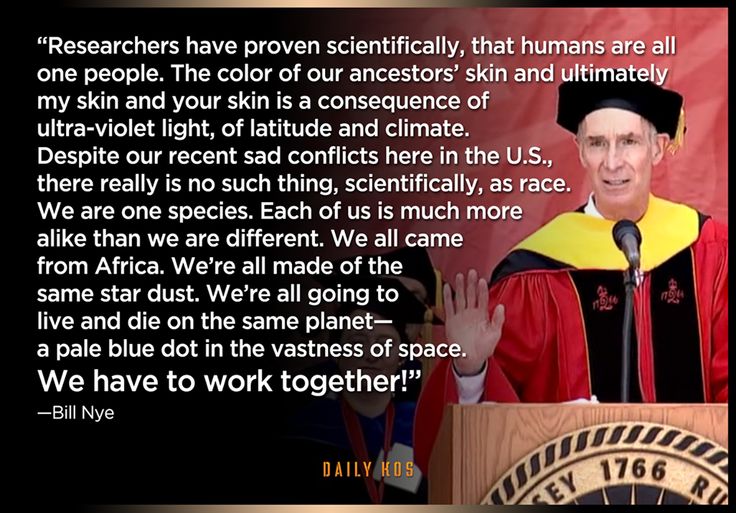
Researchers have proven, scientifically, that humans are all one people. The color of our ancestors’ skin is a consequence of ultra-violet light, of latitude and climate.
We all belong to the same genus, Homo, but again, that doesn’t disprove race. He’s correct in saying that our ancestors’ skin is a consequence of UV light of latitude and climate, and right there he proves us correct in stating that sunlight differences depending on where your ancestors evolved in the world are the cause of racial differences.
Despite our recent sad conflicts here in the U.S., there really is no such thing, scientifically, as race. We are all one species. Each one of us more alike than different.
In this statement, he is saying the first sentence because of recent racial relations in the U.S. A clear politically-motivated statement.
“Each one of us more alike than different.’ That is correct, but, yet again, doesn’t disprove the reality of race. Geneticists estimate that humans will differ, on average, at 3 million base pairs in their DNA. That’s more than enough for distinct racial classification, as well as enough to differentiate us.
Is that supposed to mean anything? Cats have 90 percent homologous genes with humans, 82% with dogs, 80% with cows, 79% with chimpanzees, 69% with rats and 67% with mice.
90% of the mouse genome could be lined up with a region on the human genome.
99% of mouse genes turn out to have analogues in humans.
As you can see from the links above, we are all extremely genetically related to animals that are clearly extremely physically different from us humans. This shows, that the differences in humans are down to not how genetically distant we are from other animals in the animal kingdom, but how the differing genes we have are expressed.
We all came from Africa. We’re all made from the same star dust. We’re all going to live and die on the same planet – a pale blue dot in the vastness of space. We have to work together!
And finally, you can see his way of saying that racial differences mean nothing because ‘we all come from Africa’ and ‘ we’re all made from star dust’. That may be true, but that doesn’t do anything to acknowledge, or even show that racial differences are meaningless.
Bill Nye has absolutely no authority to speak on this matter. Liberals then eat this up and cite Bill Nye as proof that race doesn’t exist, which is clearly untrue as I have shown.
Finally, I will get to Ta-Nehisi Coates’ ‘The Social Construction of Race‘. He cites my favorite blogger/geneticist Razib Khan, so this should be good.
Ancestry — where my great-great-great-great grandparents are from — is a fact. What you call people with that particular ancestry is not. It changes depending on where you are in the world, when you are there, and who has power.
Right with the first sentence, and with the second. It seems he’s attempting to use what the first article I cited says: that due to ever-changing racial definitions that race doesn’t exist as we believe it to be. He says that ancestry is a fact, well wouldn’t that same ancestry be your racial classification? I am not following his logic. Just because there are differing views on the definition of race throughout the globe, doesn’t mean that there is no biological reality of race.
He cites someone else who states:
“Race” as a term is very nebulous. But human subgroups with similar ancestries can have group differences in DNA — and intelligence is highly unlikely to have no genetic basis at all (although most now believe its impact is greatly qualified by cultural and developmental differences).
Cultural and developmental differences. The cultural differences are thrown out. According to the editorial ‘Mainstream Science on Intelligence’, which came out shortly after The Bell Curve was published, one of their points is that IQ tests are not culturally biased if the individual speaks English. If they are not English speakers, they will either get a test in their native language or get Raven’s Progressive Matrices, which is a ‘culture free’ IQ test as it’s based on pattern recognition and has no writing involved. Developmental differences, yes. White mothers have a better prenatal environment then do black mothers, which is biological. Developmental differences are innate within the two populations.
I do not know. Andrew is more inclined to believe that there is some group-wide genetic explanation for the IQ difference. I am more inclined to believe that the difference lies in how those groups have been treated. One thing that I am not convinced by is controlling for income and education.
Oh, the old ‘Stereotype Threat‘ canard. The paper, which was cited more than 5000 times, states that African-Americans do worse on tests in which they are told that they are being judged on their race. Well, a meta-analysis of 55 published and unpublished studies came out and what was found that the it shows clear publication bias. Either due to people not knowing how to read scientific papers or more insidious tactics. The effect varies across studies and is small. Though elite university undergrads may underperform on tests of cognitive tests due to Stereotype Threat, this effect doesn’t generalize to non-adapted standardized tests, high-stakes settings and less academically gifted test takers. Stereotype Threat cannot explain the difference in mean cognitive test performance between African Americans and European Americans. (pg 68)
In the mid-20th century, as we have been documenting, it was the policy of this country to deny African-Americans access to the same methods of wealth-building, that it was making available to whites.
This is not merely a problem for your local diversity and sensitivity workshop. It is a problem of wealth and power. When you create a situation in which a community has a disproportionate number of poor people, and then you hyper-segregate that community, you multiply the problems of poverty for the entire community–poor or not. That is to say that black individuals are not simply poorer and less wealthier than white individuals. Because of segregation, black individuals and white individuals of the same income and same wealth, do not live in communities of equal wealth.
What bearing does segregation have on IQ differential? I don’t know. My skepticism of genetics is rooted in the fact that arguments for genetic inferiority among people of African ancestry are old, and generally have not fared well. My skepticism is also rooted in the belief that power generally seeks to justify itself. The prospect of actual equality among the races is frightening. If black and white people truly are equal on a bone-deep level, then the game might really be rigged, and we might actually have to do something about it. I think there’s much more evidence of that rigging, then there is evidence of cognitive deficiency .
I must add that I can not pretend to be a dispassionate, nor impartial observer. I come from a particular place. I’ve now been out in the world, and seen how other people in other places live. They don’t strike me as more intelligent. They strike me as better armed. There’s nothing scientific about that. But I think we all have core faiths. These are mine. You’ve been warned.
Regardless of the method used in the analyses, all researchers reached estimated very close to that obtained by Lewontin: The differences observed by the subdivisions (populations, groups of populations, races) represented 10 to 15 percent of the total genetic variation found within the human species. Formally, these findings demonstrate, first, that the species is indeed subdivided into genetically definable groups of individuals and, second, that atleast some of these groups correspond to those defined by anthropologists as races on the basis of physical characters. They do not however, settle the arguments regarding the methods of racial classification. Unfortunately, Lewontin did not specify before initiating his analysis how large the difference has to be in order to call the groups “races”.
Consequently, the results of the studies have led population geneticists to two diametrically opposite conclusions. Lewontin called the observed differences trivial, and proclaimed that “racial classification is now seen to be of no genetic or taxonomic significance” so that “no justification can be offered for its continuance.” This view is echoed by authors of similar studies, who seem to be surprised that genetic variation within populations is greater than that between them. By contrast, Sewell Wright who can hardly be taken for a dilettante in questions of population genetics, has stated emphatically that if differences of this magnitude were observed in any other species, the groups they distinguish would be called subspecies.
One can extend Wright’s argument even further. The more than 200 species of haplochromine fishes in Lake Victoria differ from each other much less than the human races in their neural genes, although they are presumably distinguished by genes that control differences in their external appearances. The same can be said about atleast some of the currently recognized species of Darwin’s finches and other examples of recent adaptive radiations. In all these cases, reproductively isolated groups are impossible to tell apart by the methods used to measure differences in human races. Obviously, human races are not reproductively isolated (interracial marriages are common and the progenies of such marriages are fully fertile) but the external differences between them are comparable to cichlid fishes and Darwin’s finches. Under these circumstances, to claim that the genetic differences between the human races are trivial is a more political statement than a scientific argument. Trivial by what criterion? How much difference would Lewontin and those who side with him consider non-trivial?
By mixing science with politics, geneticists and anthropologists are committing the same infraction of which they are accusing other scientists, who they themselves label as racist. Even worse, by labelling the genetic differences as insignificant, they play into the hand of genuine racists who can demolish this claim and so further their own agenda. It is intellectually more honest to acknowledge and then point out that by no means imply supremacy of one race over others. This can be done by demonstrating that the differences are in genes that cannot be linked to any features that would be required for the preeminence of a particular race.
It’s clear that racial classification does exist. The creator of Fst, Sewall Wright, says that a Fst distance of .15 is more than enough for speciation (differing racial classifications). It directly refutes Lewontin, who put his political ideology of Marxism over science. Those cichlids in Lake Victoria are a perfect example that though the definition of ‘species’ does change depending on which researcher you speak to, it doesn’t discount that there are real and physical genetic differences between races and ethnicities.
In conclusion, the term “race is a social construct” is a deliberately intellectually dishonest statement, or a statement used to hide the truth for more insidious things to happen due to the non-acknowledgement of race.
IQ, Nutrition, Disease and Parasitic Load
1600 words
There are some environmental factors that have negative effects on IQ. Three I will touch on today are nutrition, disease and parasitic load. All three mean decreased cognitive ability as well as a slew of other negative effects on their lifestyle.
To start, nutrition of the mother is one of the most important and telling things for the health as well as IQ of the child. Prenatal nutrition is very important to a developing fetus. What the mother eats has a big effect on the fetus. For instance, vitamins and minerals are extremely important. A pregnant mother needs two times the amount of folic acid than a non-pregnant mother. A pregnant woman needs 400 mcg per day to prevent defects to the babies brain and spine called neural tube defects. A pregnant woman also needs double the amount of iron than a non-pregnant woman.
We can see here that if a pregnant woman is protein deficient, it passes on to the baby. Protein is more important in the second and third trimester due to the fetus developing more rapidly. It can also lead to growth retardation, due to reduced nutrient supply to the fetus. The authors end up concluding that the women who ingested 50-70 grams of protein per day and 156 to 465 ml of milk had children with significant and better tendency in femur length, bi-parietal diameter, abdomen circumference and head circumference. It’s important for a mother to get the right amount of protein for optimal fetal growth.
It’s also known how malnutrition in early years can lead to antisocial and aggressive behavior as well as lower cognition. It’s due to what I touched on above. They state that malnutrition in early childhood years such as lack of iron, zinc, B vitamins as well as being protein deficient leads to the 3 aforementioned things. As I have shown in the previous paragraph, the lack of the same nutrients during fetal development causes the same problems.
Now that I have touched on how prenatal nutrition is important for the fetus, I will talk about parasitic load.
According to a paper by Eppig et al, the prevalence of parasites is the cause of worldwide differences in cognitive ability. They state that from an energetics standpoint, that a developing human would have a hard time developing a brain while fighting infectious disease, as both are very metabolically demanding. They go through all of the theories of differences in cognitive ability, such as the cold winter hypothesis of Lynn, Rushton and Kanazawa, to studies of inbreeding depression by Saadat and Woodley. They state that Lynn has argued that nutrition is important to high degrees of mental development, that nutrition is the cause of the ‘Flynn Effect’ and that he showed that undernourished children have smaller heads, smaller brains and lower cognitive function than adequately nourished children. They end up concluding that as nations develop, they should be monitored for a decrease in parasitic infection to see if it correlates with a rise in IQ and whether any gain would be able to account for the ‘Flynn Effect’ (which the rate is 3 points per decade, no matter what population you look at).
To touch quickly on what Lynn said about undernourished children having smaller heads, smaller brains, and, therefore, lower cognitive function, all 3 of those variables are related. Brain size is correlated with cognitive ability at .44. So, we can see there is a pretty good relationship with brain size and IQ. So, those who don’t get adequate nutrition will, in turn, have a smaller head size and a smaller brain, which both lead to depressed intelligence.
There is evidence that Sickle Cell Anemia leads to a decrease in IQ. The authors conclude with MRI scans, that those with SCA have a decrease in total brain volume, which of course has a negative effect on cognitive ability. Though, that happened due to an increase in age. It’s known that brain size and the amount of neurons in the brain decrease with age. I won’t discount that SCA lowers cognitive ability, it’s a good hypothesis, along with the paper by Eppig et al, but I still think that Rushton, Lynn and Kanazawa’s Cold Winter Theory is the best evolutionary model for differences in intelligence found across the globe.
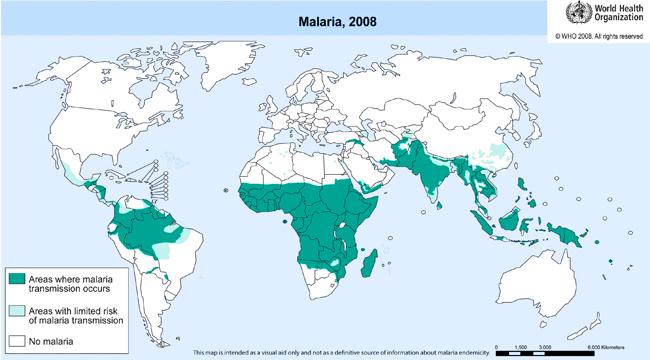
In the map above you can see the rate of malaria in the world. It’s concentrated around the equator as mosquitoes are the main transmitters of the parasites. Though, is it the parasitic load that causes low IQ or evolution in hot climates, which lead to low IQ and, in turn, makes them able to not be able to figure out how to cure the diseases due to low intellect? I believe it’s both, leaning more to the side of evolution in hot climate obviously, but I won’t discount that malaria, and therefore, SCA, has something to do with lower cognitive ability in those populations with higher rates of malaria.
So with all of the above factors, let’s talk about Africa.
We know they have the lowest IQs in the world (IQ 67 to 70), and we know they have the highest rates of malaria in the world, and also some of the worst nutritional standards of any geographic region in the world.
What is the cause? IQ? Disease? Parasitic load? Nutrient deficiencies?
All of the above. The last 3 are environmental effects that retard IQ. IQ drives most all development for a country, so with the last 3 points being there, obviously since they retard IQ, the QoL in the country will suffer.
Lynn states that with better nutrition that Africans will be able to reach their phenotypic IQ of 80. There is some good evidence for his claim as he also states that blacks with low to no white admixture have an IQ of 80. Rushton and Jensen also say that since psychologists don’t venture into the lowest income neighborhoods in the South, that the black IQ may be 78 in America, and not 85. Right there by the African phenotypic IQ of 80. So, that would mean that those with the highest amount of African ancestry have an IQ of around 80, plus or minus a few points. So if those African-Americans with low amount of white admixture have an IQ of 80, then it’s a good bet to take that if Africans themselves had proper nutrition that they would hit 80 as well, just as Lynn has stated.
Satoshi Kanazawa also said this back in 2006. Of course the media made him out to be someone who just said that without any backing of his claims. He compared IQ scores with indicators of ill health in 126 countries. He found that those countries with the lowest IQs have higher rates ill health. They accuse him of attempting to ‘revive the politics of eugenics by publishing the research which concludes that low IQ levels, rather than poverty and disease, are the reason why life expectancy is low and infant mortality high’. We know that poverty goes out the window because of the relationship between IQ and poverty. But as seen above, disease does have an effect on IQ. They only threw buzzwords at him and, of course, didn’t attempt to say anything meaningful to him.
The link between life expectancy and IQ is well studied. Those with lower IQs live shorter lives and those with higher IQs live longer lives. The studies and information I cite in that article corroborate what Kanazawa says about IQ and ability to fight disease.
IQ is affected by environmental factors such as disease, nutrition and parasitic load. I have given good evidence that with better nutrition, Africans can reach their phenotypic IQ of 80. But, they can’t learn how to farm because of their low IQ. They can’t get a higher IQ because they can’t learn how to farm.
The cause of this is evolution. When they say, as seen in Kanazawa’s article, that poverty (malnutrition) and disease are the causes of low IQ, low IQ causes those 2 things because those with lower IQ don’t have the abstract ability to think into the future that what they’re doing to their bodies can and will have negative effects in the future, which leads to decreased life span as I have noted in the article I have linked. It also leads to them not being able to farm, due to not having a high enough intellect due to evolving in the hot climates of the sub-Saharan desert. The only thing that holds wight, in my opinion, for the case for an environmental effect for lowered IQ is the case for parasitic load. So, I posit that if Africans were to some how to get it in to shape on their own and take care of those things on their own, they will be able to reach their phenotypic IQ of 80. We also know that immigrants from European countries with lower IQs, their descendants in America have IQs closer to average to the white average (100). 33 million people in Europe are at risk for malnutrition, so those who do come to America who are at risk for malnutrition, get the IQ boost due to living in America with better nutrition. This is also supported by African immigrants to America having a higher rate of collegiate attainment than white Americans, though that may be due to super-selection, only the smartest African populations coming here.
In conclusion, those African-Americans with low to no white admixture have an IQ of around 80, so it’s well supported that, with better nutrition, lower parasitic load and lower disease rate, Africans, and all other low IQ countries for that matter, can get a boost of around 10 to 15 points with all 3 things I have noted in this article taken care of.
BEHAVIOR=GENES+ENVIRONMENT NEEDS TO DIE: Vindication!
1800 words
So I was at Barnes N Noble a few weeks ago and picked up this book called ‘This Idea Must Die‘. It has a ton of researchers who wrote for it. Each person writes a short, 3 to 4 page writing on what idea must die and why. it’s a great read so far. Jared Diamond, Steven Pinker and Richard Dawkins wrote for it.
Now, I just came to this section in the book where Steven Pinker talks about behavior=genes+environment. To quote Pinker from the book:
Would you say that the behavior of your computer or smartphone is determined by an interaction between its inherent design and the way it is influenced by the environment? It’s unlikely; such a statement would not be false, but it would be obtuse. Complex adaptive systems have a nonrandom organization , and they have inputs. But speaking of inputs as “shaping” the system’s behavior, or pitting its design against its input, would lead to no insight as to how the system works. The human brain is far more complex, and processes its input in more complex ways, than human-made devices, yet many people analyze it in ways that are too simplistic for our far simpler toys. Every term in the equation is suspect.
Behavior: More than half a century after the cognitive revolution, people still ask whether a behavior is genetically or environmentally determined. Yet neither the genes nor the environment can control the muscles indirectly. The cause of the behavior is the brain. While it’s sensible to ask how emotions, motives, or learning mechanisms have been influenced by genes, it makes no sense to ask this of behavior itself. (Emphasis mine.)
Genes: Molecular biologists have appropriated the term “gene” to refer to the stretches of DNA that code for a protein. Unfortunately, this sense differs from the one used in population genetics, behavioral genetics and evolutionary theory – namely, any information carried that’s transmittable across generations and has sustained effects on the phenotype. This includes any aspect of DNA that can affect gene expression, and is closer to what is meant by “innate” than genes in the molecular biologists’ narrow sense. The confusion between the two leads to innumerable red herrings in discussions of out makeup, such as the banality that the expression of genes (in the sense of protein-coding stretches of DNA) is regulated by signals from the environment. How else could it be? The alternative is that every cell synthesizes every protein all the time! The epigenetics bubble inflated by the science media is based on a similar confusion. (Emphasis mine.)
Environment: This term for the inputs to an organism is also misleading. Of all the energy impinging on an organism, only a subset, processed and transformed in complex ways, has an effect on its subsequent information processing. Which information is taken in, how it’s transformed, and how it affects the organism (that is, the way the organism learns) all depend on the organisms innate organization. To speak of the environment “determining” or “shaping” behavior is unperspicuous.(Emphasis mine.)
Even the technical sense of “environment”used in quantitative behavioral genetics is perversely confusing. Now, there’s nothing wrong with partitioning phenotypic variance into components that correlate with genetic variation (heritability) and with variation among families (“shared environment”). The problem comes from so-called “nonshared” or “unique” environmental influences. This consists of all the variance attributable to neither genetic nor familiar variation. In most studies, it’s calculated as 1 – (heritability + shared environment). Practically, you can think of it as the differences between identical twins who grow up in the same home. They share their genes, parents, older and younger siblings, school, peers, and neighborhood. So what could make them different? Under the assumption that behavior is a product of genes plus environment, it must be something in the environment of one that is not in the environment of the other.
But this category really should be called “miscellaneous/unknown,” because is has nothing necessarily to do with any measurable aspect of the environment, such as one sibling getting the top bunk and the other the bottom, or a parent unpredictably favoring one child, or one sibling getting chased by a dog, coming down with a virus, or being favored by a teacher. These influences are purely conjectural, and studies looking for them have failed to find them.The alternative is that this component actually consists of the effects of chance – new mutations, quirky prenatal effects, noise in brain development, and events in life with unpredictable effects. (Emphasis mine.)
Stochastic effects in development are increasingly being recognized by epidemiologists, frustrated by such recalcitrant phenomena such as nonagenarian pack-a-day smokers and identical twins discordant for schizophrenia, homosexuality, and disease outcomes. They’re increasingly forced to acknowledge that God plays die with our traits.(Emphasis mine.) Developmental biologists have come to similar conclusions. The bad habit of assuming that anything not classically genetic must be “environmental” has blinkered behavioral geneticists (and those who interpret their findings) into the fool’s errand of looking for environmental effects foe what may be randomness in the developmental processes. (Emphasis mine.)
A final confusion in the equation is the seemingly sophisticated add-on of “gene-environment interactions.” This is also designed to confuse. Gene-environment interactions do not refer to the fact that the environment is necessary for genes to do their thing (which is true of all genes). It refers to a flipflop effect inn which the genes affect a person one way in one environment but another way in another environment, whereas an alternative gene has a different patter. For example, if you inherit allele 1, you are vulnerable: a stressor makes you neurotic. If you inherit allele 2, you are resilient: a stressor leaves you normal. With either gene, if you are never stressed, you are normal.
Gene-environment interactions in this technical sense, confusingly, go into the “unique environmental” component, because they’re not the same (on average) in siblings growing up in the same family. Just as confusingly, “interactions” in the commonsense – namely, that a person with a given genotype is predictably affected by the environment – goes into the “heritability” component, because the quantitative genetics measures only correlations. This confound is behind the finding that the heritability of intelligence increases, and the effects of shared environment decrease, over a person’s lifetime. One explanation is that genes have effects late in life, but another is that people with a given genotype place themselves in environments that indulge their inborn tastes and talents. The “environment” increasingly depends on their genes, rather than being the cause of exogenous behavior. (Emphasis mine.) (pg 188-191 This Idea Must Die)
I’m pretty excited about this. I have said for a while, to quote Douglas Whitman:
Race is not a social construct. Society is a racial construct. Society and culture derive from race/biology
You can see the effects from race/biology anywhere in the world you look and see the majority racial/ethnic mix of a country and/or area. A place is ONLY as good as its majority population.
We can see the kinds of effects this will have on our society as a whole. The way all of these 3rd worlders are flooding in to our countries. They leave their countries, to come to ours (in the West), and they don’t realize that once they become the majority and displace the native populations of the countries, that the place they will be living in will be just as bad, or even worse than where they came from.
Now, what Pinker said about the nonshared environment was really interesting. Especially at the end where he says ‘The “environment” increasingly depends on their genes, rather than being the cause of exogenous behavior.’
What does that mean? You can see this, for the most part, whenever there are new immigrants to an area. They still act how they did back in their home countries. The native peoples of the country have a certain way they act, and so do the immigrants to that country. The native peoples environment is an expression of their genetics. The new environment that the new immigrants bring to the country is also an expression of genetics. So, we can see just with what Pinker explained above, that environment itself doesn’t dictate behavior, but GENES DICTATE BEHAVIOR AND ALSO THE ENVIRONMENT THAT GETS CREATED.
So, it seems that those with certain genes place themselves in environments that indulge their inborn tastes and talents. “Environment” INCREASINGLY DEPENDS ON THEIR GENES RATHER THAN BEING THE CAUSE OF EXOGENOUS BEHAVIOR.
We know that genes are the driving force in life, and with this new ‘epigenetic’ field of genetics, they will attempt to say that environment is the main cause of molding genetics because one may have different things happen to them in one environment and not the other. But, since we have just seen here that those with certain genes put themselves into their environments, what does this say about certain people you may know? Does this mean that their genes put them in their situation? Well, for the most part, yes.
If one chooses their environment based on their genetic makeup, wouldn’t that throw out any and all environmental interactions?
For instance, how leftists say that negros can’t help it and are ‘born in to poverty’. Negros, as well as other low IQ peoples, choose their environment based on their genetics.
THE ENVIRONMENT YOU CHOOSE IS BASED ON YOUR GENETICS. THE PEOPLE DICTATE THE ENVIRONMENT OF A PLACE.
Growing up in a bad environment does not make you a bad person, sorry to say, but your genes make you a bad person. People seem to have the wrong idea about how environment interactions work with genes. I’m glad this came out.
This is inferred from what Pinker said. This is also explicitly said in the Whitman quote.
This new “epigenetic revolution” needs to die. It is saying that gene x environment interactions matter, when it really is the opposite. What is really happening is that individuals group up, due to genetic similarity theory, the theory proposed by Rushton after noticing that each ethnic group basically stayed with each other, along with their genetics that dictates their environment to live in. By putting so many genetically similar people in the same environment, in this case, immigrants, you will, therefore, get the same situation of how the conditions in their countries were, due to genetic similarity theory having them be with peoples of similar genetics, as well as their genes dictating their environments.
BEHAVIOR=GENES+ENVIRONMENT NEEDS TO DIE!!
Refuting Afrocentrism Part 2: Are Italians Black?
1400 words
Afrocentrists like to say things like ‘Italians were black’ and ‘the Romans were black’ and ‘The Moors were black’. All of this is based on shoddy evidence and uneducated people not knowing what they’re talking about.
In this article by an Afrocentrist, he claims that ‘Italians were black’ and talks about ‘dark-skinned Sicilians’.
Southern Italians were considered “black” in the South and were subjected to the Jim Crow laws of segregation. They weren’t allowed to marry “whites.” It was difficult, damn near impossible.
They were designated as “black” on census forms if they lived in the South and that is because the majority of them were dark-skinned Sicilians.
No idea what he’s talking about. In America at the time, Northern Italians said that Southern Italians were of a different race due to a slightly different look. Well, genetic testing shows similarities between the Northern and Southern Italians which I will get to later.
First off, it’s not only Sicilians who are ‘dark-skinned’. It’s all of Southern Europe.
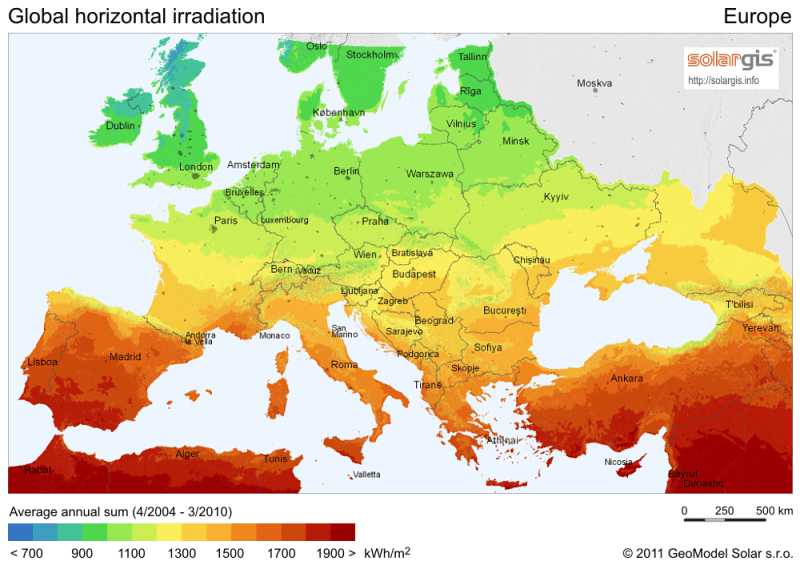
The map seen above is a map of UV rays that Europe and parts of North Africa get. Notice how North Africa and Southern Europe get the same amount of UV rays. That’s the cause of the difference in appearance between the North and South of Italy.
Mass lynchings happened to them often.
Mass lynchings happened to everyone often, not just blacks and Italians. Lynchings happened to anyone who raped, murdered, or did any other heinous crime. 27 percent of those lynched between the years of 1882-1968 were white. It wasn’t only a ‘black problem’.
One of the biggest mass lynchings happened to Italians in New Orleans when they thought that a Italian immigrant had killed a “white” police officer.
Right. It was the biggest mass lynching ever in the history of the US, 11 Italians got lynched. But, what he says about the cause being ‘killing a “white” police officer’ is unfounded. They got lynched for killing the police officer, not because they were of ‘another race’.
The very few Northern Italians that immigrated here perpetuated the myth that Southern Italians and Greeks were of a different race than them in order to save their own asses. This wasn’t true, and there are actually dark-skinned Italians all over Italy, not just in the South, as well as light-skinned Italians all over Italy.
But it is true. The differences between Northern and Southern Italians are embellished due to political reasons. There are dark-skinned Italians who live in Italy but are not genetically Italian/Greek. Yes, light-skinned ‘all over Italy’, those in the North are more Germanic, while the South has slight admixture from North Africa and sub-Saharan Africa. Though, some from the South migrated to the North and vice versa. The amount of non-white admixture in Italians is less than that of the average for Europe:
Combined data from two large mtDNA studies provides an estimate of non-Caucasoid maternal ancestry in Italians. The first study sampled 411 Italians from all over the country and found five South Asian M and East Asian D sequences (1.2%) and eight sub-Saharan African L sequences (1.9%). The second study sampled 465 Sicilians and detected ten M sequences (2.2%) and three L sequences (0.65%). This makes a total of 3% non-white maternal admixture (1.3% Asian and 1.7% African), which is very low and typical for European populations, since Pliss et al. 2005, e.g., observed 1.8% Asian admixture in Poles and 1.2% African admixture in Germans. (Plaza et al. 2003; Romano et al. 2003)
Similar data from the Y-chromosome reveals Italians’ even lower non-Caucasoid paternal admixture. Both studies obtained samples from all over the mainland and islands. No Asian DNA was detected anywhere, but a single sub-Saharan African E(xE3b) sequence was found in the first study’s sample of 416 (0.2%), and six were observed in the second study’s sample of 746 (0.8%). The total is therefore a minuscule 0.6%, which decreases to 0.4% if only Southern Italians are considered and 0% if only Sicilians are considered. Again, these are normal levels of admixture for European populations (e.g. Austrians were found to have 0.8% E(xE3b) by Brion et al. 2004). (Semino et al. 2004; Cruciani et al. 2004)
An analysis of 10 autosomal allele frequencies in Southern Europeans (including Italians, Sicilians and Sardinians) and various Middle Eastern/North African populations revealed a “line of sharp genetic change [that] runs from Gibraltar to Lebanon,” which has divided the Mediterranean into distinct northern and southern clusters since at least the Neolithic period. The authors conclude that “gene flow [across the sea] was more the exception than the rule,” attributing this result to “a joint product of initial geographic isolation and successive cultural divergence, leading to the origin of cultural barriers to population admixture.” (Simoni et al. 1999)
These studies show the opposite of what Afrocentrists, and even Nordicists say.
The reason I say very few is because over 80% of Italian immigrants were from Southern Italy (Sicily, Abruzzo, Calabria, Campania, Sardinia, Naples, etc.)
Correct, and as seen above with those 3 studies, neither of them are ‘African’. My grandmother was born in Calabria. She looked like any other normal Italian woman you see on the street. These people take their ideas from movies, take genetics information from a movie like True Romance and attempt to say that all Italians are ‘black’ or ‘African’ or ‘Moorish’.
It was highly unlikely (damn near impossible) for a Southern Italian to own a slave because they were seen as the same as blacks, and at the time, they were the second (right behind blacks) most discriminated against group.
Too bad Italians started coming to America in the 1870s. What he states doesn’t even make sense because blacks owned slaves way disproportionately than whites. 4.8 percent of Southern whites, along with the North, being 1.3 percent of all whites in America in 1860 owned slaves. There are reports from New Orleans from their 1860 census that showed 3000 freed blacks owned slaves, accounting for 28 percent of the city’s population.
In 1860 Louisiana, at least 6 blacks owned more than 65 slaves, with the biggest number of slaves being 165 slaves who worked on a sugar plantation. So even if Italians were looked at as ‘black’, as you can see, blacks themselves had no problem owning slaves, and actually did it more than whites did right before slavery ended.
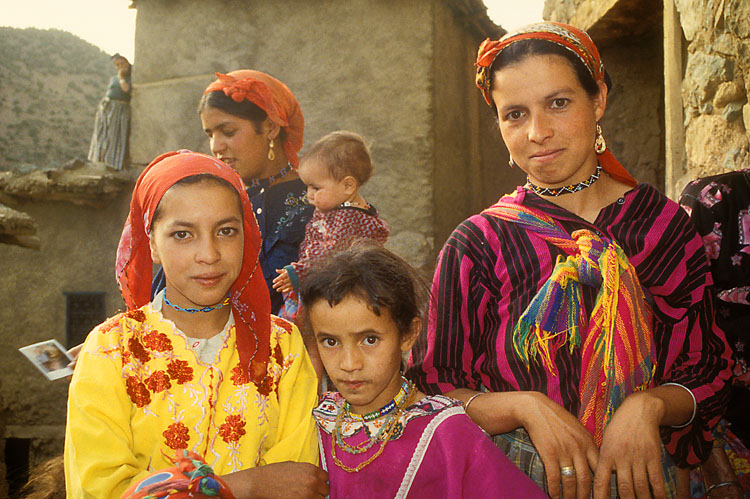
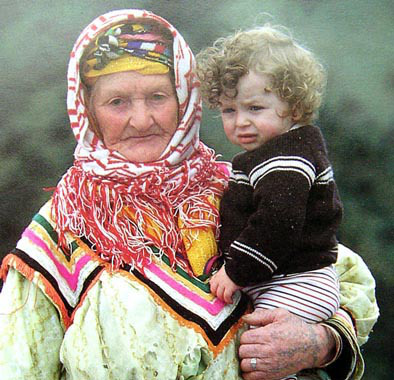
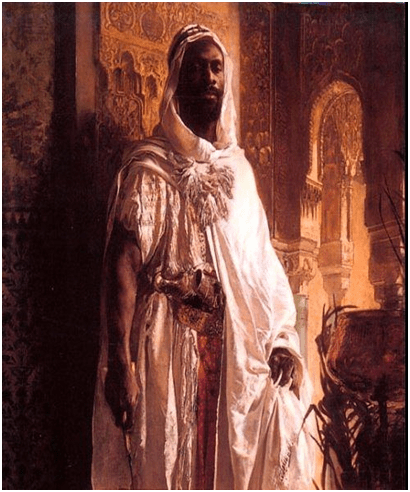
A lot of this confusion comes from the race of the Moors. The Moors are a Caucasoid Muslim group from North Africa. People hear ‘Africa’ and automatically think sub-Saharan Africa. Well, the Moors were Cacausoid for one. 2, as I have shown above, the amount of Moorish/Berber admixture is minute in Italians. 3rd, I will show now that the Berbers are not sub-Saharan African.
You have other Afrocentrist websites who talk about so-called ‘black Moors’. Well, the Moors were Berbers and Arabs, who are Caucasian.
Berbers live in groups scattered across NorthAfrica whose origins and genetic relationships with their neighbours are not well established. The first hypervariablesegment of the mitochondrial DNA (mtDNA) control region was sequenced in a total of 155 individuals from three Tunisian Berber groups and compared to other North Africans. The mtDNA lineages found belong to a common set of mtDNA haplogroups already described in NorthAfrica. Besides the autochthonous North African U6 haplogroup, a group of L3 lineages characterized by the transition at position 16041 seems to be restricted to North Africans, suggesting that an expansion of this group of lineages took place around 10500 years ago in NorthAfrica, and spread to neighbouring populations. Principal components and the coordinate analyses show that some Berber groups (the Tuareg, the Mozabite, and the Chenini-Douiret) are outliers within the NorthAfrican genetic landscape. This outlier position is consistent with an isolation process followed by genetic drift in haplotypefrequencies, and with the high heterogeneity displayed by Berbers compared to Arab samples as shown in the AMOVA. Despite this Berber heterogeneity, no significant differences were found between Berber and Arab samples, suggesting that the Arabization was mainly a cultural process rather than a demographic replacement.
 NotPoliticallyCorrect