Home » 2017 (Page 9)
Yearly Archives: 2017
The ENA Theory: On Testosterone and Aggressive Behavior by Race/Ethnicity
3250 words
A commenter by the name of bbloggz alerted me to a new paper by Lee Ellis published this year titled Race/ethnicity and criminal behavior: Neurohormonal influences in which Ellis (2017) proposed his theory of ENA (evolutionary neuroandrogenic theory) and applied it to racial/ethnic differences in crime. On the face, his theory is solid and it has great explanatory power for the differences in crime rates between men and women, however, there are numerous holes in the application of the theory in regards to racial/ethnic differences in crime.
In part I, he talks about racial differences in crime. No one denies that, so on to part II.
In part II he talks about environmental causes for the racial discrepancies, that include economic racial disparities, racism and societal discrimination and subordination, a subculture of violence (I’ve been entertaining the honor culture hypothesis for a few months; Mazur (2016) drives a hard argument showing that similarly aged blacks with some college had lower levels of testosterone than blacks with less than high school education which fits the hypothesis of honor culture. Though Ellis’ ENA theory may account for this, I will address this below). However, if the environment that increases testosterone is ameliorated (i.e., honor culture environments), then there should be a subsequent decrease in testosterone and crime, although I do believe that testosterone has an extremely weak association with crime, nowhere near high enough to account for racial differences in crime, the culture of honor could explain a good amount of the crime gap between blacks and whites.
Ellis also speaks about the general stress/strain explanation, stating that blacks have higher rates of self-esteem and Asians the lowest, with that mirroring their crime rates. This could be seen as yet another case for the culture of honor in that blacks with a high self-esteem would feel the need to protect their ‘name’ or whatever the case may be and feel the need for physical altercation based on their culture.
In part III, Ellis then describes his ENA theory, which I don’t disagree with on its face as it’s a great theory with good explanatory power but there are some pretty large holes that he rightly addresses. He states that, as I have argued in the past, females selected men for higher rates of testosterone and that high rates of testosterone masculinize the brain, changing it from its ‘default feminine state’ and that the more androgens the brain is exposed to, the more likely it is for that individual to commit crime.
Strength
Ellis cites a study by Goodpaster et al (2006) in which he measured the races on the isokinetic dynamometry, pretty much a leg extension. However, one huge confound is that participants who did not return for follow-up were more likely to be black, obese and had more chronic disease (something that I have noted before in an article on racial grip strength). I really hate these study designs, but alas, it’s the best we have to go off of and there are a lot of holes in them that must be addressed. Though I applaud the researchers’ use of the DXA scan (regular readers may recall my criticisms on using calipers to assess body fat in the bench press study, which was highly flawed itself; Boyce et al, 2014) to assess body fat as it is the gold standard in the field.
Ellis (2017: 40) writes: “as brain exposure to testosterone surges at puberty, the prenatally-programmed motivation to strive for resources, status, and mating opportunities will begin to fully activate.” This is true on the face, however as I have noted the correlation between physical aggression and testosterone although positive is low at .14 (Archer, 1991; Book et al, 2001). Testosterone, as I have extensively documented, does cause social dominance and confidence which do not lead to aggression. However, when other factors are coupled with high testosterone (as noted by Mazur, 2016), high rates of crime may occur and this may explain why blacks commit crime; a mix of low IQ, high testosterone and low educational achievement making a life of crime ‘the smart way’ to live seeing as, as Ellis points out, and that intelligent individuals find legal ways to get resources while less intelligent individuals use illegal ways.
ENA theory may explain racial differences in crime
In part IV he attempts to show how his ENA theory may explain racial differences in crime—with testosterone sitting at the top of his pyramid. However, there are numerous erroneous assumptions and he does rightly point out that more research needs to be done on most of these variables and does not draw any conclusions that are not warranted based on the data he does cite. He cites one study in which testosterone levels were measured in the amniotic fluid of the fetus. The sample was 59 percent white and due to this, the researchers lumped blacks, ‘Hispanics’ and Native Americans together which showed no significant difference in prenatal testosterone levels (Martel and Roberts, 2014).
Umbilical cord and testosterone exposure
Ellis then talks about testosterone in the umbilical cord, and if the babe is exposed to higher levels of testosterone in vitro, then this should account for racial/ethnic differences in crime. However, the study he cited (Argus-Collins et al, 2012) showed no difference in testosterone in the umbilical cord while Rohrmann et al (2009) found no difference in testosterone between blacks and whites but found higher rates of SHBG (sex hormone-binding globulin) which binds to testosterone and makes it unable to leave the blood which largely makes testosterone unable to affect organ development. Thusly, if the finding of higher levels of SHBG in black babes is true, then they would be exposed to less androgenic hormones such as testosterone which, again, goes against the ENA theory.
He also cites two more studies showing that Asian babes have higher levels of umbilical cord testosterone than whites (Chinese babes were tested) (Lagiou et al, 2011; Troisi et al, 2008). This, again, goes against his theory as he rightly noted.
Circulating testosterone
Next he talks about circulating differences in testosterone between blacks and whites. He rightly notes that testosterone must be assayed in the morning within an hour after waking as that’s when levels will be highest, yet cites Ross et al (1986) where assay times were all over the place and thusly testosterone cannot be said to be higher in blacks and whites based on that study and should be discarded when talking about racial differences in testosterone due to assay time being between 10 am and 3 pm. He also cites his study on testosterone differences (Eliss and Nyborg, 1993), but, however, just as Ross et al (1986) did not have a control for WC (waist circumference) Ellis and Nyborg (1993) did not either, so just like the other study that gets cited to show that there is a racial difference in testosterone, they are pretty hugely flawed and should not be used in discussion when discussing racial differences in testosterone. Why do I not see these types of critiques for Ross et al (1986) in major papers? It troubles me…
He also seems to complain that Lopez et al (2013) controlled for physical activity (which increases testosterone) and percent body fat (which, at high levels, decreases testosterone). These variables, as I have noted, need to be controlled for. Testosterone varies and fluctuated by age; WC and BMI vary and fluctuate by age. So how does it make sense to control for one variable that has hormone levels fluctuate by age and not another? Ellis also cites studies showing that older East Asian men had higher levels of testosterone (Wu et al, 1995). Nevertheless, there is no consensus; some studies show Chinese babes have higher levels of testosterone than whites and some studies show that whites babes have higher levels of testosterone than Chinese babes. Indeed, this meta-analysis by Ethnicmuse shows that Asians have the highest levels, followed by Africans then Europeans, so this needs to be explained to save the theory that testosterone is the cause of black overrepresentation of violence (as well as what I showed that testosterone is important for vital functioning and is not the boogeyman the media makes it out to be).
Bone density and crime
Nevertheless, the next variable Ellis talks about is bone density and its relationship to crime. Some studies find that blacks are taller than whites while other show no difference. Whites are also substantially taller than Asian males. Blacks have greater bone density than the other three races, but according to Ellis, this measure has not been shown to have a relationship to crime as of yet.
Penis size, race and crime
Now on to penis size. In two articles, I have shown that there is no evidence for the assertion that blacks have larger penises than whites. However, states that penis length was associated with higher levels of testosterone in Egyptian babes. He states that self-reported penis size correlates with self-reports of violent delinquency (Ellis and Das, 2012). Ellis’ main citations for the claim that blacks have larger penises than other races comes from Nobile (1982), the Kinsey report, and Rushton and Boagert (1987) (see here for a critique of Rushton and Boagert, 1987), though he does cite a study stating that blacks had a longer penis than whites (blacks averaging 5.77 inches while whites averaged 5.53 inches). An HBDer may go “Ahah! Evidence for Rushton’s theory!”, yet they should note that the difference is not statistically significant; just because there is a small difference in one study also doesn’t mean anything for the totality of evidence on penis size and race—that there is no statistical difference!
He then cites Lynn’s (2013) paper which was based on an Internet survey and thus, self-reports are over-measured. He also cites Templer’s (2002) book Is Size Important?, which, of course, is on my list of books to read. Nevertheless, the ‘evidence’ that blacks average larger penises than whites is extremely dubious, it’s pretty conclusive that the races don’t differ in penis size. For further reading, read The Pseudoscience of Race Differences in Penis Size, and read all of Ethnicmuses’ posts on penis size here. It’s conclusive that there is no statistical difference—if that—and any studies showing a difference are horribly flawed.
2d/4d ratio and race
Then he talks about 2d/4d ratio, which supposedly signifies higher levels of androgen exposure in vitro (Manning et al, 2008) however these results have been challenged and have not been replicated (Koehler, Simmons, and Rhodes, 2004; Yan et al, 2008, Medland et al, 2010). Even then, Ellis states that in a large analysis of 250,000 respondents, Asians had the lowest 2d/4d ratio, which if the hypothesis of in vitro hormones affecting digit length is to be believed, they have higher levels of testosterone than whites (the other samples had small ns, around 100).
Prostate-specific antigens, race, and prostate cancer
He then talks about PSA (prostate-specific antigen) rates between the races. Blacks are two times more likely to get prostate cancer, which has been blamed on testosterone. However, I’ve compiled good evidence that the difference comes down to the environment, i.e., diet. Even then, there is no evidence that testosterone causes prostate cancer as seen in two large meta-analyses (Stattin et al, 2003; Michaud, Billups, and Partin, 2015). Even then, rates of PCa (prostate cancer) are on the rise in East Asia (Kimura, 2012; Chen et al, 2015; Zhu et al, 2015) which is due to the introduction of our Western diet. I will cover the increases in PCa rates in East Asia in a future article.
CAG repeats
He then reviews the evidence of CAG repeats. There is, however, no evidence that the number of CAG repeats influences sensitivity to testosterone. However, intra-racially, lower amounts of CAG repeats are associated with higher spermatozoa counts—but blacks don’t have higher levels of spermatozoa (Mendiola et al, 2011; Redmon et al, 2013). Blacks do have shorter CAG repeats, and this is consistent with the racial crime gap of blacks > whites > Asians. However, looking at the whole of the evidence, there is no good reason to assume that this has an effect on racial crime rates.
Intelligence and education
Next he talks about racial differences in intelligence and education, which have been well-established. Blacks did have higher rates of learning disabilities than whites who had higher levels of learning disabilities then Asians in a few studies, but other studies show whites and South Asians having different rates, for instance. He then talks about brain size and criminality, stating that the head size of males convicted for violent crimes did not differ from males who committed non-violent crimes (Ikaheimo et al, 2007). I won’t bore anyone with talking about what we know already: that the races differ in average brain size. However, a link between brain size and criminality—to the best of my knowledge—has yet to been discovered. IQ is implicated in crime, so I do assume that brain size is as well (no matter if the correlation is .24 or not; Pietschnig et al, 2015).
Prenatal androgen exposure
Now to wrap things up, the races don’t differ in prenatal androgen exposure, which is critical to the ENA theory; there is a small difference in the umbilical cord favoring blacks, and apparently, that predicts a high rate of crime. However, as noted, blacks have higher levels of SHBG at birth which inhibits the production of testosterone on the organs. Differences in post-pubertal testosterone are small/nonexistent and one should not talk about them when talking about differences in crime or disease acquisition such as PCa. DHT only shows a weak positive correlation with aggression—the same as testosterone (Christiansen and Winkler, 1992; however other studies show that DHT is negatively correlated with measures of physical aggression; Christiansen and Krussmann, 1987; further, DHT is not so evil after all).
Summing it all up
Blacks are not stronger than whites, indeed evidence from the races’ differing somatype, grip strength and leverages all have to do with muscular strength. Furthermore, the study that Ellis cites as ‘proof’ that blacks are stronger than whites is on one measure; an isokinetic dynamometry machine which is pretty much a leg extension. In true tests of strength, whites blow blacks away, which is seen in all major professional competitions all around the world. Blacks do have denser bones which is due to androgen production in vitro, but as of yet, there has been no research done into bone density and criminality.
The races don’t differ on penis size—and if they do it’s by tenths of an inch which is not statisitcally significant and I won’t waste my time addressing it. It seems that most HBDers will see a racial difference of .01 and say “SEE! Rushton’s Rule!” even when it’s just that, a small non-significant difference in said variable. That’s something I’ve encountered a lot in the past and it’s, frankly, a waste of time to converse about things that are not statistically significant. I’ve also rebutted the theory on 2d/4d ration as well. Finally, Asians had a similar level of androgen levels compared to blacks, with whites having the least amount. Along with a hole in the theory for racial differences in androgen causing crime, it’s yet another hole in the theory for racial differences in androgens causing racial differences in penis size and prostate cancer.
On intelligence scores, no one denies that blacks have scored about 1 SD lower than whites for 100 years, no one denies that blacks have a lower educational attainment. In regards to learning disabilities, blacks seem to have the highest rates, followed by Native Americans, than non-Hispanic whites, East Asians and the lowest rates found in South Asians. He states only one study links brain size to criminal behavior and it showed a significant inverse relationship with crime but not other types of offenses.
This is a really good article and I like the theory, but it’s full of huge holes. Most of the variables described by Ellis have been shown to not vary at all or much between the races (re: penis size, testosterone, strength [whites are stronger] prostate cancer caused mainly by diet, 2d/4d ratio [no evidence of it showing a digit ratio difference], and bone density not being studied). Nevertheless, a few of his statements do await testing so I await future studies on the matter. He says that androgen exposure ‘differs by race and ethnicity’, yet the totality of evidence shows ‘not really’ so that cannot be the cause of higher amounts of crime. Ellis talks about a lot of correlates with testosterone, but they do not pass the smell test. Most of it has been rebutted. In fact, one of the central tenets of the ENA theory is that the races should differ in 2d/4d ratio due to exposure of differing levels of the hormone in vitro. Alas, the evidence to date has not shown this—it has in fact shown the opposite.
ENA theory is good in thought, but it really leaves a lot to be desired in regards to explaining racial differences in crime. More research needs to be looked into in regards to intelligence and education and its effect on crime. We can say that low IQ people are more likely to drop out of school and that is why education is related to crime. However, in Mazur (2016) shows that blacks matched for age had lower levels of testosterone if they had some college under their belt. This seems to point in the direction of the ENA theory, however then all of the above problems with the theory still need to be explained away—and they can’t! Furthermore, one of the nails in the coffin should be this: East Asian males are found to have higher levels of testosterone than white males, often enough, and East Asian males actually have the lowest rate of crime in the worle!
This seems to point in the direction of the ENA theory, however then all of the above problems with the theory still need to be explained away—and they can’t! Furthermore, one of the nails in the coffin should be this: East Asian males are found to have higher levels of testosterone than white males, often enough, and East Asian males actually have some of the lowest rate of crime in the world (Rushton, 1995)! So this is something that needs to be explained if it is to be shown that testosterone facilitates aggression and therefore, crime.
Conclusion
I’ve shown—extensively—that there is a low positive correlation between testosterone and physical aggression, why testosterone does not cause crime, and have definitively shown that, by showing how flawed the other studies are that purport to show blacks have higher testosterone levels than whites, along with citing large-scale meta-analyses, that whites and blacks either do not differ or the differences is small to explain any so-called differences in disease acquisition or crime. One final statement on the CAG repeats, they are effect by obesity, men who had shorter CAG repeats were more likely to be overweight, which would skew readings (Gustafsen, Wen, and Koppanati, 2003). So depending on the study—and in most of the studies I cite whites have a higher BMI than blacks—BMI and WC should be controlled for due to the depression of testosterone.
It’s pretty conclusive that testosterone itself does not cause crime. Most of the examples cited by Ellis have been definitively refuted, and his other claims lack evidence at the moment. Even then, his theory rests on the 2d/4d ratio and how blacks may have a lower 2d/4d ratio than whites. However, I’ve shown that there is no significant relationship between 2d/4d ratio and traits mediated by testosterone (Kohler, Simmons, and Rhodes, 2004) so that should be enough to put the theory to bed for good.
Why Testosterone Does Not Cause Crime
1900 words
Edit: (The correlation between aggression and testosterone isn’t .14 as Book et al (2001) state; the true correlation is .08 (Archer, Graham-Kevan and Davies, 2005) So it’s even lower than I thought. This is one of the many reasons why testosterone does not cause crime. It’s just feminist bullshit and fear mongering from people who do not understand the hormone and what it does in the body. The misconceptions come from Rushton’s r/K selection bullshit which has been summarily refuted.)
Recently, I’ve written at length on racial differences in testosterone and how the correlation between testosterone and physical aggression is .14. Pitifully low to account for the cause of crime and any overall differences in racial crime (that will be touched on at length in the future). Tonight I will show, yet again, why testosterone does not cause crime by looking at what times most crimes are committed by both adults and children under the age of 18. This will definitively put the ‘testosterone causes crime’ myth to bed for good.
Before I get into the time of day that most crimes are committed, I must talk about the production of testosterone in the body. There are no ‘genes for’ testosterone (although men who had three certain alleles had a 6.5 fold higher risk of having low testosterone; Ohlsson et al, 2011, I am unaware of there being a variation by race; over 10,000 Caucasian men were studied). There is, however, an indirect control of testosterone synthesis by DNA. DNA regulates the production of testosterone by coding for enzymes that convert cholesterol to testosterone (testosterone is a cholesterol-based hormone).
There are five simple steps to the production of testosterone: 1) DNA codes for mRNA; 2) mRNA codes for the synthesis of an enzyme in the cytoplasm; 3) luteinizing hormone stimulates the production of another messenger in the cell when testosterone is needed; 4) this second messenger activates the enzyme; 5) the enzyme then converts cholesterol to testosterone (Leydig cells produce testosterone in the presence of luteinizing hormone). That’s how testosterone is produced in the body. It is indirectly controlled by DNA.
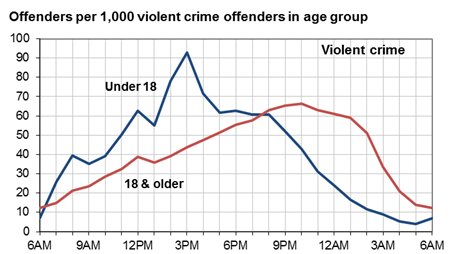
Above is a graph from the Office of Juvenile Justice and Delinquency Prevention which shows the time of day that most crimes are committed. Notice how crime goes up as the time of day goes on and since kids are at school, they’re more likely to fight. This then peaks at 3 pm when kids are getting out of school.
Now look at rates of crime for adults. At its peak of 10 pm, it’s vastly lower than that of people under the age of 18, which is important to keep in mind. You can see how at 8 am that rates of crime are low for adults and high for kids, right when they would be entering school so there would be a lot of other kids around and the chance for violence goes up. Keep the times of 8 am (kids when they enter school), 12 pm (when most kids go on lunch) and 3 pm (when most kids get out of school) along with the hours of 12 pm to 8 pm for adults (when 74 percent of crimes are committed by adults).
- In general, the number of violent crimes committed by adults increases hourly from 6 a.m. through the afternoon and evening hours, peaks at 10 p.m., and then drops to a low point at 6 a.m. In contrast, violent crimes by juveniles peak in the afternoon between 3 p.m. and 4 p.m., the hour at the end of the school day.
- Nearly one-third (29%) of all violent crime committed by juvenile offenders occurs between 3 p.m. and 7 p.m. In comparison, 26% of all violent committed by adult offenders occurs between 8 p.m. and 12 p.m.
So since testosterone varies by day and levels are highest at 8 am and lowest at 8 pm (Brambilla et al, 2009; however testing men aged 45 years of age and older is fine before 2 pm due to a blunted circadian rhythm; Long, Nguyen, and Stevermer, 2015), then how could testosterone account for why men commit most of their crimes at night and why the crime that children commit spikes when they go to school, go to lunch and get out of school? The answer is that it doesn’t because testosterone does not cause crime. What testosterone does cause, however, are feelings of confidence and dominance, which does not—surprisingly—lead to increased aggression and assault on others (Booth et al, 2006).
What testosterone does cause, however, is social dominance and success, not physical aggression and maladjustment (Shcaal et al, 1996). The effects of environment are also more notable on testosterone than are genetics at 5 months of age (Carmaschi et al, 2010). Furthermore, aggressive behavior is first noticed in infancy and reaches its peak before school age (Tremblay et al, 2004; Cote et al, 2006). Though testosterone does seem to have an effect on aggression in preschool boys, however genetic and environmental causality has not been established (Sanchez-Martin et al, 2000).
Nevertheless, the meta-analyses I cited last week show that testosterone has an extremely low correlation of .14, so other factors must be at play. However, Sanchez-Martin et al (2000:778-779) also note that “Tremblay et al (1998) suggested that associations between testosterone titer and physical aggression are likely to be observed in contexts where such attack leads to social dominance. This may be true of the preschool boys in the present study. The data generated in the present study generally support Scerbo and Kolko (1994), who studied older children (7 to 14 years of age). They found a significant relationship between testosterone levels and aggression (as assessed by clinical staff).”
It’s interesting to note that in the case of Scerbo and Kolko (1994) that after controlling for age and size, testosterone correlated with aggression when rated by staff but not parents or teachers. ‘Staff’ refers to clinic staff at a facility where the children were assessed for hyperactivity disorders. Of course, the staff would rate higher levels of aggression compared to parents of teachers—people who are around the children every day—since they would want a higher chance for diagnosis for certain drugs to ‘cure’ the hyperactivity, but I digress. Testosterone does not induce aggression in children, but it does induce social dominance and confidence which does not lead to aggression (Rowe et al, 2004; Booth et al, 2006).
There was also little difference in testosterone between socially dominant prisoners and aggressive prisoners (Ehrenkraz, Bliss, and Sheard, 1974). Furthermore, the testosterone increase leading to pubertal development in boys is not associated with increased aggression (Tremblay et al, 1998; Booth et al, 2006: 171). Indeed, increased body size is a marker for physical aggression in children, and I doubt these children have high muscle mass so, I assume, they have high levels of body fat and thusly lower levels of testosterone than they would have if they were leaner. Yet another strike against the ‘testosterone causes crime/physical aggression’ hypothesis.
Indeed, this has some implications for the honor culture hypothesis of why low-income blacks have higher levels of testosterone than similarly aged blacks with some college (Mazur, 2016). The patterns for crime as shown by the OOJDP shows that crime rises as the day progresses from the morning until its peak at 3 pm for children and then sharply declines while for adults it peaks at 10 pm.
Testosterone does increase when a challenge is issued; when one man feels his reputation is threatened, the propensity for violence is increased, but this was most notably seen in Southern men (Cohen et al, 1996). So the same would be said for this ‘culture of honor’ found in low-income black neighborhoods, the so-called ‘code of the street’ as stated by Anderson (1994: 88): “Moreover, if a person is assaulted, it is important, not only in the eyes of his opponent but in the eyes of his “running buddies,” for him to avenge himself. Otherwise, he risks being “tried” (challenged) or “moved on” by any number of others. To maintain his honor, he must show he is not someone to be “messed with” or “dissed.””
This culture of honor is found all over the world, including Brazil where homicide can be explained by the need to maintain honor and can be understood by taking into account cultural factors; biological, psychological and socioeconomic factors do not explain murder in Northeast Brazil as well as honor and culture (de Souza et al, 2015). People in honor cultures also have a higher chance of self-harm (Osterman and Brown, 2011) as well as a higher chance of committing violence in school (Brown, Osterman, and Barnes, 2009).
Testosterone does not cause crime; it does not cause aggression. Increases in testosterone before, during and after events are a physiologic process to prime the body for competition. As cited above, dominant behavior does not necessarily lead to violence in most cases, which may be surprising for some. Indeed, honor and culture may explain a nice amount of the homicide and violence rate in the South. Since testosterone is highest at 8 am and lowest at 8 pm and the rates of crime committed by adults and children are vastly different than the diurnal variance in the day, then testosterone does not cause crime and its increase is not associated with crime, but social dominance and confidence which does not lead to crime.
Hopefully—if anyone still believes testosterone to be the boogeyman its made out to be—I’ve put those misconceptions to rest. Racial differences in testosterone cannot be the cause of racial differences in crime—because there is either no statistical difference in testosterone between the races or the difference is non-existent. Testosterone is clearly a beneficial hormone—as I have extensively documented. Misunderstandings of the hormone are abound—especially in the HBD sphere—only due to literally a few paragraphs in a book (Rushton, 1997) and one study that showed blacks have higher testosterone than whites which was the cause of their higher rates of prostate cancer (Ross et al, 1986). The study is hard to find so I had to buy access to it. I will cover this in the future, but I discovered that they assayed the subjects when it was convenient for them—between the hours of 10 am and 3 pm—which is unacceptable. You cannot gauge racial differences in testosterone from a small study (n=50) and a non-representative sample (college students). For these reasons, the study should be thrown in the trash—especially when formulating evolutionary hypotheses.
Testosterone is one of the most important hormones for vital functioning. By knowing how it is processed in the body and that there are no ‘genes for’ testosterone (‘low testosterone genes’ notwithstanding) along with how testosterone has a low relationship with physical aggression one should not be scared of having high levels, on the contrary, one should be scared of having low levels. I have once again proven my case that testosterone is not related to violence in showing the diurnal variation in testosterone levels in adults, as well as the time of day that crimes are committed by both adults and children. High testosterone means high confidence and high dominance—and those two traits have a lot to do with masculinity—which do not lead to violence.
I know why testosterone does not cause crime—because I have an understanding of the hormone, how its produced in the body and what its effects on the body are. The most important thing to note here, is that even if blacks had 15 percent higher testosterone than whites, it still wouldn’t explain higher rates of crime or disease such as prostate cancer. So those who try so hard to prove that blacks have higher levels of the hormone do so in vain, because even if they did it wouldn’t mean anything for any theories they may have. The myth of testosterone causing aggression and crime need to be put to bed for good.
Our View of ‘Intelligence’ Needs to Change
900 words
What is intelligence? How would we define it? Would intelligence be reacting to what occurs in the immediate environment; having the ability to have behavioral plasticity or even communicating with others? Amazingly, bacteria have been found to do both things noted above: They have been found to be able to react to their environment, i.e., have the ability for plastic behavior and they have even been shown to communicate with one another. Hell, even something as simple as a slime mold has been found to navigate a maze to find food. Is that not intelligence?
Ken Richardson, author of the book Genes, Brains, and Human Potential: The Science and Ideology Behind Intelligence writes:
Living things, then, need to be good at registering those statistical patterns across everyday experience and then use them to shape the best response, including (in the cell) what genes to recruit for desired products. This is what intelligence is, and it’s origins coincide with the origins of life itself, and life is intelligence. (Richardson, 2017: 115)
In multicelluar systems, of course, the cells are not just responding to one another, but also collectively to the changing environment outside. That requires an intelligent physiology, as described in chapter 5. However, it is still the statistical structure of the changes that matters and that forms the basis of a living intelligence. Even at this level, closest to the genes, then, the environment is emphatically not a loose collection of independent factors to which the cells respond, in stimulus-response fashion, under gene control. This reality makes the additive statistical models of the behavioral geneticist quite unrealistic. (Richardson, 2017: 120)
Currently, our view of intelligence has an anthropometric lean. But, as I’ve been saying for months now, why should we view humans as a sort of ‘apex’ to evolution? Why should we be the measuring stick? If you really think about it to put us—our brains—at the top of a rank order as ‘the best’ and not recognize what other, smaller supposedly ‘archaic’ forms of life can do, then maybe it’s best to take off our human-centric glasses and look at the whole of the animal kingdom as intelligent—including bacteria, as they show the basic things necessary for what we would call intelligence, i.e., behavioral plasticity.
In this paper published just two months ago, the authors write:
Bacteria are far more intelligent than we can think of. They adopt different survival strategies to make their life comfortable. Researches on bacterial communication to date suggest that bacteria can communicate with each other using chemical signaling molecules as well as using ion channel mediated electrical signaling. (Majumdar and Pal, 2017)
Furthermore, looking at definitions of the term ‘behavior’ from ethology, we can see that bacteria exhibit these behaviors that we have deemed ‘human’ or ‘human-like’:
- “Externally visible activity of an animal, in which a coordinated pattern of sensory, motor and associated neural activity responds to changing external or internal conditions” (Beck et al. 1981)
- “A response to external and internal stimuli, following integration of sensory, neural, endocrine, and effector components. Behavior has a genetic basis, hence is subject to natural selection, and it commonly can be modified through experience” (Starr and Taggart 1992)
- “Observable activity of an organism; anything an organism does that involves action and/or response to stimulation” (Wallace et al. 1991)
- “What an animal does” (Raven and Johnson 1989)
Bacteria have been found to fit all of the criteria mentioned above. If organisms can react to how the environment changes, then that organism has—at least a semblance—of intelligence. Bacteria have also been found to be able to learn and they also have memories, so if this is true (and it is), then bacteria are intelligent.
Finally, Westerhoff et al (2014) write that leaving out the terms ‘human’ and our brains as measuring sticks for what is intelligent, that “all forms of life – from microbes to humans – exhibit some or all characteristics consistent with “intelligence.” For people with anthropocentric views of evolution, however, this is a hard pill to swallow. If the data says that bacteria have evidence of ‘cognition’ and an ability to react to outside environmental cues then bacteria have a semblance of intelligence. There is no denying it.
We clearly need to look at intelligence in a different way—one that’s free of any anthropocentric bias—-and if we do, we would recognize numerous species as intelligent that we would never have thought of before since we view ourselves as some sort of ‘apex’ of evolution, that we are supreme on this earth, when the bacteria—the modal bacter—reign supreme and will continue to remain supreme until the Sun explodes. So if bacteria show the ability to communicate with one another and the ability to change their behavior when their environment changes, i.e., that they learn and have ‘memories’ of past events, then maybe it’s time for us to change from our human-centric view of intelligence (which makes a ton of sense; viewing us as an ‘apex’ of evolution makes no sense and doesn’t allow us to appreciate the wide range of variation on earth).
As Gould wrote in Full House, looking at only the right tail we would believe that some sort of ‘progress’ reigns supreme, but looking at the whole sum of variation, we can see that the bacteria are the mode of all life, have been the mode of all life and will remain the mode of all life until the Sun explodes and all life forever perishes from Earth.
Testosterone and Aggressive Behavior
1200 words
Testosterone gets a bad rep. People assume that if one has higher testosterone than average, that they will be a savage, bloodthirsty beast with an insatiable thirst for blood. This, however, is not the case. I’ve documented how testosterone is vital for male functioning, and how higher levels don’t lead to maladies such as prostate cancer. Testosterone is feared for no reason at all. The reason that people are scared of it is that of the anecdotal reports that individual A had higher testosterone when he committed crime B so, therefore, anyone who commits a crime has higher testosterone and that is the ultimate—not proximate—cause of crime. This is erroneous. There is a positive—albeit extremely low—correlation between physical aggression and violence at .14. That’s it. Furthermore, most of these claims of higher levels of testosterone causing violence is extrapolated from animal studies to humans.
Testosterone has been shown to lead to violent and aggressive behavior, largely only in animal studies (Archer, 1991; Book et al, 2001). For years, the relationship between the two variables was thought to be causal, i.e., high levels of testosterone cause violent crimes, which has been called into question over recent years. This is due to how the environment can raise testosterone levels. I have documented how these environmental factors can raise testosterone—and after these events, testosterone stays elevated.
Largely, animal studies are used to infer that high levels of testosterone in and of themselves lead to higher rates of aggression and therefore crime. However, two important meta-analyses show this is not necessarily the case (Archer, 1991; Book et al, 2001). Book et al, 2001 showed that two variables were important in seeing the relationship between aggression and crime—the time of day that the assay was taken and the age of the participant. This effect was seen to be largest in, not unexpectedly, males aged 13-20 (Book et al, 2001: 594). So since age confounds the relationship between aggression and testosterone in males, that is a variable that must also be controlled for (which, in the meta-analyses and other papers I cite on black and white testosterone is controlled for).
More interestingly, Book et al (2001) showed that the nature of the measure of aggression (self-reported or behavioral) did not have any effect on the relationship between testosterone and aggression. Since there is no difference between the two measures, then a pencil-and-paper test is a good enough index of measure of aggression, comparable to observing the behavior of the individual studied.
Archer (1991) also showed the same low—but positive—correlations between aggression and testosterone. Of course, as I’ve extensively documented since there is a positive relationship between the two variables does not necessarily mean that high-testosterone men commit more crime—since the outcome of certain situations can increase and decrease testosterone, no causal factors have been detangled. Book et al (2001) confirmed Archer’s (1991) finding that the correlation between violent and aggressive behavior was positive and low at .14.
Valois et al (2017) showed there was a relationship between emotional self-efficacy (ESE) and aggressive and violent behaviors in a statewide sample of high school children in South Carolina (n=3,386). Their results suggested that there was a relationship between carrying a weapon to school within the past 30 days along with being injured with a club, knife or gun in the past 12 months was significantly associated with ESE for specific race and sex groups.
Black girls who reported a low ESE reported carrying a weapon to school 30 days prior to the survey were 3.22 times more than black girls with a high ESE who did not report carrying a weapon to school within the past 30 days prior to the questionnaire. For black boys with low ESE, they were 3.07 times more likely to carry a weapon to school within the past 30 days in comparison to black boys with high ESE who did not carry a weapon to school in the past 30 days. White girls who reported low ESE had the highest chance of bringing a weapon to school in comparison to white girls with low ESE—they were 5.87 times more likely to carry a weapon to school 30 days prior to the survey. Finally, white boys with low ESE were slightly more than 2 times more likely than white boys with high ESE to carry a weapon to school 30 days prior to the survey.
Low ESE in white and black girls is associated with carrying a weapon to school, whereas low ESE for white and black boys is associated with being threatened. Further, their results suggested that carrying a weapon to school was associated with low ESE in black and white girls suggesting that low ESE is both situation-specific and specific to the female sex. The mediator between these things is low ESE—it is different for both black boys and black girls, and when it occurs different courses of action are taken, whether it’s through bringing a weapon to school or being threatened. What this tells me is that black and white boys with low ESE are more likely to be threatened because they are perceived to be more meek, while black and white girls with low ESE that get provoked at school are more likely to bring weapons. So it seems that girls bring weapons when provoked and boys fight.
The two meta-analyses reviewed above show that there is a low positive (.14) correlation between testosterone and aggression (Archer, 1991; Book et al, 2001). Thusly, high levels of testosterone on their own are not sufficient enough to explain high levels of aggression/violence. Further, there are race- and sex-specific differences when one is threatened at high school with black and white boys being more likely to report being threatened more (which implies a higher rate of physical fighting) while black and white girls when threatened brought weapons to school. These race- and sex-specific differences in the course of action taken when they are physically threatened needs to be looked into more.
I’d like to see the difference in testosterone levels for a matched sample of black and white boys from two neighboring districts with different murder rates as a proxy for the amount of violence in the area. I’d bet that the places with a higher murder rate would have children 1) report more violence and instances of bringing weapons to school and 2) report more harm from these encounters—especially if they have low ESE as seen in Valois (2017) and 3) the children in the high schools along with the residents of the area would have higher testosterone than the place with less violence. I would expect these differences to be magnified in the direction of Valois (2017) in that areas with higher murder rates would have black and white girls report bringing weapons to school when threatened whereas black and white boys would report more physical violence.
High testosterone itself is not sufficient enough to explain violence as the correlation is extremely low at .14. Testosterone levels fluctuate depending on the time of day (Brambilla et al, 2009; Long, Nguyen, and Stevermer, 2015) to the time of year (Stanton, Mullette-Gillman, and Huettel, 2011; Demur, Uslu, and Arslun, 2016). How the genders/races react differently when threatened in adolescence is interesting and deserves further study.
You Are what you Eat, Including Brains
by Scott Jameson
850 words
I’ve been thinking about Omega 3 fatty acids (N3s) recently. We’re clearly adapted to getting more of them than we’re actually getting.
Children whose mothers took fish oil (chock full of N3s EPA and DHA) during pregnancy have higher coordination, and they are smarter, although that difference may not persist later in development. RaceRealist has written about N3s and PISA math scores before.
Here’s a paper summarizing many of the known benefits of fish oil supplementation. Goes over some of the aforementioned results regarding kids, and also shows random improvements such as helping people with Alzheimer’s maintain weight.
A lack of N3s is associated with depression, coronary artery disease, maybe even autism. N3s are known to lessen autism symptoms. This is probably an immune thing. Sulforaphane, an anti-inflammatory agent, is known to reduce autism symptoms, and other research has elucidated the relationship between N3s and the immune system.
This is delicious fodder for a post of its own. There’s a mass of papers about the relationship between autism and the immune system; N3s being neuroprotective and correlating negatively with likelihood of autism/severity of autism symptoms vindicates the idea that autism happens when your immune system cooks your brain (neuroinflammation). You would expect males to be whacked harder by this because they’re not good at producing the important N3 docosahexaenoic acid (DHA). Thus, males ought to have higher autism rates- and they do.
Anyway, here’s what I’m getting at. Either N3s are a counter-intuitive miracle drug, or they’re just an important nutrient of which many of us do not get enough. The latter, I should think! The lemonade that can and will be made from these lemons is that widespread N3 deficiency gives us an opportunity to understand one of the ways that a human brain can get messed up. But we still want to fix the problem- more on that in my next post.
Our ancestors probably got more N3s than we do. They’ve been estimated to, anyway. (Second study mentioning our ancestors’ higher N3 intake.) If they didn’t, they might’ve been selected for better processing of alpha linoleic acid into eicosapentaenoic acid and subsequently docosahexaenoic acid, which real-life humans aren’t great at. As it stands, humans need either a whole bunch of excess ALA to convert to EPA and DHA, or we could have EPA and DHA straight. The excess ALA idea probably isn’t something you can rely on for your N3 needs, but certainly ALAs are better than nothing.
Seeds would’ve been a part of the diet back in the Paleolithic. Flax, an example of a seed rich in ALA, was known to humans quite a darned while ago, so seeds might have been a source of these critical nutrients. It’s worth noting that the first paleolithic diet estimation study linked in the previous paragraph pegs hunter gatherers as getting way more ALA than modern folks do.
Of course, many populations would’ve lived near oceans or at least rivers and lakes, where they could’ve gotten N3s from fish and seafood.
Some of it must have come from insects, themselves actually having a decent amount of N3s.
I’ve got an even weirder guess, though: bioaccumulation in land animal tissue. This possibility must have been important for peoples like the Botai culture with extremely narrow (Tarpan-based) diets, which likely didn’t include enough seeds, insects, and/or seafood. Animals can’t produce N3s of their own, but they eat ALA, convert it into EPA and DHA, and send a lot of it up to the brain, where it’s needed, with the result being that the brain has a lot more and higher quality N3s than any of the plants from which the N3s were derived.
Grog the caveman could’ve gotten a bunch of N3s from his favorite treat: scrambled auroch brains. Many of his progeny carry the practice into the present day, to the disgust of other living humans. Being that humans and our relatives are disgusting in general, Neanderthals occasionally even ate each other’s brains, and according to CNN, they’re still at it!
Nonhuman brains had to be the more popular option, then as now; mentioning the whole cannibalism thing is a bit of a non sequitur I shoved in for sheer entertainment value. But I suspect that there are several reasons we Westerners don’t get enough N3s: we don’t eat brains anymore, we don’t eat bugs anymore, and we don’t get as many ALA-rich plant oils as we used to. Perhaps we’re not getting enough fish, or perhaps the fish we’re getting are less likely to be fatty (e.g. salmonids, tuna, schooling fish) and more likely to be lean (cod, pollock).
Somehow or other we ought to get N3s back in our diet. Could save some kids from autism or, failing that, improve their prognosis. Again, it could increase our math scores, too, particularly in women. Closing part of the gap with other nations and between our sexes- two birds with one stone for our educators- and a boon for our engineering departments as well. Which is a boon for everyone.
The stakes are high. Who can save us from our collective state of starved brains? I’ll post my ideas soon.
Race, Testosterone, and Prostate Cancer
1900 words
I have explicitly shown how the ‘black men have more T’ canard is false. I have provided sufficient evidence for this claim. People claim to be unbiased—like PumpkinPerson—and say they’re only ‘looking for the truth’. However, it’s clear that in all of my conversations with him on the matter, he’s reaching for anything that affirms his worldview when he is shown evidence to the contrary of his beliefs (Nyhan and Reifler, 2012). It’s so very easy to notice this. I will provide yet more robust data on the black/white testosterone ‘gap’ while also critiquing some other studies that didn’t control for some pretty important variables. The gist is: after controlling for the most important variables, (waist circumference, BMI) the ‘testosterone difference’ all but disappears—and I don’t think people will argue for .0068 ng/ml higher testosterone cause things like prostate cancer and higher rates of crime.
Gapstur et al (2002) studied 5,115 individuals from aged 18-30 who completed baseline examinations at one of four locations from 1985-86: Birmingham, Alabama; Chicago, Illinois; Minneapolis, Minnesota; and Oakland, California. Then, 4 follow-ups were completed (Year 2: 1987-88; year 5: 1990-91; year 7: 1992-93; and year 10: 1995-96).
The number of blacks who completed the baseline information was 1157 whereas for whites it was 1171. They measured waist circumference (WC) at the minimal abdominal girth. Whether or not one took medication was self-reported, so Gapstur et al (2002) separated medications into two categories: regulation or interfering with binding likely, or interfering with binding unlikely/impossible.
Now, before I discuss the results of Gapstur et al (2002) I must talk about why they controlled for BMI (body mass index) and WC along with age. Since the obesity rate differs by race/ethnicity, along with obesity frequently changing with age, all three of the variables need to be controlled for to get a clearer picture of what circulating testosterone looks like—on average—between blacks and whites. White men are slightly more likely than black men to be obese/overweight in America (being African-American seems to be a protector against obesity; African American men with more African ancestry are less likely to be obese), however the sample used by Gapstur et al (2002) had blacks who had a higher WC and BMI than whites.
At year 2, there was no significant difference in total serum testosterone between the races with or without adjustment for age, BMI and WC. The only part in this analysis that blacks had higher testosterone levels than whites was at year ten, with black ‘enjoying’ .0063 ng/ml higher levels than whites. Furthermore, there was no significant difference in testosterone between blacks and whites after adjustment for age. Only adjusting for BMI, blacks had substantially higher levels of testosterone (.21 ng/ml) however after including WC and the changes in WC between blacks and whites (blacks had a greater change over the study) this difference all but disappeared. The age-associated changes in testosterone between blacks and whites were similar after adjusting for waist circumference and BMI. Also, after adjusting for the relevant confounds, free testosterone did not differ between blacks and whites.
Measures of body size (i.e., BMI and WC) must be controlled for when comparing race/ethny since levels of obesity vary amongst them as well as obesity constantly changing with age. Furthermore, testosterone increased for both groups between the ages of 20-21 to 22-23 (blacks had a higher T level by .7 ng/ml at age 20-21), with the two groups diverging at age 22-23 with blacks having higher levels of total testosterone by .1 ng/ml.
The average ages for the cohort were 28.4 and 28.8 for blacks and whites respectfully. Thus, blacks (theoretically) had a slight advantage due to the age confound, which had to be controlled for. The unadjusted mean total testosterone, SHGB, and free testosterone were not statistically significant at any point in the study except at year 10 where blacks had slightly higher levels at 5.8 ng/ml compared to whites’ 5.69 ng/ml. The difference in year 2 (when testosterone levels raised for both groups) was a difference of 5.8 and 5.75 for blacks and whites respectfully. Free testosterone did not differ at all from years 2, 7, and 10 (.17 compared to .17 in year 2; .16 to .15 in year 7; and .16 to .15 in year 10; blacks and whites respectfully).
Levels of testosterone were also found to be lower in 12-13-year-old blacks compared to whites (Lopez et al, 2013). In this study, Mexican Americans had higher T levels, while after adjustments for confounds, blacks and whites did not differ. They conclude that testosterone levels were not higher in black compared to white adolescents. Black men have higher levels of estradiol than white men, not testosterone (Roerrmann et al, 2007; Lopez et al, 2013). These studies are done to see the relationship between PCa (prostate cancer) and certain hormones. These and other studies have shown that the black-white difference isn’t large (Richard et al, 1992; Roerrmann et al, 2007; Lopez et al, 2013; Richard et al, 2014) and that prostate cancer is not caused by abnormally high testosterone levels (Stattin et al, 2003; Michaud, Billups, and Partins, 2015).
Ross et al (1986) did not have a measure of central adiposity (WC), thusly the results were confounded. Further, the other study Rushton cited in Race, Evolution, and Behavior is and Nyborg (1992) on discharged army veterans stating a difference of 3 percent, Ellis and Nyborg did not control for WC nor BMI. As seen in the Gapstur et al (2002) study, WC is an extremely important variable to control for as decreases in testosterone are high when central adiposity is high (Wang et al, 2011) so if we are trying to compare two ethnies on one variable such as testosterone, all of the above variables MUST be controlled for, and if they are not then they can be safely disregarded.
The non-inclusion of a measure of WC is the most likely cause of the different results found in Gapstur et al (2002). If you don’t control for WC, then you cannot get an actual and reliable testosterone reading since the results will be confounded. Anyone who says otherwise that the aforementioned variables do not need to be controlled for literally have no idea what they’re talking about.
Lastly, a few more things must be addressed. In PumpkinPerson’s most recent article “Racial differences in testosterone“, he seems to now disavow testosterone as a useful measure since it can fluctuate due to winning sports games, to marriage, to anticipating confrontation, to being in a relationship, to honor culture. Now his thing is exposure to androgens (testosterone) in the womb. Supposedly, blacks have the lowest digit ratio, and low digit ratios signify higher levels of testosterone in vitro (Manning et al, 2004). However, the relationship is far from proven (Koehler, Simmons, and Rhodes, 2004; Yan et al, 2008, Medland et al, 2010) with these results, leaning towards no. Koheler, Simmons, and Rhodes (2004) failed to find any significant correlation between 2d/4d ratio and traits mediated by testosterone. So this is another claim that’s been put to bed as well.
There is a lot of bullshit to sift through out there; some things may seem simple at face value, but if you dig into it, it’s much more likely to be more complex than what it looks to be on the surface. This one singular variable (testosterone) is one of them. It does not differ between the races; exposure to androgens in the womb doesn’t affect digit ratio; high testosterone does not cause prostate cancer, but low testosterone does (Morgentaler, Brunning, and DeWolf, 1996) ; you can literally inject exogenous testosterone into a man with PCa and not effect this malady (Eisenberg, 2015; Boyle et al, 2016)
I hope this is the last time I have to say this: testosterone does not differ between blacks and whites. Testosterone is not the cause of differences in mortality rate in regards to PCa. (Diet is the much more likely factor) People still regurgitate Rushton’s bullshit from REB; Ross et al (1986) still gets cited to this day, when there are much more robust studies and samples that controlled for the relevant confounds that Ross et al (1986) did not control for. This is why that study is garbage and should not be looked at when assessing testosterone differences between the races. Much larger and robust samples show that there is no testosterone difference when the WC is controlled for.
Testosterone is not higher in black Americans; the data shows either an extremely negligible difference or no difference, not the huge 13 and 21 percent difference in free and total testosterone in black Americans in Ross et al (1986).
For the last time, and say it with me: testosterone does NOT differ by race, 2d:4d ratio is NOT influenced by androgens in vitro, and testosterone does NOT influence PCa rates. Testosterone is an extremely important hormone for vital functioning, so whoever believes the myths of the high testosterone savage and LIKES having low testosterone, have fun with a slew of maladies later in life.
References
Boyle, P., Koechlin, A., Bota, M., Donofrio, A., Zaridze, D. G., Perrin, P., . . . Boniol, M. (2016). Endogenous and exogenous testosterone and the risk of prostate cancer and increased prostate-specific antigen (PSA) level: a meta-analysis. BJU International,118(5), 731-741. doi:10.1111/bju.13417
Dobs, A., & Morgentaler, A. (2008). Does Testosterone Therapy Increase the Risk of Prostate Cancer? Endocrine Practice,14(7), 904-911. doi:10.4158/ep.14.7.904
Eisenberg, M. L. (2015). Testosterone Replacement Therapy and Prostate Cancer Incidence. The World Journal of Men’s Health, 33(3), 125–129. http://doi.org/10.5534/wjmh.2015.33.3.125
Gapstur, S. M., Kopp, P., Gann, P. H., Chiu, B. C., Colangelo, L. A., & Liu, K. (2006). Changes in BMI modulate age-associated changes in sex hormone binding globulin and total testosterone, but not bioavailable testosterone in young adult men: the CARDIA Male Hormone Study. International Journal of Obesity. doi:10.1038/sj.ijo.0803465
Koehler, N., Simmons, L. W., & Rhodes, G. (2004). How well does second-to-fourth-digit ratio in hands correlate with other indications of masculinity in males? Proceedings of the Royal Society B: Biological Sciences,271(Suppl_5). doi:10.1098/rsbl.2004.0163
Lopez, D. S., Peskoe, S. B., Joshu, C. E., Dobs, A., Feinleib, M., Kanarek, N., . . . Platz, E. A. (2013). Racial/ethnic differences in serum sex steroid hormone concentrations in US adolescent males. Cancer Causes & Control,24(4), 817-826. doi:10.1007/s10552-013-0154-8
Michaud, J. E., Billups, K. L., & Partin, A. W. (2015). Testosterone and prostate cancer: an evidence-based review of pathogenesis and oncologic risk. Therapeutic Advances in Urology,7(6), 378-387. doi:10.1177/1756287215597633
Medland, S. E., Zayats, T., Glaser, B., Nyholt, D. R., Gordon, S. D., Wright, M. J., . . . Evans, D. M. (2010). A Variant in LIN28B Is Associated with 2D:4D Finger-Length Ratio, a Putative Retrospective Biomarker of Prenatal Testosterone Exposure. The American Journal of Human Genetics,86(4), 519-525. doi:10.1016/j.ajhg.2010.02.017
Manning, J., Stewart, A., Bundred, P., & Trivers, R. (2004). Sex and ethnic differences in 2nd to 4th digit ratio of children. Early Human Development,80(2), 161-168. doi:10.1016/j.earlhumdev.2004.06.004
Morgentaler, A., Brunning, C. O., 3rd, & DeWolf, W. C. (1996). Occult Prostate Cancer in Men With Low Serum Testosterone Levels. JAMA: The Journal of the American Medical Association,276(23), 1904. doi:10.1001/jama.1996.03540230054035
Nyhan, B., & Reifler, J. (2010). When Corrections Fail: The Persistence of Political Misperceptions. Political Behavior,32(2), 303-330. doi:10.1007/s11109-010-9112-2
Richard, A., Rohrmann, S., Zhang, L., Eichholzer, M., Basaria, S., Selvin, E., . . . Platz, E. A. (2014). Racial variation in sex steroid hormone concentration in black and white men: a meta-analysis. Andrology,2(3), 428-435. doi:10.1111/j.2047-2927.2014.00206.x
Rohrmann, S., Nelson, W. G., Rifai, N., Brown, T. R., Dobs, A., Kanarek, N., . . . Platz, E. A. (2007). Serum Estrogen, But Not Testosterone, Levels Differ between Black and White Men in a Nationally Representative Sample of Americans. The Journal of Clinical Endocrinology & Metabolism,92(7), 2519-2525. doi:10.1210/jc.2007-0028
Wang, C., Jackson, G., Jones, T. H., Matsumoto, A. M., Nehra, A., Perelman, M. A., … Cunningham, G. (2011). Low Testosterone Associated With Obesity and the Metabolic Syndrome Contributes to Sexual Dysfunction and Cardiovascular Disease Risk in Men With Type 2 Diabetes. Diabetes Care, 34(7), 1669–1675. http://doi.org/10.2337/dc10-2339
Yan RHY, Malisch JL, Hannon RM, Hurd PL, Garland T Jr (2008) Selective Breeding for a Behavioral Trait Changes Digit Ratio. PLoS ONE 3(9): e3216. https://doi.org/10.1371/journal.pone.0003216
Dinosaurs, Brains, and ‘Progressive’ Evolution: Part II
1700 words
In part I, I showed how Dale Russel’s contention that the troodon would have evolved into a bipedal ‘dinosauroid’ with human locomotion and a human-sized brain was pure fantasy. I ordered the book of his that Rushton cited in his book Race, Evolution, and Behavior and I finally received it last week. When I read the relevant parts, I yawned because it’s the same old stuff that I’ve covered here on this blog numerous times. Since literally the only relevant part in the book about the troodon is the final 7 pages, that’s what I will cover today—along with a few more lines of evidence that large brains lie outside reptilian design (Gould, 1989).
First off, all of Rushton’s contentions in the final pages of his book (Rushton, 1997) need to be rebutted. Rushton (1997: 294) writes that dinosaur brains were ‘progressing’ in size for 140 million years, but neither of Russel’s writings that I have (Russel 1983; 1989) have the statement in them.
In the book Up From Dragons: The Evolution of Human Intelligence neuroscientist, evolutionary psychologist John Skoyles and science writer Dorian Sagan—the son of Carl Sagan—speak briefly about reptilian intelligence and why they wouldn’t have reached our levels of intellect:
But cold-bloodedness is a dead-end for the great story of this book—the evolution of intelligence. Certainly reptiles could evolve huge sizes, as they did over vast sweeps of Earth as dinosaurs. But they never could have evolved our quick-witted and smart brains. Being tied to the sun restricts their behavior: Instead of being free and active, searching and understanding the world, they spend too much time avoiding getting too hot or too cold. (Skoyles and Sagan, 2002: 12)
Hopson (1977: 443) writes:
I would argue, as does Feduccia (44), that the mammalian/avian levels of activity claimed by Bakker for dinosaurs should be correlated with a great increase in motor and sensory control and this should be reflected in increased brain size. Such an increase is not indicated by most dinosaur endocasts.
Most importantly, if some dinosaurs DID have bird-sized brains, the above contention would still hold. Hopson concludes that, except for coelurosaurs “the range of behaviors that existed in dinosaurs, as inferred from trackways and skeletal morphology, may not have lain much outside the observed range in ectothermic crocodilians” (Hopson, 1977: 444).
Since the conjecture/’thought experiment’ of the troodon was rebutted last week, it’s pretty conclusive that large brains lie outside of reptilian design; they need to spend so much time avoiding getting too hot or cold—as well as hunt and eat—so exploring the world and learning was not possible for them—along with the fact that they didn’t have a primate morphology and thus didn’t have the ability to fully manipulate their environment as we do which would further select for larger brains. However, as Hopson (1977) notes, animals with higher metabolic rates had larger brains; coelurosaurs had high metabolic rates and the largest dinosaur brains (Russel, 1983; 1989)—but that doesn’t mean they would have eventually evolved human-like intelligence, bipedalism or brain size and to say otherwise is fantasy.
Furthermore, there is large variation in encephalization and encephalization is not universal in mammals (Shultz and Dunbar, 2010).
Here is the thing about brain size increases: it is a local level trend. A local level trend is a trend that occurs within one or a few related species. This is exactly what characterized brain evolution; there is large variation depending on what the environment calls for (Boddy et al, 2012; Montgomery et al, 2012; see also island gigantism; Bromham and Cardillo, 2007; Welch, 2009; and also see the deep sea rule; Mcclain, Boyer, and Rosenberg, 2006). So these local trends differ by species—even one population split by, say, 50 miles of water will speciate and become evolve a completely different phenotype due to the environment of time. That is evolution by natural selection; local change, not any inherent or intrinsic ‘progress’ (Gould, 1996).
The same local level trend occurs with parasites. Now think about parasites. The get selected for ‘complexity’ or a decrease in ‘complexity’ depending on what occurs in their host. Now, looking at it from this perspective, the body is the host’s environment while the earth is ours; so my example for an environmental change would be, as usual, the asteroid impact hitting the earth blocking out the sun and decreasing high-quality food all throughout the earth. Surely I don’t need to tell you what would occur…
Russel (1989) writes:
Examples of evolutionary changes that occured at ever-increasing speeds include the initial diversification of animals in the sea 650 and 550 million years ago, the attainment of tree stature in land plants between 410 and 360 million years ago, and the diversification of mammals between 200 million years ago and the present. Changes like this have resulted in increased organismal complexity, which, in combination with a general increase in number of species, has made the biosphere of the modern Earth so much richer than it was several hundred million years ago. It is reasonable to suppose that animals living in a complex environment might find it advantageous to possess complex nervous systems in order to have access to a greater variety of responses. Indeed, the largest proportion of brain weight in an animal has also increased at an ever-increasing rate across geological time. The brain has become evidently larger in animals as diverse as insects, mollusks, and backboned creatures. Relative brain size can be taken as an indication of biotic interactions.
He references time periods that correspond with decimations (mass extinctions). Decimations lead to diversification. Think back to the Cambrian Explosion. During the Cambrian Explosion, many more lifeforms existed than can be currently classified. Therefore, according to the decimation and diversification model, greater diversity of life existed in the past. When decimations (defined as a reduction in the anatomical forms of life from mass extinction) occur, the niches that become extinct quickly become filled.
The time periods that Russel references are when mass extinctions occurred. This is how diversification occurs. What allowed for this ‘organismal complexity’ and increase in the number of species (though body plans are limited due to the Burgess Decimation) is due to the decimations. Decimation and diversification proves that evolution is not progressive.
A ‘trend’ in biology is directional change in a group stat using the mean, median or mode. Any existence of a trend from the mean (‘progress’) tells us nothing about the underlying mechanisms behind it.
To wrap this all up, even if a trend in X were to be discovered, it still wouldn’t tell us a thing about the underlying mechanisms causing it, nor will it tell us about any increasing tendency.
The analogy of the drunkard’s walk (Gould, 1996) is why ‘progress’ doesn’t make sense. Further, niche construction matters as well. When organisms construct their own niches, change occurs based on those niche constructions. Milk-drinking 8kya in Europe and African farmers diverting water for their crops having mosquitoes come by and gaining a resistance to malaria are two examples of niche construction (Laland et al, 2009). That’s another barrier to progress!
In sum, Dale Russel says nothing I’ve not heard before in regards to ‘progressive’ evolution. He only describes ever-increasing ‘complexity’ which is due to decimations and further diversification by organisms to fill empty niches. Any type of ‘progress’ would have been stymied by mass extinctions.
Further, the fact that species can consciously—in a way—guide their own evolution through the manipulation of the environment once again shows how evolution doesn’t mean progress—it literally only means local change and any type of local change, no matter to what type of environment, will cause concurrent increases/decreases on whichever relevant traits that will give the organism the best chance for survival in that environment.
This is why evolution is not progressive; and even if scientists were to identify one thing, still, a causal mechanism won’t be able to be inferred. Ruseel (1989) describes right and left walls of complexity—nothing more. Dinosaurs didn’t have the body plans to have our brain size, bipedalism and intelligence, nor did they have the right type of blood, nor did they have the time to search and learn about the world due to being constrained to their cold-blooded system—being a slave to the sun, always attempting to avoid overheating or getting too cold (Skoyles and Sagan, 2002). The so-called ‘dinosauroid’ is an impossibility and implies a teleological lean to evolution—as if our morphology (or something similar from an unrelated organism) will always evolve if we replay the tape of life again (Gould, 1989; 1996). This is what Russel is pretty much arguing, and he is 100 percent wrong as noted above.
References
Bromham, L., & Cardillo, M. (2007). Primates follow the ‘island rule’: implications for interpreting Homo floresiensis. Biology Letters,3(4), 398-400. doi:10.1098/rsbl.2007.0113
Boddy, A. M., Mcgowen, M. R., Sherwood, C. C., Grossman, L. I., Goodman, M., & Wildman, D. E. (2012). Comparative analysis of encephalization in mammals reveals relaxed constraints on anthropoid primate and cetacean brain scaling. Journal of Evolutionary Biology,25(5), 981-994. doi:10.1111/j.1420-9101.2012.02491.x
Gould, S. J. (1989). Wonderful life: the Burgess Shale and the nature of history. New York: Norton.
Gould, S. J. (1996). Full House: The Spread of Excellence from Plato to Darwin. New York: Harmony Books.
Hopson, J. A. (1977). Relative Brain Size and Behavior in Archosaurian Reptiles. Annual Review of Ecology and Systematics,8(1), 429-448. doi:10.1146/annurev.es.08.110177.002241
Laland, K. N., Odling-Smee, J., Feldman, M. W., & Kendal, J. (2009). Conceptual Barriers to Progress Within Evolutionary Biology. Foundations of Science, 14(3), 195–216. http://doi.org/10.1007/s10699-008-9153-8
Mcclain, C. R., Boyer, A. G., & Rosenberg, G. (2006). The island rule and the evolution of body size in the deep sea. Journal of Biogeography,33(9), 1578-1584. doi:10.1111/j.1365-2699.2006.01545.x
Montgomery, S. H., Capellini, I., Barton, R. A., & Mundy, N. I. (2010). Reconstructing the ups and downs of primate brain evolution: implications for adaptive hypotheses and Homo floresiensis. BMC Biology,8(1), 9. doi:10.1186/1741-7007-8-9
Russell, D. A. (1983). Exponential evolution: Implications for intelligent extraterrestrial life. Advances in Space Research,3(9), 95-103. doi:10.1016/0273-1177(83)90045-5
Russell, D. A. (1989). An Odyssey in Time: The Dinosaurs of North America. Minocqua, WI: Published by NorthWord Press in association with National Museum of Natural Sciences.
Rushton J P (1997). Race, Evolution, and Behavior. A Life History Perspective (Transaction, New Brunswick, London).
Shultz, S., & Dunbar, R. (2010). Encephalization is not a universal macroevolutionary phenomenon in mammals but is associated with sociality. Proceedings of the National Academy of Sciences,107(50), 21582-21586. doi:10.1073/pnas.1005246107
Skoyles, J. R., & Sagan, D. (2002). Up From Dragons: The Evolution of Human Intelligence. New York: McGraw-Hill.
Welch, J. J. (2009). Testing the island rule: primates as a case study. Proceedings of the Royal Society B: Biological Sciences,276(1657), 675-682. doi:10.1098/rspb.2008.1180
Height and IQ Genes
1100 words
Genes account for about 80 percent of the variation in height and IQ, with both height and IQ correlating at .2. Therefore, genes must contribute largely to population variances in height. However, finding certain genes that contribute largely to these two traits is a problem, largely because both traits are polygenic in nature. Recent research has shown that most—or all–genes are height genes. If this is the case, are most—or all—genes IQ genes?
Height is around 80-90 percent heritable (Peeters et al, 2009). What this means is that the difference between the tallest and shortest 5 percent of the population is 11 inches, with 10 inches being accounted for by genes and 1 inch being accounted for by environment (Heine, 2017: 30). The gene that contributes the most to human height has been found to give 1/6th of an inch (Weedon et al, 2007). However, a recent meta-analysis shows that certain rare alleles give as much as 8/10ths of an inch (Hirschhorn, Deloukas, and Lettre, 2017). Furthermore, thousands of gene variants combined explain about 50 percent of human height (Yang et al, 2010). Yang et al (2010) also found 294,831 SNPs related to people’s height, which is—more or less—12 times the number of genes in our genome (Heine, 2017: 30; the number of genes in our genome is in the range of 19,000-20,000; Ezkurdia et al, 2014). Another meta-analysis found that 697 genetic variants explain about 20 percent of the genetic variation (Wood et al, 2014). Furthermore, according to geneticist David Goldstein, “most genes are height genes” (Goldstein, 2009).
Author of the book DNA is not Destiny and cultural and social psychologist Steven J. Heine writes:
“This means if you wanted to genetically engineer a designer baby who you would like to grow up to be tall, you would have to make almost 300,000 genetic alterations to the genome and you still would only be half way there. When the genetic evidence suggests that almost all genes are related to height, then in a way, we learn close to nothing about the genetic basis of height.” (Heine, 2017: 30)
Hirschhorn, Deloukas, and Lettre, (2017) found 83 rare and low-frequency genes that explain 1.7 percent of the adult heritability of height, along with newly identified and novel variants that explained 2.4 percent, “and all independent variants, known and novel together explained 27.4% of heritability. By comparison, the 697 known height SNPs explain 23.3% of height heritability in the same dataset (vs. 4.1% by the new height variants identified in this ExomeChip study)” (pg 7). So 27.4 percent of the variance is explained by known common variants and these new variants discovered.
Americans who drink more milk are, on average, half an inch taller than Americans who don’t recall drinking as much milk, even after controlling for race, income, and education (Wiley, 2005). This shows the importance milk has on skeletal muscle growth. This increase has even been noticed in Japan, where they increased their milk intake using school lunch programs (Takahasi, 1984), which increased their height by 4 inches (Funatogawa et al, 2009).
We also grow more in the spring and summer than in the fall and winter. This is due to ultraviolet radiation from the sun’s rays that synthesize some of the vitamin D we drink that is in the cow’s milk. Clearly, environmental factors (UV rays, milk consumption, overall nutrition, etc) all have a part to play in human height variation (Heine, 2017: 30). However, if all genes may be height genes, may all genes be IQ genes?
In regards to IQ, 3 genetic variants explain .3 IQ points (Rietvald et al, 2014):
After adjusting the estimated effect sizes of the SNPs (each R2 ∼ 0.0006) for the winner’s curse, we estimate each as R2 ∼ 0.0002 (SI Appendix), or in terms of coefficient magnitude, each additional reference allele for each SNP is associated with an ∼0.02 SD increase in cognitive performance [or 0.3 points on the typical intelligence quotient (IQ) scale].
This is the gene with the highest known effect that we currently know of. No “but undiscovered X means Y!!”, because science isn’t based on ‘what ifs’.
To predict one’s intelligence, you would need all genes on an SNP chip—which contains about 500,000 SNPs—to be able to predict half of the individual variation in IQ (Davies et al, 2011; Chabris et al, 2012; Heine, 2017: 175). Just as is the case with height, it seems that it’s possible that most—if not all—genes are IQ genes.
So, clearly, intelligence is highly polygenic, and, contrary to what Plomin says, it’s doubtful that we’ll be able to genotype one to guesstimate their intelligence level.
This is because you need more than 500,000 SNPs on a gene chip and even still, that would only explain half of the variance. So it’s reasonable to assume—as is the case with height—that all genes are IQ genes.
Chabris et al (2012) write:
One SNP, rs2760118 in SSADH (also known as ALDH5A1), exhibited a nominally significant association with g (t = 2.01, p = .04), but this association did not survive a Bonferroni correction. The mean g values (transformed to the IQ scale) by genotype for this SNP were 98.3, 99.7, and 100.6 for genotypes TT, TC, and CC respectively.
So it seems that all genes are height genes and all genes could possibly be IQ genes (that is, having a small effect). If most genes are height genes, and height is linked to IQ, then most genes should be IQ genes as well. Therefore, it is plausible that all genes are IQ genes.
Finally, I need to talk about the study that everyone is talking about, the study that found 52 new genes for intelligence (Sniekers et al, 2017). However, Razib Khan cautions: “My plain words are this: do not trust, and always verify“. A Google search for “gene found for” brings up 26,300,000 hits. As can be seen with the study that was published the other day on the supposed ‘new hominin’ found in Europe, science journalists use fancy and catchy headlines. “Genes for ___ and ___” is a bad way to put it—few traits are caused by a single gene, and most traits are highly polygenic, height and IQ included.
Do I think we’ll disentangle the intricacies involved with height and IQ? One day. But since at the moment, 500,000 SNPs need to be loaded on a gene chip to explain half of the variation in individual IQ.
Since most—or all—genes are related to height and the same may be so for IQ, we don’t really learn anything knowing the genes that control for these two traits. In regards to Heine’s (2017) example of genetic engineering 300,000 SNPs for height and you’d only be halfway there, I’d assume the same would be true for IQ. Both traits are highly polygenic, with thousands of genes controlling these traits. Genetic engineering a human for high intelligence or height looks to be a long shot—at least until far into the future.
Rebutting Heartiste on the Twinkie Diet
1300 words
Nutritional myths run amok everywhere. One of the most persistent is that ‘a calorie is a calorie’, that is, every macronutrient will be processed the same by the body. Another assumption is that the body doesn’t ‘care’ about where the calories come from—they can come from fat, protein, or carbs and the response will be the same: bodyweight will be reduced until one reaches their goal. However, it’s not as simple as that. He also has the assumption that “diets work”, when the best meta-analysis I know of on the matter shows the opposite (Mann et al, 2007, see especially table 1). They control for studies where weight was self-reported. They conclude that dieting does not work. This is what, as Heartiste says, “iScience!” says on the matter, so he should believe everything I state in this article, which is backed by “iScience!”.
Chateau Heartiste published an article back in 2010 titled The Twinkies Diet Proves Fatty Fats Are Fat Because They Eat Too Much. He is referring to professor of human nutrition Mark Haub and his success on ‘the twinkies diet’, where 2/3rds of his caloric intake came from junk food such as Twinkies. He lost 27 pounds in a two month period while his LDL cholesterol decreased by 20 percent and his HDL cholesterol increased by 20 percent. His level of triglycerides also decreased by 37 percent, with his body fat decreasing from 33.4 to 24.9 percent. So he ate 1800 kcal per day—2/3rds of it being junk food—for two months and lost 27 pounds. Case closed, right? Eat junk food at a deficit and lose weight? A calorie is a calorie? There are a few problems with this contention which will be addressed below.
Heartiste writes:
Big bottom line: Being fat itself is bad for your health. “Fat and fit” is a myth. The change that counts the most is losing the weight, which can only be done by PUSHING AWAY FROM THE TABLE.
Except fit and overweight and obese individuals have similar mortality rates than their normal weight counterparts (Barry et al, 2014). However, more recently a study was published purporting that overweight and obese individuals being healthy despite excess weight is a myth. The researchers state that in a sample of millions of Britons that overweight and obese individuals had a higher risk of heart disease than their normal-weight counterparts. Unfortunately, I cannot locate the study since it wasn’t published in a journal (and thusly not peer reviewed). I wonder if variables such as diet, smoking and other lifestyle factors were taken into account. Nevertheless, the debate on fitness and fatness continues.
Another large meta-analysis shows that grade 1 obesity (BMI 30->35) had the same mortality risk as normal-weight individuals with grade 2 obese (BMI +35) having a significantly higher risk of death (Flegal, Kit, and Orpana, 2013).
Heartiste claims that ‘a calorie is a calorie’. This is a common fallacy. This suggests that the body will process all foods the same way—that is, processing them the same metabolically. This, however, is not the case. Haub himself is a sample size of 1. If Heartiste can use a sample size of 1 to make a claim, then I can too.
Sam Feltham ate +5,000 kcal per day for 21 days and only gained 1.3 kg when he should have gained 7.3 kg based on the amount of kcal he ate. A calorie is a calorie, right? This is a fallacious statement. The statement “a calorie is a calorie” violates the second law of thermodynamics (Feinman and Fine, 2004). Heartiste writes:
That first law of thermodynamics looms large over everything.
The first law of thermodynamics is irrelevant to human physiology. It only states that an organism gets bigger if it consumes more energy; it doesn’t state why this occurs, which is due to the hormone insulin which causes weight gain.
He does rightly state that an omega 3/6 imbalance is part of the reason but then handwaves it away. Western-like high-fat diets (i.e., diets with an imbalance of linoleic acids (LA; and n-6 fatty acid) with n-3) are sufficient enough to induce gradual enhancement in fat mass across the generations (Massiera et al, 2010). This obviously includes the average 55 percent carbohydrate diet that the AHA recommends (Eckel et al, 2014). The Standard American Diet (aptly named the “SAD diet”) has the n-3/n-6 imbalance along with being high in carbohydrates which spike insulin which impedes fat being unlocked from the adipocyte.
Heartiste doesn’t understand that if you reduce the ‘in’, the ‘out’ also decreases. This was noted in the famous starvation experiment headed by Ancel Keys. They took 36 healthy men who ate normally for three months while being their behavior and personality was monitored. In the next six months, they were reduced to eating half of their initial intake (they started at 2000 kcal and dropped to 1000 kcal; some individuals going lower than that) and their metabolic rate decreased by 40 percent (Keys et al, 1945). This is proof for the contention that the body decreases its metabolic rate due to what is ingested. A similar study was done on Vermont prisoners, except they were told to gorge on food. Since they were in a controlled setting, the prisoners could be monitored to ensure they ate all of the food.
At the end of the study, their metabolic rates had increased by 50 percent. This is evidence that the body was trying to get back to its original weight. In six months, the prisoners went back to their normal weight as they ate normally (Salas, Horton, and Sims, 1971) One man only gained ten pounds eating all of those calories. Clearly, the body was resisting weight gain and when they were allowed to eat normally, they effortlessly regained their normal weights.
Finally, on the topic of Haub, Big Food shill, I will address a few things about him and his ‘research’ that recently came to light.
Intermittent fasting and obesity expert Dr. Jason Fung showed that in 2016 after Coca-Cola released their funding reports after criticisms of transparency, Mark Haub was found to be one of the many researchers that were backed by Coca-Cola. This is an attempt to show that ‘a calorie is a calorie’ and that ‘all calories are created equal’. This has been rebutted above.
In 2016—six years after his ‘experiment—it was revealed that he was funded by Coca-Cola. No doubt in order to ‘prove’ that ‘a calorie is a calorie’ and have people continue to gorge on high carbohydrate/insulinogenic foods. However, the human body is a lot more complex than to just reduce it to simply calories in and calories out—which I have written about in depth.
People like Heartiste need to get an actual understanding of the literature and what Coca-Cola has been trying to do for years, which is to make eating junk food ‘OK’ because ‘it doesn’t cause obesity’. Children consume 45 percent more food when exposed to advertisements (Harris, Bargh, and Brownell, 2009). So to begin to curb obesity rates we don’t need to ‘eat junk food’, we need to not eat junk food and eat a diet more ancestral to us—that is, one lower in processed carbs and higher in animal fat and protein. Big Food shills like Haub need to be exposed for what they are—people who do ‘research’ for a quick buck, i.e., not furthering our understanding of a complex issue as he would like you to believe. Exercise also doesn’t induce weight loss. So the claims of ‘eat less and move more’ (eat less according to the 55 percent carbohydrate recommendations) is bound to fail.
If Heartiste can make a claim using one man as an example then so can I. Read the above article by Sam Feltham in which he writes about hs experience eating 5,000 kcal per day for 21 days while only gaining 1.3 kg. I can use this example to say that eating low carb and high fat at 5,000 kcal per day will lead to negligible weight gain, however, I don’t use n=1 sample sizes to make claims and no one else should either.
Modern Man Did Not Begin in Europe
1300 words
A lot of buzz is going around about a recent study that purports that the human-chimp split occurred in the Mediterranean—not Africa as is commonly thought (Fuss et al, 2017). This claim, however, is based off of a few teeth and jawbone with one tooth in it of a supposed hominin named Graecopithecus freybergi. A lot of wild conclusions are being jumped to about this study and these claims need to be put to rest.
On altright.com, an article was written titled Recent Discovery Shows Humans Came From Europe. The article claims that the OoA hypothesis has been “debunked by hard evidence”. Though to disprove the OoA hypothesis, a lot more will be needed than a few teeth and a jawbone. This is similar to another article on the Dailystormer, New Discovery Shows Pre-Human Hominids in Europe Before Africa, which, again, makes more wild claims.
white people are just Negroes who have lighter skin because during the Ice Age, they were wearing more clothing and thus needed lighter skin to absorb more Vitamin D. needed lighter skin to absorb more Vitamin D.
So, the reasoning behind the theory is that we are all very close together, genetically, so there isn’t really any problem with mixing us all together, and pretty much, race is a social construct.
Race is a social construct of a biological reality. OoA is based on solid evidence. Just because ‘we are close together, genetically’, as egalitarians would say, doesn’t mean we should destroy the human diversity we currently have.
Much damage to evolutionary research was done by the Jew Stephen Jay Gould3, who argued in favor of the idea of rapid evolution
This is bullshit. Stephen J. Gould and Niles Eldredge proposed Puncuated Equilibria (PE). PE occurs when a species becomes as ‘adapted’ to its environment as possible and then remains in stasis. Species speciate when the environment changes (climate), or, say an earthquake occurs and splits a population of 100 peacocks in half. Fifty of the peacocks will change due to drift, natural and sexual selection. But if the environmental conditions stay the same then species cannot change.
Punctuated Equlibria is an alternative to phyletic gradualism.
What is punctuated equilibrium? What is macroevolution? A response to Pennell et al
The proposal was that after a long time in stasis that quick speciation would occur—that would be in response to the environmental change that drives the evolution of species.
He also made much damage to the field of sociobiology, literally arguing that evolution has no role in human behavior
He argued that many functions of the ‘higher’ functions of the human brain evolved for other reasons and were coopted for other reasons, which is why he coined the term ‘exaptation’.
And the debate about spandrels—which is a phenotypic trait that is a byproduct of the evolution of another trait and not due to adaptive selection. There is a tendency to assume that all—or most—traits are due to adaptive selection. This is not true.
PZ Myers – Bad Biology: How Adaptationist Thinking Corrupts Science
With this new discovery of prehumans in Europe, they are dating the European fossil as older, but we would basically end up with the same conclusions with regards to rapid evolution and thus “race not existing.” So I don’t see anything for racists to get all excited about, with the way it is currently being presented.
Punctuated Equilibria is a lot more nuanced than you’re making it out to be. It’s looking at the whole entire fossil record and noticing that for most of a species’ evolutionary history that it remains in stasis and that evolution then occurs in quick bursts.
This theory postulates that Africans, Asians, Europeans and Aboriginal Australians all evolved completely separately from different hominidae
This is not tenable. This isn’t even how it works. Neanderthals and Homo sapiens are derived from Heidelbergensis.
Erectus is in our family tree beginning 2 mya. He is an origin of AMH and us as well. However, what you’re talking about needs to be proven with genetic testing.
Africans of course are more violent (and larger) not so much because of IQ, but because of higher levels of testosterone, but no one has explained what caused this.
Claims about substantially higher levels of testosterone in blacks are not true.
Then, of course, the Asians who moved north developed higher IQs and lighter skin because of climate-related reasons.
East Asians needed bigger brains for expertise capcity; not IQ. Light skin did evolve for climatic reasons; not sexual selection as some claim.
People need to 1) learn the basics of evolutionary theory; 2) learn the basics of the OoA hypothesis; 3) stop jumping to conclusions based on little evidence and large conjecture; 4) never trust anything at face value; always do more research into something and put all ideas under intense scrutiny, even ones you strongly believe. That way, articles like the ones above don’t get writtent with complete disregard for modern-day evolutionary theory.
John Hawks, paleoanthropologist writes:
Here’s what I think: Paleoanthropology must move past the point where a mandibular fragment is accepted as sufficient evidence.
He also states that this may be a case of apes evolving “supposed hominin characters” in the Miocene, citing a study by him and his colleagues showing that features that supposedly link Ardipethicus and Sahelanthropus are also found in other Miocene fossils (Wolpoff et al, 2006). Graecopithecus shares few features with Australopithecus, so Hawks says that we should begin to think about the possibility of Graecopithecus being “part of a diversity of apes that are continuous across parts of Africa and Europe.”
Finally, there is not enough evidence to back the claim that humans originated in Europe. Vertebrate paleontologist and paleobiologist Dr. Julian Benoit states that the author’s claim of the fourth molar root in Graecopithecus being similar to hominins is unfounded because “This is not a character that is conventionally used in palaeoanthropology, especially because not all hominins have similar tooth roots. This character is rather variable – and the authors go on to acknowledge this – so it’s unreliable for classification.” Further, humans aren’t the only apes with small canines and the jawbone and teeth aren’t too well preserved.
We have found thousands of hominin fossils in Africa. We know that the LCA between apes and humans existed between 6-12 mya in Africa. Graecopithecus was probably an ape species not related to humans. Even if the claim were true, it wouldn’t completely disprove the hypothesis that Man originated in Africa. Extraordinary claims require extraordinary evidence; this is not it.
People need to stop letting their biases and political beliefs get in the way of rational thought. Never take claims at face value; always look at things objectively. There needs to be a lot more evidence for the claim that Man originated in Europe; and even then, there is a mountain of evidence that anatomically modern humans arose in Africa.
In order to prove that Graecopithecus was a hominin and not another species of non-human ape, more fossils need to be found and a phylogenetic analysis needs to be done on the jawbone, comparing it with other species to see the closest relationship on the phylogeny. I assume when this is done it will show that it is related to non-human apes; not humans. Nevertheless, extraordinary claims require extraordinary evidence and people need to stop believing and agreeing with everything that ‘agrees’ with their worldviews as a fact without taking an objective look at the data. Never trust claims and always attempt to verify that what someone claims has a basis in reality. Only ask yourself what the facts are and what they show—without bias.
 NotPoliticallyCorrect