Home » Culture (Page 4)
Category Archives: Culture
Altruism and Ethnocentrism
2000 words
(This is a compliment to my Genetic Similarity Theory article, as well as a compliment to my What’s the Cause of the Cucking of Europe? article.)
What are the evolutionary causes for altruism? The causes for ethnocentrism? Like most things, they’re driven by evolution/genetics. There are some environmental (social) causes that have altruistic and ethnocentric behaviors arise as well. Rushton has written a great book on the matter, Altruism, Socialization, and Society. I will also address groups in current-day America who are ethnocentrist/altruistic towards one another. Finally, I will address WHY whites are not as ethnocentric as other groups and veer more towards individualism rather than collectivism.
To begin, what are the evolutionary drivers for both altruism and ethnocentrism? To quote Rushton (1980):
How, then, is it possible that altruism could have arisen through the process of natural selection? The solution to such a paradox, Darwin (1859) suggested lay in some form of group selection, rather than selection on the individual, that is, groups that have the trait survive better than groups that do not have it. Darwin, although he raised the possibility of group selection, did not elaborate on it. Altruism remained something of an anomaly in his theory of evolution and was thus ignored, as was the whole question of selection at the level of the group. (pp 22, emphasis mine)
PumpkinPerson has an outstanding article on the matter.
Wynne-Edwards (1962) suggested that whole groups of animals collectively stopped breeding when population density got too high, even to the point of killing their own offspring. Wynn-Edwards says that the purpose of the above mention is to protect the animal’s ecology so that all of the animals may benefit from the self-sacrifice in the long run. Though, Williams (1966) found evidence against Wynne-Edwards’ hypothesis of group selection.
E.O. Wilson proposed in 1975 that the concept of selection by a group can be applied on differing levels to various individuals. Those levels just above individuals are parents, offspring and close-knit family (tribes). Wilson suggested to name it kin selection. Rushton ends up saying “It is that end of the continuum concerned with kin selection that solves the paradox of altruism. It does so through the notion of inclusive fitness (emphasis Rushton’s).”
The concept of inclusive fitness, which is an extension of Darwin’s individual fitness, is that unlike individual fitness which was based on the number of direct offspring left, inclusive fitness includes the individual’s own offspring, as well as the sum of all the offspring’s relatives. Because the GENES are surviving. Sacrificing your life for your nephew ensures that 25 percent of your genes are preserved, whereas sacrificing yourself for your offspring ensures that 50 percent of your genes survive and have the opportunity to reproduce. Clearly, the percentage of the shared amount of genes is a good predictor on whether or not an individual will act altruistically. It’s clear that what natural selection actually selects for is not individuals, but genes. Those genes that are advantageous to the group then pass on to the next generation, ensuring the group’s survival.
Evolution selects for any social behavior that increases the likelihood of whatever group/culture that will spread it’s genes on to the next generation.
What Rushton’s theory predicts is that we are most altruistic to those who are more genetically similar to ourselves, that is, family rather than friends and friends rather than strangers. Within families, mothers should be more altruistic than fathers to offspring. This is because mothers have a potentially larger genetic investment in any one child than does the father. (Rushton, 1980) The cause for more paternal investment in the mother in comparison to the father is simply explained by oxytocin and how it has us ‘create intergroup bias because oxytocin motivates in-group favoritism, and to a lesser extent, out-group derogation’.
The chemical oxytocin is released when a mother gives birth, as she is breastfeeding and more pivotal moments in the relationship between the child and the mother. Along with being in the mother’s womb for 9 months, it’s seen that oxytocin is one of the biological causes of what we call ‘racism’, or as I (we in the HBD community) like to call it ethnocentrism. In the same way, you see a mother’s reaction when someone says/does anything to her baby, you will see the same reaction in those individuals with high amounts of brain oxytocin when someone of their race/ethnic group is wronged. They are both genetically similar, so one helps the other out due to sharing a lot of genes with the other, ensuring that those shared genes pass on to the next generation.
I already explained how, in Rushton’s own words, altruism developed in humanity. Now I will explain the evolutionary advantages for oxytocin and how both oxytocin and altruism manifest to what we call ‘racism’ (ethnocentrism) today.
Someone with high levels of oxytocin will, on average, be more likely to be more altruistic to an individual who shares a higher percentage of his genes than another individual who doesn’t. This makes evolutionary sense as well. While evolving in the harsh winter of Europe/Asia, those who were more altruistic, e.g., shared more food, helped out more often, put themselves into harms way for a family/group member, passed on more of their genes. Those who they helped with the aforementioned examples had a better chance of survival. Due to sharing a lot of genes with the other, as well as learning to be altruistic (which Rushton calls ‘Social Learning Theory, which Rushton changed his view to sociobiology to challenge the Social Learning theory which I will cover in the future), he says that while there is a genetic component to altruism, altruism is a learned behavior. His theory explains how and why we are altruistic towards others.
Seeing as altruism, through self-assessments and questionnaires, is 50 percent heritable, the other half is environmental, or put another way, the social environment instills altruistic behaviors in those who have altruistic acts happen to them. When those who learn to become socially altruistic act, they are acting on the learned behavior of others who acted altruistically towards them. This, in turn, creates a snowball effect which carries on to the next person and before you know it, altruism becomes a learned behavior, on top of the genetic component.
We can see ethnocentrism in action in our very own society today. Black Lives Matter is one (extreme) definition of ethnocentrism. La Raza is yet another extreme example. The KKK is another. We can see that in these groups, the motivation to be altruistic to one’s own kind far outweighs being altruistic to those of a different race/ethnicity. Altruism/ethnocentrism is a huge part of the woes of America today.
Which finally brings me to this: why exactly do whites in America not have this same altruistic/ethnocentric behavior towards their own?
Rushton answers this question in one of his AmRen talks: Genetic Similarity Theory and Ethnic Nationalism.
He says that he has really thought about it before and has no definitive answer. But, we are a species who ‘follows the leader’ so to speak. He says to look at individual psychology and not anything to do with being more spineless. That we want to be liked and not disliked. We learn many of our social attitudes (social learning). So we look to people who are similar to ourselves (names some Presidents and others), and that those people tell us things, and since they are high status, we believe it. It’s difficult to go against what those at the top of our society say.
He says what is right and wrong is basically what our neighbors are doing. One outstanding example he gives is how when those at the top say “open your borders and allow more immigrants in” since we are social animals we take to it and want to do it because we ‘follow the leader’. With the majority though right now in America (liberalism/leftism/Marxism), that is the ‘societal norm’ for the country. Therefore, everyone follows that one societal norm, for the most part.
The mass media plays a huge role in this, as I have noted in my previous article on what is going on in Europe and why. Telling whites to hate themselves, that whites are the cause of all evils in the world, makes one begin to hate themselves, their families and, of course, their race/ethnic group. Rushton says many people have said that the media is the cause for many whites with the self-hate that they have. He says back in earlier times, the Jews were self-hating in their identity, because they have assimilated some of the disdain for the wider community. He says the black groups have historically hated themselves because they identified with the conception they have of themselves of the white slave masters/white majority have of them.
Though there is a genetic desire to construct (hi social constructs. =^) ) an identity, the positive cues of that identity has to be picked from the culture (notice anything?).
Finally, David Duke asks Rushton “How would one increase ethnic solidarity and ethnic nationalism”. He says it’s common sense when Goebbels had complete control of the media in Germany, ethnic nationalism shot up, ethnic solidarity increased, out-group hatred increased and the German birth rate shot up. He said the images being displayed on television is the cause for the rise in the aforementioned points. He says, for instance, if you show a lot of blonde haired, blue eyed white babies and women being happy with those white babies in the media, showing women that are happy being stay at home mothers and not working in turn, more women will want to go out and have more babies and be stay at home mothers. He says what you see portrayed on TV, what is portrayed by people who look like you in the media, will make you take to it more.
How is our media today? I noted, very briefly in my previous article, that the media is anti-white. Showing things to bring down the morale of American whites is a huge cause of the lack of altruism and ethnocentrism in American whites.All of these anti-white articles you see in the media daily, all of the anti-white things you see on TV every day, all compound to have what we have in our society today: Marxist whites who go along with groups such as BLM, going completely against their genetic interests, because of media socialization.
Altruism, as well as ethnocentrism, has an evolutionary answer. In turn, what we call ‘racism’ has an actual biological component in our brains that make us act altruistically towards those who look like ourselves. Evolving out of necessity to ensure the species survival, altruism and ethnocentrism are clearly why we humans as a species survived and thrived so long.
To get a sense of pride back for whites and to stop so many whites from being self-hating in America, we have to use the Lefts own weapon against them: media socialization.That is one of THE MAIN CAUSES OF THIS. Without that, of course, you’d still have the odd one who goes against the grain and has those radical views. You can even see this effect in how the media is towards other races/ethnic groups and how they are to whites. All other ethnic groups, except whites, have something to be proud of. Conversely, whites should be ashamed of their history and forefathers and ‘say sorry’ for things that transgressed while they weren’t even a thought.
To end this anti-white crusade, to end the low birth rates in America, as well as Europe, the media weapon that’s used against us needs to be turned against THEM and show pro-white things with positive messages (and NOT anything to make whites shame themselves) that will, in turn, lead to an awakening of Nationalism in America, as well as around the world where whites are allowing themselves to be cucked.
Refuting Robert Sternberg’s Triarchic Theory of Intelligence
2000 words
I came across this video today from commenter Animekitty on PumpkinPerson’s blog. Animekitty says:
I just happen to think that practicality could be considered a for of intelligence. And that maybe Africans have a form of practicality that is different than the practicality of whites.
Which, as Sternberg explains in the video, sounds a lot to me like visio-spatial intelligence.
His basic thesis is that differing cultures have differing ways in which they quantify intelligence. I will use the examples he uses in the slides in the video.
First, he brings up differing examples of the models of the relationship between culture and intelligence. He brings up Herrnstein and Murray’s model of intelligence, stating that if you want to do a cross-cultural study of intelligence, you would translate the tests of WISC scores between different cultures.
A second model is like Nisbett’s. Using the same translated tests, but the same tests might be involved with different structures and different processes. He says that in Nisbett’s model, differing cultures will see the same things in a differing way, i.e., someone from Asia will what you may see as the background, they may see as the foreground and vice versa.
The third model which Sternberg uses is that there is a common form of intelligence, meaning they have to see what is going on in their lives. Defining their problems, mentally represent them and then allocate resources for a solution, set up a strategy, solve it and model it after your solution. He says the tests you would use would differ in the age of the person.
In model four which is the extreme end of model 1, is that everything is relative. The structures and processes of intelligence and structures are different. Basically, wherever you go you have to start over with different tests between cultures.
- Children and adults may be able to do tasks in one cultural/biological context but not in another.
He cites the Nunes study, where Nunes noted that Brazilian street children show that in one context, kids could do the math on the street, but giving them the same thing in a different context, they can’t solve the problems.So it suggests what would seem to be a test depends on the given context.
This was also noted in a study by Lave (1988), who had housewives wherein they were given math problems in the supermarket and were able to do them correctly, but gave differing answers under a different situation.
Some good evidence here. This could also be used as evidence that ‘women aren’t really all that bad at math’. There is currently no evidence to support or refute his theory, but I’m pretty sure I can show where his thinking is due to renaming of processes that we already know.
2. Students may develop contextually important skills at the expense of academic ones.
He cites the study: The Relationship between Academic and Practical Intelligence: A Case Study in Kenya, in which he says:
We suggest that, among these villagers, time spent developing academic skills may be perceived as taking away from time that needs to be spent developing practical skills and vice versa. The result is that academic and practical intelligence can develop independently or even at odds with one another.
Seeing as those academic skills correlate highly with a nation’s success or lack thereof, it’s clear that they don’t have the brain power to understand academic things, and therefore gravitate towards something they can understand with their lower IQs.
He then references a study on Kenyan children in a village called Luo. They collected 91 plant remedies from mothers and found that it was shared knowledge that the elders also knew, as well as the children. They’re able to memorize a lot of natural remedies to combat parasitic diseases. He uses this study to say that intelligence is dependent on cultural contexts, and therefore cannot be measured between cultures due to differing definitions of intelligence in those certain cultural contexts.
He says that in our societies, knowledge of natural remedies has no basis in our society. Conversely, those children in Nigeria have to worry about surviving and not school. So Sternberg says that in their cultural context, intelligence is knowing natural remedies to parasitic diseases.
This next part made me laugh. One of the questions on the test was:
“A small child in your family has Homa. She has a sore throat, headache and fever. She has been sick for three days. Which of the following Yadh Nyaluo (Luo herbal medicines) can treat Homa?
i. Chamama. Take the lead and sniff fito (medicine up to nose to sneeze out the illness.)
ii. Kaladali. Take the leaves, drink and fito.
iii. Obuo. Take the leaves and fito.
iv. Ogaka. Take the roots, pound and drink.
v. Ahundo. Take the leaves and fito.
This reminded me so much of the B.I.T.C.H. IQ test (yes, that’s the real name). There are ridiculous questions such as:
“Alley Apple is”
“”I know you, shame” means”
“Main Squeeze means”
“A “handkerchief head” is:”
Which are ridiculous questions in terms of an IQ test. When people say that tests are ‘culturally biased’, I don’t think they mean to use complete gibberish and bastardizing the English language to show that there is a ‘cultural bias’ with IQ tests. There isn’t. Even then, Raven’s Progressive Matrices eliminates any so-called ‘cultural bias’.
Those questions are ridiculous and have nothing to do with intelligence. Of course if you use differing variables for all cultures/societies, you will say hey!! Everyone is smart, no one is dumb! Which has no basis in reality.
3. Students have substantial practical skills that go unrecognized in academic tests.
He cites a study done on a Yup’ik Alaskan community, in which he says that differing peoples will have differing academic and practical skills.
He shows a question from that test, which is similar to the one I have shown above about the Yup’ik villagers. He says that the point is, is what’s hard is in the context of how you grew up. That those who grew up in rural areas would know the answer to the question in comparison to those from urban areas. They found that urban students outperformed Yup’ik students on academic tests. But Yup’ik children outscored urban children on the Yup’ik intelligence test. The urban kids do better on the academic tests, where the Yup’ik kids do better on the practical intelligence tests. He says you have to know certain things for your certain environment you’re in.
The findings were that academic intelligence modestly predicted adaptive skills but not hunting skills in the urban and rural communities. On the other hand, practical intelligence modestly predicted adaptive skills and moderately predicted hunting skills in the rural communities but not the urban ones.
He says the Yup’ik kids know how to get from point A to point B that might be 100 miles away in the tundra in the winter and they’ll get there. If the teachers tried to do the same, they’d die. The kids have this tremendous skill set relative to their environment. To succeed in their textbooks, you don’t need to do those certain things in their environment.
This reminded me of the Inuit. They have the same brain size as East Asians, due to being one of the peoples from one of the 3 migrations from Siberia into the Americas, but they only have a 91 IQ despite living in one of the coldest climates in the world. Richard Lynn attributes this to them having a small population. Those who have bigger populations have more chance for certain mutations to arise and be selected for. People have marveled at their ability to track where they were and how they got around the tundra. This is visio-spatial ability at work.
It seems like he’s trying to say that there no fit or unfit individuals for any given environment, only what is defined as ‘intelligence’ is different in each society, but as I am showing you, they all go back to the g factor, or general intelligence.
4. Practical intellectual skills may be better predictors of health than academic ones.
Wrong. He says that practical intelligence is different in different places. Practical intelligence is just as good as academic intelligence in terms of health in his eyes.
Whatever the case may be, actual g, is one of the best predictors of your longevity in life.
5. Teachers evaluations of students are constrained by their concepts of intelligence.
He cites his study Intelligence and culture: how culture shapes what intelligence means, and the implications for a science of well-being. In which he says:
It is important to realize, again, that there is no one overall US conception of intelligence. Indeed, Okagaki & Sternberg (1993) found that different ethnic groups in San Jose, CA, had rather different conceptions of what it means to be intelligent. For example, Latino parents of schoolchildren tended to emphasize the importance of socialcompetence skills in their conceptions of intelligence, whereas Asian parents tended rather heavily to emphasize the importance of cognitive skills. ‘White’ parents also emphasized cognitive skills more. Teachers, representing the dominant culture, emphasized cognitive skills more than social-competence skills. The rank order of children of various groups’ performance (including subgroups within the Latino and Asian groups) could be perfectly predicted by the extent to which their parents shared the teachers’ conception of intelligence. In other words, teachers tended to reward those children who were socialized into a view of intelligence that happened to correspond to the teachers’ own. However, social aspects of intelligence, broadly defined, may be as important as or even more important than cognitive aspects of intelligence in later life. Some, however, prefer to study intelligence not in its social aspect, but in its cognitive one.
With the ‘Latino’ mention, he’s describing verbal intelligence, just like in the Yup’ik example, he was describing visio-spatial IQ. White parents emphasize cognitive skills more because they are wired to do so, on average.
6. Students learn mathematics if taught in a culturally relevant way.
He says when Alaskan Yup’ik kids were taught geometry using fish racks, they outperformed students who were taught the same concepts conventionally. This, again, back to visio-spatial ability. They are able to imagine their surroundings and remember where they were, giving them an advantage.
7. It is possible to assess in the US in ways that increase prediction and reduce multicultural differences.
He showed 2 different creative writing essays. He showed differing examples of creative writing and verbal ability. He says that in terms of predicting first-year GPA, with adding the of creative and practical, they doubled prediction of performance.
He then shows the amount of each measure that is predicted by racial/ethnic differences. He says Asians do better on the math section, whites do better on the verbal, all of which is known and is caused by differences in visio-spatial and verbal intelligence between the races.
On the analytical tests, blacks, ‘Latino’ and American Indian groups didn’t do as well, but the Native American groups did better on oral storytelling, which makes sense due to their culture and how they evolved.
8. How schooling got to where it is.
He uses some crazy example. Saying that if you only allow students by height into college, that if you do a study 30 years later, with the model of Hernnstein and Murray, you will find that height is correlated with IQ (it is). But that’s a really bad example to use here.
All in all, Sternberg attempts to generalize abilities that fall in the g factor and explain them away as something else entirely, not realizing that everything he is explaining is already explained by the general intelligence factor.
A few years ago when I first got in to race differences, someone I was talking to about this did say “well, based on cultural differences, intelligence is different depending on the context and situations you put it in”. So I thought it was funny that someone had a talk on it. Clearly, he’s wrong.
He’s attempting to say that in differing contexts, we’re all smart or dumb in some capacity or another. Which is true to a point, but the g factor says otherwise.
You could also explain Sternberg’s theory as not looking at intelligence, but looking at personality differences and how they manifest and help the intelligence in that certain culture/society.
All of the examples he cited fall on the g factor, not anything else.
What’s the Cause of the Cucking of Europe?
1500 words
We all wonder, why are most European men allowing what’s happening at the moment in Europe. Why, for instance, did hundreds of men not intervene during the sexual assaults in Cologne on New Years? There are both genetic and social reasons for these phenomena that are currently happening in the European Homeland. Causes include genetic pacification, the Bystander Effect, BPA in plastics and of course, the media and propaganda towards people.
Genetic Pacification
From this paper by Frost and Harpending (2015), we see that between the 5th and 11th centuries, genetic pacification was impeded by the nature of law enforcement, the beliefs in a man’s right to settle personal disputes as he saw fit, and the Church’s opposition to the death penalty.
The impediments on genetic pacification began to dissolve by the 11th century when the Church and State decided that the wicked should be punished so that the good may live in peace. By the late Middle Ages, Courts were imposing the death penalty on .5 to 1 percent of men each generation, with just as many dying at the scene of the crime or in prison awaiting trial.
The murder rate plummeted between the 14th and 20th centuries. Most murders during that time were committed due to jealousy, intoxication or stress. The decline is attributed to longer punishments and the effects of cultural conditioning, but may also be caused by the new cultural environment selecting against propensities for violence.
I theorize that due to the culling of .5 to 1 percent of the violent European men up to the late Middle Ages is the cause of the people with ‘no fight in them’, so to speak. By culling the part of the population that has propensities for violence, you’re only left with those with low testosterone, therefore, less propensity to act when situations arise (such as Cologne). Due to the culling of part of the violent population, this caused the murder rate to drop from the 14th to 20th centuries, as well as leaving most that were left, unable to act under certain circumstances.
Clearly, without the culling of those individuals with a propensity for violence, we are left with what we have in Europe today: men with no heart, no fight in them to protect their women against invading peoples. But there are more reasons for this other than genetic pacification.
BPA in Plastics
Being hugely interested in nutrition, I also know of this nice little tidbit about plastics. The chemical BPA was discovered to act as an artificial estrogen in the 1930s. Since BPA has been in our plastics for over 100 years, this, along with genetic pacification, also explains another part of this puzzle on why Europe is so cucked.
The consumption of fluids in plastics with the chemical BPA shows a decrease in testosterone for men. In a study from China, men who worked in a chemical plant showed lower levels of testosterone than men who worked in a tap water plant. What was noted, was that those men who worked in a chemical plant had lower levels of free testosterone, which this form of test is thought to have the greatest effect on the body (most test is not free, but bound to a protein in the body).
Testosterone does begin to decline at around age 30 at around 1 percent per year (I have read other sources that say that it begins to decline at around age 25 at a rate of 2 percent per year), but this does not explain the cause of low testosterone in males. The effects of BPA do, though. It’s been noted that the past 20 years have seen a decrease in male testosterone.
I advise all of you (women included, there are many deleterious effects of BPA on the mother as well as the baby prenatally), to discontinue use of plastics with BPA in them.
The Bystander Effect
I have seen many people wonder “why did so many men in Cologne just stand around and watch women get sexually assaulted and not intervene?”
The cause is simply answered with some basic psychology.
Rushton (1978), noted that those in rural areas gave help more often than those in more urban areas. He noted that as helping behavior decreased, the urban population increased. He goes in depth in his book Altruism, Socialization and Society on this subject, with numerous examples.
One example I remember from the book is that they had subjects in a room. The room then started filling with smoke. Those who were in there alone almost immediately phoned 911. Those who were in the room with more than themselves waited until the whole room was filled with smoke to act. When an event happens and there are more than a few individuals present, they start thinking “oh he will do something, I’ll just watch”. This effect is then seen in others who think the same things. There is an inverse relationship between the number of people in any given situation and the help they will give. The fewer people there are, the more likely one is to help. The more people there are, the less likely one is to help due to them thinking the next person will.
The bystander effect was first discovered in 1964 by social psychologists Bibb Latané and John Darley. A woman named Kitty Genovese was murdered outside of her apartment. Bystanders who witnessed the event did not do anything to help her. Latané and Darley attributed the effect to diffusion of responsibility and social influences. In the case of Genovese’s murder, each bystander concluded by the inaction of others witnessing the event that their own help was not needed.
There were thousands upon thousands of people who witnessed the events of Cologne. Along with genetic pacification, along with BPA in plastics combined with the bystander effect, all of these variables made it so that there would be no action, due largely in part to this bystander effect.
Socialization from Media
Finally, we have the media’s involvement with the cucking of Europe.
The media can be a very powerful tool to influence behavior in the populace. To quote Rushton from the paper Effects of Prosocial Television and Film Material on The Behavior of Viewers
The chapter includes that television’s strongest effects result from altering (a) a person’s internalized norms of appropriate behavior or (b) a person’s direct emotional response to stimuli. These two concepts are elaborated and each of the four prosocial categories (altruism, friendliness, self-control, and diminishing fears) is presented in the chapter. In this chapter, it is indicated that television has the power to affect the social behavior of viewers in a positive, prosocial direction.
If television has that much effect on people’s behavior and emotional response in prosocial behaviors, of course, the reverse will have the opposite effect. Constantly telling European men that “all whites are evil, and some only ‘less bad than others'”, has yet another effect on the psyche of the European male. Being told you’re constantly worthless and the cause of all of the problems in the world will lead to men beginning to think that, which is in and of itself a self-fulfilling prophecy.
Through the use of predictive programming, they can alter one’s perception of the world by putting in what seems to be innocent things, but subconsciously affect the mind in a negative way. Those exposed constantly to the effects of predictive programming by the media will then begin to believe what they say due to being bombarded with its messages of worthlessness every day.
It’s noted in the discussion of this paper that:
First, the mass media can attract and direct attention to problems, or in ways which can favor those people in power, and correlatively, divert attention from rival individuals or groups. Second, the mass media can confer status and confirm legitimacy. Third, in some circumstances, the media can be a channel for persuasion and mobilization. Fourth, the mass media can help to bring certain kinds of publics into being and maintain them. Fifth, the media is a vehicle for psychic rewards and gratifications. They can divert and amuse and they can flatter. In general, mass media are very cost effective as a means of communication in society; they are also fast, flexible and easy to control.
The causes of the problems happening right now in Europe are due to both social and genetic factors. The reason for the cucking of Europe is due to the culling of the most aggressive men in the late Middle Ages, BPA in plastic, along with the bystander effect and finally, the anti-white media who tells European men they are useless.
I wonder, what if anything can be done to solve this problem and get Europe their fire back to protect the homeland from invasion. To stop drinking from plastics with BPA in them is a good start. To stop watching anti-white media that tells you’re worthless is a great start. To actually act when you see an event go down and not assume that the next man will intervene is a good start.
I wonder what it will take for Europe to finally get its fire back?
Science Magazine: “Taking race out of human genetics”
2500 words
I always love these. Refuting race-denialists has become sort of a past time for me. It’s interesting to see either the same things all the time (more likely), or something new, but still bullshit (Chanda Chisala’s attempt to put the cause for low IQ and intellectual achievement for blacks to redneck whites). But most of what is said by race-denialists and the egalitarian Left are easily refutable.
Taking race out of human genetics
In the wake of the sequencing of the human genome in the early 2000s, genome pioneers and social scientists alike called for an end to the use of race as a variable in genetic research. Unfortunately, by some measures, the use of race as a biological category has increased in the postgenomic age. Although inconsistent definition and use has been a chief problem with the race concept, it has historically been used as a taxonomic categorization based on common hereditary traits (such as skin color) to elucidate the relationship between our ancestry and our genes. We believe the use of biological concepts of race in human genetic research—so disputed and so mired in confusion—is problematic at best and harmful at worst. It is time for biologists to find a better way.
Race is a great variable in genetic research. Just because the HGP says human races differ by .1 percent of the genome doesn’t mean anything. The genetic distance between species isn’t what matters, what matters is how those genes that differ are EXPRESSED, and not how much genetic distance is between them. The use of race as a biological category has increased because it is a useful indicator of certain diseases and other things. Inconsistent definitions don’t mean anything as self-identified ancestry was correct 99.86 percent of the time in this study by Risch et al. Self-identified ancestry is good enough to show that what “has an inconsistent definition” has a basis in reality. Skin color is a good proxy for race, but not the only factor. What other better way is there?
Racial research has a long and controversial history. At the turn of the 20th century, sociologist and civil rights leader W. E. B. Du Bois was the first to synthesize natural and social scientific research to conclude that the concept of race was not a scientific category. Contrary to the then-dominant view, Du Bois maintained that health disparities between blacks and whites stemmed from social, not biological, inequality. Evolutionary geneticist Theodosius Dobzhansky, whose work helped reimagine the race concept in the 1930s at the outset of the evolutionary synthesis, wrestled with many of the same problems modern biologists face when studying human populations—for example, how to define and sample populations and genes (5). For much of his career, Dobzhansky brushed aside criticism of the race concept, arguing that the problem with race was not its scientific use, but its nonscientific misuse. Over time, he grew disillusioned, concerned that scientific study of human diversity had “floundered in confusion and misunderstanding”. His transformation from defender to detractor of the race concept in biology still resonates.
And these all don’t matter at all. Race does clearly exist in the biological sense.
Today, scientists continue to draw wildly different conclusions on the utility of the race concept in biological research. Some have argued that relevant genetic information can be seen at the racial level and that race is the best proxy we have for examining human genetic diversity.
Correct.
Others have concluded that race is neither a relevant nor accurate way to understand or map human genetic diversity
Incorrect. What is not relevant or accurate about seeing the genetic distances between populations that evolved separately for tens of thousands of years?
Several meetings and journal articles have called attention to a host of issues, which include (i) a proposed shift to “focus on racism (i.e., social relations) rather than race (i.e., supposed innate biologic predisposition) in the interpretation of racial/ethnic ‘effects’”; (ii) a failure of scientists to distinguish between self-identified racial categories and assigned or assumed racial categories ; and (iii) concern over “the haphazard use and reporting of racial/ethnic variables in genetic research” and a need to justify use of racial categories relative to the research questions asked and methods used. Several academic journals have taken up this last concern and, with mixed success, have issued guidelines for use of race in research they publish . Despite these concerns, there have been no systematic attempts to address these issues and the situation has worsened with the rise of large-scale genetic surveys that use race as a tool to stratify these data .
To see if there is a prevalence of certain disease in certain races/ethnicities seems pretty important to me. If it will better diagnose people and give faster care, that seems like a good thing to me.
It is important to distinguish ancestry from a taxonomic notion such as race. Ancestry is a process-based concept, a statement about an individual’s relationship to other individuals in their genealogical history; thus, it is a very personal understanding of one’s genomic heritage. Race, on the other hand, is a pattern-based concept that has led scientists and laypersons alike to draw conclusions about hierarchical organization of humans, which connect an individual to a larger preconceived geographically circumscribed or socially constructed group.
Seems to be the implication that there are no taxonomic differences between races. That’s funny. Hierarchal organizations of humans only exist really when you focus on certain traits, as all humans have strengths and weaknesses depending on the environment they evolved in.
Unlike earlier disagreements concerning race and biology, today’s discussions generally lack clear ideological and political antipodes of “racist” and “nonracist.” Most contemporary discussions about race among scientists concern examination of population-level differences between groups, with the goal of understanding human evolutionary history, characterizing the frequency of traits within and between populations, and using an individual’s self-identified ancestry to identify genetic risk factors of disease and to help determine the best course of medical treatments.
Population-level differences, race differences, whatever you want to call them, the effect is the same. Understanding human evolutionary history is understanding how and why races and ethnicities are so distinct from one another. As shown above in the Risch cite, self-identified ancestry is a good proxy to identify genetic risk factors to determine best medical treatments.
As a result, racial assumptions are not the biological guide-posts some believe them to be, as commonly defined racial groups are genetically heterogeneous and lack clear-cut genetic boundaries
They aren’t too heterogeneous. Ethnicities/races are homogenous enough to have enough as we evolved a level of genetic similarity to have us favor those more genetically similar to ourselves. Ah, the old ‘continuum fallacy’. Disregarded.
For example, hemoglobinopathies can be misdiagnosed because of the identification of sickle-cell as a “Black” disease and thalassemia as a “Mediterranean” disease
This is true. SCA isn’t just specifically an African disease. I covered SCA a bit on my disease, nutrition and parasitic load post. SCA comes up in populations in wet and warm climates. It’s from mosquitoes mostly. So those that live in those areas, for instance, Southern Italy, will be more susceptible to the disease. Though, these diseases are a pretty good proxy for racial identification.
Popular misinterpretations of the use of race in genetics also continue to fuel racist beliefs, so much so that, in 2014, a group of leading human population geneticists publicly refuted claims about the genetic basis of social differences between races.
A Troublesome Inheritance is a fine book.
Scientific journals and professional societies should encourage use of terms like “ancestry” or “population” to describe human groupings in genetic studies and should require authors to clearly define how they are using such variables. It is preferable to refer to geographic ancestry, culture, socioeconomic status, and language, among other variables, depending on the questions being addressed, to untangle the complicated relationship between humans, their evolutionary history, and their health. Some have shown that substituting such terms for race changes nothing if the underlying racial thinking stays the same.
The last sentence is right. you can call races ANYTHING you want. That doesn’t change the underlying reality of what is being spoken about. Call them red, blue and green. Call them any kind of weird name you can come up with, the underlying biological components do not change. This is what they don’t get. We can give you your definitions to certain words, but that doesn’t change the physiological/biological nature of HBD.
Having journals rationalize the use of classificatory terminology in studying human genetic diversity would force scientists to clarify their use and would allow researchers to understand and interpret data across studies. It would help avoid confusing, inconsistent, and contradictory usage of such terms.
Seeing as we have researchers like Risch et al doing the above, it’s clear that, no matter what you would like to call these clusters after DNA is sampled, that genetic variation among humans is 1) great and 2) extremely significant.
Phasing out racial terminology in biological sciences would send an important message to scientists and the public alike: Historical racial categories that are treated as natural and infused with notions of superiority and inferiority have no place in biology. We acknowledge that using race as a political or social category to study racism and its biological effects, although fraught with challenges, remains necessary. Such research is important to understand how structural inequities and discrimination produce health disparities in socioculturally defined groups.
It doesn’t matter!! Change the ‘historical racial categories’ if it will save your feelings, the fact that human biodiversity is still great among humans says otherwise. If you don’t want to group humanity into one of the things that make the most sense, it is you who’s being dishonest.
Biological effects between races are real and significant. I have covered them on this blog. How could ‘structural inequalities’ and ‘discrimination’ lead to health disparities?
The U.S. National Academies of Sciences, Engineering, and Medicine should convene a panel of experts from biological sciences, social sciences, and humanities to recommend ways for research into human biological diversity to move past the use of race as a tool for classification in both laboratory and clinical research. Such an effort would bring stakeholders together for a simple goal: to improve the scientific study of human difference and commonality. The committee would be charged with examining current and historical usage of the race concept and ways current and future technology may improve the study of human genetic diversity; thus, they could take up Dobzhansky’s challenge that “the problem that now faces the science of man [sic] is how to devise better methods for further observations that will give more meaningful results”. Regardless of where one stands on this issue, this is an opportunity to strengthen research by thinking more carefully about human genetic diversity.
The past and current identification of humans is clearly good enough for what we are discussing. Calling them anything else doesn’t matter and still doesn’t change anything in terms of this debate, whether it’s a Blank Slate argument, or anything like that, the repercussions of what is being discussed is still the same. The results we currently get are meaningful enough. Race clearly correlates with certain diseases and other mental and physical characteristics well enough to denote distinct racial categories.
Need I show what Sewall Wright, creator of the Fst (fixation index) has to say?
From my Race Is A Social Construct article:
Regardless of the method used in the analyses, all researchers reached estimated very close to that obtained by Lewontin: The differences observed by the subdivisions (populations, groups of populations, races) represented 10 to 15 percent of the total genetic variation found within the human species. Formally, these findings demonstrate, first, that the species is indeed subdivided into genetically definable groups of individuals and, second, that atleast some of these groups correspond to those defined by anthropologists as races on the basis of physical characters. They do not however, settle the arguments regarding the methods of racial classification. Unfortunately, Lewontin did not specify before initiating his analysis how large the difference has to be in order to call the groups “races”.
Consequently, the results of the studies have led population geneticists to two diametrically opposite conclusions. Lewontin called the observed differences trivial, and proclaimed that “racial classification is now seen to be of no genetic or taxonomic significance” so that “no justification can be offered for its continuance.” This view is echoed by authors of similar studies, who seem to be surprised that genetic variation within populations is greater than that between them. By contrast, Sewell Wright who can hardly be taken for a dilettante in questions of population genetics, has stated emphatically that if differences of this magnitude were observed in any other species, the groups they distinguish would be called subspecies.
One can extend Wright’s argument even further. The more than 200 species of haplochromine fishes in Lake Victoria differ from each other much less than the human races in their neural genes, although they are presumably distinguished by genes that control differences in their external appearances. The same can be said about atleast some of the currently recognized species of Darwin’s finches and other examples of recent adaptive radiations. In all these cases, reproductively isolated groups are impossible to tell apart by the methods used to measure differences in human races. Obviously, human races are not reproductively isolated (interracial marriages are common and the progenies of such marriages are fully fertile) but the external differences between them are comparable to cichlid fishes and Darwin’s finches. Under these circumstances, to claim that the genetic differences between the human races are trivial is a more political statement than a scientific argument. Trivial by what criterion? How much difference would Lewontin and those who side with him consider non-trivial?
By mixing science with politics, geneticists and anthropologists are committing the same infraction of which they are accusing other scientists, who they themselves label as racist. Even worse, by labelling the genetic differences as insignificant, they play into the hand of genuine racists who can demolish this claim and so further their own agenda. It is intellectually more honest to acknowledge and then point out that by no means imply supremacy of one race over others. This can be done by demonstrating that the differences are in genes that cannot be linked to any features that would be required for the preeminence of a particular race.
It’s clear that racial classification does exist. The creator of Fst, Sewall Wright, says that a Fst distance of .15 is more than enough for speciation (differing racial classifications). It directly refutes Lewontin, who put his political ideology of Marxism over science. Those cichlids in Lake Victoria are a perfect example though the definition of ‘species’ does change depending on which researcher you speak to, it doesn’t discount that there are real and physical genetic differences between races and ethnicities.
You can call race anything you’d like, the fact of the matter does not change that HBD is a real thing.
Refuting Agabond on Scientific Racism
2500 words
To set myself apart from other HBD bloggers, I decided to start a few series, one on Afrocentrism, HBD and Sports and refutations on how race isn’t a social construct. Agabond has a lot of untrue things to say, and I am here to refute them. Agabond, you can expect a lot of pingbacks from me on a lot of your posts, so get used to this.
Agabond wrote an article on the cons of Scientific Racism. The whole article is wrong.
According to race realism and the field of human biodiversity (HBD), the scientific racism of our day, the following are true:
- Race is genetic.
- Race affects intelligence.
- The races in order of intelligence are: Asians, Whites, Hispanics/Mixed, Blacks.
All of these are true.
Why this is wrong:
- Race is a social construct, created by the rules of society not by genetics.
My favorite saying from race-denialists. Yes, everything is a social construct. The Universe is a social construct, but that doesn’t mean that it doesn’t actually physically exist. We have social constructions for EVERYTHING, does that mean that NOTHING exists because they are social constructs?
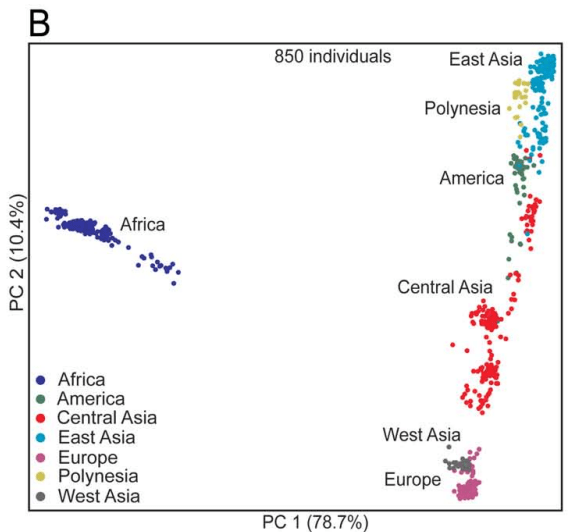
The above picture is a PCA graph showing how the different races cluster on the graph. This is actually scientific evidence that what we call ‘race’ and ‘ethnicity’ has an actual biological basis. You say that “it’s created by the rules of society not genetics”, but you can clearly see here that GENETICS shows that humanity CLUSTERS into distinct groups.
2. The differences between people from different parts of the world are too new and too slight to account for differences in IQ.
Not true at all. They are not “too new”, Agabond. Due to genetic isolation between populations for thousands of years, i.e., no population migrations between people with different genomes, this caused evolution to happen faster.
Faster evolution means more ethnic differences. This is due to, as I alluded to before, no migration of others with differing genes. Due to us moving genetically AWAY from each other and not genetically CLOSER from each other, shows that evolution is speeding up in the OPPOSITE WAY.
How are they too new and too slight to account for differences in IQ? Selection pressures varied depending on where those populations evolved. The more cognitively demanding Northern part of Europe, as well as the cognitively demanding parts of Asia that East Asians evolved in led to cooperation, which in turn led to evolutionary selection pressures, ala altruism. They also had to be smart with their food in regards to rationing. Along with more variables, over tens of thousands of years of genetic isolation, populations evolved to have distinct physical, as well as biological differences due to those certain selection pressures in those environments.
The less cognitively demanding parts of the world, along the equator, doesn’t foster high intellectual capabilities due to the lifestyle of the peoples there. They lived a mostly hunter-gatherer lifestyle (which was extremely difficult in Eurasia during the Ice Age). Evolution dictated the traits that it would enhance with Africans, e.g., longer limbs for better throwing and to cover more ground while running to get food, darker skin due to the climate, as well as their hair.
There are evolutionary reasons for everything. You should have done a bit more research here before writing this.
Your intelligence is determined not by your race but by where you were born, when you were born, a bit from your parents’s genes and the rest from what you make of it.
Yes, it is determined by your race, but I’ll get back to that later. Depending on where you’re born? Sure. If you’re born in a place with high rates of disease, parasitic load and bad nutrition, this will retard IQ. But for those born in first world countries, their IQ is at their genetic limit due to better nutrition. You said “where you were born”, do you even realize that “where you were born” means that you’re giving credence to the hereditarian hypothesis?
When you were born? Is this an epigenetic argument?
A bit from your parents genes, well more than a bit. Funny you say that. We know that the mother’s IQ is the best predictor of the child’s IQ. That being said, in studies of racially mixed black and white children, those with white mothers have higher IQs than those with black mothers. So yes, it is your parents genes. I assume you were going for the “individual variation in IQ is greater than between the races” is what you were going for. Not going to work.
The rest is what you make of it. I agree here. Even those with high IQs won’t be automatically successful, personality variables have a lot to do with it, which I will cover in a future post.
1. Correlation does not equal causation
Just because blacks in America have a higher crime rate or a lower average IQ does not necessarily mean the cause is mainly genetic. To come to such a conclusion you would have to assume that racism is pretty much dead, that American society is just so gosh-darn fair to everyone that genetics is pretty much all that remains to account for the differences.
I can’t count how many times I’ve heard this since I jumped into the black-white IQ debate. Yes, we know that correlation does not equal causation, but with retesting what you tested before with the same variables and lab conditions, if you come to the same conclusions, it is not a correlation does not equal causation argument.
Higher crime rates and lower average IQs are inversely related. There is a negative correlation there. We can see here that the low IQ being correlated with crime argument holds up in studies.
Deborah Denno analyzed data from 987 African American school children in Philadelphia. Her data contained multiple measures of intelligence collected at ages four, seven, and thirteen as well as officially recorded criminal offenses. Chronic, violent offenders consistently had low IQ scores. For example, female chronic offenders were almost four times less likely to be in the top third of verbal-IQ test scores than female nonoffenders. Similarly, male violent offenders scored 10 to 17 percentile points lower on measures of vocabulary, reading, and language than nonoffenders.
In addition to finding a robust IQ-crime correlation, studies have turned up two other empirical regularities worth noting. The first regards two different types of IQ measures: performance IQ (PIQ) versus verbal IQ (VIQ). Performance IQ is measured with nonverbal tests of attention to detail, manual design construction, and visual puzzle solving. Verbal IQ is measured with tests of general factual knowledge, abstract reasoning, mental arithmetic, and vocabulary. Studies have consistently found that criminals have PIQ scores close to the general population but VIQ scores substantially lower. This PIQ > VIQ finding holds even when controlling for race, class, and reading ability (Moffitt), suggesting that verbal intelligence is a more important correlate of criminal behavior than other types of intelligence.
I also touched on black crime and correlates for crime here. No matter what you can say about this, low IQ is correlated with crime. There are countless studies on this. Juvenile criminals average 92, whereas adult offenders are at IQ 85, right at the black average in America.
Genetics does account for the difference though you seem dishonest enough to believe any other reasons for it.
2. Confirmation bias
Scientific racists notice the cases that prove their ideas while overlooking those that disprove them. But in science it is the exceptions that disprove the rule. That is why the law of gravity is still a part of science: no known exceptions!
Care to tell me what they overlooked that disproved them? Why did you not use any examples?
3. Lack of expertise
Look at the race realists and HBDers you hear about most:
- Steve Sailer, journalist/computer salesman.
His occupation says something about his knowledge on these subjects?
- J. Philippe Rushton, psychologist.
OK? What about him? He’s a Ph.D. in psychology. He cites what he says, obviously. Rushton is one of the most important psychologists of this generation. Have you ever read any of his books, or have you only read attack articles on him? He first began researching the study of altruism. This gives him credibility, in your eyes, to talk about racial differences, as well as HBD. Hell, altruism is how our complex societies formed. That is a part of HBD as well, but you seem to talk about things you don’t know.
- Francis Fukuyama, political economist.
First I’ve heard of him. Seems to get heat for his book arguing that we have almost reached the end of history. He says people have misunderstood his thesis, that “the French and American revolutions, and their underlying principles of liberty and equality, were the final resting point for human ideological evolution. So we need to consider whether Hegel, when he declared the end of history in 1806, was not right. My argument is concerned less with the world of real events and more with the world of ideas. Essentially the question I was trying to pose is whether there are any systematical ideological competitors left to modern liberalism.”
- Steve Hsu, astrophysicist.
I love Steve Hsu. It seems that, according to Agabond, you can’t have other interests outside of your field, and if you do have interests outside of your field and speak on them, that no one should listen to you. Things don’t work like that. Steve Hsu is actively looking for intelligence genes. He also shows the reality of human genetic variation.
Just because someone is interested in things outside of their field, does that mean they can’t become an authority on it?
- Richard Herrnstein, psychologist.
Same with Rushton. Are you telling me that psychologists can’t study IQ differences and behavioral differences between races? Hernnstein knows damn well what he’s talking about in terms of IQ. Are you trying to use Hernnstein and Murray as examples of people who talk about actual human genetics? Well, they don’t. They talk about IQ, and yea they talk about genetic causes for it, but they’re mostly concerned with the policy of the country that we are no noticing because we are ‘IQ blind’ so to speak.
- Charles Murray, political scientist.
Same as above. Murray has defended himself multiple times with attacks him and Hernnstein got on The Bell Curve. 22 years later, and the book is still not refuted.
- Arthur Jensen, psychology professor.
My personal favorite. He is THE AUTHORITY ON IQ as well as RACE DIFFERENCES IN IQ. Sure Rushton and Jensen bring up genetics sometimes, but they always cite where they got their information from.
Really bad arguments here.
You notice anything strange? No biologists or anthropologists, much less geneticists.
>some of the biggest names in HBD aren’t biologists, anthropologists (LOL), and geneticists
>means there are no HBD biologists, anthropologists (LOL) and geneticists
Nice fallacy.
Why in the world should we trust these people over biologists and anthropologists, the very people who study these things for a living? To leave no stone unturned, some biologists and anthropologists have even written books about race for the general public:
This is going to be good. Let’s see what “has been written for the general public by biologists and anthropologists”.
- “Guns, Germs, and Steel”, Jared Diamond, biologist
!!!! People still cite this?!?!??!?!?
I’ll say something on G,G&S then let Rushton take over:
So different levels of civilizations can be traced to environmental differences and not innate differences in races? Because physical environment can explain civilization differences does that mean all human brains are the same on average? Horrible strawman. No one says environment doesn’t matter.
We can look at 2 countries within Sub-Saharan Africa. Look at South Africa. Still one of the wealthiest countries in Africa. Economic freedom isn’t the only source of wealth, human capital and natural resources are important. The lack of proper resources for civilizations in the past isn’t why Africa is poor today since we can see actual African countries that are better of by simply having more economic freedom.
The poverty today in Congo isn’t dated back to the dawn of time. Diamond says New Guineans are probably smarter than white Europeans. So does he accept that all races are the same in the brain except New Guineans? So does he then accept that human brains can differ in environments? Jared Diamond’s work is irrelevant and does nothing to explain why the various races perform differently in Europe. You can say racism or lingering effects of oppression, but the reasons for Africa’s poverty is not relevant to the racial gaps in Europe and America.
If you think it’s caused by environmental poverty in the past, you still have to argue the facts on racial differences today, the evidence still exists.
Jared Diamond is a man who spent a lot of time in Papua New Guinea. I guess he grew to like the natives there and befriended some of them so he makes ridiculous leaps in logic to actually say they may be more intelligent than Europeans. Hilarious. Any intelligent person can see the ridiculousness of what he claims. I can’t even begin to think how, when faced with all of this evidence of differences, that you can possibly believe in some warped view of equality or egalitarianism.
Here is Rushton’s dismantling of G,G&S.
- “The Mismeasure of Man”, Stephen Jay Gould, biologist
Arthur Jensen refutation here.
- “Genes, Peoples, and Languages”, Luigi Luca Cavalli-Sforza, geneticist
What about it?
- “Man’s Most Dangerous Myth: The Fallacy of Human Race”, Ashley Montagu, anthropologist
Never heard of this book but from the Amazon review:
It presented a revolutionary theory for its time; breaking the link between genetics and culture, it argued that race is largely a social construction and not constitutive of significant biological differences between people.
Discarded.
These books are good to help you overcome the racist brainwashing of American society.
Let’s see. G,G,&S is trash. It has some cool tidbits of information, but it’s largely not true and is an egalitarians way of attempting to say that Europeans “got lucky” in regards to geography.
Mismeasure of Man is full of sidestepping and not addressing points, as well as wishful thinking mixed with lying about the truth and not telling his audience certain things. Sure, if anything, this book will make you MORE BRAINWASHED.
No idea why you cited Cavalli-Sforza.
A book that says race doesn’t exist. Wow, that’s a new one.
4. Conspiracy theories
The reason scientific racists give for trusting, say, Steve Sailer, a computer salesman, over Cavalli-Sforza, a professor of human genetics who has, like, studied race, is, wait for it, that people like Cavalli-Sforza secretly agree with them but are too afraid to say so in public! Have they gone mad?
What are you talking about? Are you talking about how Cvalli-Sforza uses terms like “population clusters”? That doesn’t matter. You can call the things what you’d like, but that doesn’t change the underlying biological reality of genetics, race and ethnicity.
If you’d have understood Cvalli-Sforza, you’d get that.
I know you got this pingback, Agabond. I’d love a response from you though I doubt it.
Blacks in Medieval Europe? Afrocentric Ramblings
1000 words
Came across this article today from a (totally not unbiased source) person who seems to believe in the myths of Afrocentrism.
I’m always amazed at how many people are so quick to argue that people of color did not exist in Europe during medieval times or that black people, for instance, weren’t around during the Greek and Roman eras. And to include said PoCs during such time periods would be unrealistic and another example of shoving a PC agenda down our throats OH-EM-GEE.
Not that it would be unrealistic, just that those ‘PoC’ get thrown into positions of power in the setting they’re portrayed in, which is not realistic at all. Sure the Romans had black slaves, but that doesn’t mean that any important Senators or Emperors were Negros. Just because they were “around” doesn’t mean they did anything of significance, or even had a large population in comparison to Romans and Greeks.
This usually comes up in medieval fantasy stories. Like say for instance, Guinevere in BBC’s Merlin. Actress Angel Coulby caught heat for daring to be a beautiful powerful black queen.
His last 4 words aside (Kanazawa’s studies say otherwise), what kind of ‘black queen’ was there ever in Europe? Name one, please. Of COURSE she’s catching heat, as that’s not historically accurate, and I’m sure that most people care about being historically accurate in some of the things they watch. I know the show is a ‘fantasy’, but I don’t even think some people could suspend their disbelief to believe that there were ‘black kings and queens’ in medieval Europe.
This nonsense makes me laugh A LOT for two main reasons:
1.) It’s a huge double standard in that whites can always be placed in stories revolving around Egypt, China, Africa, or pre “discovered” America and no one blinks an eye.
Well, think about this. The majority of the country that these movies are made in and mostly come out in are white. Egyptians were Caucasoids, so using whites isn’t too far of a stretch. What about Africa and China and ‘pre-discovered America’? Care to give some examples?
Yet if a PoC shows up in medieval fantasy tale, it’s unrealistic. Talking animals, elves, dragons, gnomes, all totally plausible. Black people in Europe? Too many people can’t suspend disbelief at that.
Some things are just that unrealistic that you cannot suspend your disbelief of them to watch a story. =^)
First of all, people of color have been in Europe for ages. Think about it. Between all the wars, travel, and trade that countries and nations do, it would only make sense that some PoCs have traveled, relocated, and settled in other lands.
OK? Populations migrate all the time, this means nothing. Does that mean they had a strong historical presence? No way.
The Egyptians who dealt with the Romans and Greeks were black. Egypt is in Africa, in case you didn’t know.
No, they were not black. They were West Asian Caucasoids. Genetic testing on mummies from the years 806 BC to 124 AD shows that they have the haplotype I2, which originated in Western Asia. Makes sense, seeing as Egypt is right by the Middle East, and Egypt and Sumeria did have extensive trading with each other. Just because “Egypt is in Africa” doesn’t mean that they were black. The whole of North Africa are Caucasoids.
Rome and Carthage went to war and Hannibal gave the Romans a run for their money. Which anytime you can give the ROMANS a fight, you’re a bona fide badass.
I definitely agree that if you can give Rome a fight, you are a bad ass. But there’s one problem: Carthage was a Phoenician civilization, not sub-Saharan African. The “picture” you use of Hannibal is NOT an accurate portrayal of what he actually looked like.
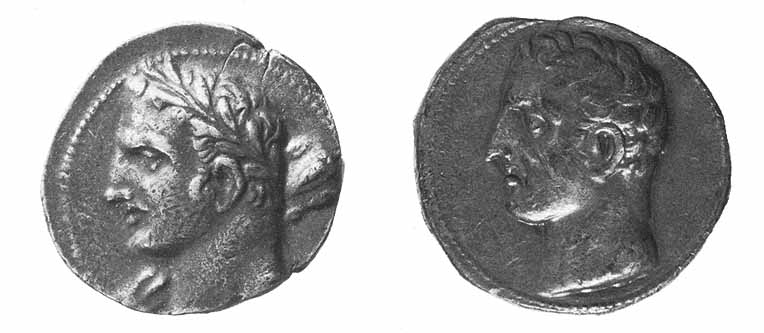
He looks pretty damn Caucasoid to me. This fantasy of Afrocenstrists to insert themselves into most any important event in world history just to say they did something worth talking about truly shows the inferiority complex of blacks.
Also, to see what Phoenicians really looked like, look to Sardinians. Due to genetic isolation from being on the island, they have hardly any admixture from outside the island. They also speak a Phoenician language.
If you’re a Greek Mythology buff like myself, look up a brother named Memnon. Speaking of Greek Mythology, look up Andromeda, Perseus’ wife and see where she’s from. Here’s a hint. And by hint I mean answer: Ethiopia.
Are we to take all peoples of antiquities word for everything they say? Are we made of corn? Is the story of Romulus and Remus true? Were there gods on Mount Olympus?
Again. Just because they were present, doesn’t mean they had ANYTHING to do with any discoveries of that time period.
Blacks actually ruled in some parts of Europe and could be found in Scotland as early as the 10th century. Funny how that isn’t taught in school.
Funny how you provide no source.
Still not convinced? Look up Othello.
Why should I look it up? Oh, it’s because it’s another thing co-opted to add blacks where it was originally a play involving whites.
Is this guy being cast in this play almost 200 years ago supposed to mean anything?
Amina of Zaria was in fact the inspiration behind Xena: Warrior Princess.
Amina of Zaria is a myth.
Alexandre Dumas, the author of The Three Musketeers and The Count of Monte Crisco? Black excellence also.
Meaning… what exactly? This is pretty meaningless. OK, cool. Some blacks can write good stories, but they are outliers. The Bell Curve, etc.
And our accomplishments didn’t stop there. As this amazing heroine’s story illustrates.
Who the hell is ‘Belle’? Also, it says it’s BASED on the ‘inspiring’ true story. Meaning, things are embellished to make a better story. Or did you not know that?
So if you’re one of those who constantly gripe about the presence of PoCs in period fantasy as being unrealistic; your history, do learn you some.
No, you learn you some. You’re spreading ridiculous things to people who know no better. Just because ‘PoC’ had a presence in these places doesn’t mean they did anything of note.
I hope you respond to this refutation of your garbage, Nerd of Color.
Towards a Theory of Everyone: Chanda Chisala Rebuttal on the Nature of the Black-White IQ Gap
3700 words
Chanda Chisala has been writing a series of articles for the Unz Review for almost a year now. They are on the nature of the black-white IQ gap. I’ve been eagerly awaiting his theory on the cause of the gap, as I always welcome any and all new information concerning this. Well, I was pretty underwhelmed by his theory.
Sowell has always used two arguments to cast doubt on the genetic hypothesis: the first one is the Flynn Effect or prior versions of it that he had noted himself, which shows that IQs have been rising with time for blacks and other people all over the world.
The “Flynn Effect” is rubbish. PumpkinPerson says:
It turned out Rushton was one of those “The Flynn effect is irrelevant” people. He found it prima facie absurd that we could have been a nation of mentally disabled people a century ago. It simply didn’t make any sense to him, given the outstanding achievements of early 20th century society. But it didn’t make any sense to me why the same tests that were culture reduced enough to measure the intelligence of South Africans could be so wrong when measuring Victorian intelligence. I needed an explanation. The Flynn effect is unrelated to g (general intelligence) and that was enough for him to just dismiss it and move on.
So even though Rushton and Jensen rebutted Flynn, as well as Flynn and Dickens, Chisala still chooses to use the Flynn Effect argument. Here is why it is irrelevant:
Let’s say Flynn is right. The average black now is as intelligent as the average white in 1945. That’s supposed to show that the race difference in IQ is environmentally caused because there hasn’t been that much genetic change in the white population and the IQ has allegedly gone up 15 points. So, you can have a 15 point difference created by just an environmental change, no one knows why. Some think better nutrition or malnourished brain, etc. That’s also a fallacy. Just because a change in one group over time is due to an environmental change, doesn’t mean, or even make it probable, that a difference between 2 groups at the same time is due to an environmental change. The Flynn Effect make’s that highly unlikely and here’s why.
The Flynn Effect, assuming it’s real, has been acting completely uniformly in every population. Any country you ask, the rate of increase is 3 per decade. That means it’s an environmental factor that affects whites and blacks the same way as well as the whole world. And as a result of this uniform environmental factor, you have a difference in IQ that’s being preserved. That would suggest that the response on the parts of blacks and whites is due to some non-environment factors, a genetic factor, which is making the difference in IQ remain constant as the Flynn Effect goes into effect.
What makes it even more unlikely, in the last 60 years, their environments have become very similar since segregation. These differences don’t exist now, they go to the same schools by court order, same TV shows, same movies, basically same environment for both, and yet, that increasing similarity in the environment, the Flynn Effect, the IQ gap has remained intact. Which means whatever counts for the gap is genetic and not environmental. The more and more similar the environment, the less and less of the difference can be due to the environment and the more and more it must be due to genes. So this 15 point gap surviving these changes in the environment, seems more and more likely to be genetic in origin.
So because this ‘Effect’ is the same across all populations and the gap didn’t close, that means it’s genetic. If the gap persisted even when IQs were rising 3 points per year, the B-W gap has still persisted, proving that it’s genetic.
That is why the Flynn Effect is irrelevant. This “Effect”, has been a slight upward trend in IQ, around 3 points per decade, which, in my opinion, has to do with the advent of better nutrition and an industrialized society. The rise in IQ started around 1880, almost perfectly coinciding with the industrial revolution in America. Along with a more industrialized society, it’s possible to give most citizens in the country good enough nutrition to where they are not iodine deficient (adding iodine to our salt boosted Americans IQs), as well as being deficient in zinc, iron, protein and certain B vitamins which the effects of not getting enough leads to the brain not growing to its full potential, which in turn leads to a lower IQ.
One more point on the Flynn Effect. The Flynn Effect does not occur on g, as it is not a Jensen Effect. Rushton defines Jensen Effect as follows:
Significant correlations occurring between g-factor loadings and other variables have been dubbed “The Jensen effect”.
…
Thus the secular increase in test scores (the “Lynn±Flynn effect”) is not a “Jensen effect” nor is this the first time the discriminating power of the Jensen effect has been shown.
The Flynn Effect is not on actual g. The black-white IQ gap is most heritable on those sub-tests that correlate highly with g. Through correlations on scores on inbreeding depression, Rushton and Jensen (2005) conclude that the magnitude of the black-white IQ gap is 80 percent genetic and 20 percent environmental.
Now to get to this other part of his theory.
The second very unique and original argument he has used is the differential IQ performance of black males and females, which seems to favor the females. He charges that the genetic hypothesis can not explain this, but it is explainable under an environmental hypothesis.
Sowell’s second argument is much stronger than the Flynn Effect argument because it is very difficult for hereditarians to explain why there should be a gender difference in African American IQ, especially one favoring females (let’s call this the “Sowell Effect,” to avoid repetition). This is very problematic for hereditarians, particularly since the trend is normally for male IQ to exceed female IQ, especially at the higher levels of the IQ distribution curve. We can see this unique trend among blacks even in the applications to medical school, a field that is considered a good metric for group intellectual comparisons.
This is very simply explained. Occam’s Razor anyone?
Even today in Africa, the women did the hunting and gathering, giving them more selective power. The same holds true for Eurasian men, who have a slight advantage in IQ over Eurasian women. Because of the colder climate in Eurasia, meat was one of the staples they had. So that shifted selection pressure from women over to men. Since men had the food, and the ability to hunt for it for that matter, men had more selection power to select the best possible mates. This led to Eurasian women being selected for beauty, whereas this led to African men being selected for physical attractiveness.
To quote from Erectus Walks Amongst Us:
In Africa, the women, even today, farm and gather food, so they have more selection power, but in the colder climates more of the food was meat, especially in the winter, and hunting was done by men, shifting some selection power to men. (Miller, 1994a). As a result of selection by men, Eurasian women have become more beautiful and, as a result of selection by women, Eurasian men have become workaholics and slightly more intelligent than Eurasian women (more intelligence = a better provider in Eurasia). African women have become slightly more intelligent than African men, however, who have become the more physically attractive sex.
So more intelligence led to a better provider. Being able to farm for and or hunt for food gave those who did it the selection ability to be able to sexually select to their liking.
Sowell (2013) claims this empirical victory in Intellectuals and Race (page 79):
Further evidence that the male-female difference in IQs among blacks is cultural is that black orphans raised by white families show no such female superiority in IQs, in addition to both sexes having higher average IQs than other black children.
Chisala says the Sandra Scarr data from the Minnesota Study does not back up this claim.
There are other studies that could possibly back Sowell up if he is right and we should check those too. For example, there is the well-known Eyferth Study in Germany which monitored the IQs of illegitimate children of black and white American soldiers who were stationed there at the end of the Second World War.
Wikipedia got its data from The g Factor, a book by Arthur Jensen (1998) that is probably the most cited in the racial intelligence debate. I went to the cited page and indeed found that Wikipedia had correctly reported Jensen’s data. The Sowell Effect had apparently disappeared among the black children born in Germany and the strong culture hypothesis seemed to be vindicated.
Arthur Jensen explains the cause for the mixed race children (and at the same time the cause for black female children having a higher IQ) on pp 483 of The g Factor: The Science of Mental Ability:
Finally, heterosis (the outbreeding effect; see Chapter 7, p. 196) probably enhanced the IQ level of the interracial children, thereby diminishing the IQ difference between the interracial children and the white children born to German women. A heterotic effect equivalent to about + 4 IQ points was reported for European-Asian interracial offspring in Hawaii.
This means that we can also resolve the debate about whether the black soldiers in this experiment were more selected than the white soldiers. It appears that the hereditarians were probably right on this point: the black soldiers had to have been significantly more intelligent than the white soldiers because the presence of a Sowell Effect indicates that the IQ of the black children has received extra depression (through an abnormal lowering of the male IQ, as usual.) However, it’s another Pyrrhic victory for hereditarians: the continued existence of apparent extra depression for black male IQ makes their simple models impotent, just as it does for standard environmentalist models.
Yet another point that Rushton and Jensen shoot down in their magnum opus paper:
Second, 20% to 25% of the “Black” fathers were not African Americans but French North Africans (i.e., largely Caucasian or “Whites” as we have defined the terms here). Third, there was rigorous selection based on IQ score in the U.S. Army at the time, with a rejection rate for Blacks on the preinduction Army General Classification Test of about 30%, compared with 3% for Whites (see Davenport, 1946, Tables I and III).
Huge error. About one-quarter of the ‘black fathers’ were French North Africans! Because North Africans have a higher genetic potential for IQ (nowhere near that of SSA), this is not a true representation of black fathers and white mothers.
Thus, racial hereditarians can not explain why the race of the mother matters
Is he being serious right now? It’s easily explained. We know that the mother’s IQ is the most important predictor of the child’s IQ. The prenatal environment is better in the white mother than in the black mother. Due to the mother’s IQ being the most important predictor of a child’s IQ, doesn’t that end the black-white IQ debate right there? Due to the fact that mixed race black and white children with white mothers show higher IQs than those with a black mother and white father, doesn’t that end the black-white IQ debate?
We racial hereditarians can definitely explain why the race of the mother matters. You should have done a bit more research into this matter.
And now on to my favorite part of this article. It’s so out there in its propensity for being a possibility for the cause of this gap between the races.
In Black Rednecks and White Liberals, Sowell (2006) theorizes that the modern ghetto culture of black Americans came from their association with white rednecks during the time of slavery and he believes it is the preservation of this detrimental culture – preserved with the intellectual help of “white liberals” – that keeps the black IQ low due to its anti-educational, anti-intellectual disposition. Sowell convincingly demonstrates some very uncanny similarities between ghetto black culture today and some aspects of white redneck culture that was more dominant in the South in the past than it is today, as more and more whites have decided to abandon it.
One huge problem with this. If that’s the case, if the cause of lower intellectual achievement is due to black Americans association with white rednecks during the time of slavery, all we need to do is look at Africa to see how they did without the “association with white rednecks during the time of slavery”! We can also look at those countries never touched by colonialism to see that they’re the same backwards countries.
Of course there will be “uncanny similarities”. When you have two groups who have lived amongst each other for a certain period of time, traits of both groups will rub off on each other. This is not a genetic cause, but an environmental cause. The similarities come down to being around other groups.
And here it is, here is the kicker:
Although I agree that the case for a cultural transfer from some groups of Southern whites is very strong, I think it is more likely that this “culture” was actually passed to blacks genetically rather than through mere influence and imitation. If that is the case, then it was in fact the presence of relatively strong mutations in that sub-population of whites that was affecting the stranger aspects of their behavior and intelligence, and they passed on the same genetic condition to blacks through mating with the black women.
THIS is his big reveal? No. Way. This has to be one of the funniest things I’ve heard in the black-white IQ debate. Hey, Chanda, there is something called Regression to the Mean (nice post, Jayman), which throws your theory out of the water.
blacks in fact had more stable families and even had less out-of-wedlock children than whites. He uses this to show that if slavery was the root of these problems, they could have started much earlier.
Wrong.
In this paper by Steven Ruggles, he says that analysis confirms that the high incidence of black Americans of single parenthood and children residing without their parents is not a recent phenomenon. Data shows that from 1880 through 1960, black children were two to three times more likely to reside without one or both children than white parents. This directly goes in the face of what liberals say is the cause of the demise of the black family structure. Ever since blacks have been free from slavery has this begun to happen.
What explains this perfectly, is Rushton’s r-K Selection Theory (now known as Life History Theory). Those who are more r selected (Africans), will have more children but spend less energy caring for them. Conversely on the other side, those more K-selected (Orientals and whites in the middle of K and r), will have fewer children but show more attention to them.
Some of Sowell’s strongest critics on this theory also suffer from the same progressional problem. Scholar and investigative journalist, Steve Sailer, for example,argued that much of the negative behavioral tendencies in black ghetto culture must have come with them from Africa. His theory is also unlikely to be true if the statistics about marriage and out-of-wedlock births etc are true. If their culture came with them from Africa they would not have had a long period where that culture seems to have been almost absent only to forcefully show up much later, in generations that had the least connection to or memory of Africa.
Sailer is correct. See my above cite showing that from 1880 through 1960 black children were two to three times more likely to reside with one or both children than white parents.
So we can see that it’s not a recent phenomenon.
Our theory thus explains a paradox that is difficult to explain by present environmental or hereditarian models: when blacks from Africa, the Caribbean and the US are compared, it is the least white-admixed black group that apparently performs best (the Africans), followed by Caribbean blacks who are in between; the most white-admixed group, the native black Americans, do worst. And yet within these communities, it is not necessarily true that the more white-admixed individuals perform worse; they may actually be over-represented on the highest levels of academic or social performance.
Dr. James Thompson says the sample for the Caribbean blacks in the UK is not a representative sample. Also, the hereditarian theory does not say that ALL Africans and African-descended peoples have a lower average IQ. It’s perfectly within the hereditarian hypothesis to have some African countries, as well as peoples, descended from African countries around the world, show a genetically higher IQ.
The evidence of such deleterious mutations still existing among modern day poor whites can be seen, not just from their low intellectual performance (going even lower than poor Caribbean boys), but even from their violent reactions against their fellow well-performing students, a culture that is also seen among ghetto black Americans, which is further evidence of a mutational rather than an imitational cause.
Wow, you mean to tell me that American whites aren’t a monolith and that there are some white groups in America with a lower average IQ? News to me!!
This solves one of the stronger challenges raised against the Unzian Asian Exception conjecture, asking why it was not East Asians who produced the greatest epochs of human intellectual achievements in history if it is true that their average IQs have consistently been stubbornly high for most of modern human history. It would be because the same canalization that protected them from low intelligence also “protected” them from producing the numbers of super-creative intellects that would be required for such revolutionary achievements in a concentrated period of time. They have a small creative smart fraction, in short.
The cause for lack of East Asian creativity is due to conforming in East Asian societies, which Rushton says in Race, Evolution and Behavior that it’s a genetic trait. Rushton did say that a larger average brain size means more creativity and that with social restrictions lifted, that East Asians may possibly become more creative than whites.
From time to time Lynn notes anomalies in his theory that require explanations. One of these is that Europeans made most of the great intellectual discoveries, while the East Asians, despite having a higher IQ, made relatively few—a paradox extensively documented by Charles Murray in his 2003 book, Human Accomplishment. Lynn proposes an explanation for this: it may be that East Asians are more conformist than Europeans and this inhibits creative achievement. (In Race, Evolution, and Behavior, I presented evidence that this personality trait has genetic roots.)
Winters Are Good For Your Genes: Lynn Book Finds World Average IQ 90, Declining From North To South
And yet the same hereditarians admit the conspicuous paucity of highly significant originators and innovators among East Asians, despite showing over-representation in high intellectual aptitude, sometimes very precociously so. East Asian women, who have the highest canalization coming from gender and race, are the most exemplary of this contrast. The shortage of such super-creative phenotypes can not be because they lack the numbers of people with the right genotype, but because the genotype is “buffered” from phenotypic expression by canalization.
See above.
Ashkenazi Jews, on the other hand, may be the most over-represented at the top of creative achievements in different intellectual fields (from chess to physics to literature, etc) simply because they happen to also be quite lowly canalized.
No. No way. Ashkenazi Jews are over-represented at the top of creative achievements in different intellectual fields because they mated with Roman women thousands of years ago. I have already noted about the mother being the best predictor of child’s intelligence. That’s the cause for high Ashkenazi IQ, not canalization.
Lower canalization also means that their improvement will be more rapid when such environmental conditions positively change (as can also be seen among recent black African immigrants, whose radical improvements begin even in children who were born under bad conditions in Africa, thus defying all kinds of hereditarian limitations.)
This is a case of super-selection. Only the most intelligent peoples leaving the country to immigrate.
In short, there is basically false assortative mating among black elites on average. This also explains why the mixed black male children have lower IQ when their mother is black than when their mother is white, as we demonstrated above.
I went over this earlier. Black mothers have a worse prenatal environment than do white mothers.
This obviously would not mean that the usual theories of environmentalists are correct either, since it should also not make a difference to them if the boys are included or excluded from the black American samples, especially in elite families. However, as we have faithfully acknowledged, both environmentalists and hereditarians also have some empirically confirmed arguments. Our present hypothesis, taking account of differential gender and racial canalization in human populations, can hopefully help to unify the valid aspects of the environmental and hereditarian frameworks.
I’ve noticed that Chisala used a hybrid environmentalist-hereditarian position to explain his theory on the black-white IQ gap.
I refuted the “Flynn Effect”, as well as the part of the Eyferth Study that talks about higher black female IQ, refuted the section about Caribbean blacks in the UK, and finally, I refuted his claim that we hereditarians “have no explanation for a mother’s IQ being the best predictor of the child’s IQ”.
In conclusion, this is just an extremely long-winded way of saying “whites are the cause of low black achievement, crime, IQ and anything else negative that affects blacks in Western countries”.
If that’s the case, Mr. Chisala, why is Africa so backwards?
How Did Man Evolve to Eat?
1300 words
How did we evolve to eat? I’ve been through Paleo Diet two times, and briefly touched on intermittent fasting in the second Paleo refutation. That is how man, no matter where he evolved in the world, ate. We didn’t know when we would get our next meal, therefore, evolutionary mechanisms evolved in us to have intermittent fasting be beneficial to us.
Intermittent fasting is halting the consumption of food for at least 14 hours for women and 16 hours for men. We evolved gathering and eating our food intermittently. Ability to function at a high level, physically and mentally, during extended periods without food, were crucial to human evolution. Your body performs best in a fasted state.
While you’re in a fasted state, the amount of catecholamines (adrenaline and noradrenaline) increase. That is your fight or flight mechanism. Catecholamines also increase fat burning, binding to fat cells putting them out of the cell to be burned off.
With increased catecholamine production from being in a fasted state which burns off body fat, you are also more alert as well. This is another evolutionary advantage. When Man was hunting for food he was in a fasted state, as he didn’t have access to food like we do today. Due to being in a fasted state with increased catecholamine production, this was a great advantage to being better prepared to be ready in case of a surprise attack by a predator or to always be on the ready to attack prey when seen. The scientific literature, though new and growing, supports this thesis with the amount of catecholamine production increased 24 hours after a fast.
Intermittent fasting leads to a dramatic increase in neural autophagy. Autophagy deals with the destruction of cells in the body, controlled digestion of damaged organelles in the cell. The conclusion of the study is, fasting is a simple, easy way to increase neural autophagy. It’s good for keeping the brain healthy, by destroying bad cells, letting the body rejuvenate them.
In conjunction with the evolutionary advantages of intermittent fasting, along with Genetic Similarity Theory, which has those care for others more because they share more alleles in common, and are therefore more closely related, the two evolved hand in hand to better make sure humans survive extended periods of time without food.
Which brings me to ‘starvation mode’. When people bring up starvation mode, they completely misrepresent the Minnesota Starvation Experiment. When they say that metabolic slowdown occurs when food is not consumed for a certain amount of time, they are correct, but they’re only half right. It’s a process called adaptive thermogenesis. Adaptive thermogenesis is the regulated production of heat in response to environmental changes in temperature and diet, which lead to metabolic inefficiency. When they talk about ‘starvation mode’, they talk about not having consumed food within the past, say 2 or 3 hours. That is a completely ignorant statement, as there are no deleterious effects of no food consumption until around 24 hours of fasting. ‘Metabolic slow down’ is not significant enough to prevent weight loss.
Now you may be thinking “What about breakfast, isn’t that the most important meal of the day?” Yes, “breakfast” is the most important meal of the day, but it doesn’t need to be had in the morning, immediately upon waking. The average person sleeps for about 8 hours, during that time, the body enters the fasted state. The “breakfast is the most important meal of the day myth” was originally pushed by Kellog’s in the 50s. The problem with any of these studies in regards to weight loss and or any other conclusions is that they are observational studies. The actual cause cannot be quantified. The slogan was created to obviously give Kellog’s more business, which was based on observational studies. The main hormone behind post-breakfast hunger is cortisol. The term ‘breakfast’ means “break your fast”, therefor “breakfast” can be had anytime AFTER your body goes into the fasted state.
Cortisol is secreted in response to a stressor, in order to help you cope with that stressor efficiently. Exercise (hunting for our ancestors), disrupts homeostasis because of the stressors that are put on the body. The stressors then require an adaptive response, which is cortisol. Most anything our ancestors did disrupted homeostasis, causing cortisol to be secreted. Because of increased cortisol levels during times of need, you can push through certain things than if you didn’t have that cortisol increase due to the stressor that made your body secrete the extra cortisol.
The stressors that our ancestors had to survive in the past, though, had a clear-cut line in beginning and end. Therefore, the fight or flight mechanism (catecholamine production) was easily secreted to elicit the needed response in order to survive, get food, and ultimately what evolution is about, making sure your shared genes pass on to the next generation. All of these responses in regards to intermittent fasting increase Man’s success on the planet, as well as evolutionary fitness. The strong selection pressures then select for those traits which are more advantageous, which pass down through the generations, getting better or becoming obsolete through non-use, e.g. migrating to a new area where those selection pressures that had certain traits arise weren’t in the new area.
To talk about another hormone, there is a hormone called ghrelin, which is secreted by the stomach in anticipation for a meal. It decreases after meal consumption and also stimulates the release of the growth hormone.
An evolutionary advantage for ghrelin is that it let Man know when the last time he ate was, as our bodies are pretty much like clocks and tell us certain things when it needs them, e.g. releasing ghrelin when it needs nutrients and sustenance, so they can then go and hunt for food, ensuring that their genetic lineage survives.
The drive for food, the drive to make sure genes pass on to the next generation, intermittent fasting and evolution of man, all intertwine with each other to tell the story of how we got to where we are today. There are way more health benefits to restricting periods of being in a fed state, and the evolution of those adaptive processes in our bodies from thousands of years of eating intermittently which our bodies had to evolve the traits that had us succeed in order to pass our genes on to the next generation. Everything we do in life is, at the most basic level, driven by our biology and the release of certain chemicals/hormones that make us seek out or want certain things.
In summary, the release of catecholamines in response to lack of food after a certain amount of time is one such example that shows that those evolutionary processes evolved to better protect us from extended periods of time without food, as well as giving us great benefits due to how our bodies evolved in response to those adaptations. This also leads to increased altruism for those with close genetic similarity, e.g. more alleles in common than with other peoples. The increased catecholamine production leads one to be more alert of their surroundings, which is an evolutionary advantage due to the release of ghrelin making man hungry, which in turn led to searching for food. That then led to an increase in the catecholamines to increase those adrenaline hormones to make man better prepared for any attack by a predator, and to be ready for any perspective prey he saw. Intermittent fasting, including all hormonal advantages involved with it, evolved closely together with altruism for one’s own people. This led to an increase in genetic fitness, as well as having a better chance to pass your genes on to the next generation.
North/South Differences in Italian IQ: Is Richard Lynn Right?
2300 words
Richard Lynn has stated that there are differences in Northern and Southern Italian IQ scores. Is he correct?
Lynn claims Italian IQ is 100 in the North and 90 in the South, with the lowest being IQ 89 in the Southern most part of Sicily.
Richard Lynn is of course, extremely controversial in his research areas of interest, mainly with his views on IQ and how it relates to the wealth of nations.
In his paper which talks about the North/South differences in IQ which predict differences in education, infant mortality, stature, and literacy.
Lynn’s methods were to take samples of the Program for International Student Assesment (PISA) which administers tests gauging the abilities of students in math, reading comprehension and science understanding. IQs were calculated by averaging science understanding, reading comprehension and mathematical ability, which the averages are expressed in SD unit deviations from the British PISA mean (n=502, SD 99). Figures are then converted to conventional IQs by multiplying them by 15. So the regional Italian IQs are expressed in comparison to the British IQ and SD (100 and 15 respectively).
His 10 data points are as follows:
First, the IQ in the northern regions of Italy measured by the PISA data is approximately 100 and therefore about the same as in Britain and other countries of northern and central Europe given in Lynn and Vanhanen (2002, 2006). This confirms the results of the standardization of the Colored Progressive Matrices in northern Italy reported by Prunetti (1985) and shows that IQs measured by the PISA data and by the Colored Progressive Matrices data are consistent. Regional IQs in Italy decline steadily through the central regions and into the south and reach a low of 89 in the most southerly region of Sicily. The first hypothesis of this study that there may be a north–south gradient of IQs in Italy is supported and quantified by the correlation of 0.963 between regional IQs and latitude.
First, the PISA data from 2013 shows Southern Italians scoring higher, and Northern Italians scoring around the same. Is that an increase in intelligence that happened in only 3 years? Did the genetics of Southern Italy change in 3 years? No.
The table above shows the changes in PISA scores for Southern Italy in only 3 years for all 3 subjects tested in PISA. Southern Italy increased by 26 points in reading, and Southern Italy and islands increased by 30 points. For math, 25 for the South and 34 for South and the islands. For science, 18 for the South and 22 for the South and the islands. The presence of non-native students may also be a factor in these score differences. You can see the differences from 3 years, and how even in 3 years, there was a slight decrease in scores in Northern Italy. Migrants, after coming in from the South of the country, then continue to go into the Northern part of the country. This could also explain a huge part of the differences, seeing as they may be counted as Italian citizens, yet aren’t native to the country.
The above table shows mean PISA scores for 2006 and 2009, showing a huge increase in scores from Southern Italy, and hardly any increase in Northern Italy. Any genetic changes in 3 years to show that big of an increase?
Source: Problems in deriving Italian regional differences in intelligence from 2009 PISA data
Two, the second hypothesis of this study is that the north–south gradient of IQs in Italy may explain much of the difference in economic development between the north and south of Italy
Wrong again. Southern Italy has a huge underground economy, that isn’t noted on the books. The GDP in Southern Italy is far from accurate and employment figures do not match reality.
These raw figures require a closer look, because one economist’s analysis of Calabria found low pay, high unemployment, and a very high level of consumer spending. In 1994, the government insurance agency placed the number of business enterprises in Calabria at 23,758, while Istat, carrying out the 1996 census, found about 90,000 businesses in the same region.The economist Domenico Marino concluded, on the basis of 4,000 interviews in Calabria, that 75 percent of the Calabrian work force would refuse a fairly low-paying job, despite a very high official level of unemployment. In Calabria, with its dire employment figures, 84 percent of the families own their own home. What such anomalies must mean is that real income in Calabria is far higher than what is “on the books.” Many among the vast numbers of officially unemployed are, in fact, partly or fully employed. They are earning no social benefits, but they are earning the daily lire that keep their families afloat.
This massive sector skews all the statistics. It means that the GDP for the Italian South (and for Italy as a whole) is far from accurate. And the unemployment figures do not reflect reality.
LOOKING TO 2007: ITALY TIMES TWO
Three, the third hypothesis we set out to examine is that regional IQ differences in Italy are also manifest in variables that can be regarded as correlates or effects of IQs, including stature, infant mortality, literacy, and years of education
When historical data on those variables are used, a different picture emerges. Correlations are insignificant and in the case of infant mortality, do not the supposed link of regional differences in intelligence and socioeconomic development.
Four, per capita incomes are also highly negatively correlated with rates of infant mortality in 1954–57 (r= −0.652), and 1999–2002 (r=−0.823).
When the years 1911, 1891 and 1871 are averaged in, there is no difference.
Lynn didn’t consider the data from the 1860s to average it in with the rest of his data.
Five, the ability of populations with high IQs to give their children better nutrition makes them healthier, more resistant to disease and reduces the risk of mortality, and also improves their children’s stature
Right. But there is no mortality difference, as seen above.
Five, the ability of populations with high IQs to give their children better nutrition makes them healthier, more resistant to disease and reduces the risk of mortality, and also improves their children’s stature
There is a 1.7-inch difference between Northern and Southern Italian height. Which is explained by differences in nutrition between the regions, with the South having a more grain-based diet. Those effects are explained by a grain-based diet, and those Italians from America (which a huge majority are from the South of the country), actually show better educational attainment as well as more monetary success than their Northern counterparts.
Six, regional IQs in 2006 are highly correlated with the years of education of adults in 1951 (r=0.929), 1971 (r=0.871) and 2001 (r=0.886)
At the regional level, average IQs and current per capita GDP are highly related: for the year 2012, the correlation is 0.86. The link between IQ and regional development is, instead, much weaker when data for the years 1871, 1891 and 1911 are considered. Regional IQs and infant mortality rates in 1863–66 are positively correlated, contrarily to that which would be expected based on Lynn’s assumptions;
Two Italies? Genes, intelligence and the Italian North–South economic divide
This is explained simply. When Italy became unified in 1861, there were literacy differences in the country. 87 percent of the Southern population was illiterate in comparison to 67 percent of the Northern population.
The likely explanation for this high correlation is that the percentages of the population that were literate in 1880 was a function of IQs and therefore that the regional differences in IQs were present in 1880 and have been stable over the period 1880 to 2006.
Literacy and average years of schooling are better predictors of income levels than regional IQs.
The above table shows this.
Eight, it is an interesting question whether the differences in Italian regional IQs were present in earlier historical periods. Some useful data bearing on this question have been assembled by Murray (2003, pp. 303–5) who has compiled the numbers of “significant figures” (i.e. those who have made significant contributions to science, literature, music and art) and their places of birth for the whole of Europe from the year 1400 to 1950. His figures for the north, center and south of Italy are shown in Table 3.
Pretty damning right? Wrong.
More than half of the country is put into the ‘North’ section of what he is talking about, and how he did the dividing, it looks like this.
Murray also said that achievement happened in a few places in Italy, with Southern Italy being one of the many areas in Europe with ‘low achievement’, which includes a big part of Northern Italy as well. The achievements in Italy were mainly found in Tuscany, which the literacy rate wasn’t too high in 1880. Again, refuting Lynn on his thesis.
Nine, Putnam (1993, p. 159) and Tabellini (2007) have proposed that “civic trust” is a determinant of regional differences in economic development in Italy and in western Europe.
There are hardly any regional differences in economic development, as seen above.
A possible explanation for the northern regions having had higher IQs than the southern regions at least from 1880 and possibly from 1400 to 1600 is that the populations of the north and south are genetically different and these genetic differences are related to differences in intelligence.
Not at all. I touched on this in my Refuting Afrocentrism: Are Italians Black? article.
They write of the population genetics of Italy that “northern Italy shows similarities with countries of central Europe, whereas central and southern Italy are more similar to Greece and other Mediterranean countries.
See above. They are genetically the same:
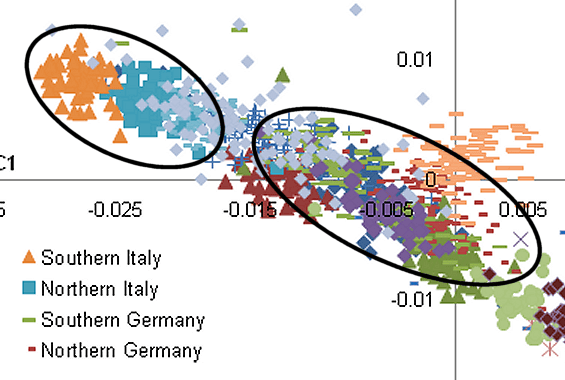
Comparison with Germany and Italy, Germans are spread out farther on the graph than are Italians, are there huge genetic differences with Germans as well?
They write of the population genetics of Italy that “northern Italy shows similarities with countries of central Europe, whereas central and southern Italy are more similar to Greece and other Mediterranean countries. This corresponds to the well-known differences in physical type (especially pigmentation and size) between the northern and north-central Italians on the one side and southern Italians on the other”.
Pigmentation is explained by getting the same UV rays as Northern Africa:
Size differences explained by slight differences in nutrition.
Subsequent studies have confirmed the genetic impact of immigration from the Near East and North Africa into southern Italy. For instance, the Taql, p1 2f2-8-kb allele has a high frequency in the Near East and North Africa (Morocco, 81.8; Lebanon, 43.7; Tunisia, 34.1). The allele is also present but at a lower frequency (26.4) in southern Italy, including Sicily.
Using a single, or small number of loci will lead to you finding the same loci in different populations? Who knew!!
The diffusion of genes from the Near East and North Africa may explain why the populations of southern Italy have IQs in the range of 89–92, intermediate between those of northern Italy and central and northern Europe (about 100) and those of the Near East and North Africa (in the range of 80–84) (these IQs are given in Lynn, 2006). This also explains the north–south gradient of IQ in Italy in which the regional IQs do not show a clear dichotomy between north and south but rather a gradient in which IQs decline steadily with more southerly latitude.
Nope. I’ve covered this in my ‘Black Italians’ article:
Combined data from two large mtDNA studies provides an estimate of non-Caucasoid maternal ancestry in Italians. The first study sampled 411 Italians from all over the country and found five South Asian M and East Asian D sequences (1.2%) and eight sub-Saharan African L sequences (1.9%). The second study sampled 465 Sicilians and detected ten M sequences (2.2%) and three L sequences (0.65%).This makes a total of 3% non-white maternal admixture (1.3% Asian and 1.7% African), which is very low and typical for European populations, since Pliss et al. 2005, e.g., observed 1.8% Asian admixture in Poles and 1.2% African admixture in Germans. (Plaza et al. 2003; Romano et al. 2003)
Similar data from the Y-chromosome reveals Italians’ even lower non-Caucasoid paternal admixture. Both studies obtained samples from all over the mainland and islands. No Asian DNA was detected anywhere, but a single sub-Saharan African E(xE3b) sequence was found in the first study’s sample of 416 (0.2%), and six were observed in the second study’s sample of 746 (0.8%). The total is therefore a minuscule 0.6%, which decreases to 0.4% if only Southern Italians are considered and 0% if only Sicilians are considered.Again, these are normal levels of admixture for European populations (e.g. Austrians were found to have 0.8% E(xE3b) by Brion et al. 2004). (Semino et al. 2004; Cruciani et al. 2004)
An analysis of 10 autosomal allele frequencies in Southern Europeans (including Italians, Sicilians and Sardinians) and various Middle Eastern/North African populations revealed a “line of sharp genetic change [that] runs from Gibraltar to Lebanon,” which has divided the Mediterranean into distinct northern and southern clusters since at least the Neolithic period. The authors conclude that “gene flow [across the sea] was more the exception than the rule,” attributing this result to “a joint product of initial geographic isolation and successive cultural divergence, leading to the origin of cultural barriers to population admixture.” (Simoni et al. 1999)
One of the most important citations is the Simoni et al. 1999 cite. Which says that gene flow across the sea was more the exception than the rule. Those 3 studies above refute any ‘racial differences’ between Northern and Southern Italians.
There are problems deriving Italian IQ from PISA test scores. You cannot take PISA data and infer a group’s IQ from it!! Moreover, on purer measures of intelligence, such as Raven’s Progressive Matrices, there is no significant difference between North and South children. These are differences in achievement, not intelligence. None of the studies cited by Lynn were aimed at comparing Italian IQ across regions and none of them used the same age groups!! This is why his data on Italian IQ is wrong.
To conclude, we don’t know the true IQs of all of the regions of Italy. Lynn used faulty measures to make his theory (which doesn’t need fluff) of north/south disparities in IQ more palatable. He’s been refuted multiple times on this matter. I may do another in the future.
Italianthro source: Refuting Richard Lynn’s IQ Study
Southern Italians and Ashkenazi Jews: What Is the Connection?
700 words.
It has been noted in many studies that there is a close genetic similarity between Ashkenazi Jews and Southern Italians/Greeks. Why such close genetic similarity?
First, some history on the Mediterranean. The Greeks colonized Italy, Sicily and territory up to the Black Sea coast. This is why Southern Italians and Greeks are genetically similar.
Where do Ashkenazi Jews fit in?
The four major founders of the Ashkenazi Jew population have ancestry in prehistoric Europe, and not the Caucus or the Near East. The four minor founders share a deep European ancestry. So with genetic testing, we can see that the majority of the Ashkenazi population didn’t have its origins in the Caucus or Levant, but through assimilation of Roman women who converted to Judaism.
Overall, it seems that at least 80% of Ashkenazi maternal ancestry is due to the assimilation of mtDNAs indigenous to Europe, most likely through conversion. The phylogenetic nesting patterns suggest that the most frequent of the Ashkenazi mtDNA lineages were assimilated in Western Europe, ~2 ka or slightly earlier. Some in particular, including N1b2, M1a1b, K1a9 and perhaps even the major K1a1b1, point to a north Mediterranean source. It seems likely that the major founders were the result of the earliest and presumably most profound wave of founder effects, from the Mediterranean northwards into central Europe, and that most of the minor founders were assimilated in west/central Europe within the last 1,500 years. The sharing of rarer lineages with Eastern European populations may indicate further assimilation in some cases, but can often be explained by exchange via intermarriage in the reverse direction.
Male Jews migrated from the Levant to Rome during Greco-Roman times, which mass conversions led to 6 million Roman women who then began to practice Judaism. The genetic proximity of Ashkenazi Jews and Syrian Jews to Northern Italians, Sardinians and French populations suggest that there is non-Semitic ancestry in Ashkenazi Jews. The findings also say that any theories of Ashkenazi Jews having ancestry in Khazaria or from Slavs are incompatible with genetic studies. The close genetic similarity of Ashkenazi Jews and Southern Europeans has been noted in many studies.
So we have male Jews from the Levant who trekked to Rome around Greco-Roman times. They took beautiful Roman women as wives, who then converted to Judaism. Which brings me to another point about Ashkenazi Jews.
Again, for anyone who thinks that Ashkenazi Jews have origins in Khazaria, and thus are not the ‘True Jews’, these studies definitively put that to rest.
It’s always said that Judaism is passed down through the mother to the child. Other sects of Judaism have it passed from father to child. So why the difference with Ashkenazi Jews?
I have a simple theory.
We know that the mother’s IQ is the most important predictor of the child’s IQ. That being said, why do Ashkenazi Jews say that Judaism passes from the mother to child?
My theory is this. Because IQ is passed from the mother to child, they say that ONLY Ashkenazi women can birth an Ashkenazi Jew. We know that since IQ passes from mother to child, that the reason for Judaism being passed like that is because it’s KNOWN that mother’s are the best predictor of intelligence.
So due to Jewish males migrating to Rome and courting and mating with beautiful Roman women who then converted to Judaism, this is where the Ashkenazi Jews get their intellect from.
We can see from the average IQs of Mizrahi and Sephardic Jews that their IQs average between 85 and 95, right around the average of the Middle East.
Reading up on Italian genetics, I always wondered why they are genetically similar. I always wondered why the Aquiline nose (Roman nose) is prevalent in both Italians and Ashkenazi Jews. Though, it looks better on Italians.
I posit the Ashkenazi Jews got their current intellect from breeding with Roman women. It makes sense, especially with what we know now about mother’s and child’s IQ. This is why Ashkenazi Jews ONLY come from those women who are Ashkenazi.
I will now end with posting pictures of beautiful Southern Italian women. Enjoy.






MILAN, ITALY – SEPTEMBER 14: Elisabetta Gregoracci attends a press conference for Italian TV show ‘The Apprentice’ on September 14, 2012, in Milan, Italy. (Photo by Pier Marco Tacca/Getty Images)

The definition of beauty is Southern Italian women.
 NotPoliticallyCorrect
