Home » IQ (Page 11)
Category Archives: IQ
Obesity and Intelligence
1600 words
[Edit: My view here has changed, read my recent article Is Diet an IQ Test? It isn’t and it is, of course, much more nuanced than ‘IQ’ (which is a proxy for social class’ leading to obesity which would imply lack of funds and education on what and when to eat. Obesity is much more complex than ‘IQ’, numerous other variables come into play and since ‘IQ’ (which is just a proxy for general knowledge ‘is low then the individual in question won’t know what and when to eat and since this occurs in low income families more often than not who have low IQs then this effects them the most.]
The relationship between intelligence and obesity is often misinterpreted. Numerous studies have concluded that becoming obese leads to a drop in IQ. This mistake happens due to improper interpretation of cross-sectional studies. However, analyses of population-based, longitudinal data show that low intelligence from birth causes obesity. No credible evidence exists for obesity lowering intelligence. There are, however, mountains of evidence showing that low intelligence from childhood leads to obesity (Kanazawa, 2014).
Kanazawa (2014), reviewed the data on the research between obesity and IQ. What he found was that those studies that concluded that obesity causes lowered intelligence only observed cross-sectional studies. Longitudinal studies that looked into the link between obesity and intelligence found that those who had low IQs since childhood then became obese later in life and that obesity does not lead to low IQ. Those with IQs below 74 gained 5.19 BMI points, whereas those with IQs over above 126 gained 3.73 BMI points in 22 years, which is a statistically significant difference. Also noted, was that those at age 7 who had IQs above 125 had a 13.5 percent chance of being obese at age 51, whereas those with IQs below 74 at age 7 had a 31.9 percent chance of being obese. This data makes it clear: low IQ is correlated with obesity, so we, therefore, need to find sufficient measures to help those with lower IQs to learn how to manage their weight. Moreover, the lack of ability to delay gratification is also correlated with low IQ (Mischel, Ebbeson, and Zeiss, 1972).
Less intelligent individuals are more likely to become obese than those who are more intelligent. With what we know about low IQ people and how there is a strong relationship between low intelligence and lack of ability to delay gratification, we can see how this lack of thought for future problems for their actions in the present can manifest itself in obesity.
This study claims that there is a link between morbid obesity and a drop in IQ. The researchers compared 24 children who weighed 150 percent of their bodyweight before age 4 with 19 children and adults with Prader Willi’s Syndrome, using 24 siblings as controls as “they share the same socioeconomic environment and genetics”. Prader Willi’s Syndrome (PWS) is a chromosomal disorder in which chromosome 15 is deleted. They have an almost insatiable desire to eat,which can cause one suffering from PWS to eat themselves to death. Those with PWS were found to have an IQ of 63, while those who became obese were found to have an IQ of 78 with the control siblings having an IQ of 106. The researchers were surprised to see such a difference in IQ between siblings. They then state that this could be one facet of obesity that could be irreversible. MRI scans of the cohort discovered white matter lesions on the subjects with PWS and early-onset obesity. The researcher says that these lesions could affect food seeking centers in the brain leading to a want to gorge on food. Seeing how those with PWS eat when unsupervised, this is an interesting hypothesis.
This study compared 49 teens with metabolic syndrome and 62 peers without the disorder, while controlling for socioeconomics status. They found significantly lower scores in arithmetic, attention and attention span, spelling, mental flexibility and regions of the brain with lower volumes of matter in the hippocampus and white matter integrity.
There are a few problems with these two studies. In a population-representative birth cohort study of 1037 children, it was found that cohort members who became obese had a low IQ, as expected. But, contrary to what your study said, cohort members didn’t exhibit a decline in IQ from becoming obese, they instead had a lower IQ since childhood. There is no evidence of obesity contributing to a decline in IQ, even in obese individuals and those on the verge of metabolic syndrome. Another problem is that they wrongly conclude that obesity leads to lowered intelligence, completely misinterpreting the extremely strong negative correlation between obesity and intelligence.
This study shows how obese mothers give birth to less intelligent children. In an observational study (already garbage), the researchers took 3412 participants and found a strong relationship with pre-pregnancy obesity and math and reading scores in children. For math, a 3 percent reduction was observed. There was a 3-point drop in reading scores with math scores showing a decline of 2 points. These differences are within the normal variation between tests, so it’s nothing to take note of. Also, this is an observational study. I have shown above that longitudinal studies are superior for this, as well as researchers misinterpreting the results found from their studies.
So because of those factors involving the mother and child, that is what accounts for it. Not the environmental factors brought up.
This study claims that overweight parents are more likely to fail. This is all due to the fact that low IQ people are more likely to be obese or overweight, with heritability of BMI being .8, you can see how low IQ is the cause of both of those variables.
This shows that binge eating is linked to memory loss. I heard about a study a few months ago actually like this. Rats were fed high fat diets and they noticed that the brain microglia actually started to eat neuronal pathways actually leading to a decrease in cognitive ability. But they said that returning to a new diet will stop its effects. Researchers say the negative cognitive effects are reversible, but I already gave the citstion about obesity not being linked to decreased IQ. I should also note that this study was carried out on rats and while this may be a factor for humans as well, a few studies need to be done.
Binge eating, however, actually has a genetic component. Though this was only observed in girls. One reason I can think of for this is that women need higher body fat for a leptin release so puberty can begin so they can bear children.
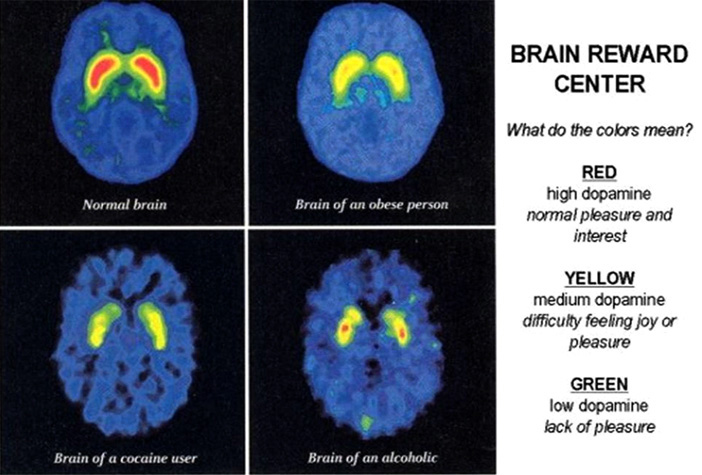
This article purports to show 5 ways obesity affects the brain. Obesity does cause food addiction, however, those who lack the ability to delay gratification are more likely to not be able to control their impulse to overeat. I always link to the MRI scan showing the control, obese and cocaine user’s brain. Interesting to see that sugar is just as addictive as cocaine. Obesity doesn’t make us more impulsive. Check out the Marshmallow Experiment, as well as its follow-up studies. Those who are more impulsive are more likely to be obese, as well as have lower SAT scores.
Satoshi Kanazawa also noted that childhood IQ predicted whether or not one would become obese at the age of 51. General intelligence in childhood has a direct effect on weight gain, BMI, and obesity, net of parents education and SES, parents BMI, the child’s social class, and sex. More intelligent children grew up to make healthier choices, and therefore stayed leaner than those children who were less bright. The link between childhood obesity and intelligence also shows that the effect between childhood g is unmediated by education of income. Meaning, those with lower IQs in a higher socioeconomic bracket STILL have the same chance of becoming obese as those in the lower socioeconomic bracket. Finally, parental BMI itself is a consequence of parental general intelligence, which the parents pass on to their children. This shows the extremely high heritability of obesity as well as showing how intelligence plays a factor in the causes of obesity.
The known differences in ethnic obesity rates generally mirror the intelligence of those populations. All populations are showing a sharp dysgenic decline, which coincides with a more obese population as well. Sociologists and the like may say that those who are poor cannot afford the same types of food that those who have more wealth can. However, this is a false statement. Whole foods are not more expensive. The conclusion that was (obviously) reached is that there is expensive and non-expensive junk food as well as whole foods. Natural diets will not cost more, all things being equal. If you know how to eat and how to buy food, you will avoid spending too much money. This goes back to intelligence. One with a higher IQ will be able to think of what his present actions will lead to in the future while those with a lower IQ live in the now without a care for the future, which then manifests itself in their obesity.
There are numerous articles showing that the causality for low intelligence is not becoming obese, but that those who become obese have a lower IQ since childhood. Longitudinal studies show the relationship, while observational studies show that obesity drops intelligence. Clearly, observational studies are inferior for seeing the relationship between IQ and obesity. This then leads to researchers misinterpreting the data and drawing wrong conclusions.
** This is a great one. In a meta-analysis of twin and family studies, including mono and dizygotic twin studies, with a sample of 140,525 people, heritability of BMI was found to be between .75 and .82. Both extremely high correlations. Since the heritability of intelligence as well as height (another good predictor of intelligence), there is good evidence for the claim that becoming obese is due to lower childhood IQ, which is genetic in nature.
Chinese IQ
1100 words
The Chinese have one of the highest IQs in the world. Their 100 and 108 in Hong Kong give them an average of 104. Chinese intelligence has been increasing from the 1940s all the way to today. This is the ‘Flynn Effect’ in action. Lui and Lynn (2013) reported that IQ scores are improving for 12-year-old Chinese children. The increases are as follows: 6.19 points for full-scale IQ, 6.55 points for performance IQ, and 1.91 points for verbal IQ. The Jintan Child Study is an ongoing longitudinal study to show the effects of health and cognitive ability.
They used 1656 6th graders (55.5 percent boys and 45.5 percent girls, “consisting of 24.3% of all children in this age range in the Jintan city region born in 1999.”) who either graduated or currently were in the grade with an average age of 12.2 years. The study from 86-87 used only individuals from urban areas, so Liu and Lynn did the same. They conclude that over the 26 years from the original study, between the two data sets that increases of 2.38 points on full-scale IQ, .73 points on verbal, and 2.52 points on performance IQ per decade. They theorize that economic development is a cause of rising IQ scores due to better nutrition. The study concludes a 105.89 IQ for the 12-year-olds in the study.
Liu and Lynn (2015) also observed the same sex differences in the same magnitude in Chinese and American boys and girls. In a study of 788 children aged 12 years old, boys obtained a higher IQ by 3.75 points on average. This exactly mirrors what Rushton and Jackson (2005) say about American men and women who are college aged. They state that males score 3.63 points higher than women. Liu and Lynn state that boys obtained 4.20 points higher in performance IQ, and 2.40 points higher in verbal IQ. This is what we would expect, evolutionarily speaking. The men need to be more intelligent to provide food, whereas women need to have a higher verbal IQ to be able to talk to and take care of children. The fact that the magnitude of sex differences in IQ between men and women has been noticed in the U.S. and China shows that sex differences in the brain do exist.
Better nutrition is a definite cause for the rise in IQ for the Chinese. Richard Lynn says that better nutrition is critical for increased cognitive functioning. This is one reason why Africa’s IQ is so low. Due to more Chinese getting better jobs and making more money, they were getting higher quality foods in order to be adequately nourished. Better nutrition explains most, if not all of the Flynn Effect. It’s what to expect if this phenomenon was not on g (it’s not), it’s on the intelligence that is affected by the environment, hence, bigger increases on that type of intelligence in comparison to the intelligence highly correlated with g.
The Chinese have the largest cranial capacity at 1492 ml. The bigger one’s brain, the more cortical neurons it has which allows for better cognitive processing. Piantadosi and Kidd (2016) corroborated one of Rushton’s theories on brain size and child rearing. Mainly that r/K selection theory explains Piantadosi and Kidd’s theory of earlier births being correlated with higher intelligence due to greater necessity to care for the more vulnerable child in comparison to those with smaller brains. Moreover, since East Asians have more myelin in the brain, this too adds to their higher cognition. Since the correlation between brain size and IQ is .35, a good amount of the variance in IQ can be explained by brain size.
We can also look at Chinese outside of China. Singapore, for instance, has an IQ of 108, the highest in the world. They’re also 74.4 percent Chinese. This is then mirrored in their IQ as well as their economy. Anywhere the Chinese go they are high achievers in both IQ as well as wealth attainment.
There are other measures to show that Chinese have higher IQs. In tests of reaction times, Rushton and Jensen (2005) say that East Asians beat whites while whites beat blacks. Since faster reaction times are associated with a more efficient brain, East Asians have a higher IQ as a result of that. Though, they are weak on verbal IQ, average 99 for Chinese in America and China, they are superior in visio-spatial IQ. This is due to their ancestors evolving in the harsh winters of Siberia which lead to being more K-selected and selecting for bigger brains which lead to children being born earlier and higher intelligence evolving to better care for defenseless children. Bigger brains also evolved due to colder temperatures, which is another cause for earlier childbirth and an even bigger increase in general intelligence to adapt.
IQ in China is higher in urban areas than in rural areas, which is seen in America as well. This is due to those with higher intelligence having the ability to be able to live in the city due to a better ability to attain wealth due to higher IQ. Those in rural areas have lower IQ, some having a lower IQ genetically, while others are depressed by bad nutrition. So with better nutrition, a lot of the rural Chinese would get an IQ boost. Nutrition is critical for brain development in vitro as well as in early childhood leading into young adulthood. This ensures the brain has adequate nutrients for growth and in turn grows to its full potential.
The Chinese are the best example of Rushton’s theory of intelligence and brain size. No matter where they go, if they have adequate nutrition, they have the biggest brains and highest IQs which shows in scholastic achievement as well as wealth attainment. The increase in full-scale IQ for China in the past 30 years is due to better nutrition as well as economic growth. Singapore has one of the world’s best economies and is 74.4 percent Chinese.
This extreme K-selection, though, is causing the Chinese birth rate to drop. This is the curse for high IQ peoples. They have a lower birth rate in comparison to those with lower IQs who have a higher birth rate. The current birth rate in China is 1.66. That is devastatingly low, almost as low as Germany and Japan (both at 1.3) and they have similar IQs as well. It seems that this intelligence increase is coming with a lower birth rate. Higher intelligence is correlated with a lower sex drive so this is another cause for the lower birth rate in East Asian countries as these slight IQ increases continue to occur. The same sex differences as seen in America were also seen in China, giving more evidence to the sexual selection theory of intelligence.
Individual and Racial Differences in IQ and Allele Frequencies
1300 words
In the past 100 years since the inception of the IQ test there have been racial differences in test scores. What causes these score differences? Genetics? Environment? Both? Recently it has come out that populations do differ in allele frequencies that affect intelligence. David Piffer’s “forbidden paper on population genetics and IQ” was rejected by the new editor of the journal Intelligence. In the paper, he shows how IQ alleles vary in frequency by population. One reviewer even said it should not be put up for review, which Piffer believes there was a hidden agenda or a closed minded attitude. He even puts reviewers comments and responds to them. He says science should be transparent, which is why he’s showing the researchers’ comments on his paper.
His December, 2015 paper titled: A review of intelligence GWAS hits: Their relationship to country IQ and the issue of spatial autocorrelation shows that there are differing allele frequencies in which IQ between populations that affect IQ which are then correlated highly with average IQ by country (r=.92, factor analysis showed a correlation of .86). There was also a “positive and significant correlation between the 9 SNPs metagene and IQ”(pg. 45). However, Piffer does conclude that since the 9 alleles are present within all populations (Africans, Latin Americans, Europeans, South Asians, and East Asians) that the intelligence polymorphisms don’t appear to be race-specific, but were already present in Homo Sapiens before the migration out of Africa. He then goes on to say that it’s extremely likely that the vast majority of alleles were subject do differential selection pressure which lead increases in cognitive abilities at different rates rates in different geographical areas (pg. 49). It’s of course known that differing populations faced differing selection pressures which then lead to genotypic changes which then affected the phenotype. It’s not surprising that genes that correlate strongly with intelligence have differing frequencies in different geographical populations; it’s to be expected with what we know about evolution and natural selection. Below is the scatter plot showing the relationship between polygenic score GWAS (Genome Wide Association Studies) hits and IQ:
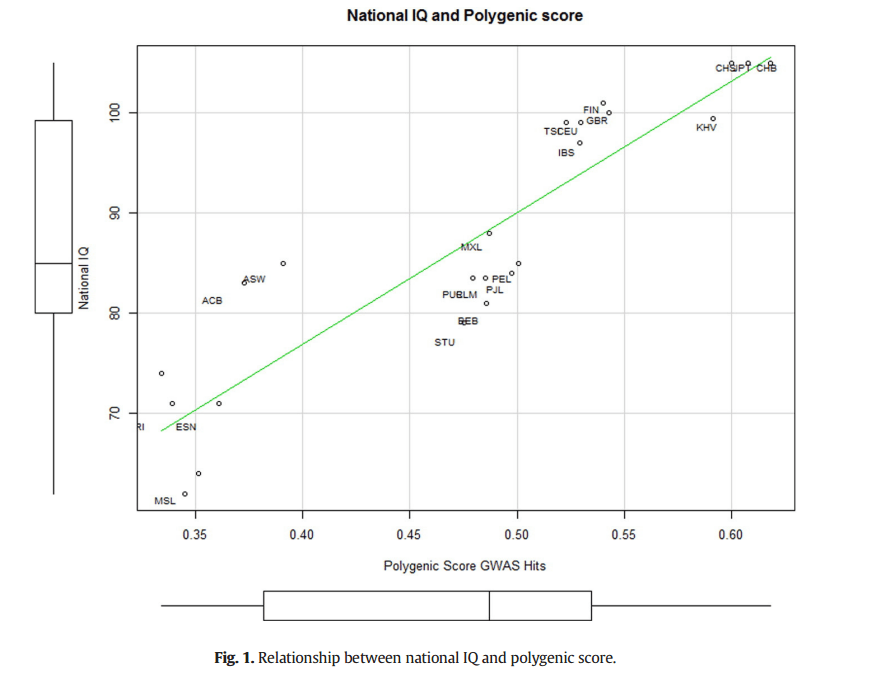
The fact that these differences exist should not come as a shock to those who want to seek the truth, but as seen with how David Piffer didn’t even get consideration for a revision, this shows the bias in science to studies such as this that show racial differences in intelligence exist.
Piffer’s data also corroborates Lynn and Meisenberg’s (2010) finding of a correlation of .907 with measured and estimated IQ. This shows that the differing allele frequencies affect IQ, which then affect a countries GDP, GNP, and over all quality of life.
With a sample with a huge n (over 100,000 subjects) cognitive abilities tests were performed on verbal-numerical reasoning, memory and reaction time (a huge correlate for IQ itself, see Rushton and Jensen, 2005). Davies et al (2016) discovered that there were significant genome-wide SNP based associations in 20 genomic regions, with significant gene-based regions on 46 loci!! Once we find definitive proof that intelligence differences vary between individuals, as well as the loci and genomic regions responsible, we can then move on to difference in allele frequency in depth (which Piffer 2015 was one of the starts to this project).
Moreover, genes that influence intelligence determine how well axons are encased in myelin, which is the fatty insulation that coats our axons, allowing for fast signaling to the brain. Thicker myelin also means faster nerve impulses. The researchers used HARDI to measure water diffusion in the brain. If the water diffuses rapidly in one direction, that shows the brain has very fast connections. Whereas a more broad diffusion would indicate slower signaling, thus lower intelligence. It basically gives us a picture of an individuals mental speed. Thinking of reaction time tests where Asians beat whites who beat blacks, this could possibly show how differing process times between populations manifest itself in reaction time. Since myelin is correlated with fast connections, we can make the inference that Asians have more than whites who have more than blacks, on average. The researchers also say that it’s a long time from now, but we may be able to increase intelligence by manipulating the genes responsible for myelin. This leads me to believe that there must be racial differences in myelin as well, following Rushton’s Rule of Three.
Since the mother’s IQ is the best predictor of the child’s IQ, this should really end the debate on its own. Sure on average, intelligent black mothers would birth intelligent children, but due to regression to the mean, the children would be less intelligent than the mother. JP Rushton also says that regression works in the opposite way. Both blacks and whites who fall below their racial means will have children who regress to the means of 85 and 100 respectively, showing the reality of the genetic mean in IQ between the races.
Why would differing allele frequencies lead to the same cognitive processes in the brain in genetically isolated populations? I’ve shown that brain circuits vary by IQ genes, and populations do differ in this aspect, like all other differing genotypic/phenotypic traits.
East Asians have bigger brains, as shown by MRI studies. Rushton and Rushton (2001) showed that the three races differ in IQ, brain size, and 37 different musculoskeletal traits. We know that West Africans and West African-descended people have genes for fast twitch muscle fibers (Type II) (Nielson and Christenson, 2001). Europeans and East Asians have slow twitch muscle fibers (Type I) for strength and endurance. (East Africans have this as well, which allows for ability to run for distance, which fast twitch fibers do not allow for. The same is true for slow twitch fibers and sprinting events.) Bengt Saltin showed that European distance runners have up to 90 percent slow twitch fibers (see Entine, 2000)! So are genetic IQ differentials really that hard to believe? With all of these differing variables in regards to intelligence that all point to a strong genetic cause for individual differences in other genes that lead to stark phenotypic differences between the races, is it really not plausible that populations differ in intelligence, which is largely inherited?
Is it really plausible that differing populations would be the same cognitvely? That they would have the same capacity for intelligence? Even when evolution occurred in differing climates? The races/ethnicities differ on so many different variables with differing genes being responsible for it. Would IQ genes really be out of the question? Evolution didn’t stop from the neck up. Different populations faced different selection pressures, so different human traits then evolved for better adaption in that environment. Different traits clearly developed in genetically isolated populations that had no gene flow with each other for tens of thousands of years. These differing evolutionary environments for the races put different pressures on them, selecting some for high IQ alleles and others for low IQ alleles.
We are coming to a time where intelligence differences between populations will become an irrefutable fact. With better technology to see how differing genes or sets of genes affect our mind as well as physiology, we will see that most all human differences will come down to differing allele frequencies along with differing gene expression. Following Rushton’s simple rule based on over 60 variables, East Asians will have the most high IQ alleles followed by Europeans and then blacks. The whole battery of different cognitive abilities tests that have been conducted over the past 100 years show us that there are differences, yet we haven’t been able to fully explain it by GWAS and other similar techniques. Charles Murray says within the next 5 to 10 years we will have definitive proof that IQ genes exist. After that, it’s only a matter of time before it comes out that racial differences in IQ are due to differing allele frequency as well as gene expression.
Islam, Suicide Bombings, IQ and Consanguinity
1650 words
A lot of people seem to confuse causes between ‘Islam’ and behavior that’s just ‘low IQ’. Whenever these attacks like shootings, sexual assaults and rapes happen, that’s due to their low IQ; not religion. I wrote about this in IQ, Inbreeding and Clannishness. All of the behavior you see is due to low IQ. 1) being in an area with a hot climate and 2) cousin marriage has been going on there ever since Jews from the Levant introduced it to them around 200 BC. To quote myself:
Those innate behaviors which result in the favoring in all areas of life, themselves and their family, is a result of genetic similarity because of the closely related genes they share (the father’s brother’s daughter type is the most common in the Muslim world). Also, first and second cousin marriages are more common, which also result in increased altruism for their own family because of the close genetic similarity, but also those in their own group, which is mediated by the brain hormone oxytocin.
In a paper on the mean IQ of Muslims and non-Muslim countries, Donald Templer states that the Muslim world, which used to be have great intellectual achievements from the 7th to 12th centuries, has seen an underrepresentation in highly creative contributions in science journals. This is because of the inbreeding effect (2.5 to 10 point drop in IQ) of close cousin marriage. He ends up saying that genetic factors are more important than social/cultural/religious values (back to the inbreeding, causing defects and lowering IQ) in regards to IQ.
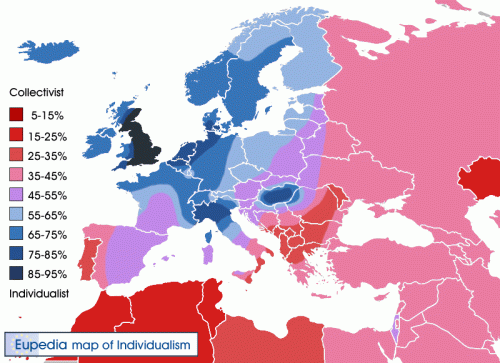
I also put a map of individualism and collectivism in Europe here. You can see that the collectivist countries are fighting back more. The countries/regions where it’s more red roughly matches up to the situation. You can see how in Central, Northern and Northwestern Europe they’re more individualistic, as well as more atheist, than those collectivist countries. So that leads to what we see with this ‘welcome refugees’ signs, as well as, I would assume, more oxytocin in the brain for Europeans, which leads to more altruism towards other peoples. Of course, 1000 years ago, the high altruism was fine due to being a mostly homogeneous society. But when others move in who are not from the area, and who do not have the same biology as you due to certain selection pressures, that’s when the ‘clash of cultures’ commences. Which it’s not really a clash of culture, more like a clash of biology, because 2 groups who shouldn’t live together are being forced to live together.
This also brings me to people who confuse the causality between Islam and blacks. As I said, it’s a low IQ religion (which I have provided enough evidence for my case). So blacks who become Muslim do so because of low IQ. Anything after that doesn’t mean that being a Muslim had them do it. Lets say that Islam never popped up and the same peoples were still there, continuing such close inbreeding, would that be Islam doing it? No. It’s their biology. **
Using environmental factors (Islam, culture) is what leftists do. In my post on behavior not equaling genes plus environment, I showed how people create their own environments based on their own genetics. The environment we put ourselves in is based on our genetics. We can clearly see that Islam is bringing their culture (genetics) to Europe and are incompatible with Europe as well as all Western societies around the world. Due to this, we can see that wherever any population goes, it will be the same from the original place they emigrated from if migration in large enough numbers occurs. A country is only as good as its majority population.
In Non-Western People are Abnormal to Our Societies, I showed how due to differing cultures (genetics), these third-world immigrants coming into our countries cannot readily assimilate due to differing average IQs and other hormones that lead to crime differentials with the native population. Though Arabs are Caucasian, evolving closer to the equator lead to higher levels of testosterone as more exposure to the sun increases vitamin D levels, which is not a vitamin but actually a steroid hormone. These differences in testosterone then lead to more sex attacks with high testosterone combined with low IQ. Lower IQ people are less likely to be virgins than higher IQ people. This shows that higher IQ people have less testosterone and can also hold back urges more than lower IQ people. This then translates over to an increase of sexual assaults by ‘migrants’ to European women. These ‘abnormalities’, though, would be abnormal anywhere. Putting differing cultures (genetics) in a place with a completely different culture will lead to strife due to genetic distance between the two populations.
I wrote in Evolutionary Reasons for Suicide Bombings that Muslims who suicide bomb do so to increase inclusive fitness. The increase in inclusive fitness comes about due to the suicide bomber having no prospects as well as no kids, so he/she is just taking up resources. By committing suicide, they are freeing resources for others who have a better chance to spread their genes. Many suicide bombers come from middle-class backgrounds, which further proves the case for genetic interests being the cause for this. The majority of Al-Qaeda members come from educated, middle-class backgrounds. Even for Palestinian suicide bombers, none of them were poor, uneducated, simple minded nor depressed.
The average IQ for a criminal is 85 adult offenders, 92 for juvenile offenders. What’s the average IQ in the Middle East? 81, around 1.3 SD lower than average, and 4 points lower for chronic adult offenders in America. The lower IQ comes from being more inbred, which then manifests itself in the crime rate. The strife in the middle east can also be traced back to IQ and consanguinity rates in those populations. How inbred a population is predicts IQ as well as how much strife occurs in those populations.
Germany has said they will begin IQ testing their ‘migrants’. If it works well (I highly doubt it will, and if it is, it won’t be implemented well) this could curb some attacks that happen. Since IQ differences between populations are one of the biggest causes for crime differentials (lower IQ is also correlated with higher testosterone) between them, screening for and only allowing high IQ ‘migrants’ in would curb some violent crime and sex attacks if implemented on a wide enough scale. IQ differences between populations are one of the biggest reasons for differences between any population you can think of.
For a comparison, we can use Christian Arabs. Christian Arabs are less inbred than Muslim Arabs, which shows in the amount of terror attacks committed by Christian Arabs, which I can’t find any data for. If anyone has found any, leave a comment. hbdchick then says this about consanguinity between Christian Arabs and Muslim Arabs:
so, the rate of cousin-marriage amongst lebanese christians was 16.5% while the rate for muslims approached double that at 29.6%.
christians married cousins more distant than first cousins at a slightly higher rate than they did first cousins: 8.6% (>1C) versus 7.9% (1C). muslims, on the other hand, favored first cousin marriage: 17.3% (1C) versus 12.3% (>1C). this is a similar pattern found elsewhere in the middle east/arab world. in egypt, for instance, copts tend to marry second cousins while muslims tend to marry first cousins (no, i can’t find the reference!).
there was also more fbd marriage amongst muslims (6.4%) versus christians (3%).
This is directly mirrored in how often we hear about Christian Arab attacks and crime (I haven’t heard of this), showing that consanguinity rates can predict crime rates. Due to this extreme inbreeding, they are more genetically similar, which leads to higher amounts of altruism for their own group, in turn leading to derogation of the out-group. Europeans are, on average, less inbred than Muslims. This is why it’s said that Muslims are incompatible with our societies. They are more clannish and altruistic for their own. Like JP Rushton said, groups will proliferate ideas that are good for their genetic interests.
Even more evidence can be shown with Chechen inbreeding. I can’t find any data on Chechen IQ, so lets use the closest country to Chechnya, which is Georgia with an average of 94. Since inbreeding can depress IQ 2.5 to 10 points, Chechnya’s average IQ should be somewhere around the mid-80s. This shows similarity with the consanguinity rate. hbdchick then concludes:
it’s no wonder, then, that they still engage in blood feuds (just like the albanians). you’d half expect them to build tower houses for protection during clan disputes like the albanians or the maniots.
oh, wait.
Muslim (Arab) populations are incompatible to Western societies due to how inbred they are. Their own societies are built on their genetics, which they then bring to the West and attempt to bring what they’re running from to their new host country.
In conclusion, whenever people say “it’s Islam doing it”, it’s low IQ behavior. Those with lower IQ are more likely to be drawn to Islam. Islam developed after 1300 years after the start of Arab inbreeding. We can draw, from IQ from American criminals, that 85 is the sweet spot for criminality, and since criminality is correlated with low IQ more so than any other variable you can think of. A good example of this is a low IQ person coaxed into committing a crime. It’s an obvious biological difference, the sociopolitical garbage is just that, garbage. The biology drives the politics. Consanguinity rates are one of the biggest factors. You should be concerned with the biology aspect.
Note: When I say “Muslim” I mean Arab. I am also not attempting to “apologize” for terror attacks. I’m simply looking at it through the lens of evolutionary psychology. Most people who read this blog know why Africans act the way they act, and African “migrants” are no different.
How to Use Current Knowledge to Effectively Treat the Symptoms of PWS Patients
2550 words
Abstract
Researchers have tried to manage those with Prader-Willi’s Syndrome for multiple decades. Though they have greatly curbed some of the implications of the disease, there are still numerous ways in which we can better use our knowledge of how the disease manifests in order to better help those suffering from PWS. Looking at research into how the extra chromosome 15 is linked to low IQ; IQ and its relationship to obesity; how the ability to delay gratification leads to obesity; growth hormone treatment to better treat low muscle mass and higher body fat; and finally using reinforcement theory to punish a response, where doing so will greatly diminish the probability of that response occurring again in the future; all of these factors can be used in conjunction to better mitigate problems from the disease. By examining all of these variables and thinking of better ways to handle them, we can then think of other, better ways to manage those with PWS. In doing so, we can better increase the quality of life of those suffering from PWS, as well as have less of a strain on healthcare workers who care for them. With new advances in technology with CRISPR Cas9, we can then edit the genomes and chromosomes of those suffering from this disease.
How to Use Current Knowledge to Effectively Treat and Manage the Symptoms of PWS Patients
How can we use the research on chromosomal differences, research on their IQ differences and their lack of ability to delay gratification that, in turn, would help those individuals with the disease? Seventy percent of PWS cases are attributed to the deletion of chromosome 15 (Ledbetter et al, 1981). Maternal uniparental disomy, which involves receiving an extra chromosome 15 from the mother, is yet another cause of PWS (Wang, 2004).
Whittington, Holland and Webb (2009) found that there was variation between families in deletion of chromosome 15. They found that the PWS and sibling IQ correlation was .3, a modest correlation. What was also noticed was that there were subtype differences which manifested itself in the familial differences in IQ. As they expected, the correlation with normal siblings and those with PWS was .5 in those who suffered from PWS due to unilateral disomy. But in the second subset (the chromosomal deletion subset), the correlation was negative at -0.07. Their research shows great promise in the role of chromosome 15 and IQ. They end up concluding that there needs to be an explanation for the small genetic differences between them. How can we use these differences in IQ to help people with PWS and what does this suggest for other symptoms of their disease?
Kanazawa (2014), reviewed the data on the research between obesity and IQ. What he found was that those studies that concluded that obesity causes lowered intelligence only observed cross-sectional studies. Longitudinal studies that looked into the link between obesity and intelligence found that those who had low IQs since childhood then became obese later in life and that obesity does not lead to low IQ. The average IQ for an individual suffering from PWS is 65 (Butler, Lee and Whitman 2006, p. 13), so that is one reason they have a tendency to be obese. He states that those with IQs below 74 gained 5.19 BMI points, whereas those with IQs over above 126 gained 3.73 BMI points in 22 years, which is a statistically significant difference. Also noted, was that those at age 7 who had IQs above 125 had a 13.5 percent chance of being obese at age 51, whereas those with IQs below 74 at age 7 had a 31.9 percent chance of being obese. This data makes it clear: low IQ is correlated with obesity, so we, therefore, need to find sufficient measures to help those with lower IQs who also suffer from PWS to better maintain their good health. Since we can better identify those PWS individuals who have lower IQs based on how they got the disease, we can then show them more attention in an effort to have them manage their gratification better. Moreover, the lack of ability to delay gratification is also correlated with low IQ (Mischel, Ebbeson, and Zeiss, 1972).
Schlam et al. (2013) observed in a follow-up study to the Marshmallow Experiment that found in a longitudinal study of individuals they found forty years later from the original Marshmallow Experiment, due to inability to delay gratification forty years previously, that was one cause of becoming obese forty years later. Due to PWS sufferers having lower average IQs, and, therefore, a lack of ability to delay their gratification, this is direct evidence that those PWS sufferers with low IQs need more stringent measures to be taken on them, which would then be helpful to those individuals who have a hard time delaying their gratification, which is partially caused by the drop in IQ due to the additional chromosome 15. We can see how those with PWS act; they want their gratification now and do not want to wait for it. This is why, when unsupervised, that those with PWS gorge on the food they understand they should not have, but do so, nevertheless, since their low IQ is correlated with lack of ability to delay gratification, which manifests itself in their obesity. We clearly need to find better methods in which to help those with low ability to delay gratification, which would strongly help those suffering from PWS.
Dykens et al (1997) note that those with PWS have hyperphagia, which correlates with their insatiable want for food. They state that the lack of fullness is due to an altered function of the hypothalamus, which is the part of the brain that is in control of feelings of satiety. Certain States gave restrictions to homes that take care of those with PWS and have come under fire because of this, mainly due to human rights violations. We must ask, then, should we limit their access to food if it will prolong their lives? Will doing so inhibit their freedom to do as they choose? PWS sufferers also have coronary heart problems; one could argue that given their free ability to choose what they want to do unfettered will lead to premature death due to obesity-related complications. Does their disease truly not allow them to learn the consequences of their behavior? Do they have the intellect to really understand the consequences of their actions of consuming too much food? There is no established or known way to control those with insatiable eating habits due to hyperphagia. So would the best course of action to take with those with PWS actually be to constantly monitor them and to lock access to easily attainable food? My answer is yes, however, there is a clear fine line in whether restricting access to food and constantly monitoring those with PWS infringes on their human rights, or that doing so actually will help them live better, healthier lives since they would have the constant supervision around them to better control their out of control eating habits. When negative actions occur, one idea that can be shown to them is constant positive reinforcement so that they may be better able to understand that what they are doing is harmful to their bodies. We can then use positive reinforcement when they do reach a healthy weight, so, in turn, they will have a higher chance of keeping a healthy weight. They may reap the benefits of positive reinforcement, and stick more closely to their program, and therefore, stay healthy.
The hormone ghrelin is secreted from the hypothalamus. With an altered hypothalamus, this would cause ghrelin levels to overload; then the individual suffering from PWS would feel the need to insatiably gorge on food due to this chemical imbalance in the brain. Ghrelin increased feeding in rats and ghrelin is the physiological mediator of feeding and probably has a function in growth regulation by stimulating feeding and release of growth hormone (Nakazato et al, 2001). There is a correlation between want of food, ghrelin release and growth hormone production. By attempting to mediate these variables, those who suffer from PWS will be able to better control their eating habits through positive reinforcement and better, more sustainable habits. Since whenever we eat we get a release of ghrelin that makes us hungry, people pretty much set their own eating times by eating multiple times a day. This affects PWS patients the same way. They can’t stop eating, due in part to constantly eating which constantly releases ghrelin in their body.
PWS sufferers have low muscle tone and, conversely, more body fat. Growth hormones may be a valid way of alleviating that problem, which in turn will give them a slightly higher resting metabolic rate so that they may burn slightly more calories, in an effort to stay healthier. Growth hormone therapy is great for those with PWS though they are largely inactive and lead a sedentary lifestyle, the growth hormone will allow them to have less body fat and more muscle mass. As noted earlier in my paper, those suffering from PWS have altered function in their hypothalamus, which is also where growth hormone is secreted. Aycan and Bas (2014) state that treatment with growth hormones should be strongly considered for those with PWS.
PWS sufferers are also quick to anger, which can be correlated with their sub-average IQ. They may, for instance, become irate at the fact that they do not have constant access to food, and may turn to emotional, angry and infantile outbursts in an attempt to receive what they want. This is one way that it’s tricky to treat those with the disease. How do you tell an individual with PWS who wants something “No”? Measures should be taken to show those with the disease what they are doing to their bodies in the simplest way possible as to better get the point across to them. We can help those sufferers of PWS who are quick to anger with by allowing them to discern between right and wrong ways to handle times when they don’t get what they want with positive reinforcement.
Since those who suffer from PWS have behavioral problems, there are better measures we can take to assure that they don’t have their violent outbursts. When positive reinforcement is consistently shown to an individual who has PWS, he will have more success with his program. When they do something wrong, they can then be shown positive reinforcement, and through being shown positive things with reinforcement theory, they can better learn that certain actions they take are dangerous and shouldn’t be done again, as Rushton (1980) states: “If one rewards a response, it will increase the probability of the future occurrence of that response. If one punishes a response, it will decrease the future probability of the occurrence of that response.” (p. 90).
Discussion
In this paper, I have presented causes for PWS as well as effective ways to manage the disease. To look at how IQ affects individuals in regards to obesity and because it is highly correlated with other measures as well, we can then better help those with the disease. By seeing which individuals have the parental disomy version of PWS, we can then monitor them and give them better care because of their lowered IQ and make sure they stay at a healthy weight. One of the best measures to take is to heavily restrict food, i.e., make sure ability to access food at all hours of the day is restricted along with constant supervision. Though, there are rights groups fighting for them saying that their human rights are being infringed on. In allowing them to have free reign over what, how and when they eat, they will gorge themselves to obesity, as well as lead themselves to horrible complications that come along with increased food consumption. When one is caught consuming food he or she shouldn’t be consuming, punishing them and letting them understand that the behavior they took was wrong will lead to better choices and outcomes from those choices, due in part to the main facet of reinforcement theory, that punishing a response will lead to a reduced outcome in that response that was punished happening in the future. Also, with the advent of CRISPR Cas9, we will be able to edit genomes, and therefore, eventually, put an end to PWS. It will enable us to fix the chromosomal deletion and uniparental disomy, which will eradicate this disease.
Conclusion
There are better, more helpful ways in which to help those suffering from PWS. By identifying and attempting to correct these abnormalities, those who suffer from the disease can, therefore, have a better quality of life due in part to the extra measures taken. By understanding that their lower average IQs lead to a lot of the problems associated with the disease, we can better structure methods for them to keep on a healthy track and reinforce positive behavior through reinforcement theory. Since obesity is correlated highly with low IQ, we can, therefore, use this information to better help those who suffer from PWS that have low IQs. Locking up food instead of providing free access, as well as understanding they do not have the ability to delay gratification, would be a big start to find better ways to treat sufferers of PWS. Treating negative actions with positive reinforcement through reinforcement theory will lead to better and increased prosocial behavior. It’s been shown that if you punish a response, then it will decrease the future probability of that response occurring. The advent of CRISPR Cas9 will then allow us to edit the chromosomes of those with this disease in the future. Should we use genome editing on individuals with this disease, as well as several other chromosomal/genetic diseases? I believe we should, in doing so, we will greatly increase the quality of life of those with the disease.
References
Aycan, Z., & Baş, V. N. (2014). Prader-Willi Syndrome and Growth Hormone Deficiency. Journal of Clinical Research in Pediatric Endocrinology Jcrpe, 62-67.
Butler, M. G., Lee, P. D., & Whitman, B. Y. (2006). Management of Prader-Willi syndrome (3rd ed.). New York: Springer-Verlag.
Dykens, E. M., Goff, B. J., Hodapp, R. M., Davis, L., Devanzo P., Moss, F. . . King, B. (1997). Eating Themselves to Death: Have “Personal Rights” Gone Too Far in Treating People With Prader-Willi Syndrome? Mental Retardation, 35(4), 312-314.
Kanazawa, S. (2014). Intelligence and obesity. Current Opinion in Endocrinology & Diabetes and Obesity, 21(5), 339-344.
Ledbetter, D. H., Riccardi, V. M., Airhart, S. D., Strobel, R. J., Keenan, B. S., & Crawford, J. D. (1981). Deletions of Chromosome 15 as a Cause of the Prader–Willi Syndrome. New England Journal of Medicine N Engl J Med, 304(6), 325-329.
Mischel, W., Ebbesen, E. B., & Zeiss, A. R. (1972). Cognitive and attentional mechanisms in delay of gratification. Journal of Personality and Social Psychology, 21(2), 204-218.
Nakazato, M., Murakami, N., Date, Y, et al (2001). A role for ghrelin in the central regulation of feeding Nature 409, 194-198
Rushton, J. P. (1980). Altruism, socialization, and society. Englewood Cliffs, NJ: Prentice-Hall.
Schlam, T. R., Wilson, N. L., Shoda, Y., Mischel, W., & Ayduk, O. (2013). Preschoolers’ Delay of Gratification Predicts their Body Mass 30 Years Later. The Journal of Pediatrics, 162(1), 90-93.
Whittington, J., Holland, A., & Webb, T. (2009). Relationship between the IQ of people with Prader-Willi syndrome and that of their siblings: Evidence for imprinted gene effects. Journal of Intellectual Disability Research, 53(5), 411-418.
YM Wang, L Chuang, BT Wang, et al. Maternal uniparental disomy in a patient with Prader-Willi syndrome with an additional small inv dup(15) chromosome. J Formos Med Assoc, 103 (2004), pp. 943–947
The Black-White IQ Gap
3300 words
(This goes along with my refutation of Steele here: Strong Evidence, Strong Argument: Race IQ and Adoption)
There is a 15 point, 1 standard deviation between black and white IQs. I will argue that they are not biased towards any group, as well as there being both positive and negative life outcomes based on IQ, crime included. This is due to false ideas of equality, some “blank slate” idea that we all have the same capacity for cognitive ability, athletic ability and so on. These egalitarian ideas, in turn, have devastating effects on our society, as we a) deny the reality of intelligence and b) deny any type of racial gaps in intelligence.
The famous words “Compensatory education has been tried and has apparently failed” in Jensen’s paper in the Harvard Educational Review that reignited the firestorm on the race/IQ debate called How Much Can We Boost IQ and Scholastic Achievement? is the reason why this debate got thrown back into the public eye (Jensen, 1969). It will be argued in this paper that he was correct and that his main thesis that blacks need differing education than do whites is correct and needs to be done.
IQ tests were first developed off of Army Aptitude Tests in the early 1900s by French psychologist Alfred Binet. They were originally used to identify at-risk populations in terms of who is mentally retarded. People then say that due to this, that IQ tests don’t test anything of worth due to the reason why they were originally developed.
In 1976, a study was conducted called the Minnesota Transracial Adoption study where they took children of different races who were adopted into different families and tested their IQs at age 7 and again at age 17. A follow-up study was published in 1992. What was found, was that IQs of transracially adopted children didn’t differ at all from children raised by their biological parents in the same area.
Dr. David Duke states in his book My Awakening: A Path to Racial Understanding (1998), that the authors waited about 4 years to publish these findings. This, of course, has to do with the political climate of today. Any allegations of “racism” can and most likely will end someone’s career; so most individuals just go the politically correct route to play it safe and keep their credentials. Blacks raised in white families hardly did any better than blacks raised in black families. If the differences supposedly were environmental in the way environmentalists say it is, how come blacks raised in rich white families didn’t reach the IQ of whites if “IQ is malleable by the immediate environment?” Because the differences are genetic.
Though, there are other studies that state that environment matters more than genetic factors. These three studies (Moore 1986; Eyferth 1961; and Tizard, 1972) all conclude that the black-white IQ gap is environmental in nature.
A study was conducted that compared IQ scores of 23 7 to 10-year-old black children raised by middle-class white families and the same number of black children but raised in black families (normal adoption) (Moore, 1986). The findings indicated that traditionally adopted black children raised by black parents had normal IQ scores (85), whereas those black children who were adopted by white families had IQs 1 standard deviation (100) above the black mean. Moore states that multivariate analysis indicates that the behaviors of black and white mothers were different in regards to how the black children were treated. She states that white adoptive mothers reduced stress by joking, laughing, and grinning. Whereas black adoptive mothers reduced stress in less positive ways including coughing, scowling and frowning. She also says that white adoptive mothers gave more positive reinforcement to their adoptive child’s problem solving whereas black adoptive mothers gave less (as I am arguing here, these traits are mostly genetic in origin, driven by IQ). She concludes that the ethnicity of the rearing environment exerts a significant influence on intellectual ability as well as standardized test scores. The sample sizes, however, are extremely small and to infer that the black-white IQ gap is environmental in origin because of a study with a small sample size is intellectually dishonest.
One study conducted in Germany in 1959 observed IQ scores of out-of-wedlock children fathered by US soldiers stationed in Germany during WWII and reared by white German mothers (Eyferth, 1961). Mean IQ scores for 83 white children and 97 mixed-race children were 97, 97.2 for the whites and 96.6 for the mixed-race children (Rushton and Jensen, pg. 261). However, these results are disputed. One, the children were extremely young, one-third of the children in the study were between the ages of 5 and 10 whereas the remaining two-thirds of the children were between the ages of 10 and 13. The malleability of intelligence is very well-known in regards to children. The heritability of IQ at age increases with age (a phenomenon known as ‘the Wilson Effect’), which Arthur Jensen states that as a child ages, social environment can increase IQ (as heritability for children aged 5 is 22 percent and children aged 7 at 40 percent). Though, as the child ages, genes activate, and they fall to their genetic potential, with genetic effects accounting for a lion’s share of intelligence (80 to 90 percent) and environment having no effect. Second, 20 to 25 percent of the ‘black’ fathers were French North Africans (Caucasians). This shows why the mixed-race children had higher IQs in the sample: about a quarter of the sample was Caucasian (Rushton and Jensen, pg. 261). Finally, rigorous selection was done on both the white and black soldiers. With 3 percent of whites getting rejected compared to 30 percent of blacks, it is shown that high IQ blacks were selected for, therefore, skewing the sample.
Yet another study on black and white children observed 2 to 5-year-olds in a nursery setting (Tizard, 1972). The white and black children both had IQs at 102.6 and 106.3 respectively. She found no significant gap in the three groups tested (white, black and West Indian). However, she did note that the single significant difference was in that of non-white children.
All three of the above studies that get cited ad nauseum have something in common: they did not retest the children again at age 17 like was done in the Minnesota Transracial Adoption Study. This is very critical. As it was alluded to earlier, as children mature, genetics exerts more of an effect than does socialization. Any IQ differences that are brought about by socialization will be mediated by genetics at adulthood, falling to the racial mean. It also noted how the age of adoption does not influence children’s IQ scores after age 7 (Jensen 1998b). This is due to, again, genetic effects being heightened as age increases.
What the Minnesota Transracial Adoption Study (Weinberg, Scarr, and Waldman, 1992) and the Eyferth study (1961) had observed was that the children born to a white mother and a black father had statistically significant differences in IQ in comparison to those birthed by a black mother and white father. This is attributed to prenatal environment. It was observed that mothers who had higher IQs and were more educated (which both correlate highly with each other), had children which, in turn, had higher IQ scores as well (Erikson, 2013). The results of the study suggest that mothers who are more educated have children who have higher intelligence. This should end this debate right there. Since, clearly, a white mother is more conducive to foster a higher IQ than is a black mother, this shows that racial differences in IQ are largely genetic in origin.
The black-white IQ gap has been noticed for over 100 years, ever since the test has been first conceptualized. Egalitarians may say that “they’re biased against minorities” or “they don’t learn the right things on the test”, all of these are easily refutable. This was true in the 70s, according to Herrnstein and Murray, but today there is no bias of that magnitude on these tests of cognitive ability.
Jensen states that genetic and cultural factors influence the black-white IQ gap the same as individual factors (80 percent genetic factors, 20 percent environmental). Since both individual differences in IQ, as well as the mean difference in the black-white IQ gap are genetic, this shows that some individuals are genetically predisposed to have lower IQs. Moreover, a multitude of traits in life fall on a bell curve, you will have some individuals at one end, and others at the opposite end, but you’ll see a majority fall in the middle of the racial mean (85 for blacks, 100 for whites, 104 for East Asians and 107 for Ashkenazi Jews). So, with equalized environments, the gap can be closed by around 3 points, but still a lion’s share of the gap is still there, which again gives credence to the genetic hypothesis.
Those who disbelieve the validity of IQ tests at the individual level, as well as the between-group level, say that test biases are the cause for lower scores in certain individuals in minority populations. Gottfredson et al state in their publication that was released after the controversial book The Bell Curve, Mainstream Science on Intelligence, that if you speak the language, IQ tests are not biased. If you don’t speak the language, you then get a special IQ test that is culture free, based on pattern recognition called Raven’s Progressive Matrices. Even then on these culture-free, word-free IQ tests, there is still a one SD gap, 15 points, between blacks and whites.
People have tried to bridge the gap, even going so far to make a test that’s ‘culture fair’ to blacks called the B.I.T.C.H. (Black Intelligence Test of Cultural Homogeneity) IQ test (Williams, 1972). What was found was that blacks scored highly, whereas whites lagged behind. But, the thing is, this test has ridiculous concepts that don’t test actual intelligence. The way that people say that regular IQ tests are biased towards blacks don’t even realize that the way the B.I.T.C.H. IQ test is set up does not mirror the supposed biased nature of regular IQ tests on blacks.
Flynn noticed that no matter which country you look IQs have gained around 3 points per decade. Herrnstein and Murray then coined the term The Flynn Effect, after the man who focused the most attention on the phenomena. Flynn argues that since IQ scores have been gaining the same amount of points in any population no matter where you look, that the black-white IQ gap has to be environmental in origin.
However, the Flynn Effect is a fallacy and is overstated. In 1945, the average IQ of whites in America was 85, the same as the black average today. That statement is supposed to show that the between-group differences are environmental in origin and since there haven’t been any big genetic changes in both populations to account for this difference, then the gap must be environmental in origin. Just because a change in one group over time is due to an environmental change, doesn’t mean, or even make it probable, that a difference between 2 groups at the same time is due to an environmental change. The Flynn Effect make’s that highly unlikely and here’s why.
Any country you look at, the rate of increase is 3 IQ points per decade; but gaps in IQ stay the same. This shows that this same uniform factor affects all groups the same throughout the world. And due to this uniform factor, as a result, you have a difference in IQ that’s being preserved. This suggests that the response on the parts of blacks and whites is due to non-environment factors, a genetic factor, which makes the difference in IQ remain as the Flynn Effect goes into effect.
Blacks and whites also have a similar environment, especially since segregation ended. Since environments are similar, the more and more similar the environment, the less and less differences are due to environment and the more and more they are due to genetic factors. So the 15-point gap surviving this change in environments proves that the racial gap is genetic in origin.
Dickens and Flynn state that black Americans have closed the gap in recent years, but this, however, is not the case. Most of those studies were done on children; Jensen states that the black-white IQ gap becomes more noticeable as they get older because genetic effects take over at adulthood with the environment having little if no effect on IQ (Rushton and Jensen, 2005). Jensen concludes that the SD gap between blacks and whites at early adulthood is about 1.2 SDs or about 17 IQ points. In Rushton and Jensen’s 2005 paper, Flynn and Dickens sidestepped a theoretical analysis in which it’s showed that the higher amount of white admixture a black has, the higher his IQ score is.
The Flynn Effect is not on g, or the general intelligence factor, which the most heritable items on the subtests show the most differences between blacks and whites (Rushton and Jensen, 2010). Since the Flynn Effect does not fall on g, this should not even be in the discussion. A Flynn Effect is not a Jensen Effect, which is real gains in g over time (Rushton, 1998). Rushton found it ridiculous that we had a nation of mentally handicapped children 100 years ago. This was enough for him to disregard the Flynn Effect.
Other proposed causes for this gap involve a mechanism called ‘stereotype threat’ (Steele and Aronson, 1995). Stereotype threat is a situational predicament in which people find themselves falling into the stereotype of whatever group their group is a part of. Though, this is not the case for blacks. Blacks are rated as seeing themselves as more attractive, which a) shows more self-confidence and b) shows that the so-called effects of white racism making blacks feel ugly and inadequate in their own skin are simply not true. Kanazawa (2011) noted that both male and female blacks rated themselves higher than other groups; showing that there are no lingering effects of racism as well as this silly belief that just by thinking you’re going to fall into a stereotype means that you will fall into it.
Still, others may state that poverty is a cause for the IQ disparity between the races. People have causalities mixed up when they make this statement. Since lower IQ is correlated with lower SES, the cause of poverty is people being born with low intellect which manifests itself in the wealth attainment of the individual. Many recent studies have come out saying that poverty decreases IQ, yet the only environmental factors that can do such a thing is malnutrition, extreme abuse, and extreme isolation. Other than that, all a parent needs to do is just give the child an ‘OK’ environment and genetic factors will take care of the rest.
Critics of the public school system have said for decades that you can’t solve educational problems by throwing money at them, but those who believed in the public schooling system said it has yet to be tried. They did try, in Kansas, MO, and failed miserably (Ciotti, 1998). This desegregation experiment cost 11,700 dollars per student, more money spent per individual on a cost of living basis than 280 school districts around the country. This tax-payer money bought “higher teachers’ salaries, 15 new schools, and such amenities as an Olympic-sized swimming pool with an underwater viewing room, television and animation studios, a robotics lab, a 25-acre wildlife sanctuary, a zoo, a model United Nations with simultaneous translation capability, and field trips to Mexico and Senegal. The student-teacher ratio was 12 or 13 to 1, the lowest of any major school district in the country.”
Despite all of these variables to enrich the environment of the black students, even bussing in white kids from out of district, the gap did not diminish, test scores did not change and there was less, not more, integration. Moreover, numerous individuals say that poverty and schooling systems are the cause for anti-intellectualism in the black community. I, however, argue that there is a considerable genetic component to the black-white IQ gap (Rushton and Jensen, 2005 p. 279).
Where does all of this leave us? Yes, blacks are less intelligent than whites, but what does this mean for our society that we refuse to acknowledge the existence of innate intelligence, as well as racial differences in intelligence? The average IQ of a repeat juvenile criminal in America is 92 (Herrnstein, Murray, and Cullens, 1998). At adulthood, the average IQ for a repeat criminal is 85. The reason for the IQ of a repeat adult offender being lower than that of teenaged offenders is due to as you age, the environment doesn’t matter as genetics takes over at adulthood.
The fact that we are disregarding g (intelligence) and its multiple covariates is extremely alarming. The fact that America is headed down the path to dysgenesis (Lynn, 2006) and we are not doing a thing about it troubles me greatly. The way we treat black underachievement in America is completely wrong. To succeed as a country, we need to recognize biological truths in that certain groups achieve highly whereas others have low levels of academic achievement, we need to recognize that there is no insidious plot to hold down others; we need to realize that some groups are less intelligent as others due to evolution in differing climates over tens of thousands of years. The trillions of dollars we have spent on all of these programs have not worked. We have tried them, and they have failed. No matter what we do, black underachievement will always be around. By recognizing black underachievement, they will be better able to succeed relative to themselves and not compare themselves to other high-achieving groups. There is a considerable genetic component to the gap (80 percent genetic) and that due to this, blacks should have differing standards in comparison to the rest of the population (Jensen, 1969).
References
Ciotti, P. (1998) Money and School Performance: Lessons from The Kansas City Desegregation Experiment http://www.cato.org/pubs/pas/pa-298.html
Cullens, F.T., Herrnstein, R., Murray, C. Does IQ Significantly Contribute to Crime? (From Taking Sides: Clashing Views on Controversial Issues in Crime and Criminology, Fifth Edition, P 30-51, 1998, Richard C. Monk, ed. — See NCJ-183062)
Dickens, W. T., & Flynn, J. R. (2006). Black Americans Reduce the Racial IQ Gap: Evidence From Standardization Samples. Psychological Science, 17(10), 913-920. doi:10.1111/j.1467-9280.2006.01802.x
Duke, D.E. (1998). My awakening A path to racial understanding. Covington, LA: Free Speech Press.
Eriksen, H. F., Kesmodel, U. S., Underbjerg, M., Kilburn, T. R., Bertrand, J., & Mortensen, E. L. (2013). Predictors of Intelligence at the Age of 5: Family, Pregnancy and Birth Characteristics, Postnatal Influences, and Postnatal Growth. PLoS ONE, 8(11).
Eyferth, K. (1961). Leistungen verscheidener Gruppen von Besatzungskindern in Hamburg-Wechsler Intelligenztest fu¨r Kinder (HAWIK) [Achievement of children on the Hamburg-Wechsler Intelligence Scale for Children]. Archiv fu¨r die gesamte Psychologie, 113, 222–241.
Flynn, J. R. (1987). Massive IQ gains in 14 nations: What IQ tests really measure. Psychological Bulletin, 101, 171–191.
Gottfredson, Linda S. “Mainstream science on intelligence: An editorial with 52 signatories, history, and bibliography.” Intelligence 24.1 (1997): 13-23.
Herrnstein, R. J., & Murray, C. A. (1994). The bell curve: Intelligence and class structure in American life. New York: Free Press.
Jensen, A. (1969). How Much Can We Boost IQ and Scholastic Achievement. Harvard Educational Review, 39(1), 1-123.
Jensen, A. R. (1998). The g factor: The science of mental ability. Westport, CT: Praeger.
Kanazawa, S. (2011). Why Are Black Women Less Physically Attractive Than Other Women? The Scientific Fundamentalist
Lynn, R. (1996) Dysgenics: Genetic Deterioration in Modern Populations, Human Evolution, Behavior and Intelligence Praeger, 1996
Moore, E. G. J. (1986). Family socialization and the IQ test performance of traditionally and transracially adopted Black children. Developmental Psychology, 22, 317–326.
Murray, C. (2014) Our Futile Efforts to Boost Children’s IQ http://www.aei.org/publication/futile-efforts-boost-childrens-iq/
Rushton, J. P., & Jensen, A. R. (2005). Thirty years of research on race differences in cognitive ability. Psychology, Public Policy, and Law, 11(2), 235-294.
Rushton, J. P., & Jensen, A. R. (2010). The rise and fall of the Flynn Effect as a reason to expect a narrowing of the Black–White IQ gap☆. Intelligence, 38(2), 213-219. doi:10.1016/j.intell.2009.12.002
Steele, C. M., & Aronson, J. (1995). Stereotype threat and the intellectual test performance of African Americans. Journal of Personality and Social Psychology, 69(5), 797-811. doi:10.1037/0022-3514.69.5.797
Tizard, B. (1974, February 1). IQ and race. Nature, 247, 316.
Weinberg, R. A., Scarr, S., & Waldman, I. D. (1992). The Minnesota transracial adoption study: A follow-up of IQ test performance at adolescence. Intelligence, 16(1), 117-135.
Williams, Robert L. (1972) The BITCH-100: A Culture-Specific Test.
“Philosophers of Science” and Race/IQ
1500 words
“Philosophers of Science” attempt to stick their heads into the race/IQ debate to give their field more credence than it should get with the hard sciences. They use bad arguments like saying that “gene-environment interactions are widespread and hard to entangle” (Block, 1995), not knowing that identical twins reared apart grow up to be so similar (Rushton and Jensen, 2005, p. 279). The only time they should stick their heads in this debate is when they’re affirming that the methodology used to test IQ as well as racial differences in IQ are sound; otherwise, they do not have the training to assess this. Most “Philosophers of Science” defend claims that disintegrate when presented with the relevant scientific evidence (Sesarardic, 2000). I will be referencing this paper for the length of this article.
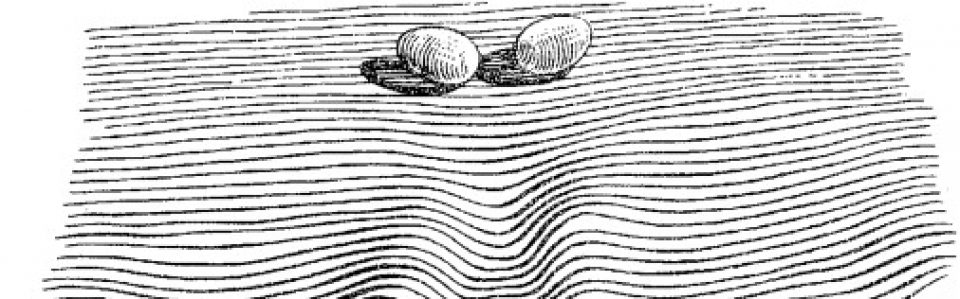
Half of the paper analyzes Lewontin’s argument to Jensen in which he uses his now famous “seed argument” in which he says you can take two seeds from the same heterogeneous population and plant them in rich and poor soil and “. . . as a result, the phenotypic differences within each of the two groups of plants will be 100 percent heritable, but the difference between the two groups will be entirely due to differences in two environments (zero heritability).” The fact of the matter is, this argument is parroted by “Philosophers of Science” when Jensen never made that argument.
Jensen then systemically dismantled every environmental argument with empirical evidence that they don’t hold up.
Other researchers then made accusations of “racism” the reason for Jensen’s overlooking of this. James Flynn, a big opponent of the hereditarian hypothesis and Rushton and Jensen in general, say that Jensen is not a “racist”. There is also something called the “X-Factor”, which is when phenotypic differences between two groups can be explained by an environmental factor that has no within-group variation at all, a 0 heritability. Racism, however, is a poor excuse for the “X-Factor”. Both Flynn and Jensen rule out discrimination as being the cause for the “X-Factor” as well.
Simply put, Jensen doesn’t make inferences that the black-white IQ gap is genetically based on one or a few variables on their own, but everything put together, that’s where the remaining evidence put. “Philosophers of Science” don’t understand heritability coefficients to be saying what they do; they wouldn’t be saying that if they knew how they worked.
Sesardic brings up how Block (1995) only mentions three pieces of empirical evidence: The “Flynn Effect”, “data about caste-like minorities”, and the small amount of genetic variation between races.
- The Flynn Effect happens uniformly in all populations at a rate of 3 points per decade but has slowed considerably. This increase began starting around 1880, coinciding with the industrial revolution. Better nutrition increased brain size in all populations, which lead to an increase in IQ. The Flynn Effect is not on g, so to make any claims that the differences in IQ between blacks and whites, or global differences in IQ for that matter, can be changed with more favoring towards environmentalist positions are not consistent with the scientific literature. In 1945, the average white IQ in America was 85, the same as the average American black IQ today. Since the differences in IQ have stayed consistent despite better nutrition in all groups, this proves that the gap is genetic in origin. Just because a change in one group over time is due to an environmental change, doesn’t mean, or even make it probable, that a difference between 2 groups at the same time is due to an environmental change. Since the Flynn Effect does not occur on g, it should be a non-factor.
- Minorities are only “caste-like” because differences in IQ are heritable, leading to racial disparities in social class differences. We can see when we match blacks, whites, and “Hispanics” for IQ (100), that some differences disappear, other differences decrease dramatically, and even blacks and “Hispanics” beat out whites in a couple of variables. Through multiple IQ tests averaged over time as well as seeing that test differences between races stay mostly the same, we can then make the inference, with all of the other evidence, that racial and ethnic differences in IQ are mostly genetic in origin with the environment having very little effect. To say that “racism” or “stereotype threat” has any bearing on these racial differences in IQ is laughable because 1) stereotype threat is only replicable in the lab and 2) racism as a variable does not exist in IQ testing.
- The small amount of genetic variation between races as an argument for the non-existence of race is meaningless. There are around 3 billion base pairs in the human genome. The human races differ on around .1 percent of the genome, or around 3 million base pairs. This is more than enough genetic difference to show phenotypic differences (obviously) as well as genotypic differences (again, obviously). Richard Dawkins in the Ancestor’s Tale writes: “What is not correct is the inferene that race is therefore a meaningless concept.” Race is a perfectly valid concept, anyone who denies it has doesn’t know of all of the studies that show the existence of race and how it’s a scientifically taxonomic concept.
Sesardic then brings up how “Philosophers of Science” continuously cite The Mismeasure of Man and Steven Jay Gould in an attempt to denigrate scientists long dead. A few “glowing reviews” from two “Philosophers of Science”:
No one has done as much as Stephen J. Gould to expose race and intelligence studies for the garbage that they often are. (Brown 1998, 5)
Stephen Jay Gould has lucidly analyzed how filling the skulls with lead shot, and comparing the weights of the lead, could easily be infected with unconscious biases. (Kitcher 1997, 171)
The garbage that they often are? Steven Jay Gould is a long discredited ideologue who put his politics before actual science, ironically giving HIM the same bias he falsely accused Samuel Morton of having. James Flynn even says that Gould’s book evades all of Jensen’s best arguments (as most always happens with this debate) with his false belief that g is “reified” therefore leading to the study of race and IQ being meaningless since he has “rebutted the g factor”. I proved the existence of Spearman’s hypothesis the other day using Jensen’s writings that he empirically verified that Spearman’s hypothesis exists in 25 independent samples of blacks and whites along with the study by Dragt (2010) who used the method of correlated vectors to empirically prove the existence of Spearman’s hypothesis. In meta-analyses of Spearman’s hypothesis, he found that differences in intelligence between groups are largely based on cognitive complexity and any so-called “biases in mental testing” cannot account for these racial differences in cognitive ability.
In the definitive refutation of Steven Jay Gould’s “reanalysis” of Morton’s skulls, Lewis, et al definitively prove by remeasuring 308 of the 670 skulls that he had no implicit biases. They also found that if Morton’s biases were true, then there would be considerable overestimates of white skulls while there would be considerable underestiamates of non-white skulls. Ironincally enough, he considered his Egyptian skulls “Negroid” and overmeasured by 12 percent. He overmeasured three of those skulls, along with Seminole (by 8 percent) and native African Nergro (by 7 percent), falsifying the claim that Morton had a bias in measuring his skulls!! As I have brought up here numerous times, as Rushton has refuted him (and defended Morton’s results) as well as Jensen giving Gould a definitive rebuttal to his book. Gould should not be being cited seriously anymore. He should only be brought up as an example of extreme bias in the context of race as well as racial differences and a whole slew of other things that are politically motivated.
He finally rounds up the paper by bringing up how TJ Bouchard, showing that the Big Five Personality Traits have a high heritabilty, gets told that they are traits that carry a social judgment. However, we now know that 40-60 percent of the variation the Big Five is heritable, so this is a meaningless claim.
Sesardic ends the paper as follows:
Why is this small segment of contemporary philosophy of science in such a sorry state? On reflection, I prefer to leave this question as an exercise for the reader. My aim in this paper is to criticize a deviant philosophical trend, not to explain how it came about or why it spread.
My answer to this question is that most philosophers seem to be leftists. We can see with the vehement race denial that they want to believe so strongly that racial differences, as well as race as whole, does not exist. The fact that they attempt to say that these things are not a reality and based on faulty methodologies shows that they do not know what they are talking about. They show large misconceptions about heritability, and continuously cite Steven Jay Gould, even when Gould has been refuted numerous times as well it being shown that they don’t correctly understand heritability. They show large misconceptions of what is understood in the field of psychometrics and heritabilities and make faulty claims about the hereditarian hypothesis.
If the hereditarian hypothesis is to be refuted (it won’t), it will be from science and not philosophy or “Philosophers of Science”.
More g Denialism and more Gould Refuting
1750 words
It seems like every day something new comes out that attempts to discredit the reality of g (This paper came out in 2012.). Steven Jay Gould (in)famously wrote in The Mismeasure of Man:
The argument begins with one of the fallacies—reification, or our tendency to convert abstract concepts into entities (from the Latin res, or thing). We recognize the importance of mentality in our lives and wish to characterize it, in part so that we can make the divisions and distinctions among people that our cultural and political systems dictate. We therefore give the word “intelligence” to this wondrously complex and multifaceted set of human capabilities. (emphasis mine)
Which is the same thing that the researchers of the paper Fractioning Human Intelligence said to The Independent:
“The results disprove once and for all the idea that a single measure of intelligence, such as IQ, is enough to capture all of the differences in cognitive ability that we see between people,”
“Instead, several different circuits contribute to intelligence, each with its own unique capacity. A person may well be good in one of these areas, but they are just as likely to be bad in the other two,”
Just like The Mismeasure of Man is “the definitive refutation to the argument of The Bell Curve”, right?
In the above paper, they cite Gould twice writing:
It remains unclear, however, whether population differences in intelligence test scores are driven by heritable factors or by other correlated demographic variables such as socioeconomic status, education level, and motivation (Gould, 1981; . . .
They have been shown over numerous studies that population differences in intelligence are driven by heritable factors (Rushton and Jensen, 2005; Lynn and Vanhanen, 2006; Winick, Meyer, and Harris, 1975; Frydman and Lynn, 1988; Rushton, 2005)
More relevantly, it is questionable whether they relate to a unitary intelligence factor, as opposed to a bias in testing paradigms toward particular components of a more complex intelligence construct (Gould, 1981;
I will prove the existence of g in this article. There is also an empirical basis for the g factor.
It’s getting old now that researchers still think that they can “disprove g”, as a multitude of studies have already corroborated Spearman’s hypothesis as an empirical fact. That is, applying the scientific method, using the same hypothesis over a multitude of different studies and testing those predictions by experiment or further observation and modify the hypothesis when new information comes to light. Then, repeat the aforementioned steps until there are no discrepancies between the theory and experiment/observations.Then when consistency is obtained it then becomes a theory that provides a coherent set of premises that explain a class of events.
How many times has the Hampshire et al hypothesis been corroborated? I doubt it has been corroborated as many times as Spearman’s hypothesis has.
As I said the other day, Jensen tested Spearman’s hypothesis on 25 large independent samples, with each sample confirming Spearman’s hypothesis. Even matching blacks and whites for SES didn’t diminish the effect. Jensen then concludes that the overall chance for Spearman’s hypothesis being wrong is over 1 in a billion. Pretty high odds.
Even then, if this study were to be replicated the amount of times that Spearman’s hypothesis has, it still wouldn’t disprove g.
On page 558-559 of the Afterword to The Bell Curve, Charles Murray responds to many of Gould’s criticisms of the book. He writes:
He (Gould) continues: “The fact that Herrnstein and Murray barely mention the factor-analytic argument forms a central indictment around The Bell Curve and is an illustration of its vacuousness.” Where, Gould asks, is the evidence that g “captures a real property in the head?
Murray states that they “barely brought up the factor-analytical argument” because it was out of date; Gould was using statistics on g that were 50 + years old. Also, a reviewer of his book for the journal Nature said that Gould’s “discussion of the theory of intelligence stops at the stage it was more than a quarter of a century ago.” Gould was using old arguments, and, as Arthur Jensen states in his response to Gould:
Of all the book’s references, a full 27 percent precede 1900. Another 44 percent fall between 1900 and 1950 (60 percent of those are before 1925); and only 29 percent are more recent than 1950.
More than half of Gould’s references in The Mismeasure of Man are outdated by more than 50 years. Clearly, he was attempting to denigrate the old studies of intelligence, i.e., phrenology, even though this recent paper in the journal Nature recently said:
The genomic regions identified include several novel loci, some of which have been associated with intracranial volume
So, we have several loci that are associated with intracranial volume; this shows that those skull studies of yesteryear weren’t crazy. Moreover, the fact that Rushton and Ankney (1996) “reviewed 32 studies correlating measures of external head size with IQ scores or with measures of educational and occupational achievement, and they found a mean r .20 for people of all ages, both sexes, and various ethnic backgrounds, including African Americans” shows that there is a correlation of .20, albeit not too high but there, with external head size and IQ. This shows that Gould’s argument on phrenology is bunk, as modern studies confirm that there is a slight correlation between head size and IQ, and therefore g.
The fact that researchers are still bringing up Gould’s arguments on g show that there really is no good argument to discount it. Basically, any and all arguments that attempt to discredit g are bunk as Spearman’s hypothesis has been empirically verified:
Conclusion: Mean group differences in scores on cognitive-loaded instruments are well documented over time and around the world. A meta-analytic test of Spearman’s hypothesis was carried out. Mean differences in intelligence between groups can be largely explained by cognitive complexity and the present study shows clearly that there is simply no support for cultural bias as an explanation of these group differences. Comparing groups, whether in the US or in Europe, produced highly similar outcomes.
Along with Jensen’s 25 large independent studies that showed that the probability that Spearman’s hypothesis is false is 1 in a billion, this proves that Spearman’s hypothesis is an empirical scientific fact.
Newman and Just, (2005) state in verbal and spatial conditions that the frontal cortex revealed greater activation for high-g in comparison to low-g, supporting the idea that g reflects functions of the frontal lobe. The “seat” of general intelligence is the prefrontal cortex (Cole, et al, 2011, Roth, 2011). This can also be verified with MRI scans that show that those who have higher g have bigger prefrontal cortexes than those with lower g.
Moreover, the fact that Colom, et al (2006) show that in their sample that neuroanatomic areas underlying the g factor could be found across the entire brain including the frontal, parietal, temporal and occipital lobes, shows that this factor is present throughout the brain and all are correlated with g and work together in concert to manifest intellectual ability.
Other researchers have also used the method of correlated vectors on functional Magnetic Resonance Imaging (fMRI), which measures brain activity by detecting changes associated with blood flow. This technique is proven useful due to the fact that cerebral blood flow and neuronal action are correlated. Lee, et al write:
In conclusion, we suggest that higher order cognitive functions, such as general intelligence, may be processed by the coordinated ability may be attributable to the functional facilitation rather than the structural peculiarity of the neural network for g. In addition, our results demonstrated that the posterior parietal regions including bilateral SPL and right IPS could be the neural correlates for superior general intelligence. These findings would be the early step toward the development of biological measures of g which leads to new perspectives for behavior interventions improving general cognitive ability.
They also used the MCV to find that the frontal and parietal lobes are associated with g. Even these studies show that g shows up throughout the brain and not in one solitary spot (though, the PFC is still the seat of intelligence), this shows yet another biological basis for g.
Hampshire, et al write:
Thus, these results provide strong evidence that human intelligence is a construct that emerges from the functioning of anatomically dissociable brain networks.
However, with the above studies confirming that the seat of intelligence is the prefrontal cortex, along with great g ability possibly be attributable to the functional facilitation rather than the structural peculiarity of the neural network for g, this shows, along with the study proving Spearman’s hypothesis, that g is a real and measurable thing. g’s seat is the prefrontal cortex, and exceptional g may possibly be attributed to the functional facilitation of the neural network for g . What all of these studies show is that all though the Hampshire paper showed how they “demonstrate that different components of intelligence have their analogs in distinct brain networks.” that a) higher order cognitive functions may be processed by the coordinated activation of widely distributed brain areas (disproving the above quote), b) the seat of g is the prefrontal cortex, c) those with more g have bigger prefrontal cortexes and therefore bigger brains since the prefrontal cortex is the ‘seat’ of intelligence and d) Spearman’s hypothesis has been corroborated numerous times by many different researchers not named Arthur Jensen.
Highfield (one of the researchers in the study) ends the article as follows:
“We already know that, from a scientific point of view, the notion of race is meaningless. Genetic differences do not map on to traditional measurements of skin colour, hair type, body proportions and skull measurements.
This is something that never ends; it always comes up no matter how many times it’s been said. People can say “race is a social construct” all they want, it doesn’t make it true as there is a biological reality to race.
Now we have shown that IQ is meaningless too,” Dr Highfield said.
IQ is not biased, nor is it “meaningless“.
When will people learn not to cite men who have smeared their legacy in an attempt to defame men who they disagreed with ideologically? Citing Steven Jay Gould in 2016 shows a bias to want to discredit g as a main factor for many things in life including SES, educational attainment, wealth attainment and so forth. The g factor is a measurable thing, with the seat of the factor being the prefrontal cortex. No amount of attempting to dispute this factor can be done, as it’s been empirically verified numerous times.

There Is Such a Thing As a “Male” and “Female” Brain
2100 words
Towards the end of last year, it was said that “male and female brains don’t differ“. Male and female brains differ from the number of neurons to differences in g that affect intelligence, to differences in temperament and differences in the hormones testosterone and estrogen. Other than accounting for differences in physical appearance between the sexes, the differences between the sexes in the two hormones accounts for brain differences as well. This is yet another blank slate argument, years after cognitive neuroscience affirmed that behavior is rooted in the brain and that we are not in fact “blank slates”, these same old and outdated arguments keep being pushed, of course, in part due to the growing number of “transgenders” and an influx of non-western people who are abnormal to our societies. This attempt to have the general public to believe that we have minds of Silly Puddy (to borrow a phrase from Steven Pinker) is an attempt to have us accept all of the things that get pushed on us through the media.
You may have read that having a male brain will earn you more money.
Men do make more money than women, and this isn’t the cause of the imaginary gender pay gap. Even Thomas Sowell, the liberal icon has refuted this myth. Men make more money than women due to, which I will get to below, higher intelligence.
Or maybe that female brains are better at multitasking.
Anecdotal evidence suggests it. Evolutionary evidence suggests it. Studies suggest it. But ever since the Jewish feminist push in the 20th century, this strive for egalitarianism between the sexes became mainstream, which helps to still keep the notion of “blank slatism” alive.
The idea that people have either a “female” or “male” brain is an old one, says Daphna Joel at Tel Aviv University in Israel. “The theory goes that once a fetus develops testicles, they secrete testosterone which masculinises the brain,” she says. “If that were true, there would be two types of brain.”
Anyone else surprised that someone from Tel Aviv University is making these claims? Are we supposed to believe that testosterone doesn’t affect the brain? Are we supposed to believe that higher testosterone, higher estrogen and other biologic differences in brain structure don’t account for behavioral differences between the sexes?
We have data that this is the case, though:
Sex steroid hormones exert a profound influence on the sexual differentiation and function of the neural circuits that mediate dimorphic behaviors. Both estrogen and testosterone are essential for male typical behaviors in many species. Recent studies with genetically modified mice provide important new insights into the logic whereby these two hormones coordinate the display of sexually dimorphic behaviors: estrogen sets up the masculine repertoire of sexual and territorial behaviors, and testosterone controls the extent of these male displays.
Control of masculinization of the brain and behavior (Wu and Shah, 2010)
To believe that testosterone doesn’t cause masculinization of the brain will have to have one deny all of the literature out there. Why people believe that sex differences, as well as racial/ethnic differences, are rooted in experience and not biology is truly mind boggling.
“There are not two types of brain”
And below this, they basically say that the “gender fluid” phenomenon is ‘ok’. Differences between individual boys and girls and individual men and women are extremely evident just by casual observation, so to attempt to say that individual brains cannot be shown to have full-on male or female characteristics is insincere. The fact that, as shown above, testosterone mediates the masculinization of the brain, we can see that these differences in brain structure do exist, and are accounted for by exposure to testosterone invitro, which then cause the differences in the brains of men and women.
Although the team only looked at brain structure, and not function, their findings suggest that we all lie along a continuum of what are traditionally viewed as male and female characteristics. “The study is very helpful in providing biological support for something that we’ve known for some time – that gender isn’t binary,” says Meg John Barker, a psychologist at the Open University in Milton Keynes, UK.
Gender is binary. Female and male characteristics do exist. Males and females differ in certain structures of the brain as seen in a study reviewing over 20 years of the study of sex differences in the brain.
“Across all kinds of spatial skills, we find very, very few that are sensitive to sex,” says Hausmann. “We have also identified spatial problems where women outperform men – the black-and-white idea of a male or female brain is clearly too simple.”
The sex differences on spatial skills tests are rooted in brain structure. Researchers measured a 10 percent difference between men and women in overall amount of parietal lobe surface area. Since how we process information is obviously a result of cognitive processes in the mind, differences between the sexes in brain structure show how men and women can differ in certain cognitive tasks. Of course, some spatial problems can be women can outperform men on some spatial tasks, no one disputes that. However, what the average battery of tests shows is that men have higher visio-spatial intelligence than men.
Alexandra Kautzky-Willer, head of the Gender Medicine Unit at the Medical University of Vienna in Austria, agrees that things aren’t so simple. “There are differences between men and women when you look in large groups, and these are important for diagnosis and treatment,” she says. “But there are always more differences within genders. We always need to look at culture, environment, education and a person’s role in society,” she says.
Just like there “is more difference within race than between them”, right? Culture is a product of genetics and IQ, we put ourselves into certain environments based on our genes, education is largely heritable, a person’s worth to society is based on IQ and the Big Five personality traits, which are at least 50 percent heritable, all of which are rooted in brain processes.. Those factors don’t prove that there are no differences between the brains of the sexes because all of them can be explained, in part due to genetic factors.
These findings, they claim, say that it’s impossible to say what features a person’s brain will have based on the known sex of the brain. With differences in gray matter, brain size and other regions in the brain, we can definitively say whether or not the brain is male or female. Sure some outliers will occur, but the overall bulk, we would see that the sex would be guessed with a super majority being correct.
Joel envisions a future in which individuals are not so routinely classified based on gender alone. “We separate girls and boys, men and women all the time,” she says. “It’s wrong, not just politically, but scientifically – everyone is different.”
Here we are with the point of this article: to attempt to normalize this trend of degenerate behavior that the media pushes which begins to permeate our society. Chromosomal differences between men and women show the sex differences. X means woman, Y means man. Some may point to some anomalies, but anomalies occur in nature all the time and are not a representative of the population.
This also shows with differences in brain size, that causes a difference in IQ between men and women. The study found that men had brains that were, on average, 8 to 13 percent larger than women’s. Since we know that the IQ/brain size correlation is .35, more often than not, men will have higher IQs than women due to having slightly larger brains. And the data is consistent with the finding that men and women have slightly differing IQ scores, which shows in the difference in average brain volume between men and women.
In JP Rushton’s refutation to Steven Jay Gould’s revised edition of The Mismeasure of Man, he states that Gould claims that when accounting for body size and age that the difference in brain size drops from 182 grams to 113 grams, then invokes unspecified age and body size parameters and that accounting for these differences then the sex difference in brain size will vanish. Ankney (1992) reexamined the autopsy data of Ho et al (1980) and found that uncorrected for body size, the difference between men and women’s brains was 140 grams; After correcting for body size, the difference between men and women was 100 grams. This shows that around 30 percent of the difference between men and women in brain size is attributed to body size.
In this review, Rushton did state that men and women had the same scores on tests of intelligence and that this provided a paradox due to the differences in brain size between men and women and similar IQ scores. However, Rushton and Jackson (2006) showed that men and women differ by 3.63 IQ points on average, among a multitude of other strong correlates with the difference in IQ scores.
Men have 23 billion neocortical neurons, women with 19 percent less, at 19 billion (Pakkerson and Gunderson, 1997). Seeing as cortical neuron activity moderates perception in the brain, the differences in neocortical neurons affect other processes and mental faculties in the brain as well.
All of these brain differences then manifest themselves in cultural achievement between men and women.
Charles Murray (2003), in his book Human Accomplishment shows differing societies’ human accomplishments and how these differences in human accomplishment have shaped our society today. He gathered data on women Nobel Prize winners from 1901-2000 and found this:
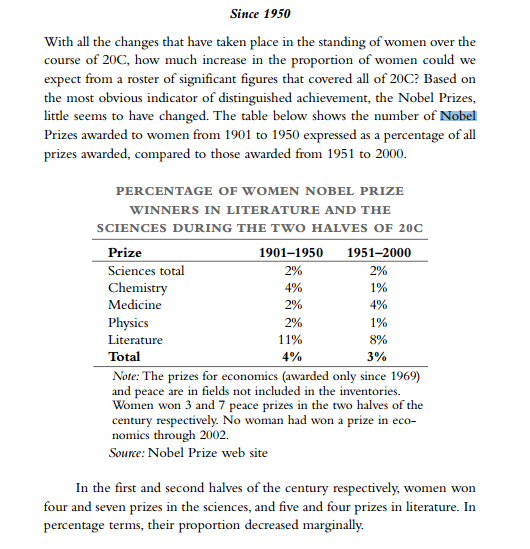
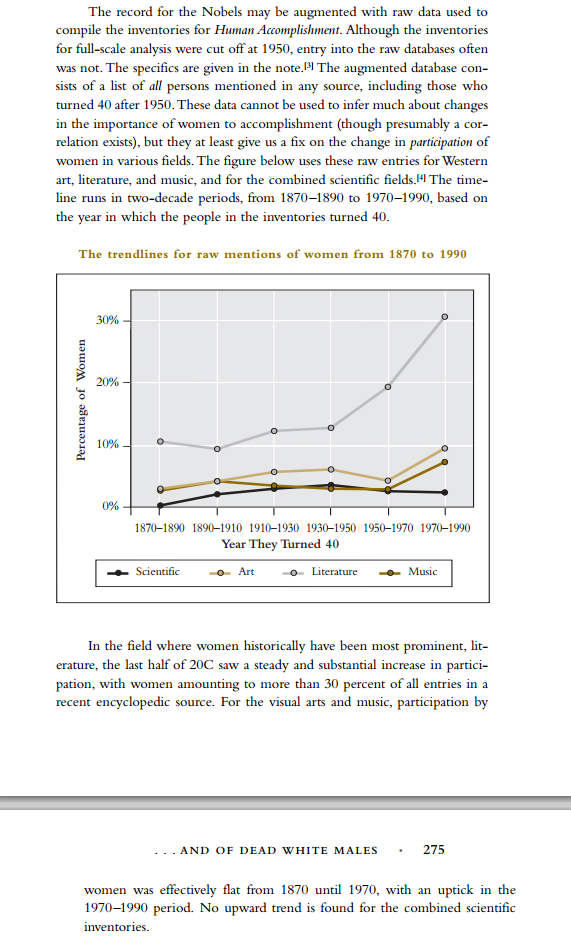
Murray states on p. 273, 274 and 275 that women have an underrepresentation in the sciences. You would figure, if this so-called “white cis male patriarchy” was out to have women be underrepresented, they wouldn’t have allowed the feminist movement to come full-swing in the early 1900s. Well, the numbers on women Nobel Prize winners from 1901-1950 is: 2 percent sciences total, 4 percent chemistry,2 percent medicine, 2 percent physics and 11 percent literature with a 4 percent representation in total. From 1951-2000, it was 2 percent sciences total, 1 percent chemistry, 4 percent medicine, 1 percent in physics and 8 percent in literature for a total of 3 percent.
Now, this does show women’s high verbal ability at play with regards to the number of literary Nobel Prizes’ they have, but this shows that after the Feminist Movement, that when they got ‘equality’, they failed to produce the same as men. This data corroborates what I noted earlier: that there is a significant amount of cortical neuronal difference between men and women, there is a 3.63 IQ point difference between men and women on average, and finally the data on Nobel Prizes corroborates this information.

The Defense Ministers of Sweden, Norway, the Netherlands, and Germany embody what is going on at the moment in these countries with the ‘migrant’ crisis. We can see with Russia’s aversion to the scenario currently happening in Europe, that with their Defense Minister, these things that are currently happening in those aforementioned countries won’t happen in Russia.
This is shown in how men and women’s overall leadership capabilities, ability to lead meetings and differing managing strategies. All of these differences, of course, are due to brain differences between men and women.
Women are more emotional than men due to biology, so in times of war with a woman Defense Minister, since men and women differ in inductive and deductive reasoning traits, women won’t be deductive, which is a logical process in which a conclusion is drawn from multiple premises that are assumed to be true, which men excel at. Women, however, excel at inductive reasoning, which is making broad generalizations from specific observations. It seems that in war time, deductive reasoning would be better, seeing as the conclusion is drawn from things that are assumed to be true. Men make better leaders than women because, since, on average, men don’t think with their emotions while women do.
Men and women’s brains differ on the individual level, of course, like all things between groups, sexes, and individuals. The push to deny human nature, and in turn, invoke a blank slate argument even in the face of science is shown in the way that our society is headed. Between differences in brain size, scholastic achievement, IQ, brain weight, Nobel Prizes, neocortical neurons and other gender-specific differences, these innate differences in brain structure manifest themselves in society and the types of jobs women want and acquire. Women cannot lead as well as men and while they ‘lead differently’, the best type of leader to have is a man as men think with logic and facts whereas women think with emotion, on average.
Strong Evidence, Strong Argument: Race IQ and Adoption
2450 words
Commenter Salger brought this article to my attention, Weak Evidence, Weak Argument: Race, IQ, Adoption in which an environmentalist in the B-W IQ debate regurgitates the same old and boring long-refuted studies and the same long-refuted researchers, to attempt to prove that the gap in IQ is purely environmental in nature. I have written on this before, so his reasoning that there is “weak evidence” and “a weak argument on race and IQ” is clearly wrong, as we know the studies and researchers he cites have been disproven. Steele then references another discussion he had on the black-white IQ gap, speaking about people being “uninformed” about a position while arguing it.
My problem with this kind of data is as follows. It isn’t overly useful data in proving much of anything: small sample sizes, lack of effective controls and control groups, abundance of confounding factors, difficulty of replicability, etc.
Since he’s saying that there is a “difficulty of replicability” with IQ tests in transracial adoption studies, he hasn’t read the ones for the hereditarian argument and seeing how they show the biological origin of IQ or he’s just being willfully ignorant. I’ll go with the first one.
We know through other research that racial biases are immense in our society, and this other research tends to be of a higher quality than the adoption (and twin) research. Studies have found various forms of racial biases in a wide variety of areas, from education to policing. It’s well supported that this is systemic and institutional.
There are no racial biases in education nor policing. Police arrest less black offenders than are reported by the NCVS and affirmative action getting blacks ahead shows that the racial bias is for them, not whites. Saying that it’s “systemic and institutional” is a cop out since you know he doesn’t want to even entertain the idea of the hereditarian hypothesis.
It is also well supported that it is often internalized, and typically unconscious. Studies have shown that even minorities show prejudice against other minorities and that this is worse toward those with darker skin. Plus, studies show an internalized racial bias by way of stereotype threat, where the framing of a situation apparently causes the person to in a sense unintentionally sabotage themselves (because of added stress and cognitive load).
Stereotype threat, my favorite. ST can only be replicated in the lab. “Prejudice” doesn’t matter.
For any of these adoption (and twin) studies to be useful, it would require taking into account all the known confounding factors. I don’t know of a single study that does this or even attempts to come close to doing this. It would be ludicrously counterintuitive to presume that these endemic and internalized racial biases weren’t effecting the results.
All this leaves us is to speculate based on weak and probably misleading data. This means interpretation inevitably will follow ideology, as long as we limit ourselves to this data and ignore the larger context of data.
What other confounders could be controlled for that you think had a negative impact on the mean IQ of blacks at adolescence throughout adulthood? “Internalized racial biases” don’t matter since blacks have a higher self-esteeem about their physical attractiveness (Kanazawa, 2011), so “internalized racial biases” (which includes things such as one’s thoughts of one’s self physically) do not matter as they are more confident than are whites. This is due to testosterone, which makes blacks more extroverted than whites who are more extroverted than Asians (Rushton’s Differential-K Theory). If these racial biases were really to manifest themselves to actually sap 15 to 18 (1 to 1.2 SDs) IQ points from blacks, this would show in their self-confidence about themselves. Yet they are more confident, on average, than the other two major races.
All this leaves us is to speculate based on weak and probably misleading data. This means interpretation inevitably will follow ideology, as long as we limit ourselves to this data and ignore the larger context of data.
It’s been discussed ad nasueam. The data attempting to say that blacks are just as intelligent are whites are wrong, as I will show below. The data for the hereditarian hypothesis is not weak, as I have detailed on this blog extensively.
This is highly problematic, for the issues involved are complex. That is just the way reality is. If you want to deal with complex reality, you better find sophisticated ways of dealing with it. On that account, these studies fail in various ways. Still, they give us some possible insights in new directions to take with better research.
IQ has been tested for 100 years, and every time, whites outscore blacks 1 to 1.2 SDs.THAT is reality, not some made up, contorted view of reality for some egalitarian dogma.
In conclusion, my basic point is that all of this demonstrates how weak is the argument being made by hereditarians. As for those who prefer environmental explanations, they don’t need this data at all, since there is already plenty of other data that supports their position. Given what we know, all of the racial disparities, IQ or otherwise, can be explained without recourse to genetic determinism.
My basic point is that all of this demonstrates how weak the argument being made by environmentalists really is. What other data supports the environmentalist position that “they don’t need any data at all”? I’d love to see it. The gap is 80/20 genetics and environment respectively. From averaged correlations on subtests that correlate highest with g, we can say that the gap is around 80 percent genetic and 20 percent environment. Genetic determinism in terms of IQ, save extreme environmental factors, will always beat any environmental model.
This is an obvious statment, for the simple reason that race itself is a social construct, not a scientific fact. Social constructs and their social consequences need social explanations of social causes. The debate of the racial IQ gap is about as meaningful as attempting to compare the average magical intelligence of those sorted into each Hogwarts Houses by the magical sorting hat, if one were to base a society on such strange notions.
Race is not a social construct, but a biological reality. If this debate is “about as meaningful as attempting to compare the average magical intelligence of those sorted into each Hogwarts Houses by the magical sorting hat”, why waste youre time writing this post with tons of misinformation?
Steele cites Block (2005), a “philosopher of science”. Rushton and Jensen (2005, p. 279) say that those (Block) who say that gene-environment interactions are so hard to entangle, why then, do identical twins raised apart show identical signs of intelligence (among many other heritable items)?
Eyferth comes out, of course, which the study has been discredited. To be breif, 20 to 25 percent of the fathers to German women’s children weren’t sub-Saharan African, but French North Africans. 30 percent of blacks got refused in military service in comparison to 3 percent of whites due to rigorous testing for IQ in 70 years ago. One-third of the children were between the ages of 5 and 10 and two-thirds were between the ages of 10 and 13. Heritability estiamtes really begin to increase around puberty as well, so if the Eyferth study would have retested in the following 5 to 8 years to see IQ scores then, the scores would have dropped as that’s when genetic effects start to dominate and environments effects are close to 0.
He then cites Richard Nisbett, who I have discussed here, on the Moore study.
The study conducted by Elise Moore (1986) compared IQ scores of 23 7 to 10-year-old black children raised by middle-class white families and the same number of black children but raised in black families (normal adoption).The findings indicated that traditionally adopted black children raised by black parents had normal IQ scores (85), whereas those black children who were adopted by white families had IQs 1 standard deviation (100) above the black mean. Moore states that multivariate analysis indicates that the behaviors of black and white mothers were different in regards to how the black children were treated. She states that white adoptive mothers reduced stress by joking, laughing, and grinning. Whereas black adoptive mothers reduced stress in less positive ways including coughing, scowling and frowning. She also says that white adoptive mothers gave more positive reinforcement to their adoptive child’s problem solving whereas black adoptive mothers gave less (as I am arguing here, these traits are mostly genetic in origin, driven by IQ). She concludes that the ethnicity of the rearing environment exerts a significant influence on intellectual ability as well as standardized test scores. The sample sizes, however, are extremely small and to infer that the black-white IQ gap is environmental in origin because of a study with a small sample size is intellectually dishonest.
He cites a study of black children in the UK, but this is a case of super-selection, as only the most intelligent Africans emigrate.
Steele then cites this article:
These results make some common sense. We know that intelligent people tend to have intelligent children— but not always. Some studies have also suggested that intensive programs may make a large difference in disadvantaged children’s intelligence quotient (IQ) scores.
Headstart gains are temporary, and there is a fadeout over time.. Arthur Jensen was writing about this 50 years ago. IQ and scholastic achievement gains only last for a few years after Headstart, then genetics starts to take effect as the child grows older.
The article then mentions how European ancestry can be measured in American black populations. However, the studies fail to choose genetic markers with large allele frequencies between Europeans and African Americans (Jensen, 1998, p. 480).
He cites Lee Willerman and his colleagues who found that children with white mothers and black fathers scored higher on IQ tests than children with black mothers and white fathers. This is due to the mother being the best predictor of intelligence of the child. White mothers have a better prenatal environment than do black mothers.
He cites the Wikipedia article on Race and Intelligence, which brings up all the usual, Moore, Tizard (will address below) and Eyferth. The article cites Nisbett (2009) as claiming that Rushton and Jensen’s (2005) claim that the three aforementioned studies did not retest at adulthood, and that “heritability between ages 7 and 17 are quite small, and that consequently this is no reason to disregard Moore’s findings.”
That’s a lie. IQ heritability jumps from 40 percent at age 7 to 82 percent at age 18, with some studies showing heritabilities up to 90 percent.
From the same Wikipedia article:
Another study cited by Rushton & Jensen (2005), and by Nisbett et al. (2012), was Moore (1986) study which found that adopted mixed-race children’s has test scores identical to children with two black parents – receiving no apparent “benefit” from their white ancestry
As shown above, since the mother’s IQ is the best predictor of intelligence and the black-white IQ gap being 80 percent heritable, this means that the amount of white ancestry an American black has, the higher his IQ score will be.
Tizard (1972) observed 2 to 5-year-old black and white children in a nursery setting. The white and black children both had IQs at 102.6 and 106.3 respectively. She found no significant gap in the three groups tested (white, black and West Indian). However, she did note that the single significant difference was in that of non-white children. But that doesn’t mean anything as genetics doesn’t take full effect until around 18, where the IQ gap will be the largest.
Levin and Lynn (1994) disputed Weinberg et al’s conclusion with a hereditarian alternative. That the average IQ and school achievement scores of the black children directly reflected their amount of African ancestry. At both age 7 and 17, the adopted children with 2 black parents had lower average IQs and worse school achievement tests than those with one black parent and one white parent. So right here, in the MTAS, it shows that mixed-race people DO score better than just blacks, which is attributed to their white ancestry.
He then cites a bunch of quotes from Nisbett’s book Intelligence and How to Get It, yet Ruhston and Jensen have refuted this too.
Even with equalized environments these gaps still persist. Your allegations of supposed racism or any other factor you want to bring up for the racial gap in intelligence are unfounded. Environmental differences do not account for the 1.2 SD gap between blacks and whites; environment accounts for, at best, 3 IQ points, so you’ll need to explain what environmental effects cause that kind of IQ drop. In America, blacks don’t have the same environmental factors, i.e., parasitic load, bad nutrition and the high disease rate, so they can hit their phenotypic IQ, plus a bit more due to 22 percent white ancestry on average. Why you cite discredited studies and researchers to help prove your point is beyond me.
Stereotype Threat is false. Non-replicable studies outside of a lab setting, as well as a meta-analysis that looked at 55 published and unpublished studies that showed that Stereotype Threat is discredited. As shown above, blacks have higher self-confidence than do whites, so this imaginary “stereotype threat” doesn’t affect blacks taking real tests; it only affects them in a lab setting. Steve Sailer has covered stereotype threat as well.
This debate is meaningful, and environmentalist who thinks that they can attempt to explain everything away by environmental factors are being extremely disingenuous. Even giving blacks everything they want in a school system with having one of the highest budgets at 430 million dollars did nothing to close the IQ gap or do anything for integration. Why do we have to deny reality, all for egalitarian dogma based off of philosophical musings then taken by Franz Boas to deny the biological validity of race?
To quote the concluding paragraph in Rushton and Jensen’s refutation to Nisbett:
There is no value in denying reality. While improving opportunities and removing arbitrary barriers is a worthy ethical goal, we must realize that equal opportunity will result in equitable, though unequal outcomes. Expanding on the application of his “default hypothesis” that group differences are based on aggregated individual differences, themselves based on both genetic and environmental contributions, Jensen proposed “two laws of individual differences”—(1) individual differences in learning and performance increase as task complexity increases, and (2) individual differences in performance increase with practice and experience (unless there is a low ceiling on proficiency). We must recognize that the more environmental barriers are ameliorated and everybody’s intellectual performance is improved, the greater will be the relative influence of genetic factors (because the environmental variance is being removed). This means that equal opportunity will result in unequal outcomes, within-families, between-families, and between population groups. The fact that we have learned to live with the first, and to a lesser degree the second, offers some hope we can learn to do so for the third.