One of the first critics of IQ tests after they were brought to America and used by the US army was journalist Walter Lippmann. Lippmann was very prescient with some of his argumentation against IQ, making similar anti-measurement arguments to anti-IQ-ists today. Although he was arguing against the “army intelligence tests” (the alpha and beta along with the Stanford-Binet), his criticisms hold even today and for any so-called IQ test since they are “validated” on their agreement with other tests (that weren’t themselves validated). He rightly noted that the test items are chosen arbitrarily (and that the questions chosen reflected the test constructor’s biases), and that the test isn’t a measure at all but a sorter of sorts, which in effect classifies people. This is similar to what Garrison (2009) argued in his book A Measure of Failure. He also argued that “IQ” isn’t like length or weight, which is what Midgley(2018) argued and also what Haier (2014, 2018) stated about IQ test scores—they are not like inches, liters, or grams.
Lippmann’s critique of IQ
Lippmann got it right in one major way—he stated that IQ tests results give the illusion of measurement because the results “are expressed in numbers.” However, measurement is much more complex than that—there needs to be a specified measured object, object of measurement and measurement unit for X to be a measure, and if there isn’t then X isn’t a measure. Lippmann stated that Terman couldn’t demonstrate that he was “measuring intelligence” (McNutt, 2013: 10).
Because the results are expressed in numbers, it is easy to make the mistake of thinking that the intelligence test is a measure like a foot rule or a pair of scales. It is, of course, a quite different sort of measure. For length and weight are qualities which men have learned how to isolate no matter whether they are found in an army of soldiers, a heap of bricks, or a collection of chlorine molecules. Provided the footrule and the scales agree with the arbitrarily accepted standard foot and standard pound in the Bureau of Standards at Washington they can be used with confidence. But “intelligence” is not an abstraction like length and weight; it is an exceedingly complicated notion which nobody has as yet succeeded in defining.
He then invents puzzles which can be employed quickly and with little apparatus, that will according to his best guess test memory, ingenuity, definition and the rest. He gives these puzzles to a mixed group of children and sees how children of different ages answer them. Whenever he finds a puzzles that, say, sixty percent of the twelve year old children can do, and twenty percent of the eleven year olds, he adopts that test for the twelve year olds. By a great deal of fitting he gradually works out a series of problems for each age group which sixty percent of his children can pass, twenty percent cannot pass and, say, twenty percent of the children one year younger can also pass. By this method he has arrived under the Stanford-Binet system at a conclusion of this sort: Sixty percent of children twelve years old should be able to define three out of the five words: pity, revenge, charity, envy, justice. According to Professor Terman’s instructions, a child passes this test if he says that “pity” is “to be sorry for some one”; the child fails if he says “to help” or “mercy.” A correct definition of “justice” is as follows: “It’s what you get when you go to court”; an incorrect definition is “to be honest.”
A mental test, then is established in this way: The tester himself guesses at a large number of tests which he hopes and believes are tests of intelligence. Among these tests those finally are adopted by him which sixty percent of the children under his observation can pass. The children whom the tester is studying select his tests.
…
What then do the tests accomplish? I think we can answer this question best by starting with an illustration. Suppose you wished to judge all the pebbles in a large pile of gravel for the purpose of separating them into three piles, the first to contain the extraordinary pebbles, the second normal pebbles, and the third the insignificant pebbles. You have no scales. You first separate from the pile a much smaller pile and pick out one pebble which you guess is the average. You hold it in your left hand and pick up another pebble in your right hand. The right pebble feels heavier. You pick up another pebble. It feels lighter. You pick up a third. It feels still lighter. A fourth feels heavier than the first. By this method you can arrange all the pebbles from the smaller pile in a series running from the lightest to the heaviest. You thereupon call the middle pebble the standard pebble, and with it as a measure you determine whether any pebble in the larger pile is sub-normal, a normal or a supernormal pebble.
This is just about what the intelligence test does. It does not weigh or measure intelligence by any objective standard. It simply arranges a group of people in a series from best to worst by balancing their capacity to do certain arbitrarily selected puzzles, against the capacity of all the others. The intelligence test, in other words, is fundamentally an instrument for classifying a group of people. It may also be an instrument for measuring their intelligence, but of that we cannot be at all sure unless we believe that M. Binet and Mr. Terman and a few other psychologists have guessed correctly but, as we shall see later, the proof is not yet at hand.
The intelligence test, then, is an instrument for classifying a group of people, rather than “a measure of intelligence.” People are classified within a group according to their success in solving problems which may or may not be tests of intelligence.
Even though Lippmann was writing over 100 years ago in 1922, his critiques have stood the test of time. Being one of the first critics of hereditarian dogman, he took on Terman in the pages of The New Republic, and I don’t think Lippmann’s main arguments were touched—and 100 years later, it looks to be more of the same. Still, as shown above, even some psychologists admit that certain things that are true of physical measures aren’t true of IQ.
Jansen (2010: 134) noted that “Lippmann vehemently opposed introducing I.Q. tests into the schools on democratic grounds, contending that it would lead to an intellectual caste system.” Lippmann and other environmentalists in the 1920s sought to understand variation in IQ as due to environment, and that all individuals had the same “biological capacity” for “intelligence” (Mancuso and Dreisinger, 1969). (They also state that a physiological intelligence was the “logical outcome” of the scientific materialism of the 19th century, a point I have made myself.) Not only is the concept of “IQ/intelligence” arbitrary, it is indeed used as an ideological tool (Gonzelez, 1979; Richardson, 2017).
The fact of the matter is, IQ-ists back then—and I would say now as well—were guilty of the naming fallacy (Conley, 1986):
Walter Lippmann had exposed most of its critical weaknesses in a series of articles in the New Republic in 1922. He emphasized the fundamental point that “intelligence is not an abstraction like length and weight; it is an exceedingly complicated notion which nobody has yet succeeded in defining.”33 Then, in 1930, C.C. Brigham, one of the most influential scientific proponents of eugenics, recanted. Accepting Lippmann’s point, he accused himself and his colleagues of a “naming fallacy” which allowed them “to slide mysteriously from the score in the test to the hypothetical faculty suggested by the name given to the test.”’34 He repudiated the whole concept of national and racial comparisons based on intelligence test scores, and then, in what is surely the most remarkable statement I have ever read in a scientific publication, concluded, “One of the most pretentious of these comparative racial studies—the writer’s own—was without foundation.”35
Finally, returning to the test items being arbitrary and reflecting the test constructor’s biases, this was outright admitted by Terman. He stated that he created a “norm intelligent” group which led to the “developing [of] an exclusion-inclusion criteria that favored the [US born white men of north European descent], test developers created a norm “intelligent” (Gersh, 1987, p.166) population “to differentiate subjects of known superiority from subjects of known inferiority” (Terman, 1922, p. 656) (Bazemore-James, Shinaprayoon, and Martin, 2017). This, of course, proves Lippmann’s point about these tests—the test’s constructors assumed ahead of time who is or is not “intelligent” and then devise tests with specific item content to get their desired distribution—Terman outright admitted this. Lippmann was 100 percent right about that issue.
Conclusion
Lippmann’s critiques of IQ, although they were written 100 years ago, can still be made today. Lippmann got much right in his critiques of Terman and other hereditariansm psychologists, and his claim that if you can’t define something then you can’t measure it is valid. Although Lippmann’s warnings on the abuse of IQ testing were not heeded, the fact of the matter is, Lippmann was in the right in this debate 100 years ago. One of Lippmann’s main points—that test items are chosen arbitrarily and chosen to agree with a priori biases—still holds true today, since the Stanford-Binet is now on its 5th edition and since it is “validated” on its “agreement” with older versions of the Stanford-Binet, this assumption is carried into the modern day. (Do note that Terman assumed that men and women should have similar IQ scores and so devised his test to reflect this, and this shows, again, that the previous biased that the test constructors held were then built into the test. So this shows that what chat be built in can be built out.)
Lippmann’s observations on the limitations of IQ tests and their use in reinforcing stereotypes have stood the test of time. So by analyzing his arguments we can draw parallels to critiques of IQ today. So although Lippmann’s critiques of IQ are 100 years old there is still much value in them, since the arguments he made back then still can be made today, since there has been basically little to no progress in that time period of 100 years since he made his critiques.
It’s interesting that a journalist of all people would be able to mount the kind of critique against IQ that he did, while arguing with one of the men who first used IQ tests on a large level in America (Terman). This just goes to show that the IQ debate in the past 100 years has hardly made any progress on the hereditarian side, since they still rely on twin studies and other similar studies to argue for a genetic or hereditary hypothesis of mental abilities. But mental abilities and psychological traits are molded by what one experiences in their lives—indeed, one’s IQ is an outcome of one’s life experiences due to the kind of cultural and psychological tools that people acquire as they age.
Lippmann correctly argued that nothing measurable underlies the concept of “intelligence”—and that argument he made is one that is very familiar to readers of this blog. This argument is one that is quite powerful, and it is obviously quite old as evidenced by Lippmann’s prescient critique of “IQ.” Lippmann had some great knowledge on how tests were constructed and on the methodological and theoretical pitfalls that still plague psychometrics today. While psychometricians have yet to address the serious pitfalls that invalidate their field, the use of their methods continues to perpetuate biased outcomes and reinforce social inequalities, since it is claimed that where a group falls on their “intelligence” score is where they fall on the social hierarchy. This then goes back to Terman’s assumptions when he created the Stanford-Binet. Have any ideas about society and how it’s structured? Have any ideas about the so-called distribution of “intelligence”? Just build it into the test and then claim that your test is showing biologically natural intelligence levels between people. This is what Lippmann argued against, and he was right to argue against it; he knew that the test constructors used items that showed what they wanted.
So, anyone who wants to argue against the concept of IQ would do well to read Lippmann’s 6 articles arguing against the concept of IQ/intelligence.
For decades, hereditarians have attempted to partition traits into relative genetic and environmental causes. The assumption here is of course that G and E are separable, independent components and another assumption is that we can discover the relative contribution of G and E by performing certain tests and statistical procedures. However, since Oyama’s publication of The Ontogeny of Information in 1985, this view has been called into question. The view that Oyama articulated is a philosophical theory based on the irreducible interactions between all developmental resources called developmental systems theory (DST)
However, we can go further. We can use the concept of dualism and argue that psychology is irreducible to the physical and so it’s irreducible to genes. We can then use the concepts laid forth in DST like that of gene-environment and the principle of biological relativity and argue that the development of organisms is irreducible to any one resource. Then, for the formation of mind and psychological traits in humans, we can say that they arise due to human-specific ecological contexts. I will call this view Dualistic Experiential Constructivism (DEC), and I will argue that it invalidates any and all attempts at partitioning G and E into quantifiable components. Thus, the hereditarian research program is bound to fail since it rests on a conceptual blunder.
The view that refutes the claim that genes and environment, nature and nurture, can’t be separated is this:
(1) Suppose that there can be no environmental effect without a biological organism to act on. (2) Suppose there can be no organism outside of its context (like the organism-environment system). (3) Suppose the organism cannot exist without the environment. (4) Suppose the environment has certain descriptive properties if and only if it is connected to the organism. Now here is the argument.
P1: If there can be no environmental effect without a biological organism to act on, and if the organism cannot exist without the environment, then the organism and environment are interdependent. P2: If the organism and environment are interdependent, and if the environment has certain descriptive properties if and only if it is connected to the organism, then nature and nurture are inseparable. C: Thus, nature and nurture are inseparable.
Rushton and Jensen’s false dichotomy
Rushton and Jensen (2005) uphold a 50/50 split between genes and environment and call this the “hereditarian” view. On the other side is the “culture-only” model which is 0 percent genes and 100 percent environment regarding black-white IQ differences. Of course note the false dichotomy here: What is missing? Well, an interactive GxE view. Rushton and Jensen merely put that view into their 2-way box and called it a day. They wrote:
It is essential to keep in mind precisely what the two rival positions do and do not say—about a 50% genetic–50% environmental etiology for the hereditarian view versus an effectively 0% genetic–100% environmental etiology for the culture-only theory. The defining difference is whether any significant part of the mean Black–White IQ difference is genetic rather than purely cultural or environmental in origin. Hereditarians use the methods of quantitative genetics, and they can and do seek to identify the environmental components of observed group differences. Culture-only theorists are skeptical that genetic factors play any independently effective role in explaining group differences.
Most of those who have taken a strong position in the scientific debate about race and IQ have done so as either hereditarians or culture-only theorists. Intermediate positions (e.g., gene–environment interaction) can be operationally assigned to one or the other of the two positions depending on whether they predict any significant heritable component to the average group difference in IQ. For example, if gene–environment interactions make it impossible to disentangle causality and apportion variance, for pragmatic purposes that view is indistinguishable from the 100% culture-only program because it denies any potency to the genetic component proposed by hereditarians.
Rushton and Jensen did give an argument here, here it is formalized:
P1: Gene-environment interactions make it impossible to disentangle causality and apportion variance correctly. P2: If it is impossible to disentangle and apportion variance, then the view denying any potency to the genetic component proposed by hereditarians becomes indistinguishable from a 100% culture-only perspective. C: Thus, for pragmatic purposes, the view denying any potency to the genetic component is indistinguishable from a 100% culture-only program.
This argument is easy enough to counter. Rushton and Jensen are explicitly putting the view that refutes their whole research program into their 2 boxes—their 50/50 split between genes and environment, and the 0 percent genes and 100 percent environment. The view that Rushton and Jensen articulated is basically a developmental systems theory (DST) view. DST highlights the interactive and dynamic nature of development. Rushton and Jensen’s view is clearly gene-centric, where gene-centric means centered on genes. I would impute to them—based on their writings—that genes are a sufficient, privileged cause for IQ, and traits as a whole. But that claim is false (Noble, 2012).
Although I understand where they’re coming from here, they’re outright wrong.
Put simply, they need to put everything into this box in order to legitimatize their “research.” Although I would be a “culture-only theorist” to them regarding my views on the cause of IQ gaps (since there is no other way to be), my views on genetic causation are starkly different than theirs are.
Most may know that I deny the claim that genes can cause or influence differences in psychological traits between people. (And that genes are outright causes on their own, independent of environment.) I hold this view due to conceptual arguments. The interactive view (of which is more complex than Rushton and Jensen are describing), is how development is carried out, with no one resource having primacy over another—a view called the causal parity thesis. This is the principle of biological relativity (Noble, 2012). This theory asserts that there is no privileged level of causation, and so if there is no privileged level of causation, then that holds for all of the developmental resources that interact to make up the phenotype. Thus, hereditarianism is false since hereditarianism privileges genes over other developmental resources when no developmental resource is privileged in biological systems.
Rushton and Jensen almost had it—if GxE makes it hard or impossible to disentangle causality and apportion variance, then the hereditarian program cannot and will not work since, basically, they apportion variance into G and E causes and claim that independent genetic effects are possible. However, many authors have a conceptual argument on heritability, for if G and E and anything else interact, then they are not separable, and if they are not separable, they are not quantifiable. For example, Burt and Simon (2015: 107) argue that the “conceptual model is unsound and the goal of heritability studies is biologically nonsensical given what we now know about the way genes work.”
When it comes to “denying potency” to the “genetic component”, Rushton and Jensen seem to be quite specific in what they mean by this. Of course, a developmentalist (a GxE supporter) would not deny that genes are NECESSARY for the construction of the phenotype, though they would deny the PRIMACY that hereditarians place on genes. Genes are nothing special, they are not special resources when compared to other resources.
Of course, hereditarianism is a reductionist discipline. And by reductionist, I mean it attempts to break down the whole to the sum of its parts to ascertain the ontogeny of the desired object. Reductionism is false, and so that would apply to genetic and neuroreduction. Basically, reducing X to genes or the brain/brain physiology is the wrong way to go about this. Rushton (2003) even explicitly stated his adherence to the reductionist paradigm in a small commentary of Rose’s (1998)Lifelines. He repeats his “research” into brain size differences between races and argues that, due to the .4 correlation between MRI and IQ, due to differences in brain size between races (see here for critique) and since races have different cognitive abilities, then this is a “+” for reductionist science.
Since the behavioral genetic research program is reductive, it is necessarily committed to genetic determinism, even though most don’t explicitly state this. The way that Rushton and Jensen articulated the GxE (DST) view fit into their false dichotomy to try to reject it outright without grappling with its implications for organismal development. Unfortunately for the view put forth by Rushton and Jensen, organisms and environment are constantly interacting with each other. If they constantly interact, then they are not separable. If they are not separable, then the distinction made by Rushton and Jensen fails. If the distinction made by Rushton and Jensen fails, then ultimately, the quest of behavioral genetics—to apportion variance into genetic and environmental causes—fails.
Another hereditarian who tries to argue against interactionism is Gottfredson (2009) with her “interactionism fallacy.” Heritability estimates, it is claimed, can partition causes of variance between G and E components. Gottfredson—like all other hereditarians, I claim—completely misrepresent the view and (wilfully?) misunderstand what developmental systems theorists are saying. People like Rushton, Jensen, and Gottfredson quite obviously claim that science can solve the nature-nurture debate. The fact of the matter that destroys hereditarian assumptions and claims about the separability of nature and nurture is this: The genome is reactive (Fox-Keller, 2014) that is, it reacts to what is occurring in the environment, whether that be the environment outside or inside of the body.
At the molecular level, the nurture/nature debate currently revolves around reactive genomes and the environments, internal and external to the body, to which they ceaselessly respond. Body boundaries are permeable, and our genome and microbiome are constantly made and remade over our lifetimes. Certain of these changes can be transmitted from one generation to the next and may, at times, persist into succeeding generations. But these findings will not terminate the nurture/nature debate – ongoing research keeps arguments fueled and forces shifts in orientations to shift. Without doubt, molecular pathways will come to light that better account for the circumstances under which specific genes are expressed or inhibited, and data based on correlations will be replaced gradually by causal findings. Slowly, “links” between nurture and nature will collapse, leaving an indivisible entity. But such research, almost exclusively, will miniaturize the environment for the sake of accuracy – an unavoidable process if findings are to be scientifically replicable and reliable. Even so, increasing recognition of the frequency of stochastic, unpredictable events ensures that we can never achieve certainty. (Locke and Pallson, 2016)
The implication here is that science cannot resolve this debate, since “nature and nurture are not readily demarcated objects of scientific inquiry” (Locke and Pallson, 2016: 18). So if heritability estimates are useful for understanding phenotypic variation, then the organism and environment must not interact. If these interactions are constant and pervasive, then it becomes challenging—and I claim impossible—to accurately quantify the relative contribution of genes and environment. But the organism and environment constantly interact. Thus, heritability estimates aren’t useful for understanding phenotypic variation. This undermines the interpretability of heritability and invalidates any and all claims as to the relative contribution of G and E made by any behavioral geneticist.
The interactive view of G and E state that genes are necessary for traits but not sufficient for them. While genetic factors do of course lay the foundation for trait development, so do the other resources that interact with the genes (the suite of them) that are necessary for trait development. I can put the argument like this:
P1: An interactive view acknowledges that genes contribute to the development of traits. P2: Genes are necessary pre-conditions for the expression of traits. P3: Genes alone are not sufficient to fully explain the complexity of traits. C: Thus, an interactive view states that genes are necessary pre-conditions for traits but not sufficient on their own.
Why my view is not blank slatism: On Dualistic Experiential Constructivism
Now I need to defend my view that the mind and body are distinct substances, so the mental is irreducible to the physical, so genes can’t cause psychology. One may say “Well that makes you a blank slatist since you deny that the mind has any innate properties.” Fortunately, my view is more complex than that.
I have been espousing certain points of view for years on this blog: The irreducibility of the mental, genes can’t cause mental/psychological traits, mind is constructed through interacting with other humans in species-relevant contexts to eventually form mind, and so-called innate traits are learned and experience-dependent. How can I reconcile these views? Doesn’t the fact that I deny any and all genetic influence on psychology due to my dualistic commitments mean I am a dreaded “blank slatist”? No it does not and I will explain why.
I call my view “Dualistic Experiential Constructivism” (DEC). It’s dualistic since it recognizes that the mind and body are separate, distinct substances. It’s experiential since it highlights the role of experiential factors in the forming of mind and the construction of knowledge and development of psychological traits. It is constructivist since individuals actively construct their knowledge and understanding of the world by interacting with other humans. Also in this framework is the concept of gene-environment interaction, where G and E interact to be inseparable and non-independent interactants.
Within the DEC framework, gene-environment interactions are influential in the development of cognition, psychology and behavior. This is because due to genes being necessary for the construction of humans, they need to be there to ensure they begin growing once conceived. Then, the system begins interacting irreducibly with other developmental interactants, which then begin to form the phenotype and eventually a human forms. So genes provide a necessary pre-condition for traits, but in this framework they are not sufficient conditions.
In Vygotsky’s socio-historical theory of learning and development, Vygotsky argued that individuals acquire psychological traits through interacting with other humans in certain social and environmental contexts through the use of cultural and psychological tools. Language, social interactions and culture mediate the cognitive development which then fosters higher-order thinking. Thus, Vygotsky’s theory highlights the dynamic and interactive nature of human development which emphasizes the social contexts of the actors in how mind is shaped and developed. So Vygotsky’s theory supports the idea I hold that mind is shaped through interactions and experiences within certain socio-historical contexts. So it would seem that adherence to this theory would mean that there are critical points in child development, where if the child does not get the rich exposure they need in order to develop their abilities, they then may never acquire the ability, indicating a critical window in which these abilities can be acquired (Vyshedakiy, Mahapatra, and Dunn, 2017). Cases of feral children allow us to see how one would develop without the role of social interaction and cultural tools in cognitive development. That these children are so stunted in their psychology and language shows the critical window in which children can learn and understand a language. The absence of social experiences in feral children thusly supports Vygotsky’s theory regarding the significance of cultural and social factors in shaping the mind. And cognitive development. Vygotsky’s theory is very relevant here, since it shows the necessary socio-historical and cultural experiences need to occur for higher order thinking, psychology, and mind to develop in humans. And since newborns, infants and young children are surrounded by what Vygotsky called More Knowledgeable Others, they learn from and copy what they see from people who already know how to act in certain social and cultural situations, which then develops an individual’s psychology and mind.
There is also another issue here: The fact that species-typical behaviors develop in reliable ecological contexts. If we assume this holds for humans—and I see no reason not to—then there need to be certain things in the environment that then jettison the beginnings of the construction of mind in humans, and this is in relevant social-historical-ecological contexts, basically, environments are inherited too.
In an article eschewing the concept of “innateness”, Blumberg (2018) has a great discussion on how species-typical traits arise. Quite simply, it’s due to the construction of species-specific niches which then allow the traits to reliably appear over time:
Species-typical behaviors can begin as subtle predispositions in cognitive processing or behavior. They also develop under the guidance of species-typical experiences occurring within reliable ecological contexts. Those experiences and ecological contexts, together comprising what has been called an ontogenetic niche, are inherited along with parental genes16. Stated more succinctly, environments are inherited—a notion that shakes the nature-nurture dichotomy to its core. That core is shaken still further by studies demonstrating how even our most ancient and basic appetites, such as that for water, are learned17. Our natures are acquired.
Contrasting the DEC with hereditarianism shows exactly how different they are and how DEC answers hereditarianism with a different framework. DEC offers an alternative perspective on the construction of psychological traits and mind in humans, and strongly emphasizes the role of individual experiences and environmental factors (like the social) in allowing the mind to form and shape psychological traits, but it does in fact highlight the need for genetic factors—though in a necessary, not sufficient, way. DEC suggests that genes alone aren’t enough to account for psychology. It argues that the mind is irreducible to the physical (genes, brain/brain structure) and that the development of psychological traits (and along with it the mind) requires the interactive influences of the individual, experiences, and environmental context.
There is one more line of evidence I need to discuss before I conclude—that of clonal populations living in the same controlled environment and what it does and does not show, along with the implications of behavioral genetic hereditarian explanations of behavior. Kate Laskowski’s (2022) team observed how genetically identical fish behaved in controlled environments. Substantial individuality still arises in clonal fishes with the same genes while being in a controlled environment. These studies from Laskowski’s team suggests that behavioral individuality “might be an inevitable and potentially unpredictable outcome of development” (Bierbach, Laskowski, and Wolf, 2017). So the argument below captures this fact, and is based on the assumption that if genes did cause psychological traits and behavior, then individuals with an identical genome would have identical psychology and behavior. But these studies show that they do not, so the conclusion follows that mind and psychological traits aren’t determined by psychology.
(P1) If the mind is determined by genetic factors, then all individuals with the same genetic makeup would exhibit identical psychological traits. (P2) Not all individuals with the same genetic makeup exhibit identical psychological traits. (C) Thus, mind isn’t determined by genetic factors.
I think it is a truism that an entailment of the hereditarian view would be identical genes would mean identical psychology and behavior. Quite obviously, experimental results have shown that this quite simply is not the case. If the view espoused by Rushton and Jensen and other hereditarians were true, then organisms with identical genomes would have the same behavior and psychology. But we don’t find this. Thus, we should reject hereditarianism since their claim has been tested in clonal populations and gas been found wanting.
Now how is my view not blank slatism? I deny the claim that psychology reduces to anything physical, and I deny that innate traits are a thing, so can there be nuances, or am I doomed to be labeled a blank slatist? Genetic factors are necessary pre-conditions for the mind but there are no predetermined, hardwired traits in them. While genetic factors lay the groundwork for this, the importance of learning, experience, and relevant ecological contexts must not be discounted here. While I recognize the interplay between genes and environment and other resources, I do not hold to the claim that any of them are sufficient to explain mind and psychology. I would say that Vygotsky’s theory shows how and why people and groups score differently on so-called psychological tests. There is the interplay between the child, the socio-cultural environment, and the individuals in that environment. Thus, by being in these kinds of environments, this allows the formation of mind and psychology (which is shown in cases of feral children), meaning that hereditarianism is ill-suited to explaining this with their fixation on genes, even when genes can’t explain psychology. If the mental is irreducible to the physical and genes are physical, then genes can’t explain the mental. This destroys the hereditarian argument.
Conclusion
Vygotsky’s theory provides a socio-cultural framework which acknowledges the role of subjective experiences within social contexts. Individuals engage in social interactions, and collaborative activities as conscious beings, and in doing so, they share their subjective experiences to the collective construction of knowledge and understanding. The brand of dualism I push entails that psychology doesn’t reduce to anything physical, which includes genes and the brain. But I do of course recognize the interactions between all developmental resources, I don’t think that any of them along are explanatory regarding psychology and behavior like the hereditarian, that’s one of the biggest differences between hereditarianism and the DEC. My view is similar to that of relational developmental systems theory (Lerner, 2021a, b). Further, this view is similar to Oyama’s (2002) view where she conceptualizes “nature” as a natural outcome of the organism-environment system (inline with Blumberg, 2018), and nurture as the ongoing developmental process. Thus, Oyama has reconceptualized the nature nurture debate.
Of course, my claim that psychology isn’t reducible to genes would put me in the “100% percent culture-only” camp that Rushton and Jensen articulated. However, there is no other way to be about this debate, since races are different cultural groups and different cultural groups are exposed to different cultural and psychological tools which lead to differences in knowledge and therefore lead to score differences. So I reject their dichotomy they mounted and I also reject the claim that the interactive view is effectively a “culture-only” view. But, ultimately, the argument that psychology doesn’t reduce to genes is sound, so hereditarianism is false. Furthermore, the hereditarian claim that genes cause differences in psychology and behavior is called into question due to the research on clonal populations. This shows that individuality arises randomly, and is not caused by genetic differences since there were no genetic differences.
The discussion surrounding the specific IQ debate concerning the hereditarian explanation necessitates a thorough examination of the intricate interplay between genetics and environment. A mere environmental explanation seems to be the only plausible rationale for the observed black-white IQ gap, considering that psychological states cannot be solely ascribed/reduced to genetic factors. In light of this, any attempts to dichotomize nature versus nurture, as was exemplified by Rushton and Jensen, fail to capture the essence of the matter at hand. Their reductionist approach, encapsulating a “100% culture-only program” within their 2 boxes that shows their adherence to the false dichotomy, followed by the triumphal proclamation of their seemingly preferred “50/50 split between genes and environment” explanation (although they later advocate an 80/20 perspective), can be regarded as nothing more than a fallacious oversimplification.
I have presented a comprehensive framework which challenges hereditarianism and provides an alternative perspective on the nature of human psychology and development. I integrated the principles of mind-body dualism, Vygotsky’s socio-historical theory of learning and development, and gene-environment interactions calling it Dualistic Experiential Constructivism, which acknowledges the interplay between genes, environment, and other developmental resources. Ultimately, DEC promoted a more holistic and interactive view in understanding the origin of mind through social processes and species-typical contextual-dependent events, while acknowledging genes as a necessary template for these things, since the organism is what is navigating the environment.
So this is the answer to hereditarianism—a view in which all developmental resources interact and are irreducible, in which first-personal subjective experiences with others of the species taking place in reliable ecological contexts jettison the formation of mind and psychological traits. This is called Dualistic Experiential Constructivism, and it entails a few different other frameworks that then coalesce into the view against hereditarianism that I hold.
“the study of the brains of human races would lose most of its interest and utility” if variation in size counted for nothing ([Broca] 1861 , p. 141). Quoted in Gould, 1996: 115)
The law is: small brain, little achievement; great brain, great achievement (Ridpath, 1891: 571)
I can’t hope to give as good a review as Gould’s review in Mismeasure of Man on the history of skull measuring, but I will try to show that hereditarians are mistaken in their brain size-IQ correlations and racial differences in brain size as a whole.
The claim that brain size is causal for differences in intelligence is not new. Although over the last few hundred years there has been back and forth arguments on this issue, it is generally believed that there are racial differences in brain size and that this racial difference in brain size accounted for civilizational accomplishments, among other things. Notions from Samuel Morton which seem to have been revived by Rushton in the 80s while formulating his r/K selection theory show that the racism that was incipient in the time period never left us, even after 1964. Rushton and others merely revived the racist thought of those from the 1800s.
Using MRI scans (Rushton and Ankney, 2009) and measuring the physical skull, Rushton asserted that the differences in brain size and quality between races accounted for differences in IQ. Although Rushton was not alone in this belief, this belief on the relationship between brain weight/structure and intelligence goes back centuries. In this article, I will review studies on racial differences in brain size and see if Rushton et al’s conclusions hold on not only brain size being causally efficacious for IQ but there being racial and differences in brain size and the brain size and IQ correlation.
The Morton debate
Morton’s skull collection has received much attention over the years. Gould (1978) first questioned Morton’s results on the ranking of skulls. He argued that when the data was properly reinterpreted, “all races have approximately equal capacities.” The skulls in Morton’s collection were collected from all over. Morton’s men even robbed graves to procure skulls for Morton, even going as far to take “bodies in front of grieving relatives and boiled flesh off fresh corpses” (Fabian, 2010: 178). One man even told Morton that grave robbing gave him a “rascally pleasure” (Fabian, 2010: 15). Indeed, grave robbing seems to have been a way to procure many skulls which were used in these kinds of analyses (Monarrez et al, 2022). Nevertheless, since skulls house brains, the thought is that by measuring skulls then we can ascertain the brain of the individual that the skull belonged to. A larger skull would imply a larger brain. And larger brains, it was said, belong to more “intelligent” people. This assumption was one that was held by the neurologist Broca, and this then justified using brain weight as a measure of intelligence. Though in 1836, an anti-racist Tiedemann (1836) argued that there were no differences in brain size between whites and blacks. (Also see Gould, 1999 for a reanalysis of Tiedemann where he shows C > M > N in brain size, but concludes that the “differencesare tiny and probably of no significancein the judgment of intelligence” (p 10).) It is interesting to note that Tiedemann and Morton worked with pretty much the same data, but they came to different conclusions (Gould, 1999; Mitchell, 2018).
In 1981 Gould published his landmark book The Mismeasure of Man (Gould, 1981/1996). In the book, he argued that bias—sometimes unconscious—pervaded science and that Morton’s work on his skull collection was a great example of this type of bias. Gould (1996: 140) listed many reasons why group (race) differences in brain size have never been demonstrated, citing Tobias (1970):
After all, what can be simpler than weighing a brain?—take it out, and put it on the scale. One set of difficulties refers to problems of measurement itself: at what level is the brain severed from the spinal cord; are the meninges removed or not (meninges are the brain’s covering membranes, and the dura mater, or thick outer covering, weighs 50 to 60 grams); how much time elapsed after death; was the brain preserved in any fluid before weighing and, if so, for how long; at what temperature was the brain preserved after death. Most literature does not specify these factors adequately, and studies made by different scientists usually cannot be compared. Even when we can be sure that the same object has been measured in the same way under the same conditions, a second set of biases intervenes—influences upon brain size with no direct tie to the desired properties of intelligence or racial affiliation: sex, body size, age, nutrition, nonnutritional environment, occupation, and cause of death.
Nevertheless, in Mismeasure, Gould argued that Morton had unconscious bias where he packed the skulls of smaller African skulls more loosely while he would pack the skulls of a smaller Caucasian skull tighter (Gould made this inference due to the disconnect between Morton’s lead shot and seed measurements).
Plausible scenarios are easy to construct. Morton, measuring by seed, picks up a threateningly large black skull, fills it lightly and gives it a few desultory shakes. Next, he takes a distressingly small Caucasian skull, shakes hard, and pushes mightily at the foramen magnum with his thumb. It is easily done, without conscious motivation; expectation is a powerful guide to action. (1996: 97)
…
Yet through all this juggling, I detect no sign of fraud or conscious manipulation. Morton mad e no attempt to cove r his tracks and I must presume that he was unaware he had left them. He explained all his procedure s and published all his raw data. All I can discern is an a priori conviction about racial ranking so powerful that it directed his tabulations along preestablished lines. Yet Morton was widely hailed as the objectivist of his age, the man who would rescue American science from the mire of unsupported speculation. (1996: 101)
But in 2011, a team of researchers tried to argue that Morton did not manipulate data to fit his a priori biases (Lewis et al, 2011). They claimed that “most of Gould’s criticisms are poorly supported or falsified.” They argued that Morton’s measurements were reliable and that Morton really was the scientific objectivist many claimed him to be. Of course, since Gould died in 2002 shortly after publishing his magnum opus The Stuecure of Evolutionary Theory, Gould could not defend his arguments against Morton.
Weisberg (2014) was the first to argue against Lewis et al’s conclusions on Gould. Weisberg argued that while Gould sometimes overstated his case, most of his arguments were sound. Weisberg argued that, contra what Lewis et al claimed, they did not falsify Gould’s claim, which was that the difference between shot and seed measurements showed Morton’s unconscious racial bias. While Weisberg rightly states that Lewis et al uncovered some errors that Gould made, they did not successfully refute two of Gould’s main claims: “that there is evidence that Morton’s seed‐based measurements exhibit racial bias and that there are no significant differences in mean cranial capacities across races in Morton’s collection.”
There is prima facie evidence of racial bias in Morton’s (or his assistant’s) seed‐basedmeasurements. This argument is based on Gould’s accurate analysis of the difference between the seed‐ and shot‐based measurements of the same crania.
Gould is also correct about two other major issues. First, sexual dimorphism is a very suspicious source of bias in Morton’s reported averages. Since Morton identified most of his sample by sex, this is something that he could have investigated and corrected for. Second, when one takes appropriately weighted grand means of Morton’s data, and excludes obvious sources of bias including sexual dimorphism, then the average cranial capacity of the five racial groups in Morton’s collection is very similar. This was probably the point that Gould cared most about. It has been reinforced by my analysis.
[This is Weisberg’s reanalysis]
So Weisberg successfully defended Gould’s claim that there are no general differences in the races as ascribed by Morton and his contemporaries.
In 2015, another defense of Gould was mounted (Kaplan, Pigliucci and Banta, 2015). Like Weisberg before them, they also state that Gould got some things right and some things wrong, but his main arguments weren’t touched by Lewis et al. Kaplan et al stated that while Gould was right to reject Morton’s data, he was wrong to believe that “a more appropriate analysis was available.” They also argue due to the “poor datasetno legitimateinferences to“natural” populations can be drawn.” (See Luchetti, 2022 for a great discussion of Kaplan, Pigliucci and Banta.)
In 2016, Weisberg and Paul (2016) argued that Gould assumed that Morton’s lead shot method was an objective way to ascertain the cranial capacities of skulls. Gould’s argument rested on the differences between lead shot and seed. Then in 2018, Mitchell (2018) published a paper where he discovered lost notes of Morton’s and he argued that Gould was wrong. He, however, admitted that Gould’s strongest argument was untouched—the “measurement issue” (Weisberg and Paul, 2016) was Gould’s strongest argument, deemed “perceptive” by Mitchell. In any case, Mitchell showed that the case of Morton isn’t one of an objective scientist looking to explain the world sans subjective bias—Morton’s a priori biases were strong and strongly influenced his thinking.
Lastly, ironically Rushton used Morton’s data from Gould’s (1978) critique, but didn’t seem to understand why Gould wrote the paper, nor why Morton’s methodology was highly suspect. Rushton basically took the unweighted average for “Ancient Caucasian” skulls, and the sex/age of the skulls weren’t known. He also—coincidentally I’m sure—increased the “Mongoloid skull” size from 85 to 85.5cc (Gould’s table had it as 85cc). Amazingly—and totally coincidentally, I’m sure—Rushton miscited Gould’s table and basically combined Morton’s and Gould’s data, increased the skull size slightly of “Mongoloids” and used the unweighted average of “Ancient Caucasian” skulls (Cain and Vanderwolf, 1990). How honest of Rushton. It’s ironic how people say that Gould lied about Morton’s data and that Gould was a fraud, when in all actuality, Rushton was the real fraud, never recanting on his r/K theory, and now we can see that Rushton actually miscited and combined Gould’s and Morton’s results and made assumptions without valid justification.
The discussion of bias in science is an interesting one. Since science is a social endeavor, there necessarily will be bias inherent in it, especially when studying humans and discussing the causes of certain peculiarities. I would say that Gould was right about Morton and while Gould did make a few mistakes, his main argument against Morton was untouched.
Skull measuring after Morton
The inferiority of blacks and other non-white races has been asserted ever since the European age of discovery. While there were of course 2 camps at the time—one which argued that blacks were not inferior in intelligence and another that argued they were—the claim that blacks are inferior in intelligence was, and still is, ubiquitous. They argued that smaller heads meant that one was less intelligent, and if groups had smaller heads then they too were less intelligent than groups that had smaller heads. This then was used to argue that blacks hadn’t achieved any kind of civilizational accomplishments since they were intellectually inferior due to their smaller brains (Davis, 1869; Campbell, 1891; Hoffman, 1896; Ridpath, 1897; Christison, 1899).
Robert Bean (1906) stated, using cadavers, that his white cadavers had larger frontal lobes than his black cadavers. He concluded that blacks were more objective than whites who were more subjective, and that white cadavers has larger frontal and anterior lobes than black cadavers. However, it seems that Bean did not state one conclusion—that the brain’s of his cadavers seemed to show no difference. Gould (1996: 112) discusses this issue (see Mall, 1909: 8-10, 13; Reuter, 1927). Mall (1909: 32) concluded, “In this study of several anatomical characters said to vary according to race and sex, the evidence advanced has been tested and found wanting.”
Franz Boas also didn’t agree with Bean’s analysis:
Furthermore, in “The Anthropological Position of the Negro,” which appeared in Van Norden)- Magazine a few months later, Boas attempted to refute Bean by arguing that “the anatomical differences” between blacks and whites “are minute,” and “no scientific proof that will stand honest proof … would prove the inferiority of the negro race.”39 (Williams, 1996: 20)
In 1912, Boas argued that the skull was plastic, so plastic that changes in skull shape between immigrants and their progeny were seen. His results were disputed (Sparks and Jantz, 2002), though Gravlee, Bernard, and Leonard (2002) argued that Boas was right—the shape of the skull indeed was influenced by environmental factors.
When it comes to sex, brain size, and intelligence, this was discredited by Alice Lee in her thesis in 1900. Lee created a way to measure the brain of living subjects and she used her method on the Anthropological Society and showed a wife variation, with of course overlapping sizes between men and women.
Lee, though, was a staunch eugenicist and did not apply the same thinking to race:
After dismantling the connection between gender and intellect, a logical route would have been to apply the same analysis to race. And race was indeed the next realm that Lee turned to—but her conclusions were not the same. Instead, she affirmed that through systematic measurement of skull size, scientists could indeed define distinct and separate racial groups, as craniometry contended. (The Statistician Who Debunked Sexist Myths About Skull Size and Intelligence)
Contemporary research on race, brain size, and intelligence
Starting from the mid-1980s when Rushton first tried to apply r/K to human races, there was a lively debate in the literature, with people responding to Rushton and Rushton responding back (Cain and Vanderwolf, 1990; Lynn, 1990; Rushton, 1990; Mouat, 1992). Why did Rushton seemingly revive this area of “research” into racial differences in brain size between human races?
Centring Rushton’s views on racial differences needs to start in his teenage years. Rushton stated that being surrounded by anti-white and anti-western views led to him seeking out right-wing ideas:
JPR recalls how the works of Hans Eysenck were significantly influential to the teenage Rushton, particularly his personality questionnaires mapping political affiliation to personality. During those turbulent years JPR describes bundled as growing his hair long becoming outgoing but utterly selfish. Finding himself surrounded by what he described as anti-white and anti-western views, JPR became interested in right-wing groups. He went about sourcing old, forbidden copies of eugenics articles that argued that evolutionary differences existed between blacks and whites. (Forsythe, 2019) (See alsoDutton, 2018.)
Knowing this, it makes sense how Rushton was so well-versed in old 18 and 1900s literature on racial differences.
For decades, J. P. Rushton argued that skulls and brains of blacks were smaller than whites. Since intelligence was related to brain size in Rushtonian r/K selection theory, this meant that what would account for some of the intelligence differences based on IQ scores between blacks and whites could be accounted for by differences in brain size between them. Since the brain size differences between races accounted for millions of brain cells, this could then explain race differences in IQ (Rushton and Rushton, 2003). Rushton (2010) went as far to argue that brain size was an explanation for national IQ differences and longevity.
Rushton’s thing in the 90s was to use MRI to measure endocranial volumes (eg Rushton and Ankney, 1996). Of course they attempt to show how smaller brain sizes are found in lower classes, women, and non-white races. Quite obviously, this is scientific racism, sexism, and classism (which Murray 2020 also wrote a book on). In any case, Rushton and Ankney (2009) tried arguing for “general mental ability” and whole brain size, trying to argue that the older studies “got it right” in regard to not only intelligence and brain size but also race and brain size. (Rushton and Ankney, just like Rushton and Jensen 2005, cited Mall, 1909 in the same sentence as Bean, 1906 trying to argue that the differences in brain size between whites and blacks were noted then, when Mall was a response specifically to Bean! See Gould 1996 for a solid review of Bean and Mall.) Kamin and Omari (1998) show that whites had greater head height than blacks while blacks had greater head length and circumference. They described many errors that Lynn, Rushton and Jensen made in their analyses of race and head size. Not only did Rushton ignore Tobias’ conclusions when it comes to measuring brains, he also ignored the fact that American Blacks, in comparison to American, French and English whites, had larger brains in Tobias’ (1970) study (Weizmann et al, 1990).
Rushton and Ankney (2009) review much of the same material they did in their 1996 review. They state:
The sex differences in brain size present a paradox. Women have proportionately smaller average brains than men but apparently have the same intelligence test scores.
This isn’t a paradox at all, it’s very simple to explain. Terman assumed that men and women should be equal in IQ and so constructed his test to fit that assumption. Since Terman’s Stanford-Binet test is still in use today, and since newer versions are “validated” on older versions that held the same assumption, then it follows that the assumption is still alive today. This isn’t some “paradox” that needs to be explained away by brain size, we just need to look back into history and see why this is a thing. The SAT has been changed many times to strengthen or weaken sex differences (Rosser, 1989). It’s funny how this completely astounds hereditarians. “There are large differences in brain size between men and women but hardly if any differences in IQ, but a 1 SD difference in IQ between whites and blacks which is accounted for in part by brain size.” I wonder why that never struck them as absurd? If Rushton accepted brain weight as an indicator that IQ test scores reflected differences in brain size between the races, then he would also need to accept that this should be true for men and women (Cernovsky, 1990), but Rushton never proposed anything like that. Indeed he couldn’t, since sex differences in IQ are small or nonexistent.
In their review papers, Rushton and Ankney, as did Rushton and Jensen (I should assume that this was Rushton’s contribution to the paper since he also has the same citations and arguments in his book and other papers) consistently return to a few references: Mall, Bean, Vint and Gordon, Ho et al and Beals et al. Cernovsky (1995) has a masterful response to Rushton where he dismantles his inferences and conclusions based on other studies. Cernovsky showed that Rushton’s claim that his claim that there are consistent differences between races in brain size is false; Rushton misrepresented other studies which showed blacks having heavier brains and larger cranial capacities than whites. He misrepresented Beals et al by claiming that the differences in the skulls they studied are due to race when race was spurious, climate explained the differences regardless of race. And Rushton even misrepresented Herskovits’ data which showed no difference in regarding statute or crania. So Rushton even misrepresented the brain-body size literature.
Now I need to discuss one citation line that Rushton went back to again and again throughout his career writing about racial differences. In articles like Rushton (2002)Rushton and Jensen (2005), Rushton and Ankney (2007, 2009) Rushton went back to a similar citation line: Citing 1900s studies which show racial differences. Knowing what we know about Rushton looking for old eugenics articles that showed that evolutionary differences existed between blacks and whites, this can now be placed into context.
Weighing brains at autopsy, Broca (1873) found that Whites averaged heavier brains than Blacks and had more complex convolutions and larger frontal lobes. Subsequent studies have found an average Black–White difference of about 100 g (Bean, 1906; Mall, 1909; Pearl, 1934; Vint, 1934). Some studies have found that the more White admixture (judged independently from skin color), the greater the average brain weight in Blacks (Bean, 1906; Pearl, 1934). In a study of 1,261 American adults, Ho et al. (1980) found that 811 White Americans averaged 1,323 g and 450 Black Americans averaged 1,223 g (Figure 1).
There are however, some problems with this citation line. For instance, Mall (1909) was actually a response to Bean (1906). Mall was race-blind to where the brains came from after reanalysis and found no differences in the brain between blacks and whites. Regarding the Ho et al citation, Rushton completely misrepresented their conclusions. Further, brains that are autopsied aren’t representative of the population at large (Cain and Vanderwolf, 1990; see also Lynn, 1989; Fairchild, 1991). Rushton also misrepresented the conclusions in Beals et al (1984) over the years (eg, Rushton and Ankney, 2009). Rushton reported that they found his same racial hierarchy in brain size. Cernovsky and Littman (2019) stated that Beals et al’s conclusion was that cranial size varied with climatic zone and not race, and that the correlation between race and brain size was spurious, with smaller heads found in warmer climates, regardless of race. This is yet more evidence that Rushton ignored data that fid not fit his a priori conclusions (see Cernovsky, 1997; Lerner, 2019: 694-700). Nevertheless, it seems that Rushton’s categorization of races by brain size cannot be valid (Peters, 1995).
It would seem to me that Rushton was well-aware of these older papers due to what he read in his teenage years. Although at the beginning of his career, Rushton was a social learning theorist (Rushton, 1980), quite obviously Rushton shifted to differential psychology and became a follower—and collaborator—of Jensenism.
But what is interesting here in the renewed ideas of race and brain size are the different conclusions that different investigators came to after they measured skulls. Lieberman (2001) produced a table which shies different rankings of different races over the past few hundred years.
Table 1 from Lieberman, 2001 showing different racial hierarchies in the 19th and 20th century
As can be seen, there is a stark contrast in who was on top of the hierarchy based on the time period the measurements were taken. Why may this be? Obviously, this is due to what the investigator wanted to find—if you’re looking for something, you’re going to find it.
Rushton (2004) sought to revive the scala naturae, proposing that g—the general factor of intelligence—sits a top a matrix of correlated traits and he tried to argue that the concept of progress should return to evolutionary biology. Rushton’s r/K theory has been addressed in depth, and his claim that evolution is progressive is false. Nevertheless, even Rushton’s claim that brain size was selected for over evolutionary history also seems to be incorrect—it was body size that was, and since larger bodies have larger brains this explains the relationship. (See Deacon, 1990a, 1990b.)
Salami et al (2017) used brains from fresh cadavers, severing them from the spinal cord at the forum magnum and they completely removed the dura mater. This then allowed them to measure the whole brain without any confounds due to parts of the spinal cord which aren’t actually parts of the brain. They found that the mean brain weight for blacks was 1280g with a ranging between 1015g to 1590g while the mean weight of male brains was 1334g. Govender et al (2018) showed a 1404g mean brain weight for the brains of black males.
Rushton aggregated data from myriad different sources and time periods, claiming that by aggregating even data which may have been questionable in quality, the true differences in brain size would appear when averaged out. Rushton, Brainerd, and Pressley, 1983 defended the use of aggregation stating “By combining numerous exemplars, such errors of measurement are averaged out, leaving a clearer view of underlying relationships.” However, this method that Rushton used throughout his career has been widely criticized (eg, Cernovsky, 1993; Lieberman, 2001).
Rushton was quoted as saying “Even if you take something like athletic ability or sexuality—not to reinforce stereotypes or some such thing—but, you know, it’s a trade-off: more brain or more penis. You can’t have both.” How strange—because for 30 years Rushton pushed stereotypes as truth and built a whole (invalid) research program around them. The fact of the matter is, for Rushton’s hierarchy when it comes to Asians, they are a selected population in America. Thus, even there, Rushton’s claim rests on values taken from a selected population into the country.
While Asians had larger brains and higher IQ scores, they had lower sexual drive and smaller genitals; blacks had smaller brains and lower IQ scores with higher sexual drive and larger genitals; whites were just right, having brains slightly smaller than Asians with slightly lower IQs and lower sexual drive than blacks but higher than Asians along with smaller genitals than blacks but larger than Asians. This is Rushton’s legacy—keeping up racial stereotypes (even then, his claims on racial differences in penis size do not hold.)
The misleading arguments on brain size lend further evidence against Rushton’s overarching program. Thus, this discussion is yet more evidence that Rushton was anything but a “serious scholar” who trolled shopping malls asking people their sexual exploits. He was clearly an ideologue with a point to prove about race differences which probably manifested in his younger, teenage years. Rushton got a ton wrong, and we can now add brain size to that list, too, due to his fudging of data, misrepresenting data, and not including data that didn’t fit his a priori biases.
Quite clearly, whites and Asians have all the “good” while blacks and other non-white races have all the “bad.” And thus, what explains social positions not only in America but throughout the world (based on Lynn’s fraudulent national IQs; Sear, 2020) is IQ which is mediated by brain size. Brain size was but a part of Rushton’s racial rank ordering, known as r-K selection theory or differential K theory. However, his theory didn’t replicate and it was found that any differences noticed by Rushton could be environmentally-driven (Gorey and Cryns, 1995; Peregrine, Ember and Ember, 2003).
The fact of the matter is, Rushton has been summarily refuted on many of his incendiary claims about racial differences, so much so that a couple of years ago quite a few of his papers were retracted (three in one swipe). While a theoretical article arguing about the possibility that melanocortin and skin color may mediate aggression and sexuality in humans (Rushton and Templer, 2012). (This appears to be the last paper that Rushton published before his death in October, 2012. How poetic that it was retracted.) This was due mainly to the outstanding and in depth look into the arguments and citations made by Rushton and Templer. (See my critique here.)
Conclusion
Quite clearly, Gould got it right about Morton—Gould’s reanalysis showed the unconscious bias that was inherent in Morton’s thoughts on his skull collection. Gould’s—and Weisberg’s—reanalysis show that there are small differences in skulls of Morton’s collection. Even then, Gould’s landmark book showed that the study of racial differences—in this case, in brain and skull size—came from a place of racist thought. Writings from Rushton and others carry on this flame, although Rushton’s work was shown to have considerable flaws, along with the fact that he outright ignored data that didn’t fit his a priori convictions.
Although comparative studies of brain size have been widely criticized (Healy and Rowe, 2007), they quite obviously survive today due to the assumptions that hereditarians have between “IQ” and brain size along with the assumption that there are racial differences in brain size and that these differences are causal for socially-important things. However, as can be seen, the comparative study of racial brain sizes and the assumption that IQ is causally mediated by it are hugely mistaken. Morton’s studies were clouded by his racial bias, as Gould and Weisberg and Kaplan et al showed. When Rushton, Jensen, and Lynn arose, they they tried to carry on that flame, correlating head size and IQ while claiming that smaller head sizes and—by identity—smaller brains are related to a suite of negative traits.
The brain is of course an experience-dependent organ and people are exposed to different types of knowledge based on their race and social class. This difference in knowledge exposure based on group membership, then, explains IQ scores. Not any so-called differences in brain size, brain physiology or genes. And while Cairo (2011) concludes that “Everything indicates that experience makes the great difference, and therefore, we contend that the gene-environment interplay is what defines the IQ of an individual“, genes are merely necessary for that, not sufficient. Of course, since IQ is an outcome of experience, this is what explains IQ differences between groups.
Table 1 from Lieberman (2001) is very telling about Gould’s overarching claim about bias in science. As the table shows, the hierarchy in brain size was constantly shifting throughout the years based on a priori biases. Even different authors coming to different conclusions in the same time period on whether or not there are differences in brain size between races pop up. Quite obviously, the race scientists would show that race is the significant variable in whatever they were studying and so the average differences in brain size then reflect differences in genes and then intelligence which would then be reflected in civilizational accomplishments. That’s the line of reasoning that hereditarians like Rushton use when operating under these assumptions.
Science itself isn’t racist, but racist individuals can attempt to use science to import their biases and thoughts on certain groups to the masses and use a scientific veneer to achieve that aim. Rushton, Jensen and others have particular reasons to believe what they do about the structure of society and how and why certain racial groups are in the societal spot they are in. However, these a priori conceptions they had then guided their research programs for the rest of their lives. Thus, Gould’s main claim in Mismeasure about the bias that was inherent in science is well-represented: one only needs to look at contemporary hereditarian writings to see how their biases shape their research and interpretations of data.
In the end, we don’t need just-so stories to explain how and why races differ in IQ scores. We most definitely don’t need any kinds of false claims about how brain size is causal for intelligence. Nor do we need to revive racist thought on the causes and consequences of racial differences in brain size. Quite obviously, Rushton was a dodgy character in his attempt to prove his tri-archic racial theory using r/K selection theory. But it seems that when one surveys the history of accounts of racial differences in brain size and how these values were ascertained, upon critical examination, such differences claimed by the hereditarian all but dissappear.
The concept of “intelligence” has enthralled many people who wish to understand human cognition, including cognitive scientists, philosophers and psychologists. The claimed identity between IQ and intelligence has even led to the sterilization of people in the 1900s around the world. One’s IQ is an outcome, not a cause, and in this article I will explore arguments showing that IQ is best viewed as an outcome not a cause and I will provide arguments for the claim.
What would it mean for IQ to be a cause? Put simply, it means that IQ is causally efficacious for X. For example, the hereditarian may say that “IQ predicts” certain things, and so IQ explains and causes those things. This claim, though, is false. The claim “IQ predicts” is another way of saying “IQ is correlated with.” We all know that correlation doesn’t equal causation. So the claim fails.
When it comes to IQ as a whole, IQ is forced to a bell curve; the bell curve is not a mere outcome of test design, it was deliberately forced by the test constructors by adding and subtracting certain items that certain groups do well on over others. This is seen for the SAT for men and women (Rosser, 1989) and for the SAT for blacks and whites (Kidder and Rosner, 2002)—the fact of the matter is, these two studies are the best evidence that by having different assumptions about people and groups, the test constructors can get the distribution of scores they want by manipulating the test items. Thus, due to the way IQ tests are constructed, I can rightly state that IQ is arbitrary.
As a matter of fact, the bell curve was not an empirical discovery, it was posited a priori by Adolphe Quetelet. He believed that a sign of moral perfection was mathematical regularity. Quetelet’s observations led him create the concept of l’homme moyen—the average man. The bell curve is a main point of contention in the debate about IQ. Though we know that it is a forced consequence of test construction, that is item design and analysis, and it is not real and does not exist in nature (Fendler, 2014) while Richardson (2017: 45-50) notes that few biological traits are distributed in that manner. For example, the brain is log-normal (log-dynamic), meaning it’s strongly skewed with a heavy tail (Buszaki and Mizuseki, 2014). Since the bell curve is a “necessary component of IQ testing” as Fendler rightly notes, then if it can be shown that the assumption of a normal distribution is just not tenable, then it can be rightly inferred that the assumptions of IQ-ists should be questionable since their assumptions are false.
More evidence that IQ is an outcome and not a cause can be seen from the fact that schooling is causally efficacious for IQ and that summer vacation decreases IQ. Why does this happen? It’s quite simple—due to the content on test and the structure of it, when one goes on summer vacation they are thrown out of the school rhythm. Class gaps grew in the summer, which is yet another reason that the claim IQ tests are mere class-specific knowledge tests is true. This evidence shows that IQ is an outcome of what one is exposed to and that the knowledge on the test is class-specific. This class-specific knowledge is what the tests show; cultural and social exposure to information explains IQ gaps, not genes. Cognition is thinking and thinking is the main aspect of IQ test-taking, and thinking is an action which is irreducible to anything physical, so genes can’t explain IQ. Clearly, due to the nature of the tests, what explains how one scores is the knowledge they are exposed to. That much is clear.
IQ is a mere proxy for social class, and it helps to legitimatize social hierarchies (Mensh and Mensh, 1990; Roberts, 2015). Of course, Richard Herrnstein attempted to argue that the social hierarchies seen were a natural consequence of inherited differences among people, that is inherited differences that cause IQ. However, Stephen Ceci (1996) showed that when IQ is equated and social class is not, social class is predictive of life success. So the IQ-income relationship is in all actuality due to schooling and family background, not IQ.
A psychological test score is no more than an indication of how well someone has performed at a number of questions that have been chosen for largely practical reasons. Nothing is genuinely being measured. (Howe 1997: 17)
It is in this context that we need to assess claims about social class and race differences in IQ. These could be exaggerated, reduced, or eliminated in exactly the same way. That they are allowed to persist is a matter of social prejudice, not scientific fact. In all these ways, then, we find that the IQ testing movement is not merely describing properties of people—it has largely created them. (Richardson, 2017: 82)
The distinction between causes and outcomes
If X is an outcome, then X can’t be a cause. So if IQ is an outcome, then it can’t be a cause. So IQ doesn’t cause anything.
The conceptual distinction between an outcome and a cause will show that IQ can’t be a cause. Causes are events, actions or factors which precede outcomes and serve as initiating factors which set into motion chains of events which lead to a particular outcome. So causes come before the outcome they produce which establishes directionality in the cause and effect relationship.
The fact of the matter is, the malleability of IQ shows that IQ is an outcome not a cause. IQ can be changed over time through various experiences and interventions. What this suggests is that rather than being something that shows one’s potential, IQ could then be seen as how prepared one is to take a test with class-specific items. So if a characteristic is malleable and subject to change, then it is an outcome. IQ is a characteristic that is malleable and subject to change. Thus, IQ is an outcome and not a cause.
Causes shape or determine outcomes. They exert their effects on the occurrence of an outcome. That is, causes provide the driving force of the eventual outcome. But outcomes are passive in nature. They are the direct result or consequence that emerge as a direct or indirect consequence of the cause. So causes shape, influence, or determine the outcome while outcomes reflect the consequences of causal factors. Causal factors are what give rise to outcomes.
P1: If X is an outcome, then it is a result or consequence of certain factors or events. P2: Y is a cause. P3: If Y is a cause, then it cannot be an outcome. P4: X is an outcome. C: Thus, X cannot be a cause.
Since IQ is subject to change development over time, this shows how it is malleable. Due to the differences in cultural and psychological tools between groups (Richardson, 2002), they will necessarily be exposed to different kinds of knowledge. Thus, if people are exposed or not exposed to certain things and they take a test which have a narrow set of class-specific knowledge and skills, then the group more familiar with the content—in virtue of being surrounded by it—would score higher.
P1: If IQ is an outcome, then it is influenced by various factors like education and environment. P2: IQ is influenced by various factors such as education and environment. C: Thus, IQ is an outcome.
I can see someone trying to say “IQ is an outcome, you’re right—an outcome of one’s genetic constitution.” However, this claim fails. It fails due to the fact that such a claim reduces to “The way one thinks is an outcome of one’s genetic constitution.” Different cultures and environments can lead one into thinking in different ways since they are exposed to different knowledge bases. Since anything mental is irreducible to the physical, then one’s IQ can’t be an outcome of one’s genetic constitution.
In On Intelligence, Ceci (1996: 118) describes how cultural context is an important part of cognition:
One’s cultural context is an integral part of cognition because the culture arranges the occurrence or nonoccurrence of events that are known to affect cognitive developments (e.g., literacy and orientation in hostile situations). Each culture and subculture presents a limited number of contexts in which children may interact during development, and many of these could have an impact on cognitive performance. Moreover, culture controls the frequency of occurrence of events, thus dictating the amount of time spent doing some tasks (e.g., weaving) over others (e.g., abstracting and interacting with others).
Similarly, cultures control the level of difficulty of tasks within various contexts. For example, in many cultures it is “uneconomical” to encourage each child’s maximal or potential cognitive growth. Rather, these societies endeavor to keep their children in a “zone of proximal development,” which is the difference between their level of independent problem solving and their level of problem solving under adult guidance or in collaboration with more capable peers (Vygotsky, 1978, p. 86). The advantage of the latter is that children are exposed to a complete task while only engaging in those aspects found at the limits of their own cognitive competence.
…
…large-scale cultural differences are likely to affect cognition in important ways. One’s way of thinking about things is determined in the course of interactions with others of the same culture; that is, the meaning of a cultural context is always negotiated between people of that culture. This, in turn, modifies both culture and thought. (119)
In order to establish cause and effect (say, the claim that genes cause or influence the etiology of IQ and differences between individuals), then it is necessary for there to be a theory or definition of the so-called cause. The absence of a well-established theory and definition of intelligence makes it difficult to establish that intelligence is a cause. So this lack of consensus establishes that it can’t be defined easily or measured. The lack of a consensus definition, the multi-determined nature of IQ, the presence of mediating factors, along with cultural variability establishes that IQ/intelligence isn’t a cause.
Since all tests are culture-bound, then a culture-free test is an impossibility (Cole, 2002). Since culture-free tests are an impossibility, then what explains differences between cultures (say, blacks and whites, Asians and whites), is the item content on them that are biased toward certain classes. Since items are biased toward certain classes, then one getting a low score is due to them not being prepared for the test’s content due to being exposed to different knowledge bases. So since all tests are culture-bound, then what explains differences between groups are methodological test construction differences, and we can state this since IQ test results have been changed in the past due to differing assumptions.
P1: If IQ is a cause, the specific outcomes can be solely attribute to IQ. P2: Specific outcomes cannot be attributed to IQ. C: Thus, IQ isn’t a cause.
P1: If changes in IQ are observed as a result of external interventions, then IQ is an outcome. P2: Changes in IQ are observed as a result of external interventions. C: Thus, IQ is an outcome, not a cause.
Conclusion
For these reasons and more, IQ is an outcome not a cause. And believing that IQ is a cause and not merely an outcome has had some troubling consequences for some people, as the eugenics movement in America in the early 1900s has shown.
Adoption studies (Skodak and Skeels, 1949; Dumaret and Stewart, 1985; van Izendoorn et al, 2005; Kendler et al, 2015; see also Nisbett et al, 2012 for a review of adoption studies and Brockwood, 2021 for review of Skeels and Skodak) along with the results of Headstart and natural experiments like summer vacation show that IQ isn’t a cause, but it’s merely an outcome of what one was exposed to in their lives. This is necessarily true, due to the kinds of items on the test which are specific to certain groups of people. The fact that IQ is an outcome not a cause shows that one can’t invoke IQ as an explanation for anything. One may try to say that IQ is an outcome of genetics, but I’ve argued that those claims fail.
At the end of the day, IQ-ists are trying to say that one’s IQ is causal for how they act in their life. They base this on flawed studies of IQ and job performance (Richardson and Norgate, 2015). In any case, the arguments given in this article show that IQ isn’t a cause and it is an outcome.
To claim that IQ is a cause means that’s it’s a causal factor for something. This means that a higher or lower IQ would have a causal impact on different aspects of one’s life. This is true regarding academic performance but this is due to there being similar items and structure between the tests so they are in effect different versions of the same test. Nevertheless,
To claim that IQ is an outcome means that IQ is the result or consequence of numerous factors rather than the primary cause or determinant of those factors. Thus, IQ is a mere reflection of the influences on an individual’s cognition, not a causal factor which directly affects other aspects of their lives.
The very fact that genetic and mental reductionism are false means that the outcome can’t be due to genes. If it can’t be due to genes, then it has to be due to one’s life experiences. If it’s due to one’s life experiences, then we must recognize IQ as being an outcome due to the environmental factors they are exposed to along with the experiences they have.
The concept of hereditarianism has been a topic of intense debate for decades. Ever since Francis Galton’s inquiries into what makes “genius”, to the advent of twin studies in the 1920s, hereditarian ideas have been espoused in the literature as having explanatory power. Hereditarianism is the theory that genes cause and influence psychological traits and differences in them between people and even groups.
The main claim is that genetics is the main influence and cause of psychological traits like IQ/intelligence. Hereditarians claim that intelligence is greater than 0 percent genetically caused (Warne, 2021) or that a “substantial proportion (20% or more) of differences in psychological traits within and among human populations is caused by genes” (Winegard, Winegard, and Anomaly, 2020). So hereditarianism is true if intelligence is greater than 0 percent genetically caused or if 20 percent of more of the differences in psychological traits are genetically caused. However, the concepts of mind-body dualism (MBD) and developmental systems theory (DST) offer a very powerful challenge to this kind of genetic reductionism/determinism.
MBD is the philosophical theory that the mind and the body are distinct entities. Basically, the mental is irreducible to the physical. If the mental is irreducible to the physical, then the mental can’t be explained in physical terms. Facts about the mind can’t be stated using a physical vocabulary and the mind can’t be described in material terms using words that only refer to material properties. This refutes psychological genetic reductionism; it is impossible for human psychology to be genetically caused/influenced and so this holds for differences between groups and individuals as well.
Developmental systems theory (DST) further establishes that since human development is dynamic and interactive, then genes, environment, behavior and other developmental resources all interact to form the phenotype and shape development. Thus, DST refutes the view, too, that genes cause the development of traits and of the organism as a whole. The hereditarian programme is inherently reductionist, and it attempts to reduce human life and it’s particularities to genes and biology.
The possibility that hereditarianism could reinforce social inequalities is high. From Jensen to Murray and Herrnstein, it has been stated for decades that we need to do something about the lower classes and their having children. Hereditarianism basically would then be removing undesirable people from society based on the false premise that genes have anything to do with their psychology or the undesirable social traits they have.
Hereditarians claim that their research is objective, that they are merely interested in the search for truth. Modern hereditarian thinking can be traced back to Francis Galton. The presupposition that human psychology can be quantitative has its origins with Francis Galton and is directly derived from his eugenic ideas (Michell, 2021). So hereditarian ideas and eugenics are inherently linked. It is the case that genetic determinist ideas like hereditarianism deflect away from actionable positions that could reduce disease far more than eugenic proposals (Holtzman, 1998).
Hereditarianism could be used as justification to accept current existing inequities and inequalities. For if these differences between people are inborn and the result of their genes, then there would be some harsh realities that we as a society would need to accept. People are of course genetically different and these genetic differences then somehow cause group (class) and individual differences. However, contra Murray (2020), social class differences do not lie in the genes and genetics can’t be used as justification to maintain a ruling class, limiting a group’s ability to have children, and minimize social safety nets (Holtzman, 2002).
Why is hereditarianism alluring?
I think it’s simple—it gives us quite simplistic answers on the nature of group, individual, and societal differences. If differences within and between these things reduce to genes, then we can say that the causes are due to genes and they thusly have certain consequences attached to them. This, again, shows how eugenic and hereditarian ideas are married to each other.
It is alluring because it is simplistic and reductionist, deterministic. It posits that differences within and between individuals, groups, and societies come down to genes. Of course individuals, groups, and societies have different gene frequencies—that is the correlation. But the folly is to assume that the genetic differences between them drive the trait (used loosely) differences between them. That is something that has yet to be explained—there is no mechanism of action.
The genetic determinism that is steeped into society also plays a role. If genes largely determine one’s intelligence, then it provides predictability and stability. It suggests a fixed level of ability that simply isn’t malleable due to how genes are thought to work by the hereditarian. This then offers a level of understanding to the hereditarian—the causes of ability and differences in them between people, groups, and societies are due to genetic differences between them, even if we don’t know exactly how these differences manifest themselves genetically. This is why they have to use twin, family, and adoption studies along with GWASs and PGS. This lends them the deterministic tilt they need in order to show that society is stratified due to the genetic differences between groups and individuals.
This assumption, though, is quite clearly false since societies are genetically stratified (the fact that needs to be explained, which the hereditarian tries to argue are due to genetic differences), social stratification maintains this genetic stratification, social stratification causes cognitive stratification, and tests reflect priori cognitive stratification. Thus, the structure of society bakes-in these stratifications, giving the illusion of genetic differences being the causes of differences between people (Richardson, 2017, 2021).
Genetic determinism and reductionism then lead to a kind of “gene worship.” For if differences are mainly due to genes, then the gene is powerful, powerful enough to be causal in the sense that genes dictate certain outcomes that would then manifest in social life and then dictate the course of a society or group of people.
How do MBD and DST combine to refute hereditarian ideas?
MBD and DST combine to refute hereditarianism quite easily. Hereditarianism has two main assumptions:
A1: Genes are the main determinate of differenced in traits and of psychological differences.
A2: Genes and environment can be teased apart using certain methods which shows the proportion of influence each has on a trait.
Assumption 1: This assumption is easily dispatched due to the irreducibility of the mental. Accepting the irreducibility of the mental undermines the hereditarian assumption that genes can account for most of the variation in IQ and other psychological traits. Hereditarianism is a physicalist theory and so relies on the assumption that the mental can be reduced to the physical, whether it be genes, brain physiology or the brain itself. But if the mental is irreducible (and it is), then the hereditarian programme becomes highly questionable and thusly outright false, since no hereditarian has articulated a specified measured object, object of measurement and measurement unit for any psychological trait, IQ included. Since hereditarianism seeks to reduce psychology to genes, then the irreducibility of the mental challenges that assumption, and it ensures that a hereditarian psychology just isn’t possible. So of the mental is irreducible, then it implies that the hereditarian hypothesis is false, since psychology can’t be explained by the physical since it is immaterial. So attempting to explain and measure psychological traits based on genetic assumptions is bound to fail. And there is also the measurement and quantification issue—the irreducibility of the mental challenges the claim that psychology can be measured and quantitative since it isn’t physical.
Assumption 2: Ever since Susan Oyama published The Ontogeny of Information in 1985, simplistic and reductive accounts of genetics and the nature traits have been called into question based on an interactive view of developmental resources. Hereditarians privilege genetic factors above other developmental resources, as if they are special resources. But unlike hereditarian theories, DST proponents argue against any a priori privileging of any developmental resources. So this suggests that genetic factors lack superiority—either inherent or predetermined—over other developmental resources. Genes are on par with other developmental resources (called the causal parity thesis, CPT), and so, this hereditarian assumption is also false.
Thus the combination of MBD and DST combined to refute the simplistic assumptions of the hereditarian. Both combined challenge the reductive and deterministic assumptions of hereditarianism. They do this by calling into question the measurability of psychological traits while advocating for a holistic, non-reductionist perspective which acknowledges the irreducible interplay between all developmental resources.
The arguments against hereditarianism from MBD and DST
Now that I have described hereditarianism and what it sets out to do, along with how MBD and DST refute hereditarianism, I will provide two arguments. The first will conclude that genes aren’t special nor privileged developmental resources. The second will then combine both arguments from MBD and DST to successfully show that the hereditarian dream is a logical impossibility.
P1: If genes are special or privileged developmental resources, then they possess a unique or superior causal role in shaping development compared to other factors. P2: If causal parity exists, then no developmental resource possesses a unique or superior causal role in shaping development. P3: If genes do not possess a unique or superior causal role in shaping development, then they are not special or privileged developmental resources. P4: Casual parity exists. C: Thus, genes are not special or privileged developmental resources.
Premise 1: This premise asserts that if genes are special, then they must have a distinct role—compared to other resources—in explaining and shaping development. Genes would need to show a unique influence in shaping developmental outcomes. This is a main assumption of hereditarianism and perhaps the most important one, because if the assumption is false then hereditarianism cannot possibly be true.
Premise 2: However, since DNA sequences (genes) do nothing on their own until activated by and for the physiological system, then we can safely state that no single resource would be over and above another in doing any explaining. Development is interactive, rather than individual; these resources work together rather than in isolation.
Premise 3: This premise builds on the idea that if genes lack a superior, or unique causal role in shaping development, then they cannot be privileged or special resources. The absence of exclusive causal influence diminishes—and outright refutes—the claim that genes are special or unique developmental resources with a privileged role in development.
Premise 4: This premise is derived from DST literature, where development is understood as a complex and multifaceted event, influenced by many interactive and irreducible factors. It highlights a need for a holistic, rather than reductionist approach to understanding development.
Conclusion: This conclusion is derived from the claim that if causal parity exists (P4), then no developmental resource possesses a unique or superior causal role, so genes can’t considered special or privileged when it comes to development. P2 emphasizes the equal importance of the interacting of developmental resources, which challenges the claim that any of those resources can be isolated as a causal, privileged factor. P3 challenges the assumption that genes can alone determine how traits develop which then reinforces the interactivity between the resources. P4 then asserts that causal parity exists, and so no developmental resource, including genes, should be privileged. This directly refutes a sometimes unstated assumption of hereditarianism.
P1: If hereditarianism is true, then mental abilities can be explained by genetic factors and can be accurately measured. (Assumption of hereditarianism) P2: If mental abilities are irreducible to the physical, then they cannot be explained by genetic factors. (From MBD) P3: If no developmental resource is privileged in biological systems, then genetic factors alone cannot determine any trait, including psychological traits. (From DST) C1: If mental abilities are irreducible to the physical, then hereditarianism is false. (Modus tollens, P2) C2: If no developmental resource is privileged in biological systems, then hereditarianism is false. (Hypothetical syllogism, C1, P3)
Premise 1: This is an accepted and accurate depiction of hereditarianism and is how hereditarianism is understood in the literature.
Premise 2: This draws on MBD and the irreducibility of the mental. I have been using dualistic arguments for years to argue against the concept of hereditarianism. Mental abilities cannot be reduced to anything physical, and therefore refutes the main assumption of hereditarianism, that genes can determine psychological traits and differences in them between people, groups and societies.
Premise 3: This is derived from DST. Any kind of development is due to the interactive and irreducible nature of development. It asserts that there is no privileged level of causation between resources, which then refutes the claim that genes should be looked at to explain any differences—any that we deem “good and bad”—between people.
Conclusion 1: This conclusion follows using modus tollens. If the consequent in the conditional statement in P1 is false (“If mental abilities are irreducible to the physical”), then the antecedent (“hereditarianism”) must also be false. If mental abilities cannot be explained by genetic factors (asserted in P2), then it contradicts the main assumption of hereditarianism (P1). Therefore if mental abilities are irreducible to the physical, then hereditarianism is false.
Conclusion 2: If mental abilities are irreducible to the physical (C1), and no developmental resource is privileged in biological systems (P3), then it follows that hereditarianism is false. This conclusion stems from the entailment of hereditarianism which relies on privileging genetic factors over and above other factors. But if no developmental resource holds privilege, then hereditarianism is false, since it quite clearly assumes the superiority of genes in trait determination. Thus the conclusion challenges hereditarianism based on the premise that no developmental resource is privileged, and since hereditarians privilege genes, then hereditarianism is false.
Conclusion
The two main assumptions of hereditarianism quite clearly do not hold when inspected using a MBD and DST lense. Thus, since hereditarianism is false, then believing it to be true would be socially destructive. And these socially destructive policies were an outcome of the IQ test then they were brought to America, using the assumption that genes were the primary cause for differences in IQ scores. Here’s the argument:
P1: If hereditarianism is false, then it does not accurately represent the complex nature of human traits and abilities. P2: If we believe in a false representation of human traits and abilities, then it can lead to discriniminatory practices and unjust societal outcomes. P3:, Hereditarianism is false. C: Thus, if we believe hereditarianism to be true when it is false, then it can lead to socially destructive outcomes.
The concept of eugenics has a long history. Back in 2018, I surveyed the history of eugenics throughout antiquity to the modern day in different countries. It seems that the Greeks were the first to employ the concept. Both Aristotle and Plato wanted the state go be in charge of the birthing process, which is a classical definition of eugenics. People have even been sterilized in recent history, as recent as 20 years ago in California.
After the defeat of the Nazis in WW2, though, such eugenic ideas have never left. They have just changed form. We are in the new millennium and so we have new technologies that may allow us to screen for certain disseases and terminate then early on in the process. In this article, I will argue that using such technologies to prevent the births of such people are eugenic. I will give a few arguments and then I will connect them.
The “new eugenics”, same as the old eugenics
“New eugenics” refers to the use of advanced genetic technologies to improve or enhance genetic traits of humans or to selectively breed humans with desired traits while discouraging or preventing the reproduction of those with undesired traits. This tracks with “classical eugenics”, which was a socio-political movement in the late 18th to early 19th century which aimed at improving the human gene pool through encouraging the selective breeding of those with desirable traits while discouraging or preventing the reproduction of those with undesired traits, through coercion such as forced sterilization and euthanasia of individuals who have undesired traits like mental illness, physical disabilities or criminal tendencies. So as can be seen, both the old and new eugenics both involve the same basic practice of selective breeding of humans based on their genetic traits. Thus, both forms of eugenics are reductive in nature.
Both kinds of eugenics are morally wrong. By “morally wrong” I mean that it is not in accordance with accepted ethical principles and values. So calling eugenics “morally wrong” indicates that it is ethically unacceptable to most people, since it goes against the fundamental principles of human dignity, social justice, and human autonomy.
It’s a violation of human dignity and autonomy (Zaluski, 2010) since it makes decisions about a person’s life and reproductive choices based on their genetic makeup rather than their own desires and preferences. It can also stigmatize certain groups while perpetuating existing socio-economic inequalities by reinforcing the dominance of certain groups while marginalizing others. So it can result in further stigmatization and discrimination of certain groups based on their perceived genetic traits which would then lead to a loss of social cohesion along with a decrease in societal well-being. Selective breeding can also lead to a loss of genetic diversity in humans, which could then have further negative effects on our species’ ability for long-term survival and adaptation. And there are concerns involving the new eugenics like gene editing and PGD while there of course could be unintended, unforseen consequences and side effects while new forms of inequality and discrimination could emerge.
So here is the argument that eugenics is morally wrong.
P1: If a practice involves the selective breeding of humans based on their genetic traits, it is permissible only if it respects the autonomy and dignity of all individuals involved. P2: Eugenics involves the selective breeding of humans based on their genetic traits. P3: Eugenics does not respect the autonomy and dignity of all individuals involved. C: Therefore, eugenics is morally wrong.
Premise 1 can be defended by the idea that every human has inherent value and deserves to be treated with respect and dignity regardless of their genetic makeup. Premise 2 is an accepted feature of both the old and the new eugenics. Premise 3 can be supported on the basis that eugenic practices involve the imposition of genetic traits on individuals without their consent, and it could also lead to the stigmatization and marginalization of those with so-called undesired genetic traits which would violate the fundamental ethical principles of human dignity and autonomy. So from (1), (2), and (3), and Conclusion follows that eugenics is morally wrong since it involves the selective breeding of humans based on their genetic traits while failing to respect the autonomy and dignity of all individuals involved.
Eugenics won’t work because genetic reductionism is false
Genetic reductionism is the view that genes are the primary determinants of human traits. It is the view that complex traits and behaviors can be reduced to and explained by genetic and biological factors while non-genetic and environmental factors are insignificant determinants. In the eugenic view—and in the view of most people—traits are primarily genetically caused, and by using genetic engineering and similar new-age tools, we can then guide out evolution and prune out both genes that lead to undesired traits and, in effect, people too. However, genetic reductionism is false. It is false because there is no privileged causal role in development of any of the developmental resources, genes included (Noble, 2012). So it then follows that eugenics can’t work, since eugenics is genetically reductionistic, and genetic reductionism is false. So the practice of eugenics is unlikely to work and may lead to unintended consequences. Here’s the formalized argument:
P1: If eugenics is based on the assumption that genetic traits are the primary determinants of human traits, then eugenics is genetically reductionistic. P2: Eugenics is based on the assumption that genetic traits are the primary determinants of human traits. P3: Genetic reductionism is false. C: Therefore, eugenics cannot work.
Just like eugenics is genetically reductionistic, so is hereditarianism and that’s also why hereditarianism cannot work. And many hereditarians, like Lynn, Jensen, Shockley, and Cattellheld eugenic views (just like Murray and Herrnstein, but they were much more careful with their language, though the underlying ideas are the same) and they are, of course, genetic reductionists. It is, after all, with the advent of IQ tests that eugenics had it’s start in America, and that’s one of the reasons why IQ tests should be banned, since they can and have led to morally wrong policies.
New genetic technologies are eugenic
I have given a pro- and anti-argument for the use of preimplantation genetic diagnosis (PGD) back in 2018. PGD is a procedure which allows parents to screen embryos for genetic abnormalities before implatiation during IVF. This process is often based on the desire to avoid certain traits or to select for certain desirable traits. As I argued above, the new boss is the same as the old boss—the new eugenics has similar end-goals as the old eugenics. PGD doesn’t involve coercion or forced sterilization like the old eugenics, yet it still has intended goals which are similar to the old eugenics by creating “genetically better” people by selecting for certain genes while avoiding others, under the assumption of genetic causation of socially-desired and undesired traits. This can then lead to the homogenization of our species, since people with certain traits could become more common while others without them become rarer. This can also lead to the discrimination of those who do not have the desired traits. Thus, PGD is a form of new eugenics and it is eugenic because it has the same end-goals as the old eugenics.
P1: If PGD isn’t a form of new eugenics, then it does not involve a selective breeding process based on genetic traits that can lead to a homogenization of the human population and discrimination against those who do not possess the desired traits. P2: PGD does involve a selective breeding process based on genetic traits that can lead to a homogenization of the human population and discrimination against those who do not possess the desired traits. C: Therefore, PGD is a form of new eugenics.
I have already provided an argument which establishes that eugenics is morally wrong. Now here are a few more arguments which establish PGD as a eugenic practice.
P1: If prenatal testing is used to screen for diseases to abort babies, then it is selectively terminating those with undesirable genetic traits. P2: If selective termination of those with undesirable genetic traits is practice then it is a eugenic practice. C: Thus, if prenatal testing is used to screen for diseases to abort babies, then it is a eugenic practice.
P1: If prenatal testing is not a eugenic practice, then it is not selectively terminating those with undesirable genetic traits. P2: Prenatal testing is selectively terminating those with undesirable genetic traits. C: Therefore prenatal testing is a eugenic practice.
P1: If a practice is eugenic, then it involves the selective breeding or termination of individuals with undesirable genetic traits. P2: Prenatal testing involves the selective termination of individuals with undesirable genetic traits. C: Therefore, prenatal testing is a eugenic practice.
As can be seen, it is quite obvious that the new eugenics is the same as the old eugenics and the goals shared are very similar. Thus, the only distinction between old and new eugenics is that for the new eugenics there is no state coercion for the use of the new genetic technologies to screen for undesired traits like diseases. In this regard, it is used negatively, but there is though the chance that it will be used positively. By “negative” and “positive” I’m referring to negative and positive eugenics.
Now, I can connect the arguments I’ve made and argue that eugenics is morally wrong and that it rests on the false premise of genetic reductionism.
P1: If prenatal testing is used to screen for diseases to abort babies, then it is a eugenic practice. P2: If selective breeding or termination of individuals with undesirable genetic traits is a eugenic practice, then eugenics is based on the false premise of genetic reductionism. P3: Eugenics that is based on the false premise of genetic reductionism ignores the complex interplay between genetics, environmental factors and other developmental resources and fails to fully appreciate the inherent worth and value of every human being. C: Therefore, using prenatal testing to screen for diseases to abort babies is a form of eugenics that is based on the false premise of genetic reductionism and is morally wrong.
IQ, embryo selection and PGS
While we have already begun to implement such tools and methods in the public, a recent study concluded that testing embryos for complex traits like height and IQ is “premature”, with the top-scoring PGS embryos gain would be approximately equal to 2.5cm in height and 2.5 IQ points (Karavani et al, 2019). But these values were derived from PGS which were derived from GWAS, so it’s just based on correlation. Most authors of course assume that “intelligence” is “highly polygenic”, they need not only correlation, but a mechanism (Munday and Savalescu, 2021). Unfortunately, the eugenic dreams of IQ-ists to increase IQ through these methods won’t work. Since one’s IQ is a function of the type of psychological and cultural tools they are exposed to from birth, and the items on the test are biased towards a certain social class, there are known ways to increase IQ that don’t have anything to do with genetically reductionist GWAS/PGS/PGD pipe dream. The argument can be made like this:
P1: The potential gain of embryo screening for traits such as height and cognitive ability is not significant. P2: The gain due to embryo screening for height and cognitive ability is small, with an average gain of only ≈2.5 cm for height and ≈2.5 IQ points for cognitive ability. C: Therefore, there is no significant case for using preimplantation genetic diagnosis to select embryos for implantation based on height or cognitive ability.
Of course, this doesn’t mean that even if the so called gains were significant and that PGS were causal that we should use PGD to select those traits
Conclusion
Although it has been said that common arguments against genetic reductionism rest on a strong version of genetic reductionism/determinism, and so the arguments “are therefore unsound” (Resnick and Vorhaus, 2006). The kinds of arguments, assumptions and considerations in this discussion of genetic modification and PGD assume, also, any kind of genetic determinism of traits.
At the end of the day, methods like PGD can lead to the destruction of fetuses on the basis of its genetic constitution. Eugenic selection could also have unintended consequences in the future since genetic variance could be reduced which would impinge on one’s ability to choose a partner, so it would lead to a limitation in partners for future people. Irrespective of the moral arguments made here, I think that the open future argument makes the best case against genetic modification of humans. This will yet again be another argument from human autonomy. Not only will we be impinging on one’s individual autonomy, but we don’t even know what kind of traits could be desirable from a survival point of view in the future. So that’s another reason to not genetically modify embryos or to select certain embryos over others.
P1: Future people have a moral right to choose (or not) the characteristics of their own genome. P2: Genetic modification of an embryo involves making choices about the characteristics of the future person’s genome. C: Therefore genetic modification of an embryo is morally impermissible since it violates the moral right of the future person to choose (or not choose) the characteristics of their own genome.
While genetic reductionism is a form of biological determinism, there is also what is called epigenetic determinism. Any kind of reducing X to deterministic proclivities is false. Nevertheless, I have distinguished between the old and the new eugenics, and showed that the only difference between them is that in the new eugenics, there is no state-sponsored coercion or forced sterilization occurring. (Although that, sadly still happens today.) Since genetic reductionism is false, then any attempt to “defend eugenics” (Anomaly, 2018; Wilson, 2019; Veit et al, 2021) are doomed to fail. But genetic engineering “is objectionable because it represents a bid for mastery and dominion that fails to appreciate the gifted character of human powers and achievements” (Sandell, 2007).
Almost seven years ago I argued that there is such a thing as a “male” and “female” brain. Now, I’m not so sure on that belief. Because a claim like that reduces to the claim that there are two different KINDS of brain—make and female. This, though, is basically a mereological fallacy. Brains aren’t gendered/sexed, people are. Brains don’t have genders, people have genders. This doesn’t mean that there are no sex differences in the brain, that claim would be ridiculous. But the actual claim—a claim that I think is perfectly defensible—is that there ARE NOT two different kinds of brain. This is the conclusion that I will argue for in this article.
The brain mosaic
Questions like “Is the brain gendered?” are the wrong kinds of questions to ask. Not only is it implying that there is more than one kind of brain, it is also implying that the brain is itself gendered. The claim that the brain is gendered is patently false; brains don’t have genders, people have genders, and people aren’t—nor do they reduce to—their brains. Therefore brains aren’t gendered.
When does a feature of a brain count as that which is typical of a male brain and vice versa for women? How many of these differences would there need to be in one brain to designate that brain as male or female? Of course there are average differences which I don’t think anyone would deny, but these average differences between brains wouldn’t license the claim that there are two different kinds of brain just like the fact that there are average differences in hearts between men and women don’t license the claim that there are two different kinds of heart. The only clear-cut average difference between the brains of men and women are that of size—women’s brains are about 11 percent smaller than men’s when body size is accounted for (Eliot et al, 2021). But mere size differences, also, do not license the claim that there are two different kinds of brain. For there to be male and female brains—two types of brain—there needs to be a property or set of properties which are exclusive to the two brains, but there are no such properties. Again, no one denies average sex differences, what is denied is that there are two different kinds of brain.
In recent years, talk in the neurosciences have shifted away from such a binary claim to that of mosaicism (Joel, 2011, 2012, 2021; Joel et al, 2015). Fine, Joel, and Rippon even have an explainer about sex, gender, brains and behavior. Joel et al (2015) analyzed four datasets of 1400 individuals examining the size and characters of brain regions that show the largest sex differences. They found substantial overlap between features, and that, on each end of the distribution, there were more males and more females, respectively. However, they had a novel finding: Many of the brains that were analyzed had many components of each “kind” of brain—they contains a mosaic of each of the ends of the distribution (male and female). Thus, the claim that brains are a mosaic or intersexed are true. So sex doesn’t determine brain type and, even though there are average differences between men and women, these average differences don’t add up to the claim that there are two different kinds of brain. Sex is dimorphic, but brains aren’t—brains are monomorphic.
Monomorphic not dimorphic
Sexual dimorphism is where the genders of a specific species have differences that aren’t solely (that is, not related to) due to their sexual characteristics. Monomorphic species, though, are similar in everything but their sexual characteristics. There is only one form with all individuals in that species having the same physical characters with little to no variation in them. So the claim that brains are dimorphic means that there are two kinds of brain—meaning, male and female. These terms (monomorphic and dimorphic) refer to variation in traits, with the term monomorphic referring to little or no variation while the term dimorphic refers to a situation in which there is noticeable variation. Certain bird species have different physical characteristics such as sex-specific markings, size differences and color differences which would mean they are dimorphic. On the other hand, other kinds of bird species may have the same kinds of physical characteristics meaning they are dimorphic.
If there is only one form of trait in a population, then the population is monomorphic. If there are two distinct forms of a trait in a population, then that population is dimorphic. Thus if there is little to no variation in the expression of a trait within a population then that population is monomorphic; if there is noticeable variation in the expression of a trait in a population then that population is dimorphic.
Eliot et al (2021) showed that brains aren’t dimorphic, they are monomorphic. The only reliable difference between the two are that of brain size, with women having an 11% smaller brain than men, which is smaller than that of the heart, lungs, and kidneys. Therefore, once brain size is accounted for, there are little no variation between brains (Eliot et al state the few reliable differences between brains are byproducts of brain size, so brain differences between sex/genders “explains” 1 percent of the total variance which means that brain differences which could be attributed to sex and gender are minuscule compared to individual variation.)
But for all the surplus of brain-level data on male-female difference, surprisingly few clear findings have emerged, and even less to justify labeling the human brain as “sexually-dimorphic.” Nor does anything in this massive data collection actually explain male/female differences in psychology or mental health (De Vries and Södersten, 2009; Hirnstein et al., 2019) in spite of decades of such promise. To the contrary, the data show that male and female brains are overwhelmingly similar, or monomorphic, and suggest that finding such neural correlates will more fruitfully be achieved through study at the individual, as opposed to s/g group level.
…
Rather, a picture is emerging not of two brain types nor even a continuous gradient from masculine to feminine, but of a multidimensional “mosaic” of countless brain attributes that differ in unique patterns across all individuals (Joel et al., 2015). Although such differences may, in a particular sample, sum up to discriminate male from female brains, the precise discriminators do not translate across populations (Table 7; see also Joel et al., 2018; Sanchis-Segura et al., 2020) so are not diagnostic of two species-wide types. In this sense, the brains of male and females are not dimorphic (like the gonads) but monomorphic, like the kidneys, heart and lungs, which can be transplanted between women and men with great success. (Eliot et al, 2021)
Mccarthy and Arnold (2011) explain why the belief that there are sex-specific circuits, which is due to the investigation of a small number of dimorphisms in the brain:
The repeated investigation of a relatively small number of sexual dimorphisms may have contributed to the false impression that a few discrete male or female circuits sit in an otherwise sexually monomorphic brain. The notion that for specific behaviors there is a discrete male neural circuit versus a discrete female neural circuit remains widely held despite a lack of empirical evidence of the existence of either.
The argument against the “two kinds of brain” argument
In this section, I will synthesize the preceding sections into an argument which argues that there aren’t two kinds of brain, male and female.
P1: If there are two kinds of brain (male and female) then there should be clear and distinct differences in brain structure and function between men and women. P2: Studies have shown that there is a wide range of variation in brain structure and function among individuals of the same sex and also between men and women. C1: Therefore, the available evidence doesn’t support the claim that there are clear and distinct differences in brain structure and function between men and women. P3: The claim that there are two kinds of brain (male and female) is based on the assumption that there are clear and distinct differences in brain structure and function between men and women. C2: Therefore, the claim that there are two kinds of brain (make and female) is not supported by available evidence.
Premise 1: This premise is based on the assumption that male and female brains are fundamentally distinct from each other, to such an extent that they can be categorized into two separate categories. There is, though, much overlap between the structure and function between brains belonging to men and brains belonging to women. For example, the Joel et al (2015) study cited above concluded that there is no such thing as a “male” and “female” brain, but there is a continuum of brain characteristics which are influenced by G and E factors. Rippon et al (2014) don’t argue that there are no differences in brain structure and function between sexes, but they do argue that such differences don’t license the claim that there are two forms—kinds—of brain. It is, again, important to note that none of these researchers argue that there are no sex differences; the claim is that these sex differences don’t add up to make “male” or “female” brains, they don’t belong to two different categories. Joel and Fausto-Sterling (2016) write:
We argue that the existence of differences between the brains of males and females does not unravel the relations between sex and the brain nor is it sufficient to characterize a population of brains. … Studies of humans further suggest that human brains are better described as belonging to a single heterogeneous population rather than two distinct populations.
Premise 2: The references on the brain mosaic back up P2. The differences that do exist are small (as noted by Eliot et al, 2021) and these differences do not support that claim that human brains are dimorphic. There is much overlap between brains of men and women and even significant variation in brain function and structure between individuals of the same sex.
Conclusion 1: Based on the two previous premises, the claim that human brains are dimorphic are clearly false. Differences are not clear-cut (and what differences do exist are small) and there is no one property or set of properties between brains that would designate one “male” and another “female.”
Premise 3: P3 is based on the history of this kind of research, in which it was assumed that there are two different kinds of brain—male and female. Jordan-Young and Rumiati (2012) argue that much of the research on sex differences in the brain is based on the binary assumption—since sex is binary, then the brains inside of the heads of the individuals must be sexed too. They assume that such differences exist in the brains exist and then go looking for them. Of course, more often than not, if you’re looking for something you’re going to find it. At the end of the day, the fact that sex and gender (s/g; Eliot et al, 2021) are so tightly interwoven (but still distinct) that even if there are biological differences, untangling them will be next to impossible, just like when it comes to heritability and the nature-nurture debate.
Conclusion 2: This conclusion logically follows from P3, since the claim that there are male and female brains is based on an outdated and oversimplified understanding between biology (brain) and sex. Any differences that do exist are small, influenced by numerous factors, and fall along a continuum, not a dimorphic binary.
So it thusly follows that there are not two different kinds of brain; the dimorphic assumption is false and brains, like other internal organs, are monomorphic.
Gender isn’t natural
Here, I have two arguments. One that establishes that gender and sex aren’t the same, and another that establishes that gender is not natural (it is social).
P1: If gender and sex are the same, then the characters and roles associated with being male and female are biologically determined. P2: The characters and roles associated with being male and female are not purely biologically determined. C: Thus, gender and sex are not the same.
P1 is based on the assumption that if g and s are the same, then all characters associated with male and female are biologically determined. Gender is a social construct which changes with the times and is different across cultures and time periods. (Like, for example,) So this indicates that such differences are not solely biologically determined. P2 states that gender roles are context- and time-sensitive. So roles and expectations of men and women are not solely biologically determined. The conclusion then logically follows: If the differences between men and women aren’t purely biologically determined, then gender doesn’t reduce to biology. So sex and gender are different because the characters and roles of men and women aren’t purely biologically determined, which means that gender isn’t reducible to biology.
Now here is my argument that gender is not natural, meaning it is social:
P1: All things that are “natural” are socially unmediated and inevitable (all A are B). P2: Gender is socially-mediated and not inevitable (C is not B). C: Therefore, gender is not natural (C is not A).
I think P1 is the only premise that one would reject. But to best defend P1, I only need to appeal to the definition of “natural.” “Natural” refers to anything that exists in the world independent of human society, culture, or intervention. Natural phenomena aren’t socially-mediated meaning that they aren’t shaped by human norms, values or practices and are inevitable due to certain physical laws. By “socially unmediated” I mean a phenomenon which isn’t dependent on human values, norms, or practices which occur independent of human intervention which are not subject to variation or change based on social context or historical period. By “inevitable” I mean phenomena which are subject to natural laws which are universal and unchanging. I can also defend P1 by arguing the distinction between facts and values. Natural phenomena are facts that exist beyond human values. Anything that is subject to human values or norms would be socially mediated, which would include gender.
Now that I have successfully defended P1, to defend P2 one easy example is that of color. It has been argued that men and women prefer different colors due to our hunter-gatherer ancestry (Hulbert and Ling, 2007). Pink used to be seen as a color for boys while blue used to be seen as a color for girls. (See here and here.) The conclusion then follows, since the premises are true and the argument is valid.
Men and women and IQ
Lastly I will discuss the preceding arguments in the context of IQ. For example, Lynn (1994) argues that there is a 4 point difference between men and women in IQ, and relates it to selection pressures. Kanazawa (2009) argues that men have higher IQ than women since men are taller than women, and when height is controlled, women have higher IQ. Irving and Lynn (2006) and Lynn and Kanazawa (2011) also note a small difference between the sexes. But Halpern and Wai (2019) rightly note the historical reasons why there is such a small—almost nonexistent—difference in IQ between men and women:
Massive amounts of data show that although there are some on average differences in specific cognitive abilities, there is considerable overlap in the male and female distributions. There are no sex differences in general intelligence – standardized IQ tests were written to show no differences, and separate assessments that were not written with this criterion show no differences in general intelligence.
When creating his Stanford-Binet test, Terman thought that men and women should be equal in IQ, and so he adjusted his test to reflect this (a priori) assumption. Ackerman (2018) describes this well:
There is an important historical reason why there are negligible gender differences in omnibus IQ assessments. … Terman … decided that there was adequate justification for equality of IQ scores across the sexes, and so he constructed his IQ test to be specifically balanced.
We don’t need to use differences in height, or stories about evolutionary selection pressures, or differences in brain size to explain the small difference between and women on IQ tests. We only need to look at how the tests are constructed, as the considerations from Terman and also Rosser (1989) show. Thus, we don’t need to look to biology and brains to explain the small difference. It is due tohow the tests are constructed.
Conclusion
Taken together, the three sections here point to one conclusion: The nonexistence of male and female brains means that gender doesn’t reduce to biology (the brain), nor do brain differences cause IQ differences between men and women. While hereditarians do argue that the brain size differences between men and women “explain” the slight 4 point or so difference in IQ between men and women, and while women do have about an 11 percent smaller brain than men on average, this does not (1) license the claim that brain size is causal for the small IQ differences and (2) justify the claim that there are two distinct kinds of brain (male and female). So claims from people like Murray (2020) that there are two kinds of distinct brain fail. When does a feature count as “typical” of the so-called male or female brain and how many of these features would one of these brains need to have to be designated as male or female? Brains aren’t gendered or sexed, people are, and people aren’t their brains.
P1: If male and female brains don’t exist, then any observed differences in cognitive ability between men and women are likely to be explained by cultural and social factors along with how the tests are constructed. P2: Male and female brains do not exist. C: Thus, any observed differences in cognitive ability between men and women are likely to be explained by cultural and social factors along with how the tests are constructed.
Brains are not sexed or gendered, humans (and their selves) are sexed or gendered. While gender identity does exist, it’s irreducible to biology and it is a form of personal identity. As I stated at the outset, the claim that there are male or female brains or that brains are sexed is a mereological fallacy since those are properties of the whole (human) rather than their parts (the brain). These arguments also have implications for claims that transgendered people have brains of “the other sex.” For if two types of brains do not exist, then those claims are false. “Brain sex”, therefore, is a nonsense, incoherent term. Human brains are monomorphic, not dimorphic.
The invention of the thermometer made it possible to objectify the attribute of temperature, to quantify it, and to measure it with a high degree of reliability. With some important qualifications, the situation is similar in the case of intelligence tests. … To object to this procedure by arguing that the IQ cannot be regarded as being interchangeable with intelligence, or that intelligence cannot really be measured, or that IQ is not the same as intelligence, is to get bogged down in semantic morass. It is equivalent to arguing that a column of mercury in a glass tube cannot be regarded as synonymous with temperature, or that temperature cannot really be measured with a thermometer. – Jensen, 1973: 343, 345; Can we and should we study race differences?
In assessing the methodological role of IQ tests in each of the research programmes, thermometers provide an instructive analogy, for the relationship of thermometers to thermodynamics is rather similar to that of IQ tests to theories of intelligence. (Urbach, 1974: 104)
‘if the measurement of temperature is scientific (and who would doubt that it is?) then so is that of intelligence.’ (Eysenck, quoted in Nash, 1990: 131)
If psychology can’t be measured then that is a huge barrier in the way of psychology actually becoming a science like all of the other sciences it tried to mimic. Psychology has been trying to become a legitimate science for years now. There is of course the so-called replication crisis in psychology (Baker, 2016; Oberauer and Lewandowsky, 2019), but psychologists say that this doesn’t extend to “intelligence”. However, I have argued that psychologists are mistaken. If psychological traits exist (and they do), and if they are a product of immaterial minds (they are), then how could they be measured by empirical methods? That’s the troubling issue for psychology—if psychometrics isn’t measurement (Uher, 2021), and if psychological traits aren’t quantitative (Michell, 1997) and if psychological phenomena aren’t manipulable nor controllable (Trendler, 2009), then how can psychology be an empirical science (Smedslund, 2016)?
Why the Berka-Nash measurement objection mattersand what it means for temperature and IQ
This objection is simple—something can be said to be measurable if and only if there is a specified measured object, object of measurement and measurement unit (Berka, 1983; Nash 1990). Where a specified measured object is the thing or phenomenon to be measured, an object of measurement refers to the property that is measured, and the measurement unit refers to a standardized unit which is used to quantify the specified measured object. Since there are, by admission of psychologists, no measurement units in psychology (specifically for IQ, as admitted by Haier (2014, 2018) then it seems that a science of psychology—a science of the mind—is impossible.
In the past, IQ-ists have claimed that their discipline is a science and if temperature can be measured, why can’t intelligence? Nash (1990: 131) puts this succinctly:
First, the idea that the temperature scale is an interval scale is a myth and, second, a scale zero can be established for an intelligence scale by the same method of extrapolation used in defining absolute zero temperature. In this manner Eysenck (p. 16) concludes, ‘if the measurement of temperature is scientific (and who would doubt that it is?) then so is that of intelligence.’ It should hardly be necessary to point out that all of this is special pleading of the most unabashed sort. In order to measure temperature three requirements are necessary: (i) a scale, (ii) some thermometric property of an object and, (iii) fixed points of reference. Zero temperature is defined theoretically and successive interval points are fixed by the physical properties of material objects. As Byerly (p. 379) notes, that ‘the length of a column of mercury is a thermometric property presupposes a lawful relationship between the order of length and the temperature order under certain conditions.’ It is precisely this lawful relationship which does not exist between the normative IQ scale and any property of intelligence.
Basically, what is the property that IQ tests measure? The answer to the question, it seems, is elusive. Contrary to popular belief of IQ-ists, they do not have any refuge by attempting an argument from analogy on IQ tests and thermometers. IQ tests measure intelligence, says the IQ-ist, just like thermometers measure temperature. However, there is no property measured by IQ tests while the property measured by thermometers is thermal expansion—which is a physical property. Thus, contra Eysenck and Jensen, their attempted analogy fails. The construct of temperature was validated in a non-circular manner independent of the original measurement tool used to measure it (see Chang, 2007). The same cannot be same for IQ.
In a wonderful discussion about the measurement of temperature and how it is nothing at all like “intelligence” (and by identity, how the thermometer is nothing like the IQ test), Evans and Waites (1981: 181) write in their book IQ and Mental Testing: An Unnatural Science and itsSocial History:
The comparison between IQ test development and thermometer development would be appropriate if the history of thermometers had been quite different from what actually took place. Suppose that it was as follows. A crude thermometer was devised. Further thermometers were then invented, and accepted as satisfactory provided that they yielded results which correlated reasonably well with those obtained from the original device. Research into the relationship between heat and other things produced roughly similar results when different thermometers were used, and when this was not the case, a variety of ad hoc explanations were put forward to account for this. It was not considered necessary to investigate the anomalies further because the rough similarities were considered to be much more significant than the anomalies. In this hypothetical case, we have a very good analogy with the development of IQ tests and with research into such topics as the heritability of IQ, and the relationship between IQ and educational achievement. The reason why there is such a sharp contrast between IQ psychology and what actually took place in the theory of heat and thermometer development follows from our discussion of contemporary psychobiology in Chapter 4. It proved extremely productive to conceive of heat as a unidimensional measurable quantity; it is not productive to conceive of human intelligence in this way.
IQ-ists have claimed for decades that IQ (“intelligence”) is basically identical to temperature. Going back to Nash above, there was a scale, a thermometric property of an object, and a fixed point of reference, along with a lawful relationship between the length of mercury in a thermometer and the temperature, say, outside. There is a theory that is used to validate temperature and thermometers and there is no such sinilar theory for IQ and it’s relation to “intelligence”; there is no validating theory for it like there is for temperature.
The kinetic theory of gases validates temperature and thermometers. The length of a column of mercury increases or decreases due to the surrounding temperature of the environment that the thermometer is in. As the mercury in the thermometer is heated (meaning, when the temperature in the environment increases), this results in an increase of the kinetic energy of the mercury particles. So as this kinetic energy increases, the mercury particles move faster and faster while colliding with each other which then causes the mercury in the thermometer to increase. Meanwhile, as the temperature in the environment deceases, the average kinetic energy of the molecules decreases which then causes the mercury to contract and subsequently decrease in the thermometer. This relationship is quite clearly lawlike and a physical relationship.
The arguments
Now here are a few more arguments that psychology can’t be measured.
P1: Scientific measurement requires a consistent and standardized way of observing or quantifying an object or phenomenon. P2: Psychological traits cannot be observed or quantified in a consistent or standardized way. C: So psychological traits cannot be measured scientifically.
P1: If psychological traits are a meaningful object of scientific measurement, then they must be observable or measurable in a consistent and standardized way. P2: Psychological traits cannot be observed or quantified in a consistent and standardized way. C: So psychological traits aren’t a meaningful object of scientific investigation.
P1: If X is a specified measured object, or phenomenon, then X can be measured using a standardized measurement unit. P2: Psychological traits cannot be measured using a standardized measurement unit. C: So psychological traits aren’t a specified measured object or phenomenon.
P1: If temperature and IQ were similar, then there would be a theory of cognitive processes similar to the kinetic theory of gases. P2: There is no theory of cognitive processes similar to the kinetic theory of gases. C: Thus, temperature and IQ are not similar (MT, P1, P2) P3: There was a theory of temperature developed in the past. P4: There was no theory of cognitive processes developed in the past. C2: So temperature and IQ are not similar and there is no theory of cognitive processes similar to the kinetic theory of gases. (MT, C1, P3, P4)
P1 sets up the conditional relationship between IQ and temperature being similar, and a theory of cognitive processes. P2 states that there is no theory of cognitive processes that is akin to the kinetic theory of gases. The conclusion then follows that IQ and temperature are not similar. P3 and P4 are then deployed to show that while there was a theory developed to account for and explain temperature, there was no such theory for human intelligence (“IQ”) , per Ian Deary: “There is no such thing as a theory of human intelligence differences—not in the way that grown-up sciences like physics or chemistry have theories” (quoted in Richardson, 2012).
So it is therefore false, contra the protestations from Jensen, Eysenck, and Urbach, that IQ is similar to temperature, since temperature is a physical property. If you ask any IQ-ist “What property is being measured by IQ tests?”, they won’t be able to provide a satisfactory answer. That’s because there is no theory behind what the tests are “measuring”. Temperature is a fundamental aspect of the physical world. It is a physical property. Since science only deals with physical properties and phenomena, then it can deal with temperature. Since psychological traits are immaterial, they are therefore immeasurable since they lack a specified measured object, object of measurement and measurement unit.
P1: If temperature and IQ were similar, then they would share similar properties and characteristics. P2: Temperature is a physical property that can be measured using various devices. P3: IQ is a psychological construct, and can’t be measured using physical instruments. C: So temperature and IQ do not share similar properties and characteristics.
P1 is based on the idea that if temperature and IQ were similar as had been asserted for years by hereditarians, then they would have theories explaining then along with the underlying mechanisms for them. This has occurred for temperature, but not for IQ. So the premise suggests that temperature and IQ are not similar. P2 is based on the idea that there is a well-established theory of temperature, but not IQ (see Richardson and Norgate, 2015 for examples of real, valid measures of unseen functions and mechanistic relations between variables). There is no overarching theory of IQ that can explain all aspects of it in the same way that the kinetic theory of gases explains temperature. P3 and P4 are based on historic facts: as alluded to above, the kinetic theory of temperature explains the behavior of molecules which then explains the expansion of mercury in a thermometer (it explains the expansion and contraction of materials and temperature); while there is no single theory that can be considered to be such an explanation for IQ. Therefore, temperature and IQ are not similar, and attempts to treat them as similar are unwarranted.
Now here is the master argument, which I call the physical properties and theoriesargument, which establishes that temperature is measurable since it is a physical property with an established theory while the same isn’t true for IQ.
P1: Physical quantities are measurable. P2: Temperature is a physical quantity. C: Thus, temperature is measurable. (MP, P1, P2). P3: Psychometric intelligence (“IQ”) is a hypothetical construct. P4: Hypothetical constructs are unobservable. P5: If something is unobservable, then it is immeasurable and so it cannot be quantified. C2: Psychometric intelligence is unobservable and so it is immeasurable thus it can’t be quantified (MT, P1, P3, P4, P5). P6: The validity of a measurement is based on a well-established theory. P7: There is a well-established theory of temperature. C3: Therefore, measurements of temperature are valid. (MP, P6, P7) P8: There is no well-established theory of cognitive processes. P9: Psychometric intelligence is (supposedly) a measure of cognitive processes. C4: Thus, measurements of psychometric intelligence lack validity. (HS, P6, P7, P8,P9)
Conclusion
As can be seen, even if we accept claims from IQ-ists (and we definitely don’t have to), then what they try to argue for still fails. Over the decades, quite a few authors have attempted an argument by analogy—that if the measurement of temperature was a valid scientific method, then so was the measurement of intelligence using IQ tests. However I have provided a few (more) arguments for the claim that IQ is nothing like temperature since temperature is a physical property and psychological traits (IQ) have no theory so they therefore cannot be measurable (along with numerous other arguments). The fact of the matter is, contra Jensen, Eysenck and Urbach, thermometers and temperature are not related—that is, they are not identical with—IQ tests and IQ/intelligence, since one is physical and based on actual physical measurements with a theory and a specified measured object, object of measurement and measurement unit. The same, obviously, cannot be said for IQ. Thus, the claims put forth by Jensen, Eysenck and Urbach fail. Measurement by fiat—like “intelligence”—aren’t theoretically justified (Berka, 1983: 131). I have, yet again, shown that IQ is not a physical measurement, and so, IQ isn’t a physical property, and that there is no specified measured object, object of measurement and measurement unit for IQ. Therefore, temperature is NOT to IQ like thermometers are NOT to IQ tests.
The scale for temperature measurement was originally defined by stipulation with regard to the mercury thermometer. In this case, the notion of temperature can be interpreted only for materials within the range of their values between the point of thawing and the boiling point of mercury. Since an empirical law exists, according to which one may view temperature (under a constant pressure) in this range as a function of volume, we can measure the temperature of materials indirectly, on the ground of laws, by means of a gas thermometer, i.e., by virtue of establishing the volume which will be occupied by a definite standard amount of gas (under the specified pressure) in contact with the measured material. Should we now use a derived measurement by stipulation, we might decide that temperature will also exist outside the range of the original measurement of the functions of volume. Within the framework of measuring temperature by means of a mercury thermometer, the use of a gas thermometer represents a derived measurement on the basis of laws, while outside this framework it represents a derived measurement by means of stipulation. (Berka, 1983: 130)
In the year 2000, philosopher Stephen Kershnar published a paper titled Intrinsic Moral Value and Racial Differences (Kershnar, 2000). In the article, he argues that whites and Asians have greater per capita moral value than blacks, since ceteris paribus, autonomy is proportional to intelligence and moral value is proportional to intelligence. In this article, I will show how Kershnar’s argument is flawed.
Kershnar’s argument
(P1) Other things equal, intrinsic moral value is proportional to autonomy. (P2) Other things equal, autonomy is proportional to intelligence. (C1) Hence, other things equal, intrinsic moral value is proportional to intelligence. [(PI), (P2)] (P3) Whites and Asians have greater per capita levels of intelligence than blacks. (C2) Hence, other things equal, whites and Asians have greater per capita intrinsic moral value than blacks. [(Cl), (P3)] (P4) Other factors do not offset this difference in per capita moral value. (C3) Hence, all things considered, whites and Asians have greater per capita intrinsic moral value than blacks. [(C2), (P4)]
The inference in C1 is transitive property of equality where if A = B and B = C then A = C. Intrinsic moral value is proportional to autonomy (A = B) (P1), while autonomy is proportional to intelligence (B = C) (P2), so intrinsic moral value (A) is proportional to intelligence (C), so A = C justifying the inference. It also uses a form of proportional reasoning to show the A = C (intrinsic moral value = intelligence). P3 and C1 are then used to derive C2 through deduction. He then assumes the truth of P4, which then establishes C3, which states that, ceteris paribus, whites and Asians have greater per capita moral value than blacks, so C2 and P4 are used to derive the conclusion in C3.
Critical discussion of Kershnar’s argument is scant, being that over the 23 years since the paper was published, there are a mere 7 citations of the paper, 3 of which are from Kershnar himself. The implication of the argument is that the United States should deprioritze aid to Africa, since rendering aid there would be useless based on their average “intelligence.” He, of course, relies on IQ differences between blacks, whites, and Asians as grounds for his argument here. He brings up the myth of “general intelligence”. In any case, he states that differences in IQ being due to genetic or environmental factors doesn’t matter—since lowered IQ due to environmental factors result in “a lowered level of intelligence that results from environmental deprivation correlates with less autonomy, other things equal, every bit as much as a lowered level of intelligence that results from genetic factors” (Kershnar, 2000: 217). This claim, of course, is nonsense, as IQ isn’t a measure at all, nevermind a measure of “general intelligence.” Thus, C1 and P3 can be rejected, which would mean that, also, C2 then doesn’t follow.
Kershnar’s argument is basically saying that whites and Asians have more inherent value or worth than whites and Asians. Conclusion C2 which is derived from P3 is false and if is further based on a misunderstanding between the nature of IQ scores and so-called “intelligence.” Nevermind the fact that Asians are a selected population. Now I will discuss each premise.
Premise 1: This premise claims that intrinsic moral value (IVM) is proportional to autonomy. It is a reductionist view, which equates morality with autonomy. Numerous other factors also contribute to autonomy, and autonomy and moral value cannot be reduced to a single number. Nevermind the fact that IVM and autonomy aren’t measurable variables.
Premise 2: Like P1, P2 also assumes a reductionist view of of autonomy which equates it with “intelligence.” I don’t doubt that cognitive ability is related to autonomy, however, Kershnar’s claim that autonomy is proportional to intelligence is outright false, and so P2 must be rejected.
Conclusion 1: Even IF P1 and P2 are accepted (and I see no reason why we should accept them), it does not follow that IMV is proportional to “intelligence.” Many other factors contribute to IMV than merely “intelligence.” Thus, P2 and C1 are not entirely true.
Premise 3: This claim is just straight-up false. There is no reason to claim that differences in IQ scores are differences in “intelligence.” While Kershnar does assume that IQ is a measure of g, and also tries to argue that even if the observed IQ differences are due to either genetic or environmental factors that it doesn’t hurt his overall argument, it actually does. Due to what we know about the nature of IQ test construction and the ability to build in or out what the test constructors desire, we therefore cannot and should not accept the claim in premise 3. Furthermore, there are philosophical arguments (Spencer, 2014; Hardimon, 2017) that while race exists and is a social construct of a biological reality, we cannot be justified in claiming that, over and above physical differences, genes contribute to socially-desired/-valued traits. Even if there were differences in “intelligence” between races, this would not justify the claim that differences in Intelligence and autonomy translate to IMV. The rejection of P3 makes his argument crumble.
Conclusion 2: This conclusion is outright racist. It is racist since it assumes that intelligence is directly related to moral worth. The claim that certain racial groups have more intrinsic value than others has been, in the past, used to justify morally repugnant actions such as Jim Crow, slavery and segregation. C2 isn’t false because it’s racist—that’s merely a descriptive claim about C2—but it is false since it is based on false premises (C1 and P3). So C2 must be rejected.
Premise 4: This premise is straight up ridiculous. It is false because it assumes that other factors don’t off-set IMV. IMV is influenced not only by individual characteristics or traits, but also by social and cultural contexts and factors such as education and upbringing.
Conclusion 3: C3 is derived from C2 and P4. As already discussed, C2 is outright racist but it being racist isn’t why it’s false, it’s false since it is based on false premises. P4, again assumes that no other factors influence per capita IMV.
Refuting Kershnar’s argument
Now that I have analyzed Kershnar’s premises, I will now provide an argument against Kershnar’s argument.
P1: Autonomy isn’t solely determined by cognitive ability. P2: IMV isn’t solely determined by cognitive ability or autonomy. P3: The claim that whites and Asians have greater per capita intrinsic moral value than blacks based on differenced in cognitive ability is unfounded and outright discriniminatory. C: Thus, the argument that whites and Asians have a greater per capita IMV than blacks is invalid and so Kershnar’s argument isn’t sound.
P1 states that autonomy isn’t solely determined by cognitive ability. There are many other factors that determine autonomy, like socio-environmental factors which are independent of cognitive ability. P2 asserts that other factors contribute to an organism’s moral value. The idea that cognitive ability is related to one’s moral value has been used in the past to justify discriminatory policies and forced sterilization of people found to be “low IQ.” This is one reason why IQ tests should be banned, since they have been used to justify discriminatory policies and sterilization in the past. Further, infants, children, people with cognitive disabilities and animals are considered to have moral value, even though they don’t have the same cognitive capacities as adult humans. P3 claims that Kershnar’s overall claim that whites and Asians have greater per capita IMV than blacks is unfounded, along with the fact that it is outright discriniminatory. Here is an argument for P3:
P1: If claims of IMV based solely on differences in cognitive ability are justified, then discriniminatory beliefs and practices are also justified. P2: Discriniminatory beliefs and practices are not justified. C: So claims of IMV based solely on cognitive ability aren’t justified.
Thus, the conclusion of the original argument against Kershnar’s argument follows—like in my argument to ban IQ tests, if we belief the hereditarian hypothesis is true and it is false, then it will lead to certain discriniminatory policies and beliefs. Since Kershnar’s argument is, basically, an argument using hereditarianism for our moral values, then this, too, is another reason why IQ tests should be banned. Nevertheless, Kershnar’s argument isn’t sound and it is refuted.
Conclusion
An implication of Kershnar’s argument is that we should not give aid to African countries (I argue that we should) and that, if we saved Europeans and Africans, that it would be more morally praiseworthy to have saved Europeans over Africans (Engelbert, 2015). Engelbert’s (2015: 186) note 16 also talks about the “repugnancy” and “absurdity” of Kershnar’s argument.
On the absurdity point: Kershnar’s argument that more intelligent beings possess greater autonomous agency is based almost entirely upon thought experiments involving comparisons between humans and non-human animals, or between humans with normal cognitive abilities and those with serious disorders that inhibit mental functioning. Thus, the notion of “intelligence” he utilizes bears little resemblance to the use of the term in psychometrics (from which he draws his claim that racial groups differ in “intelligence”). Kershnar provides no reason for thinking that autonomy, understood in the way moral philosophy uses the term, is proportional to intelligence in the psychometric sense. On the repugnancy point, it’s also worth noting that Kershnar’s extrapolation of comparisons between “human beings and pigs” (2000, p. 222) to comparisons between Whites and Blacks is full of troubling implications.
Nevertheless, Kershnar’s argument is outright racist, but that doesn’t mean that it’s false. I have outlined the reasons why it’s false, his assumptions are hardly argued for (like the claim that autonomy is proportional to “intelligence”), and so, Kershnar’s argument must be rejected. I also have provided a counterargument against Kershnar’s, which thusly invalidates it. Now here is one final argument against Kershnar’s:
P1: All human beings have inherent moral value and worth regardless of their cognitive ability and race. P2: Autonomy is a fundamental principle of moral value. P3: Autonomy isn’t solely determined by cognitive ability but also by factors like cultural background, personal experience, and social context. C: Thus, it is morally wrong to claim that whites and Asians have greater IMV than blacks based solely on cognitive ability, since it violates the principle of non-discrimination.
At the end of the day, Kershnar’s argument seems to be deployed in order to deny aid to African countries. However, giving aid to African countries will decrease their birthrate, as empirically shown in other countries. C3 in Kershnar’s argument is both scientifically and morally flawed. For reason—among the others laid out above—Kershnar’s argument is unsound and must be rejected. Kershnar’s argument applies hereditarian “science” to moral worth of racial groups, which is another reason why the argument doesn’t work, since hereditarianism isn’t a valid science.
Over three years ago I provided an argument with the ultimate conclusion that IQ tests should be banned. The gist of the argument is that if we believed the hereditarian hypothesis is true and we make policy ascription based on the hereditarian hypothesis and the results that were derived from IQ tests, then a policy could be enacted that would harm a group, and if the policy were enacted, then it would do harm to a group. Thus we should ban whatever led to the policy in question, and so if IQ tests led to the policy in question then IQ tests should be banned. In this article, I will strengthen each premise and then I will provide another argument for why IQ tests should be banned. Here’s the argument:
(P1) The Hereditarian Hypothesis is false (P2) If the Hereditarian Hypothesis is false and we believed it to be true, then policy A could be enacted. (P3) If Policy A is enacted, then it will do harm to group G. (C1) If the Hereditarian Hypothesis is false and we believed it to be true and policy A is enacted, then it will do harm to group G (Hypothetical Syllogism, P2, P3). (P4) If the Hereditarian Hypothesis is false and we believed it to be true and it would harm group G, then we should ban whatever led to policy A. (P5) If Policy A is derived from IQ tests, then IQ tests must be banned. (C2) Therefore, we should ban IQ tests (Modus Ponens, P4, P5).
Premise 1: The truth or falsity of this premise would divide people. On the one hand, there are proponents of the hereditarian hypothesis who believe that the hereditarian hypothesis is true, and so by banning their main “measurement tool”, then we would be censoring “the truth of human biodiversity.” But what entails “the hereditarian hypothesis”? The hereditarian hypothesis can also be called the generic theory of intelligence. It’s main claim is that the observed differences in IQ between groups and individuals are largely attributed to genetic factors. For example, Rushton and Jensen (2005) claim to take the middle ground in arguing that it’s 50/50 genes and environment that lead to the IQ phenotype. But Rushton and Jensen (2005: 279) claim that the 50/50 estimate of heritability is too low—80 percent G and 20 percent E is what we should assume:
A conundrum for theorists of all persuasions, however, is that there is too little evidence of any environmental effects. The hereditarian model of Black–White IQ differences proposed in Section 2 (50% genetic and 50% environmental), far from precluding environmental factors, requires they be found. Although evidence in Sections 3 to 11 provided strong support for the genetic component of the model, evidence from Section 12 was unable to identify the environmental component. On the basis of the present evidence, perhaps the genetic component must be given greater weight and the environmental component correspondingly reduced. In fact, Jensen’s (1998b, p. 443) latest statement of the hereditarian model, termed the default hypothesis, is that genetic and cultural factors carry the exact same weight in causing the mean Black–White difference in IQ as they do in causing individual differences in IQ, about 80% genetic–20% environmental by adulthood.
I have spent the better part of 3 years since publishing my original article to ban IQ tests arguing against the falsity of the hereditarian hypothesis on many grounds. The hereditarian hypothesis largely relies on heritability estimates derived from twin and adoption studies (and now shifting to neuroscience, like they have been since the 80s) and this is where the “laws of behavioral genetics” came from, but the “laws” fail. Important for the hereditarian position is the claim that science can study the mind. However, science is third-personal while mind is first-personal and subjective. Thus it follows that what is third-personal cannot study what is first-personal. Most important for the hereditarian position is the irreducibility of the mental—for if the claim is that the hereditarian hypothesis is true, then the mental would need to reduce to the physical. Humans have minds which means we have the ability for intentional states and propositional attitudes which implies that humans aren’t fully physical. If the argument there holds then science can’t study what’s immaterial, so there is a part of our constitution that can’t be studied by science. So at the end of the day, the hereditarian hypothesis is a physicalist position on the mind-body problem, but empirical evidence is irrelevant to conceptual arguments so the hereditarian position can’t help us understand the mind-body problem since it is an empirical position based on a supposed relationship between mind (“IQ”) and genes/brain/brain structure. Finally, the claim that there is a “general intelligence” is false; we don’t need a nonexistent, reified thing to explain the intercorrelations on IQ scores between individuals and groups. IQ tests are mere knowledge tests—and since knowledge is class-dependent, then different classes have different psychological and cultural tools, and so they would have different knowledge. Basically, IQ is an arbitrary notion especially due to the fact that tests can and have changed in the past for different social groups like men and women (Rosser, 1989), and two white South African groups (Hilliard, 2012) while Kidder and Rosner (2002) showed unconscious bias in the SAT favoring whites due to how the questions were selected. All of these considerations combine to show that the hereditarian hypothesis is false and that we should not accept conclusions from anyone who uses the hereditarian hypothesis as a guide.
Premise 2: But if we believed the hereditarian hypothesis to be true even when it’s false, then we may harm a group. For example, Jensen espoused some eugenic-type ideas in his infamous 1969 paper, stating:
“Is there a danger that current welfare policies, unaided by eugenic foresight, could lead to the genetic enslavement of a substantial segment of our population?” – Jensen, 1969: 95, How Much Can We Boost IQ and Scholastic Achievement?
“What the evidence on heritability tells us is that we can, in fact, estimate a person’s genetic standing on intelligence from his score on an IQ test.” – Jensen, 1970, Can We and Should We Study Race Difference?
“… the best thing the black community could do would be to limit the birth-rate among the least-able members, which of course is a eugenic proposal.” – A Conversation with Arthur Jensen, American Reinnasance, 1992
We can imagine no recommendation for using the govemment to manipulate fertility that does not have dangers. But this highlights the problem: The United States already has policies that inadvertently social-engineer who has babies, and it is encouraging the wrong women. If the United States did as much to encourage high-IQ women to have babies as it now does to encourage low-lQ women, it would rightly be described as engaging in aggressive manipulation of fertility. The technically precise description of America’s fertility policy is that it subsidizes births among poor women, who are also disproportionately at the low end of the intelligence distribution. We urge generally that these policies, represented by the extensive network of cash and services for low-income women who have babies, be ended.
While these propositions don’t directly stem from hereditarian ideas, they are a direct consequence of such thinking. Like Shockley and Cattell’s beliefs and how their a priori racist ideas influenced the “science” they performed. So premises 2 and 3 presume a causal link between the hereditarian hypothesis, policy A and harm to group G. One specific example that immediately comes to mind is the sterilization or “morons”, “idiots”, and “imbeciles” in the 1900s even continuing up until the late 1970s. Perhaps the most famous case of this was the case of Carrie Buck, to which a judge famously stated, “Three generations of imbeciles are enough.” Premise 3 clearly has historical support.
Conclusion 1: So, since I’ve argued that P2 and P3 are true, then it follows that C1 is true as well. In the original article, I showed that blacks were disproportionately affected by IQ test rulings. Along with the fact that low IQ people were sterilized, this provides yet more support for the premises and the conclusion of this part of the argument.
Premise 4: I have already given the example above about the eugenics movement of the 1900s in America sterilizing thousands of people for having low IQs (this also occurred around the world). The Tuskegee Syphilis Experiment also lends credence to this premise. The US Public Health Service conducted a study from 1932 to 1972 on black Americans where they were observed with syphilis but they weren’t treated after penicillin became available. Segregation laws were based on the belief that the races were inherently different and shouldn’t mix. So in an attempt to prevent mixing, segregation was based on a false belief that blacks were inferior to whites. This is what Darby and Rury (2018) refer to as “the color of mind.”
The Color of Mind [the idea that”blacks were not equal to whites in intelligence, character, or conduct”] has served to rationalize racially exclusionary school practices and unequal educational opportunities, and the effects of these..have worked to sustain this racial ideology
Premise 5: Furthermore, government policies such as redlining and discriniminatory housing policies have led to segregation and inequalities/inequities in education (Rothstein, 2017). These example lend credence to the claim in P4 and P5—policies and practices derived from IQ or other standardized tests can be harmful if they contribute to existing inequalities and disparities. It is quite clear that IQ tests have been used to justify discriminatory polices in the past. Historical and recent considerations point to the fact that IQ tests can and have been used to perpetuate harm on individuals and groups (with the best example being the eugenics movement sterilizing low IQ people, sometimes without their knowledge). The other considerations that weren’t directly related to IQ tests like Tuskegee and Japanese Americans in WW2 show that beliefs that are false that are held to be true can and do lead to devestating consequences for groups of people. The arbitrariness of IQ can also be seen with the death penalty—there are literally life or death consequences riding on the results of a biased test. Moreover, IQ tests have been used to bar immigrants into America in the 1920s (Gould, 1981; Allen, 2006; Richardson, 2011).
Even if IQ tests haven’t been used to enact harmful policies in the past (they quite obviously have), potential future harm is enough. For example, IQ tests are biased in virtue of their item content. So if, say, an employer decides to use IQ tests to select job applicants, they will be necessarily biased by race and class. (Even though IQ tests don’t really have any predictive power for job performance, and whatever relationship between school performance is built in due to the relationship between the items on the tests.)
Thus, the conclusion of the argument that we should ban IQ tests follows. I have argued for the truth of premises 4 and 5 so it then follows that we should ban IQ tests. The argument is valid and I hold it to be sound. So we should ban IQ tests. Nevertheless, here is another argument that we should ban IQ tests:
P1: If IQ tests are not culturally biased and do not perpetuate social inequalities, then they should not be banned. P2: IQ tests are culturally biased and perpetuate social inequalities. P3: If IQ tests are culturally biased and perpetuate social inequalities, then IQ tests should be banned. C: Therefore IQ tests should be banned.
Conclusion
I defended the premises in my original argument more in depth, giving more examples go each premise to justify and strengthen the overall argument. I then gave a new argument stating that since IQ tests at culturally biased, and perpetuate social inequalities then they should be banned. I will now close with a final argument that we should ban IQ tests (hypothetical syllogism):
P1: If IQ tests are biased and have a negative impact on people’s lives, then they should be banned. P2: If IQ tests are banned, then they will no longer have a negative impact on people’s lives. C: Therefore, if IQ tests are biased and have a negative impact on people’s lives, then IQ tests should be banned to eliminate that harm.
All you need to do to see the goal of IQ-ists is to merely read what they write. IQ-ists like Jensen and Lynn have outright stated that we should in Jensen’s case limit the birthrate of the “least-able” while there is a danger that “current welfare policies unaided by eugenic foresight” could lead to a “genetic enslavement” of a substantial portion of the population. While in Lynn’s case, he was much more coy about it that we need to “phase out” such cultures (but he claimed it isn’t genocidal, though the term “phase out” of course tells you his real aims). Nevertheless, IQ-ists like Jensen, Lynn, Shockley, and Cattell have told us exactly what their views are. And their views are derived from, ultimately, heritability estimates derived from research with false assumptions. There is also the case that Pygmalion seems to be in the genes—the act of classifying one based on their polygenic score could have feedback effects based on how they view themselves and how society views them: “Through possible mechanisms of stigma and self-fulfilling prophecies, our results highlight the potential psychosocial harms of exposure to low-percentile polygenic scores for educational attainment” (Matthews et al, 2021).
I don’t even think it makes sense to claim that genes contribute to the ontogeny and differences in psychological traits between individuals. Genes only contribute to physical traits. Genes also don’t work how hereditarians need them to work. This is yet another reason why we should reject the hereditarian hypothesis and, along with it, stop using and banning IQ tests. The claim that genes contribute to the differences in psychological traits between people is not only false, but it has caused much harm since the argument has been mounted. Hereditarians have a ton of work to do on the conceptual front if they ever hope to have a sound basis for their beliefs. I’ve argued for a long time that it’s just not possible.
I don’t think we need a moratorium on these matters, such as behavioral genetics. I will be much more specific:
We need to outright cease and ban behavioral genetic research and IQ testing since they lead to avoidable harms. Since these things are based on flawed assumptions, and since these hardly have an evidentiary basis, the only recourse we should take on the matter is to outright ban them. The arguments given here definitively show that to be the case. If someone tells you who they are, then you listen to them. The main actors in the hereditarian sphere have told us who they are and what they stand for for decades, so we should listen to them and ban behavioral genetic and IQ tests. It’s only right to do so.
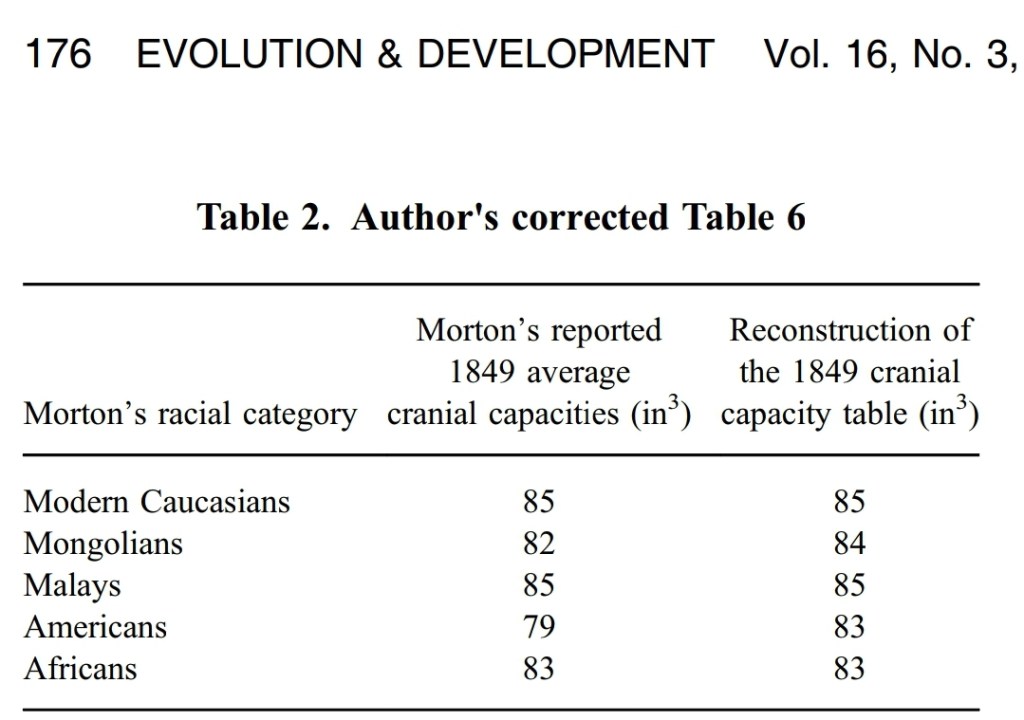
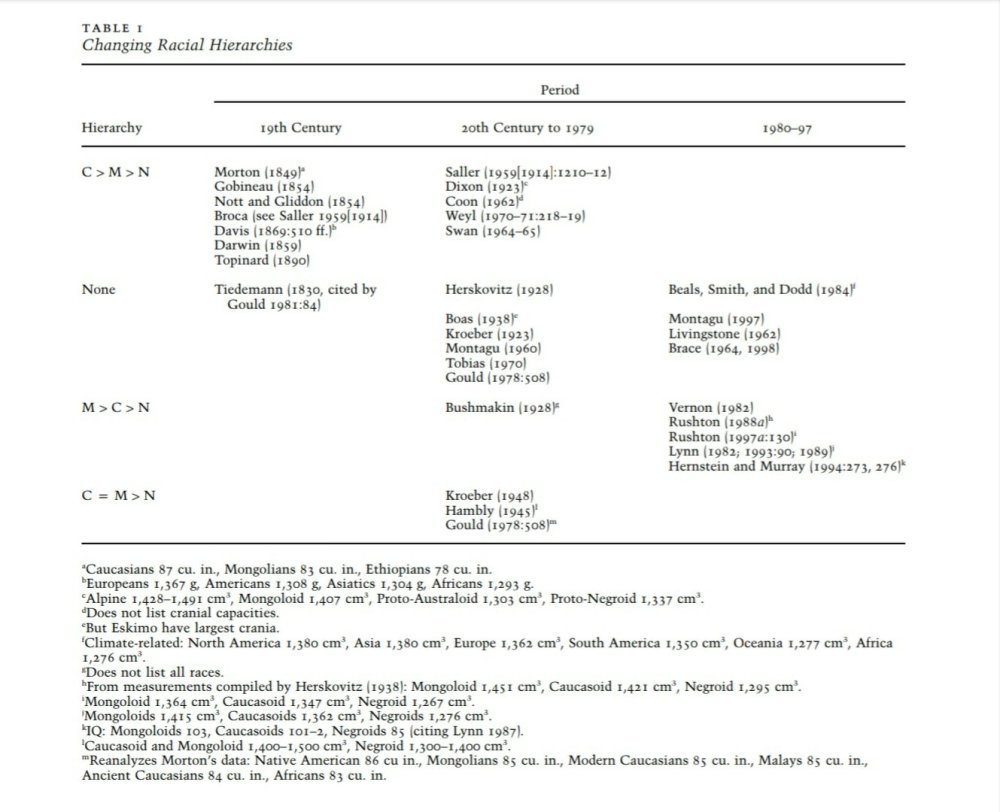
 NotPoliticallyCorrect