Home » Posts tagged 'Race' (Page 4)
Tag Archives: Race
Race, Obesity, Poverty, and IQ
2100 words
America has a current and ongoing obesity epidemic. Some ethnicities are more likely to be obese or overweight than others due to lower intelligence which means a lack of ability to delay gratification, lack of ability to think into the future, lower funds which translates to eating more refined carbohydrates which means more blood glucose spikes which then leads to obesity as I will show. Insulin has a causal relationship with obesity so those who lack funds to buy healthier food then turn to refined foods high in carbohydrates as they are cheaper and more abundant in low-income neighborhoods.
Adult obesity rate by State (top 5) is: 1) Louisiana (36.2 percent), 2) Alabama (35.6), West Virginia (35.6), and Mississippi (35.6), and 5) Kentucky (34.6) with the 5 least obese States being 51) Colorado (20.2), 49) Hawaii (20.7), 48) Montana (23.6), 47) California (23.2), and 46) Massachusetts (24.3). Notice how the States with higher rates of obesity are in the South and the States with the lower rates are in the North, give or take. The average IQ for these States as follows: Lousiana: 95.3, Alabama: 95.7, West Virginia 98.7, Mississippi 94.2 (lowest IQ State in the country, largest black population at 37 percent), and Kentucky at 99.4. The average IQ for those States is 96.66. The average IQs for the States with the lowest obesity rates are: Colorado 101.6, Hawaii 95.6, Montana 103.4, California 95.5, and Massachusets 104.3 (highest IQ State). The average for these States being 100.08. So there is a 4 point IQ difference between the top 5 States with the highest and lowest percentage of obese people, which goes with the North/South gradient of higher IQ people living in the North and lower IQ people living in the South. Back in 2014, a California real estate group took 500,000 Tweets using a computer algorithm and estimated intelligence based on spelling, grammar, and word choice and found a difference in State by State intelligence. Notice how the further North you go the higher the average intelligence is, which is then correlated with the obesity levels in that State.
With poverty rates by State, we can see how the States in the South have less intelligent people in them which then correlates to the amount of obesity in the State. Though, there are some anomalies. West Virginia and Kentucky have a super majority of whites. This is easily explained by the fact that less intelligent whites live in those States, and since both the poverty rates and obesity rates are high, it follows that the State will be less intelligent than States that have more intelligent people and less obesity.
It is known that intelligence is correlated with obesity at around -.25 (Kanazawa, 2014). The negative correlation between intelligence and obesity means that they are inversely related so, on average, one with higher intelligence has less of a chance of being obese than one with lower intelligence. The States with the lowest IQ people having those with the highest BMIs corroborates this. In America, obesity rates by ethnicity are as follows: 67.3% for whites, 75.6% for blacks, and 77.9% for ‘Hispanics’.
Now that we know the average intelligence rates by State, the percentage of obese by State and the demographics by State, we can get into why obesity rates correlate with intelligence and race.
Diaz et al (2005) showed that minority populations are more likely to be affected by diabetes mellitus which may be due to less healthy diets and/or genetic factors. Using the National Health and Nutrition Survey for 1999-2000, they analyzed overweight, healthy adults, calculating dietary intake variables and insulin sensitivity by ethnicity. They characterized insulin resistance with fasted insulin, as those who are more likely to become insulin resistant have higher fasted insulin levels (levels taken after waking, with the subject being told not to eat the night before as to get a better reading of fasted insulin levels). Non-‘Hispanic’ whites had higher energy and fat intake while ‘Hispanics’ had higher carb intake with blacks having lower fiber intake. Blacks and ‘Hispanics’ were more likely to have lower insulin sensitivity. However, ‘Hispanics’ were more likely to have lower insulin sensitivity even after controlling for diet, showing that metabolic differences exist between ethnicities that affect carbohydrate metabolism which leads to higher rates of diabetes in those populations.
Drewnowski and Specter (2004) showed that 1) the highest rates of obesity are found in populations with the lowest incomes and education (correlated with IQ), 2) an inverse relationship between energy density and energy cost, 3) sweets and fats have higher energy density and are more palatable (food scientists work feverishly in labs to find out different combinations of foods to make them more palatable so we will eat more of them), and 4) poverty and food insecurity are associated with lower food expenditures, lower fruit and vegetable intake, and lower-quality diet. All of these data points show that those who are poor are more likely to be obese due to more energy-dense food being cheaper and fats and sugars being more palatable.
Now that I’ve shown the relationship between race and IQ by state, obesity rates by state, insulin sensitivity by race, and that those in poverty are more likely to be obese, I can now talk about the actual CAUSE of obesity: insulin.
The conventional wisdom is that if you consume more kcal than you expend, you will gain weight, whereas if you consume less than your daily needs you will lose weight. This has been unchallenged for 50 years. Also known as Calories In and Calories Out (CICO), this mantra “eat less and move more!!!” has been bleated over and over with horrendous results. The CICO model only concerns itself with calories and not insulin which is a causal factor in obesity.
In this study, participants in the basal insulin group which received the lowest average insulin dose gained the least average amount of weight at 4.2 pounds. Those on prandial insulin gained the most weight at 12.5 pounds. The intermediate group gained 10.3 pounds. More insulin, more weight gain. Moderate insulin, moderate weight gain. Low insulin, low weight gain.
Researchers compared a standard dose of insulin to tightly control blood sugars in type 1 diabetic patients. At the end of the 6 years, the study proved that intensive control of blood sugars resulted in fewer complications for those patients.
Though, in the high dose group, they gained on average 9.8 pounds more than those in the standard group.
More than 30 percent experienced major weight gain! Prior to the study, both groups were equal in weight. But the only difference was the amount of insulin administered. Were the ones given high levels of insulin all of a sudden more lazy? Were those who gained weight suddenly lacking in willpower? Were they lazier before the study? We’re they more gluttonous? No, no, and no!!
(source)
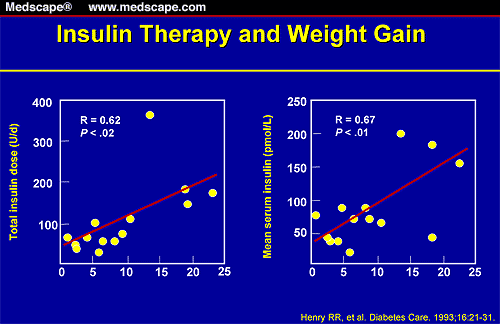
Finally, Henry et al (1993) took Type II diabetics and started them off with no insulin. They went from 0 units of insulin a day to 100 units at 6 months. As higher rates of insulin were administered, weight rose in the subjects. Insulin was given, people gained weight. A direct causal relationship (see figure above). However, what’s interesting about this study is that the researchers measured the amount of kcal ingested, the number of kcal ingested was reduced to 300 per day. Even as they took in less kcal, they gained 20 pounds! What’s going on here? Well, insulin is being administered and if you know anything about insulin it’s one of the hormones in the body that tells the body to either store fat or not burn it for energy. So what is occurring is the body is ramping down its metabolism in order for the subject to store more fat due to the exogenous insulin administered. Their TDEE dropped to about 1400 kcal, while they should have been losing weight on 1700 kcal! The CICO model predicts they should have lost weight, however, adaptive thermogenesis, better known as metabolic slow down, occurred which dropped the TDEE in order for the body to gain fat, as insulin directly causes obesity by signaling the body to store fat, so the body drops its metabolism in an attempt to do so.
Putting this all together, blacks and ‘Hispanics’ are more likely to be in poverty, have lower intelligence, and have higher rates of obesity and diabetes. Furthermore, blacks are more likely to have metabolic diseases (adaptive thermogenesis aka metabolic slowdown is a metabolic disease) which are related with obesity due to their muscle fiber typing which leads to lower maximal aerobic capacity (less blood and oxygen get around the body). Type II skeletal muscle fibers’ metabolic profile contributes to lower average aerobic capacity in blacks. It also is related to cardiometabolic diseases, in my opinion because they don’t have the muscle fiber typing to run long distances, thus increasing their aerobic capacity and VO2 max.
Due to the diets they consume, which, due to being in poverty and having lower intelligence, they consume more carbohydrates than whites, which jacks their blood glucose levels up and the body then releases insulin to drive the levels glucose in the body down. As insulin levels are spiked, the body becomes insulin resistant due to the low-quality diet. Over time, even a change in diet won’t fix the insulin resistance in the body. This is because since the body is insulin resistant it created more insulin which causes insulin resistance, a vicious cycle.
Poverty, intelligence and race both correlate with obesity, with the main factor being lower intelligence. Since those with lower IQs have a lack of foresight into the future, as well as a lower ability to delay gratification which also correlates with obesity, they cannot resist low-quality, high-carb food the same way one with a higher IQ can. This is seen with the Diaz et al study I linked, showing that whites have higher levels of fat intake, which means lower levels of carbohydrate intake in comparison to blacks and ‘Hispanics’. As I’ve shown, those in poverty (code word for low intelligence) ingest more refined carbohydrates, they have higher levels of obesity due to the constant spiking of their insulin, as I have shown with the 3 aforementioned studies. Since blacks and ‘Hispanics’ have lower levels of intelligence, they have lower levels of income which they then can only afford cheap, refined carbs. This leads to insulin being constantly spiked, and with how Americans eat nowadays (6 times a day, 3 meals and snacks in between), insulin is being spiked constantly with it only dipping down as the body goes into the fasted state while sleeping. This is why these populations are more likely to be obese, because they spike their insulin more. The main factor here, of course, is intelligence.
Another non-CICO cause for obesity is exposure to BPA in the womb. Researchers carried out BPA testing in three differing subjects: 375 babies invitro, (3rd trimester) children aged 3 (n=408) and aged 5 (n=518) (Hoepner, et al, 2016). They measured the children’s bodies as well as measuring body fat levels with bioelectrical impedance scales.Prenatal urinary BPA was positively associated with waist circumference as well as fat mass index, which was sex-specific. When analyzed separately, it was found that there were no associated outcomes in body fat for boys (however it does have an effect on testosterone), but there was for girls (this has to do with early onset puberty as well). They found that after controlling for SES and other environmental factors there was a positive correlation with fat mass index – a measure of body fat mass adjusted for height, body fat percentage and waist circumference. The researchers say that since there was no correlation between BPA and increased obesity, that prenatal exposure to BPA indicates greater vulnerability in that period. The sample was of blacks and Dominicans from New York City. Whites drink less bottled water, which has higher levels of BPA. Blacks and ‘Hispanics’ consume more, and thus have higher levels of obesity.
In conclusion, blacks and ‘Hispanics’ are more likely to be in poverty, have lower intelligence, higher rates of obesity and lower incomes. Due to lower incomes, cheap, refined carbohydrates is what they can afford in bulk as that’s mostly what’s around poor neighborhoods. Ingesting refined carbohydrates more often consistently jacks up blood glucose which the body then releases insulin to lower the levels. Over time, insulin resistance occurs, which then leads to obesity. As I’ve shown, there is a direct causal relationship between the amount of insulin administered and weight gain. With the aforementioned factors with these two populations, we can see how the hormonal theory of obesity fits in perfectly with what we know about these ethnic groups and the obesity rates within them. Since people in poverty gravitate more towards cheap and refined carbohydrates, they’re constantly spiking their insulin which, over time, leads to insulin resistance and obesity.
Muscle Fiber Typing and Race: Redux
I recently blogged on Muscle Fiber Typing, HBD, and Sports. I showed that differences in which race wins at what competition comes down to ancestry, which then correlates with muscle fiber typing. I came across this paper, Black and White race differences in aerobic capacity, muscle fiber type, and their influence on metabolic processes, today which, of course, proved my point on muscle fiber typing.
The authors say that obesity is a known risk factor of cardiometabolic disease (though Blüher 2012 says that up to 30 percent of obese patients are metabolically healthy with insulin sensitivity on the same level as thin individuals) and that cardio can reduce excess adipose tissue (this isn’t true either), maintains weight (maybe) and reduces the risk of obesity (it doesn’t) and cardiometabolic disease (this is true). The two major determinants of aerobic capacity are muscle fiber typing and “the capacity of the cardiorespiratory system to deliver nutrient-rich content to the muscle”. As I said in my previous article on muscle fiber typing, depending on which fibers an individual has determines whether or not they are predisposed to being good at endurance sports (Type I fibers) or being good at explosive sports (Type II fibers). Recent research has shown that blacks fiber typing predisposes them to a lower overall VO2 max.
VO2 max comes down to a strong oxygen support system and the capacity to contract a large number of muscle fibers at once, both of which are largely genetic. Lactic acid makes us tired, the best way to train is to minimize lactic acid production and maximize lactic acid removal during exercise. High-Intensity Interval Training, or HIIT, achieves this. The more O2 consumed during exercise, the less of a reliance there will be on the anaerobic breakdown of CHO to lactic acid.
Along with inadequate exercise, these variables place blacks at an increased risk for obesity as well as other negative metabolic factors in comparison to other races/ethnic groups. The author’s purpose of the review was to show how skeletal muscle fiber typing contributes to obesity in non-“Hispanic” black populations.
The review indicates that the metabolic properties of Type II fibers (reduced oxidative capacity, capillary density, which is a physiological measure that takes a cross-section of muscle and counts the number of blood vessels within. The measurement can be considered an indicator of physical health and is also related to the ability to do strenuous activity) are related to various cardiometabolic diseases.
Since non-“Hispanic” blacks have more Type II fibers on average, they have a lower maximal aerobic capacity. Combined with low Resting Energy Expidenture (REE) and reduced hemoglobin concentration (hemoglobin is a protein in the red blood cells that shuttles oxygen to your tissues and organs and transports carbon dioxide from your organs and tissues back to your lungs), non-“Hispanic” blacks may be predisposed (they are when you look at what the differing skeletal muscle fibers do in the body and if you have a basic understanding of physiology) to a lower maximal aerobic capacity, which contributes to obesity and metabolic disease in the non-“Hispanic” black population.
I have written on ethnicity and obesity last year. In the two racial groups that were tested, American non-“Hispanic” whites and American non-“Hispanic” blacks, what the researchers say holds true.
On the other hand, Kenyans have an average BMI of 21.5. Since we know that a high VO2 max and low BMI are correlated, this is why Kenyans succeed in distance running (along with VO2 max training, which only enhances the genetic effects that are already there).
Moreover, I wrote an article on how Black American Men with More African Ancestry Less Likely to Be Obese. How do we reconcile this with the data I have just written about?
Simple. The population in the study I’m discussing in this article must have had more non-African ancestry than the population that was gathered showing that black American men with more African ancestry are less likely to be obese. The researchers in that study looked at 3,314 genetic markers. They then tested whether sex modifies the association of West African genetic ancestry and body mass index, waist circumference, and waist to hip ratio. Also, they adjusted for income and education as well as examined associations of ancestry with the phenotypes of males and females separately. They conclude that their results suggest that a combination of male gender and West African ancestry is correlated with protection against central obesity and suggests that a portion of the difference in obesity (13.2 percent difference) may be due, in part to genetic factors. The study also suggests that there are specific genetic and physiologic differences in African and European Americans (take that, race-denialists =^) ).
Since both black men and women in America share the same environment, some genetic factors are at play in the differences in obesity rates between the two sexes with more African ancestry for black American men being the main reason.
Finally, I wrote an article on BPA consumption and obesity. The sample was on blacks and Dominicans (they’re black as well) in NYC. It was discovered that babes who were exposed to BPA more in childhood and in the womb had higher chances of being obese. This goes with what the authors of the study I’m citing in this article say. There are numerous environmental factors that pertain to obesity that’s not kcal in/out (which the First Law of Thermodynamics is irrelevant to human physiology). BPA consumption is one of them (as well as a cause for the current and ongoing cucking of Europe). Whites at all age groups drink more tap water. Blacks and ‘Hispanics’ were pretty much even in consumption of bottled water. Bottled water has BPA in the plastic, and since they drink more bottled water, they run the risk of their children being more prone to obesity due to the negative effects of BPA in the human body.
In sum, blacks are more likely to be faster due to their fiber typing, but are also more likely to be obese (in this sample, anyway which I assume was a mix of men and women. I will update this article when I find and read the full paper). They also run a higher risk of having related diseases, most notably due to a lower REE (showing they don’t walk around as much, since too much sitting increases mortality EVEN WITH EXERCISE. So if you have a desk job and don’t do any other physical activity and enjoy living, do more LISS, low-intensity steady-state cardio). These factors also, in part, explain why blacks have higher rates of hypertension (with Sickle Cell Anemia being another cause since when the blood is sickle-shaped, they crowd in the blood vessels causing blockage in the veins which leads to strokes and other diseases). The more the genetic factors that predispose people to obesity are understood (let’s be real here, there ARE genetic correlates with obesity), the better we can help those who suffer from the condition.
Myopia, IQ, and Race
1200 words
We’ve all heard of the nerd stereotype. One of the main ones is that nerds wear glasses. However, as most of my readers may know, stereotypes are based on fact more often than not. From the black criminal and sprinter, to the hyper-intelligent East Asian, to the intelligent and creative Europeans, we see that these so-called ‘stereotypes’ arise because stereotypes are actually average traits. Therefore, this ‘nerd stereotype’ that they always wear glasses is based on averages, so there must be a genetic component behind it. In this article I will talk about the genetics of myopia, reasons why researchers believe it arises, and racial differences in the prevalence of myopia.
Myopia, better known as nearsightedness, has a pleiotropic relationship with intelligence. Pleiotropy is the single gene or set of genes controlling multiple, possibly unrelated, phenotypic traits. So if the two traits are correlated, then there is a good chance that if one wears glasses they may have higher average intelligence.
Rosner and Belkin (1987) found that the prevalence of myopia was higher in more intelligent and educated groups. They found a strong association between the rate of myopia, years of schooling and intelligence level. Schooling and intelligence weigh equally with myopia, showing that those who are myopic tend to stay in school longer and are more intelligent than average.
Saw et al (2004) show that there may be similar genes associated with eye growth or size (myopia) and neocortical size (*possibly* correlated with IQ, we know it is). This is exactly what Cohn, Cohn, and Jensen found in 1987; that there was a pleiotropic relationship between IQ and myopia. One set of genes controls one or multiple phenotypic traits. They also say that nonverbal IQ is correlated with myopia in the Singaporean cohort independent of near work from the children (such as reading). Nonverbal IQ may be an independent risk factor of myopia independent of books read per week. They conclude that more research needs to be taken out to untangle the cause and effect of the myopia/intelligence/reading relationship.
Mirashi et al (2014) show in a sample of 4600 myopia-inflicted Germans between the ages of 35 and 74 that about 53 percent of the sample had graduated from college compared to 24 percent of the sample who didn’t go to school past high school. They, too, conclude that higher levels of myopia are associated with higher educational achievement and post-school professional achievement and that those who were myopic had higher levels of educational achievement than those in the sample who weren’t myopic.
More recently, Verma and Verma (2015) state that there is evidence that both genetic and environmental factors play a role in the prevalence of myopia. Moreover, Czepida, Lodykowska, and Czepita (2008) come to the same conclusion; that children with myopia have higher IQs and was verified in other countries (the USA, the Czech Republic, Denmark, Israel, New Zealand).
The correlation between myopia and IQ is between .2 and .25 (Jensen, 1998 b; 149). Jensen writes on page 150:
. . .the degree of myopia was measured as a continuous variable (refraction error) by means of optical techniques in a group of sixty adolescents selected only for high IQs (Raven matrices) and their less gifted full siblings, who averaged fourteen IQ points lower, a difference equivalent to 0.92o. The high-IQ subjects differed significantly from their lower-IQ siblings in myopia by an average of 0.39a on the measure of refraction error.1161 In other words, since there is a within-families correlation between myopia and IQ, the relationship is intrinsic. However, it is hard to think of any directly functional relationship between myopia and IQ. The data are most consistent with there being a pleiotropic relationship. The causal pathway through which the genetic factor that causes myopia also to some extent elevates g (or vice versa) is unknown. Because the within-family relationship of myopia and IQ was found with Raven’s matrices, which in factor analyses is found to have nearly all of its common factor variance on g ,n it leaves virtually no doubt that the IQ score in this case represents g almost exclusively. (emphasis his)
Therefore, as noted earlier, we would see a slight variation in the general population between those with high IQs and those who wear glasses and are myopic.
Jensen also talks about race and myopia. He says that Asians have the highest rates of myopia, while blacks have the lowest rate and whites have a rate slightly higher than blacks.
In a tribute to Arthur Jensen, edited by Helmuth Nyborg, it states that East Asians have the highest rates of myopia, with blacks having the lowest rate and whites being intermediate (Rushton’s Rule of Three). Ashkenazi Jews have a rate of myopia two times higher than that of gentiles, on par with East Asians. These are yet other biological correlates with the g factor that also lend credence to the hereditarian hypothesis.
Certain types of visual disturbances affect some races more frequently. Asian-Americans, for example, are more likely to be near-sighted than Caucasians or African-Americans. African-Americans have the lowest incidence of near-sightedness, but are more prone to cataracts and some other eye diseases. Eye problems, including the need to wear glasses, also can run in families.
Of course, if myopia is a pleiotropic trait (there is good evidence that there is), and wearing glasses runs in families as well as high intelligence, it can be safely hypothesized that the two indeed do have a relationship with each other. The biological correlates show enough that these traits, too, follow Rushton’s Rule.
Finally, Au, Tay and Kim (1993) present data that shows the prevalence and severity of myopia is associated with higher education. They also report on data that Rosner and Belkin reported the prevalence of myopia in males with and IQ of 80 or less was 8 percent while the rate increased up to 27.3 among those with an IQ of 128 or higher. Reported separately, it was concluded that the myopia rates in the cohort of 110,236 young Singaporean males correlated with race (Au, Tay, and Lim, 1993). The myopia rate for the Chinese was 48.5 (IQ 105), for Eurasians it was 34.7, for Indians it was 30.4 (IQ 82), and for Malays it was 24.5 (IQ 92). It’s worth noting that India’s IQ is depressed by disease and bad nutrition, and if this were to be ratified their IQ would be around 94. So this, again, shows the biological correlate with IQ and myopia as it’s showing on the Indians’ genotype.
The association between myopia and intelligence isn’t definite yet, however with more studies looking into the relationship between these variables I believe it will be concrete that those who are more myopic tend to have higher IQs due to the pleiotropic nature of IQ and myopia. Since reading is heritable, those with higher IQs as children tend to read more as adults, and the racial gradient is noticed in children, it’s pretty safe to say that myopia and IQ are linked pleiotropically and give more credence to the hereditarian hypothesis. Most studies find a statisically positive correlation between myopia and intelligence. Along with the racial disparities in myopia as well as intelligence, it’s pretty safe to say that the relationship is genetic and pleiotropic in nature since the races also differ in these variables.
Muscle Fiber Typing, HBD, and Sports
1850 words
With the Olympics currently happening, I figured I’d talk about muscle fiber typing and how it plays a factor in who wins what competition. First I’ll go through both fiber typings and what they mean for each sport. Then I will go through some of the most well-known sports and show how and why certain races dominate in different sports.
Muscle fiber typing
There are two types of muscle fibers: Type I fibers (slow twitch) and Type II fibers (fast twitch). Each fiber fires off through different pathways, whether they be anaerobic or aerobic. The body uses two types of energy systems, aerobic or anaerobic, which then generate Adenosine Triphosphate, better known as ATP, which causes the muscles to contract. Depending on the type of fibers an individual has dictates which pathway muscles use to contract which then, ultimately, dictate if there is high muscular endurance or if the fibers will fire off faster for more speed.
Type I fibers lead to more strength and muscular endurance as they are slow to fire off, while Type II fibers fire quicker and tire faster. Slow twitch fibers use oxygen more efficiently, while fast twitch fibers do not burn oxygen to create energy. Slow twitch muscles delay firing which is why the endurance is so high in individuals with these fibers whereas for those with fast twitch fibers have their muscles fire more explosively. Slow twitch fibers don’t tire as easily while fast twitch fibers tire quickly. This is why West African blacks and their descendants dominate in sprinting and other competitions where fast twitch muscle fibers dominate in comparison to slow twitch.
Usain Bolt, who just won the 100m dash the other day, has fast twitch fibers (Type II) due to a gene called ACTN3 which is associated with elite athletic performance. West African blacks and their descendants have this gene. For example, 70 percent of Jamaicans have the ACTN3 gene, and this gene is why Usain Bolt is the world’s fastest man.
Though at the same time, West Africans and their descendants suffer in competitions where muscular endurance is needed (swimming is one of them). Caucasians Asians and East Africans have more slow twitch fibers (Type I fibers) which allows them to dominate in competitions where endurance is needed (weightlifting, Strong Man, distance running, swimming).
There are physiological differences found in the winners of these competitions, and like most things, there is a racial basis to them.
Sports
As noted above, West Africans and their descendants dominate competitions in which their muscle fibers are best put to use (sprinting, football, basketball, etc) while they suffer in competitions in which Caucasians and Asians dominate in which muscular endurance is needed (weightlifting, powerlifting, distance running).
World’s Strongest Man
Muscle fiber typings play a major part in the winners of these competitions as does limb length. Generally, the winners of the World’s Strongest Man (WSM) are more stocky and have shorter limbs which translates into more power generated since the distance is shorter.
A white man has won the WSM competition every year since its inception. It’s always a Northern or Easter European who wins these competitions. The Russians and Slavs are known for their crazy squat programs, and muscle fiber typing is the reason why. They are able to generate more power than those with fast twitch fibers which translates into domination in strength-based competitions.
The same thing is noticed in powerlifting. Caucasians and Asians dominate. I’ve seen some incredibly strong East Asian powerlifters, and the reason is they are shorter and stockier with shorter limbs. More power is able to be generated with the shorter distance and Type II fibers which allow these populations to excel in these types of competitions.
I hypothesize that just like West Africans and their descendants consistently win sprinting competitions due to their genes and fiber typing, this is the same reason why Europeans consistently win WSM. Though, PumpkinPerson thinks differently about this.
PP believes that since Africans have higher testosterone, then they, therefore, should dominate in these types of competitions. His reasoning is based on Rushton’s Rule of Three, which all though it holds well for a wide variety of variables, it doesn’t hold with more complex traits such as muscle fiber typing.
PP cites a study stating that blacks out benched whites in the beginning and end of the study. However, it seems this is anomalous. The researchers say this is the only study looking at this, and from what I can tell, they didn’t ask about dietary and or exercise habits. They also say that blacks were heavier in BMI at the onset, but not in the follow-up.
I’d like to see another study like this before any conclusions are drawn. Because what I see in actual powerlifting competitions from people who go above and beyond their genetic potential when everyone is using, Caucasians (whites, MENA people) and East Asians are consistently always stronger than blacks. From what we see from actual competitions, Caucasians and Asians dominate these competitions. Africans are really nowhere to be found. In fact, Kenya is the only sub-Saharan African country to place in the top 3 in the WSM, which strengthens my theory on muscle fiber typing and strength-based competitions since they have slow twitch fibers.
PP then writes another article saying that from 1938 to 1953 the WSM was a black man named John Henry Davis. He was known as the WSM from those years, but as we know, exceptions don’t prove rules.
Mark Henry is a better example. Genetic freak of nature. World record total in squat, bench and deadlift; he was a squatting 600 pounds as a freshman; as a teenager, he had the 8th best total regardless of age group.
He’s a genetic freak of nature. He’s way stronger than the guy you cited. Mark Henry is one of the strongest people to ever live. He is a freak of nature. I can’t emphasize that enough.
Sprinting
West Africans and their descendants excel at sports where their muscle fiber typing is put to good use. The ACTN3 gene, as noted above, has a lot to do with their success in these competitions but it doesn’t tell the whole story. Sprinters have long limbs, which allow them to cover a greater distance with each stride in comparison to another with shorter limbs. Sprinters also have lower levels of body fat which translates to more speed. Where these lower levels of body fat make have them suffer in swimming competitions since fat floats, this helps in sprinting competitions due to less fat mass.
Swimming
For those of you who are keeping up with the Olympics, you may have heard of Robel Kiros Habte. He finished with the worst time out of the 59 contestants and was only there due to an invitation extended to him by the International Swimming Federation who chooses people from countries that are underrepresented in the Games. This invitation shows that even the ‘best’ in their country is nowhere near good enough versus the best in the world.
But on the other hand, for the first time in history, swimmer Simone Manuel became the first black American to win gold in the 100m freestyle. There’s a first time for everything and exceptions don’t disprove rules.
Of course, Michael Phelps speaks for himself, with his 23rd gold medal win which broke a record that was standing for 2168 years.
Bodybuilding
Blacks dominate in American bodybuilding. This is due to them having lower fat-free body (FFB) and being more mesomorphic on average.
The winner of Mr. Olympia for the five years in a row is Phil Heath (who will win a sixth title next month during the Olympia). Blacks have consistently been in the top running in the IFBB (International Federation of Bodybuilding). This is due to their muscle insertions and lower average fat-free body that allows a high percentage of blacks to compete. Moreover, I’d say that genetically speaking, blacks have a better chance to win over whites since they have a more sculpted physique naturally, which comes down to evolutionary selection
Some people may say that the above sports are tainted due to performance enhancing drug (PED) use. Though what they fail to realize is that drugs take you above and beyond your genetic limit. These people are already genetic freaks of nature and taking drugs just makes them that much better. You can’t take someone with garbage genetics, have him shoot up for years and bust his ass in the gym to be Mr. Olympia. Just like you can’t take someone with garbage genetics and the wrong proportions, inject them with PEDs and expect them to do well in powerlifting and Strongman competitions. The genetic potential is already there in these athletes and PEDs take them above and beyond what is naturally possible.
Strength and Mortality
Finally, to round this up, there is a correlation between strength and mortality. With a sample of 8762 men between the ages of 20 and 80, it was found that muscular strength was inversely and independently associated with death from all causes and cancer in men even after adjusting for cardiorespiratory fitness and other possible confounders. From the discussion of the paper:
The analysis on the combined effects of muscular strength and cardiorespiratory fitness with all cause mortality showed that the age adjusted death rate in men with high levels of both muscular strength and cardiorespiratory fitness was 60% lower (P<0.001) than the death rate in the group of unfit men with the lowest levels of muscular strength. These results highlight the importance of having at least moderate levels of both muscular strength and cardiorespiratory fitness to reduce risk of death from all causes and cancer in this population of men.
The point of bringing this paper up is that Caucasians and Asians are stronger than blacks, and also live longer. This is just like the correlation between IQ and life expectancy. Since men with higher levels of strength live longer than men with lower levels of strength, this strengthens my hypothesis for strength-based competitions and the racial mix of the competitions. Caucasians and East Asians, who have higher IQs than blacks, are also stronger than them on average, which also correlates with life expectancy.
(For more information see Steve Sailer’s post on West African and East Africans in sprinting and distance running as well as Razib Khan’s post on West Africans and their domination of sprinting competitions.)
Conclusion
HBD is evident in all of our lives. Though many of us don’t bring it up, it’s evident in the sports we watch to everyday life. The reason why there are racial disparities in the upper echelons of professional sports has to do with muscle fiber typing as well as those who are genetically predisposed to do well in these competitions. West Africans dominate in sprinting competitions and others where they are able to use their longer limbs and fast twitch fibers whereas Caucasians and Asians dominate in strength sports due to their limb length and slow twitch fibers. Professional sports proves what is evident in our everyday lives and, subconsciously at least, the average person sees this.
Nordicist Fantasies: The Myth of the Blonde-Haired, Blue-Eyed Aryans and the Origins of the Indo-Europeans
750 words
Nordicists say that the Aryans, the Indo-Europeans, had blonde hair and blue eyes. Though, recent genetic evidence shows that the origin of the Indo-European language is from the Russian steppe, originating from the Yamnaya people. The originators of the Indo-European languages weren’t blonde-haired and blue-eyed, but dark-haired and dark-eyed. Better known as the ‘Kurgan Hypothesis’, this is now the leading theory for the origin of Indo-European people.
Haak et al (2016) showed that at the beginning of the Neolithic period in Europe (approximately 7 to 8 kya) that a closely related group of farmers appeared in Germany, Hungary, and Spain. These ancient populations were different from the indigenous peoples from the Russian steppe, the Yamnaya, who showed high affinity with a 24000-year-old Siberian sample. Approximately 5 to 6 kya, farmers throughout Europe had more hunter-gatherer ancestry than their predecessors from the early Neolithic, but the Yamnaya from the Russian steppe were descended from the Eastern European hunter-gatherers, but also from a population with Near East ancestry (Ancient North Eurasians, ANE). Further, the migration of haplotypes R1b and R1a traveled into Europe 5000 years ago.
The Late Neolithic Corded Ware culture from Germany trace approximately 75 percent of their ancestry to the Yamnaya, which confirms a massive migration from Eastern Europe to the heartland of the continent 4500 years ago. This ancestry from the Yamnaya persisted in all of the Europeans sampled up until approximately 3000 years ago, and is common in all modern-day Europeans. The researchers then conclude that this provides evidence for a steppe origin for some of the Indo-European languages from Europe.
As mentioned above, Haber et al (2016) show how, as I alluded to above, that the Yamnaya people share distant ancestry with the Siberians, which is probably the source of one of the three ancient populations that contributed to the modern-day European gene pool (Ancient North Eurasians, West European hunter-gatherers, and Early European farmers from Western Asia with the fourth population being the Yamnaya people).
Olade et al (2015) show that since the Basque people speak a pre-Indo-European language that this indicates that the expansion of Indo-European languages is unlikely to have begun during the early Neolithic (7 to 8 kya). They, like Haak et al, conclude that it’s in agreement with the hypothesis of the Indo-European languages coming out of the East, the Russian steppe, around 4500 years ago which is associated with the spread of Indo-European languages into Western Europe.
Finally, it is known that the Yamnaya people had dark skin (relative to today’s Europeans), dark hair, and dark eyes. Knowing what is presented in this article, this directly goes against the Nordicist fantasy of the blue-eyed, blonde-haired Indo-Europeans. Nordicists also like to claim that the Indo-Europeans had blonde hair and blue eyes, when genetic evidence goes directly against this claim:
For rs12913832, a major determinant of blue versus brown eyes in humans, our results indicate the presence of blue eyes already in Mesolithic hunter-gatherers as previously described. We find it at intermediate frequency in Bronze Age Europeans, but it is notably absent from the Pontic-Caspian steppe populations, suggesting a high prevalence of brown eyes in these individuals.
Further, the Yamnaya were a tall population. Since the Yamnaya had a greater genotypic height, it stands to reason that Northern European populations have more Yamnaya ancestry.
The Yamnaya herded cattle and other animals, buried their dead in mounds called kurgans, and may have created some of the world’s first wheeled vehicles. They were a nomadic population that, some linguists say, had a word for wheel. The massive migration into Western Europe from the Russian steppe contributed large amounts of North Asian ancestry in today’s Europeans. The Yamnaya are also shown to be the fourth ancient population that is responsible for modern-day Europeans.
Modern-day genetic testing is shattering all of these myths that are told about the origins of Europeans and Proto-Indo-European peoples and languages. The ACTUAL basis for most PIE languages is from the Russian steppe, from a relatively (to modern Europe) dark-skinned, dark-haired, and dark-eyed people who then spread into Europe 4500 years ago.
The Nordicist fantasies of the Aryans, the originators of Proto-Indo-European languages has been put to rest. It was originally proposed based off of myths and stories, mostly from ancient Indo-European cultures who were situated thousands of miles away from the original Indo-Europeans (the Yamnaya).
The Kurgan Hypothesis is now the theory that’s largely accepted by the scientific community as being the homeland of the Proto-Indo-Europeans. The Yamnaya people now make a fourth founding population for Europeans, with the other three being West European hunter-gatherers, Ancient North Eurasians, and Early European Farmers.
Dysgenic Fertility and America’s Obesity Crisis
1050 words
The dysgenic trend currently occurring in America has implications for obesity as well. Since intelligence is negatively correlated with obesity, as America’s average IQ decreases, the rates of obesity in our country will increase. This is due to the high correlation between intelligence and obesity. As we continue to allow unfettered immigration into America, the average IQ of the country will decrease, while the amount of people that are overweight and obese will increase.
The ethnic differences in obesity rates lead more credence to what I am saying. As the demographics shift, more people will be overweight or obese due to having a lower IQ. Whites, too, are experiencing this dysgenic effect, as intelligent people of all ethnicities are not reproducing. As more and more genetically less fit individuals continue to have a higher rate of reproduction in comparison to intelligent individuals, this crisis will continue to persist.
Those with lower intelligence have less of an ability to delay gratification, which has a strong genetic component. As more people breed who cannot delay their gratification, the rates of obesity will increase in the country. Of course, the lack of ability to delay gratification comes with a lowered IQ. This is what we see in regards to sex. Those with higher IQs lose their virginities at a later age in comparison to those with lower IQs. Along with the data from Kanazawa that shows that more intelligent people have a lower BMI than those with lower intelligence, this study gives more credence to the theory that those with higher levels of intelligence can better delay their gratification.
JayMan says that there is evidence for an increased genetic load for those with lower IQs, which we can then reason that this also leads to a higher prevalence for obesity in low IQ populations. JayMan then says that many of the genes found to influence obesity seem to operate in the brain and that they have a pleiotropic effect, meaning that multiple genes affect one or more traits. With the increased genetic load comes with an increased chance to have a lower IQ and become obese, as these two things correlate with the lack of ability to delay gratification.
Of course, these problems persist due to modern medicine. With the advent of better medicine, it allowed us to beat diseases that formerly would have been devastating to the population at large. This led to an increase of alleles with negative effects in the population that continue to pass down through the generations. Along with these advances in medical technology, welfare and other government-funded programs also enable those that are less genetically fit. Since intelligence is correlated with ability to care for offspring, as well as r- and K-selected traits, those with lower intelligence exhibit more r-selected traits. This is why America is facing a dysgenic fertility crisis. Welfare props up those with less intelligence, giving them more incentives to breed. They then breed more low IQ children who then will live off of the government. This vicious cycle then continues unfettered due to how America’s dysgenic welfare structure is implemented.
Before the advent of modern technology, those who were less genetically fit didn’t survive to pass on their genes. But, in the modern day with all of our superior technology, this allows the less intelligent to breed when in the past they would have been selected out of the gene pool due to being less biologically fit.
Another variable that is involved with the dysgenic fertility of America is Mexican immigration. With the influx of illegal (and legal) peoples from the South of the Border, this is having both dysgenic effect on both the average intelligence of our country along with the average BMI. The average BMI for the average American male is 28.6. In the 1950s, 10 percent of American adults were obese compared to 35 percent of American adults today. Now, this has to do with ability to access food, as well as the effect of the media on children has a huge effect on obesity, due in part to not getting a full nights sleep, as that is correlated with obesity. However, an increase in genetic load, which also comes with a decrease in intelligence, has a lot to do with this as well. The increase in the BMI of the average American has to do with immigration as well. The rates of obesity for different ethnicities in America are as follows: 67.3% for whites, 75.6% for blacks, and 77.9% for ‘Hispanics’. So of course, with more immigration from the South of the Border, the average IQ for America is decreasing while obesity rates are increasing, due mostly to this illegal immigration.
Height and intelligence are both correlated. Ever since the advent of the industrial revolution, we have had an excess surplus of food. As Gina Kolata says in her book Rethinking Thin, an increase in obesity is inevitable. She says this since the increase in genetic height and IQ has occurred, so the increase in obesity follows with it. We need to influence those with higher IQs to have more children. Further, we also need to restrict immigration to only high-skilled immigrants (only when necessary) to reverse this trend that has been occurring since the 1960s. Though, with higher levels of intelligence one can forgo their urges and live a healthier lifestyle due to having higher cognition which leads to a better ability to delay gratification than one with lower intelligence.
Those with higher IQs make better choices on what to eat than those with lower IQs. This is shown in the BMIs of the intelligent and non-intelligent population. As more and more people with lower genotypic IQ come into the country, the quality of life will decrease as will the average intelligence of the country. In turn, the BMI of the average American will increase along with the decrease of our country’s average intelligence. To ameliorate this, we need to have extremely stringent criteria on who we allow into the country. An IQ test, to start, would be a good idea. As those with higher intelligence have less of a genetic load and have less of a chance of becoming obese than one with a lower IQ, the current dysgenic effect that this unfettered immigration is having on America can be lessened.
Climate, Violence, r/K Selection Theory and the Vindication of JP Rushton
1850 words
Why do violent crimes increase as temperatures increase? Why do violent crimes decrease as the temperatures decrease? These phenomena are noticed every year, and criminologists set out to find the relationship between climate and violence and whether or not there is a curvilinear hypothesis, which crime increases as the temperature increases, but at extremely high temperatures the crime rate begins to dip down.
When the weather gets colder, crime decreases. All though crime does decrease in the Winter months, crimes that take more planning, such as property crime and robbery increase. This is due, obviously, to the fact that people don’t want to spend too much time outside so they plan their crimes ahead to minimize the time spent outside whereas in hotter temperatures this does not occur. It is known that when it’s colder, resulting criminal actions are less random than those committed in hotter temperatures.
The two trains of thought for the temperature/crime theory are the curvilinear hypothesis, as noted above, and the linear hypothesis, which argues for that as the temperature increases, so does crime without a drop in extremely high temperatures.
Mishra (2014) showed that the relationship is not a curvilinear one, but that crime rises steadily as the temperature increases. Looking at Allahabad city, India from a 62 year period from the years 1952 to 2013 with the variables being temperature, humidity and rainfall, the results of the analysis shows that temperature has a significant effect on the proclivity to commit crime, as well as murder. Relative to the temperature, humidity shows a strong correlation with crime with rainfall showing a negative correlation.
Mishra took annual data from the National Crime Record Bureau with monthly data taken from the various police stations of Allahabad city. The temperature and rainfall data was taken from local news stations and the Indian Meteorological Department.
Results of his analysis showed significant correlations with violent crime and temperature (r=.75) with murders increasing as temperatures increase. The relationship between relative humidity and crime was strong as well (r=.68) with rainfall having a negative correlation (r=-.14). Out of all three of these variables, the average temperature has more of an effect on crime than relative humidity. Using a regression model, Mishra discovered a correlation of .56, showing that temperature alone accounts for 56 percent of the variation in crime pattern. Including all three variables in the regression model shows a correlation of .61. This confirms that among the climate elements tested that temperature itself had the highest effect on crime.
Figure 2 of the paper shows that as temperatures rise (starting at about 25 degrees celsius), that the crime rate increases.Since very high temperatures are associated with rainfall, there is a reduction in crime when this occurs, thermal stress is reduced. However, when rainfall and humidity were both unchanged, higher temperatures would not cause a decrease in violence. This result is inconsistent with the curvilinear hypothesis and does not support the claim that extremely high temperatures cause decreased violence.
Van Lange, Rinderu, and Bushmen (2016) thought of the model CLASH (CLimate, Aggression, and Self-control in Humans) which shows differences within and between countries and their proclivities for aggression and criminal behavior. With lower temperatures, along with seasonal variation like what is seen in Northern Europe, peoples had to adopt a slower life history strategy with more focus on planning for the future as well as a need for self-control due to the differing variations in climate and how that has an effect on acquiring food. The CLASH model further shows that slow life history strategy, thinking into the future and self-control are important determinants in predicting violence.
As I have discussed here before, r/K Selection Theory (Life History Theory) shows that those who live in colder temperatures adopt slower strategies which lead to more future planning along with more self-control along with more altruistic behaviors shown. In a more harsh environment, such as Africa, Latin America and other locations situated near the equator, faster life history strategies are needed to offset the harsh environment, which leads to evolutionary causes for earlier menarche in black and Mexican-American girls. Faster life history strategies are needed in locations near the equator due to the harshness of the environment. This is why Africans and other peoples located at or near the equator have more children, to offset the harsher environment. No planning ahead was needed, as most likely populations near the equator wouldn’t have lived long enough to see the delayed payoff. Conversely, those in northerly climes live longer due to the need to plan ahead, and along with this ability to plan ahead came higher intelligence, which leads to yet another selector for high intellect in populations that evolved further from the equator, earlier childbirth. On top of that selector, deleterious Neanderthal alleles decreased historic fitness levels 1 percent in non-African populations, which further lead to evolution of the ability to think into the future due to less children beared. Since the future becomes more predictable the further you travel away from the equator, it becomes adaptive for peoples to adopt a slower life history strategy out of necessity, as that’s the only way to survive and they will see the fruits of their self-control due to having a longer life expectancy due to superior future time orientation in comparison to those in southerly climes.
Since a faster life history strategy is correlated with threats of harshness and higher morbidity and mortality, from the life history perspective we would reason that those with lower SES would have to adopt a faster life history strategy in order to offset the fact that they are more likely to suffer premature disability or death. Lower SES is also correlated with other r-selected strategies such as earlier sexual activity (a variable correlated with lower IQ), higher rates of childhood pregnancy and childbearing, greater number of offspring and less care and attention shown to those offspring, this study. For the third time this month, proves Rushton right with his application of r/K Selection Theory on the three races of humanity.
Van Lange, Rinderu, and Bushmen state that neighborhood deterioration, assaults, muggings, drug addicts, and presence of gangs are associated with earlier and higher rates of sexual activity. Not coincidentally, this is seen in many majority black and ‘Hispanic’-majority cities in America. They also say that as resources become scarce that women gravitate towards men with more access to resources and those that will invest in their children’s reproductive values. Though this is hardly seen in low-income communities around America, you do see a lot of black women who gravitate towards the drug dealer or another black male who is involved with illegal activities who then acquire mass amounts of capital. This is an evolutionary strategy for all women, since money is correlated with intelligence and therefore a mate with more money has better means to take care of any offspring conceived.
The CLASH model extends r/K Selection Theory, particularly where r/K Selection Theory emphasizes unpredictability and harshness as a source of environmental stress, the CLASH model emphasizes predictability over environmental stress. That is, those who evolved in northerly climes can deal with stress better than those who evolved near the equator, therefore lessening the amount of crime in those populations due to them being able to constrain themselves more. The CLASH model proposes that the combination of predictability and control shape a slow life history strategy, future time orientation, with a focus on self-control. Moreover, in an analysis of 40 work-related values in 40 countries, it was found that the countries located the furthest from the equator tended to place a greater value on future rewards, such as perseverance and thrift.
In countries closer to the equator, according to the 2014 World Fact Book, the average age of first birth for a female was 20 years of age (the countries were the Gaza strip, Liberia, Bangladesh, Kenya, Mali, Tanzania, Uganda and various other middle African countries). Conversely, for countries further away from the equator, the average age of first birth was 28 years of age (Japan, Canada, and most European countries). Those populations that evolved in warmer climates where the changes in season are minimal with unpredictable harshness tend to enact faster life history strategies than those in colder climates.
The researchers state on page 31:
One standard deviation increase in temperature was associated with a 11.3% increase in intergroup conflict and a 2.1% increase in interpersonal conflict. Examples of interpersonal conflict include spikes in domestic violence in India and Australia, greater likelihood of assaults and murders in the USA and Tanzania, ethnic violence in Europe and South Asia, and civil conflicts throughout tropical climates. Hence, we conclude that it is both differences in average temperature and differences in seasonal variation in temperature that help explain cross-national differences in aggression and violence around the world.
And on page 41:
Assuming CLASH is accurate, it is interesting to consider that people’s thoughts and behaviors may be quite different, based on the physical circumstances their ancestors faced and that they face themselves. The world is getting smaller and smaller. Electronic and social media (e.g., WhatsApp, Twitter, Facebook, email) connect us to people all over the world. Yet, people coming from differing ancestral histories and living in different locations face challenges of self-control in a variety of ways. A businessperson from London may expect a response the next day, but the alliance in Nairobi may want to take at least an extra day. If CLASH is correct, the same pattern should hold for within-country differences between a businessperson working in Chicago and the alliance working in New Orleans, or between a businessperson working in Melbourne and the alliance in Brisbane or Cairns (with London, Chicago, and Melbourne being relatively more remote from the equator, and facing greater variation in climate).
The correlation between temperature, crime and life history strategies is shockingly high. JP Rushton is now vindicated from all of the derision he experienced in the 30 plus years he was pushing his r/K Theory. This shows implications for the European ‘refugee’ crisis as well, due to the higher rates of all violent crime occurring ever since this mass exodus from MENA (Middle Eastern North African) countries.
The CLASH model is a great compliment to r/K Selection Theory and goes deeper into why behaviors differ in human populations based where ancestral evolution occurred. As temperatures increase, so does crime starting at 76 degrees Fahrenheit, with there being a negative correlation for crime committed during rainfall. The CLASH model vindicates Rushton’s supposedly ‘wacky theories’ on race, evolution and behavior. Further, the CLASH model also shows another cause for the current situation occurring in Europe. The people flooding into the continent have ancestral ties to hotter climes. They then bring their genetic proclivity to commit crimes with them to the new area, which then increases crime. This is one of many reasons for the cucking of Europe. As we look more into evolutionary causes for behavior and those behaviors that lead to more crime committed, Rushton and others will be further vindicated and when this occurs, with ample data, of course, sensible immigration policy can be had to quell the amount of crime committed by ‘migrants’ and other immigrants into our countries.
Neanderthals, Inbreeding, r/K Selection Theory and Eurasian Birthrates
1100 words
(Note, 6/24/17: Rushton’s r/K selection in applications to human races is dead. It’s been dead for almost 30 years after and ecologist critiqued his method and use of ecological theory in application to human races. Now, that doesn’t meant that everything written below—or even on my whole blog—is fully wrong, just that the attempted explanation is wrong. It still holds that Eurasians have worse fitness than Africans, which is partly due to deleterious Neanderthal variants, however, r/K theory does not explain it.)
Science Daily reported last week that Neanderthals left humans a genetic burden, which is having less offspring. Of course, these deleterious alleles only introgressed into non-African populations due to Africans not leaving Africa. This manifests itself today in birth rates within countries and between them based on the ethnic/racial mix. And (not) coincidentally, the areas with the highest rate of children are in sub-Saharan Africa.
The Neanderthals existed in small bands, so inbreeding was common. Due to this inbreeding, Neanderthals were more homogenous than we are today. When humans migrated out of Africa, they encountered the inbred Neanderthals who they interbred with. Harmful genetic variants acquired from Neanderthals are shown to reduce the fitness of populations with certain deleterious alleles. There are of course tradeoffs with everything in life. Increased intelligence and being better able to weather the Ice Age, among numerous other factors, were positive things gained from interbreeding with Neanderthals. Negative effects were the acquisition of deleterious alleles which still persist today in non-African hominids. These deleterious alleles decreased biological fitness which manifests itself in the birthrate of Eurasian populations throughout the world (the Germann and Japanese birthrate is 1.3 for reference).
Harris and Nielson also hypothesize that since Neanderthals existed in small bands that natural selection was less effective, allowing for weakly harmful mutations to pass on and not get weeded out over the generations. However, when introduced back into humans these effects become lost over time due to a large population with natural selection selecting against the deleterious Neanderthal alleles. Using a computer program, Harris and Nielson quantify how much of a negative effect the Neanderthal genome had on modern populations. The conclusion of the results was that Neanderthals are 40 percent LESS genetically fit than modern humans.
The researchers’ simulations also suggest that humans and Neanderthals mated more freely, which leads more credence to the idea that Neanderthals got absorbed into the Homo Sapien population and not mostly killed off. The estimation for Neanderthal DNA in modern hominids from the simulation was around 10 percent, which then continued to drop as the Neanderthal-Homo Sapiens hybrids interbred with those who hardly had any Neanderthal DNA. More evidence also shows that the percentage of Neanderthal DNA was higher in the past in Eurasians as well. Which makes sense since Asians have on average 20 percent more Neanderthal DNA than Europeans due to a second interbreeding event.
However, Harris and Nielson end up concluding that non-Africans historically had a 1 percent loss in biological fitness due to Neanderthal genetics. Moreover, a better immune system came from Neanderthal genetics. Skin color is another trait inherited from Neanderthals as well.
Along with the acquisition of deleterious Neanderthal alleles, early Eurasians also encountered the same environment as the Neanderthals. Those selection pressures, along with interbreeding due to small bands lead to a decrease in the number of children had. Fewer children are easier to care for as well as show more attention to. All of these variables in that environment lead to fewer children produced. It’s a better evolutionary strategy to have fewer children in more northerly climes than in more southerly ones due to the differing selection pressures. Environmental effects are also one reason why birthrates are lower for populations that evolved in northerly climes (Neanderthals and post-OoA hominids). Harsh winters lead to a decreased population size, as evidenced by the Inuit and Eskimoes, which their low population size didn’t allow for selection for high IQ despite having the same brain size as East Asians.
I couldn’t help but think that, yet again, for the second time in two weeks, one of JP Rushton’s theories was confirmed. This confirms one of the many variables of Rushton’s r/K Selection Theory. Just like I covered how Piantadosi and Kidd corroborated Rushton’s theory of brain size and earlier child birth. Neanderthals had bigger brains than we do today, and knowing what we know about the correlation between IQ, brain size and early childbirth, I would assume that Neanderthals also had earlier childbirths as well,.
Along with these deleterious gene variants from Neanderthals, other variables that contribute to the decline in Eurasian populations also include higher IQ as well, as JP Rushton says, is an extreme way to have control over their environment and individuality. These traits are seen in higher IQ populations in comparison to lower IQ populations. We could also make the inference that since Eurasian children have bigger heads, that multiple childbirths would be taxing on the Eurasian woman’s birth canal while it would be less taxing on the African woman’s.
This study also shows that Neanderthals also had less offspring due to being more intelligent. They had bigger brains than we do today, and since we know that higher IQ is correlated with fewer children conceived, we can say that they were pretty damn smart (they buried their dead 50,000 years ago. There was also a recent discovery of a 176,500-year-old Neanderthal constructions in a French cave). A main cause for the current trend in birthrates in Eurasian populations is due interbreeding with Neanderthals. These events also attributed more to the decline of the Neanderthals.
Deleterious Neanderthal alleles are yet another reason for lower Eurasian birthrates, which shows = that the current trend currently happening in the world with these populations is natural and evolutionarily based. I’ve said a few times that by showing positive things to women on television will increase the white birth rate, with Rushton cites National Socialist Germany as one example. By showing women happy with children, this lead to a massive boom in the German population. To ameliorate the effects of low natural birth rates, these positive things need to be shown on television to women to start to reverse the effects of low natural childbirths.
It’s been a great month for Rushton’s theories, with two of them being corroborated in one month. It’s only a matter of time before the denial of human nature is completely discarded from modern science. As the data piles up on human genetic diversity we will not be able to deny these clearly evident factors any longer.
Black American Men with More African Ancestry Less Likely to Be Obese
1300 words
Black American men are the least likely male ethnic group to be overweight or obese in America (69.2 percent) compared to ‘Hispanic’ men (78.6 percent) and white men (71.4 percent) (Ogden et al, 2014). As a result of being less likely to be obese, black men as a whole suffer from diabetes and other diseases that are correlated with higher body fat. Conversely, for women the rate for white women is 63.2 percent, 77.2 percent for ‘Hispanic’ women and 82.4 percent for black women. Why do black men have lower rates of obesity and chronic health diseases?
Klimentidis et al (2016) set out to find why black men have lower rates of obesity than black women despite having the same socioeconomic and environmental factors. Using 2814 self-identified African Americans from the Atherosclerosis Risk in Communities study, they estimated each individual’s degree of African ancestry using 3,314 genetic markers. They then tested whether sex modifies the association of West African genetic ancestry and body mass index, waist circumference, and waist to hip ratio. Also, they adjusted for income and education as well as examined associations of ancestry with the phenotypes of males and females separately. They recreated their results with the Multi-Ethnic Study of Atherosclerosis (n= 1611 AA).
They discovered that West African ancestry is negatively correlated with obesity as well as central obesity, which is obesity around the midsection, among black men but not black women. Also noted, was that black men with more African ancestry had a lower waist to hip ratio and less central adiposity than black men with less African ancestry. They conclude that their results suggest that a combination of male gender and West African ancestry is correlated with protection against central obesity and suggests that a portion of the difference in obesity (13.2 percent difference) may be due, in part to genetic factors. The study also suggests that there are specific genetic and physiologic differences in African and European Americans.
This study confirms two things. 1) Black women are more likely to be obese than black men as well as the general population. 2) Black men have less of a chance of becoming obese or overweight as well as less of a chance of incurring the risks that come along with being obese or overweight. The degree of African ancestry is the cause in both black men and black women for these differences in the rate of overweight and obese individuals in both populations. One of my theories also got confirmed. Since obesity is partly genetic in African Americans, and black girls have an earlier menarche (period) than white girls due to higher body fat which activates the hormone leptin, which precedes an increase in body fat to prepare for eventual menstruation, I theorize that black girls have earlier menarche than white girls due to r/K Selection Theory. It’s an evolutionary advantage to be able to have children earlier, as the population dies younger.
Evolutionarily speaking, black men needed to be more fit in order to protect the clan from predators. This is also why blacks evolved narrower hips (Rushton, 1995). Higher body fat allows for more protection for a baby in vitro, which is why an increase in leptin precedes an increase in body fat, which then causes black girls to have an earlier puberty.
One of the questions I would like answered is whether it’s the actual degree of African ancestry that is the cause of black men being less likely to be obese or it’s the cause of higher degree of European ancestry. European American men do have a slightly higher risk of being overweight or obese than African American men, so there is some credence to this hypothesis. Three SNPs were found to be correlated with obesity in African American populations as well as European American populations; this could be one cause.
Wagner and Heyward (2000) discovered biological differences exist between blacks and whites. They reviewed the literature on the differences between blacks and whites in fat-free body mass (water, mineral, and protein) fat patterning and body dimensions and proportions. Blacks, in general, have greater bone mineral density and body protein content than do whites, resulting in lower fat-free bone density. They also note racial differences in the differences of subcutaneous body fat, which is the body fat that’s just below the skin, as opposed to visceral body fat which is found in the peritoneal cavity, which can be measured with calipers to give a rough estimate of total body fat adiposity. The conclusion reached in the study was that differences in FFB (fat-free body) was statistically significant between blacks and whites. They also have a greater BMC (bone mineral content) and BMD (bone mineral density) than do whites. They also argue that for a given BMI (body mass index), blacks might have less adiposity because they tend to be more mesomorphic. Researchers push for the development of racial-specific equations to better see differences in FFB.
With the above study noting that there is a substantial difference between blacks and whites in FFB, there may be some truth to a negative effect of European ancestry on blacks in terms of obesity acquisition. However, lower FFB in black men is one reason why black men can’t swim as well as whites.
One of the causes for both racial and gender discrepancies in obesity is genetic in origin. The difference between black men and black women is 13.2 percent whereas for white men and white women the difference is 8.2 percent. There is a clear genetic difference between races that is the cause for this discrepancy. Black men and black women have the same socioeconomics status and live in the same environment, so some of the differences in obesity noticed in this population must be genetic in origin.
Freedman et al (2004) observed that, as expected, black men were more likely to choose heavier figures as an ideal body for women than white men. Also expected was that both groups would choose figures with a low waist to hip ratio, but black men would choose a lower waist to hip ratio as ideal. They also show weight to be a more important cue than waist to hip ratio in mate selection as well as supporting the theory that black men’s preferences may serve as a protective factor against eating and body image pathology in black women.
To give an example of the above study in action, we can look at Mauritania. They force feed their women up to 16,000 kcal a day in an effort to make them obese, as that’s what is seen as attractive in their society. Mauritanian love songs also describe the ideal woman as fat. Obesity is so celebrated in their society that parents beam at the fact that their daughters look obese, as they have a better chance of getting partners.
The higher the degree of West African ancestry in black men, the lower the chance they have for obesity. I do wonder, though, if it’s because they have less European ancestry or because they have more African ancestry. Black men with more African ancestry are less likely to be obese than black men with less African ancestry, so there is a correlation there that I would like to see explored in the future. Differences in fat-free body mass have been noticed between blacks and whites, but this is one of the first studies to my knowledge that shows that genetic differences between black men and black women may be part of the cause for obesity differences in that population. Cultural differences in perception of beauty, of course, come into play in regards to differences between black and white men, however, the cause of black women having higher rates of obesity is due in part to genetic factors, which then leads to black men liking that as their beauty standard.
Chinese IQ
1100 words
The Chinese have one of the highest IQs in the world. Their 100 and 108 in Hong Kong give them an average of 104. Chinese intelligence has been increasing from the 1940s all the way to today. This is the ‘Flynn Effect’ in action. Lui and Lynn (2013) reported that IQ scores are improving for 12-year-old Chinese children. The increases are as follows: 6.19 points for full-scale IQ, 6.55 points for performance IQ, and 1.91 points for verbal IQ. The Jintan Child Study is an ongoing longitudinal study to show the effects of health and cognitive ability.
They used 1656 6th graders (55.5 percent boys and 45.5 percent girls, “consisting of 24.3% of all children in this age range in the Jintan city region born in 1999.”) who either graduated or currently were in the grade with an average age of 12.2 years. The study from 86-87 used only individuals from urban areas, so Liu and Lynn did the same. They conclude that over the 26 years from the original study, between the two data sets that increases of 2.38 points on full-scale IQ, .73 points on verbal, and 2.52 points on performance IQ per decade. They theorize that economic development is a cause of rising IQ scores due to better nutrition. The study concludes a 105.89 IQ for the 12-year-olds in the study.
Liu and Lynn (2015) also observed the same sex differences in the same magnitude in Chinese and American boys and girls. In a study of 788 children aged 12 years old, boys obtained a higher IQ by 3.75 points on average. This exactly mirrors what Rushton and Jackson (2005) say about American men and women who are college aged. They state that males score 3.63 points higher than women. Liu and Lynn state that boys obtained 4.20 points higher in performance IQ, and 2.40 points higher in verbal IQ. This is what we would expect, evolutionarily speaking. The men need to be more intelligent to provide food, whereas women need to have a higher verbal IQ to be able to talk to and take care of children. The fact that the magnitude of sex differences in IQ between men and women has been noticed in the U.S. and China shows that sex differences in the brain do exist.
Better nutrition is a definite cause for the rise in IQ for the Chinese. Richard Lynn says that better nutrition is critical for increased cognitive functioning. This is one reason why Africa’s IQ is so low. Due to more Chinese getting better jobs and making more money, they were getting higher quality foods in order to be adequately nourished. Better nutrition explains most, if not all of the Flynn Effect. It’s what to expect if this phenomenon was not on g (it’s not), it’s on the intelligence that is affected by the environment, hence, bigger increases on that type of intelligence in comparison to the intelligence highly correlated with g.
The Chinese have the largest cranial capacity at 1492 ml. The bigger one’s brain, the more cortical neurons it has which allows for better cognitive processing. Piantadosi and Kidd (2016) corroborated one of Rushton’s theories on brain size and child rearing. Mainly that r/K selection theory explains Piantadosi and Kidd’s theory of earlier births being correlated with higher intelligence due to greater necessity to care for the more vulnerable child in comparison to those with smaller brains. Moreover, since East Asians have more myelin in the brain, this too adds to their higher cognition. Since the correlation between brain size and IQ is .35, a good amount of the variance in IQ can be explained by brain size.
We can also look at Chinese outside of China. Singapore, for instance, has an IQ of 108, the highest in the world. They’re also 74.4 percent Chinese. This is then mirrored in their IQ as well as their economy. Anywhere the Chinese go they are high achievers in both IQ as well as wealth attainment.
There are other measures to show that Chinese have higher IQs. In tests of reaction times, Rushton and Jensen (2005) say that East Asians beat whites while whites beat blacks. Since faster reaction times are associated with a more efficient brain, East Asians have a higher IQ as a result of that. Though, they are weak on verbal IQ, average 99 for Chinese in America and China, they are superior in visio-spatial IQ. This is due to their ancestors evolving in the harsh winters of Siberia which lead to being more K-selected and selecting for bigger brains which lead to children being born earlier and higher intelligence evolving to better care for defenseless children. Bigger brains also evolved due to colder temperatures, which is another cause for earlier childbirth and an even bigger increase in general intelligence to adapt.
IQ in China is higher in urban areas than in rural areas, which is seen in America as well. This is due to those with higher intelligence having the ability to be able to live in the city due to a better ability to attain wealth due to higher IQ. Those in rural areas have lower IQ, some having a lower IQ genetically, while others are depressed by bad nutrition. So with better nutrition, a lot of the rural Chinese would get an IQ boost. Nutrition is critical for brain development in vitro as well as in early childhood leading into young adulthood. This ensures the brain has adequate nutrients for growth and in turn grows to its full potential.
The Chinese are the best example of Rushton’s theory of intelligence and brain size. No matter where they go, if they have adequate nutrition, they have the biggest brains and highest IQs which shows in scholastic achievement as well as wealth attainment. The increase in full-scale IQ for China in the past 30 years is due to better nutrition as well as economic growth. Singapore has one of the world’s best economies and is 74.4 percent Chinese.
This extreme K-selection, though, is causing the Chinese birth rate to drop. This is the curse for high IQ peoples. They have a lower birth rate in comparison to those with lower IQs who have a higher birth rate. The current birth rate in China is 1.66. That is devastatingly low, almost as low as Germany and Japan (both at 1.3) and they have similar IQs as well. It seems that this intelligence increase is coming with a lower birth rate. Higher intelligence is correlated with a lower sex drive so this is another cause for the lower birth rate in East Asian countries as these slight IQ increases continue to occur. The same sex differences as seen in America were also seen in China, giving more evidence to the sexual selection theory of intelligence.
 NotPoliticallyCorrect