Recent Comments


The Frivolousness of the Hereditarian-Environmentalist IQ Debate: Gould, Binet, and the Utility of IQ Testing
1850 words
Hereditarians have argued that IQ scores are mostly caused by genetic factors with environment influencing a small amount of the gap whereas environmentalists argue that the gaps can be fully accounted for by environmental factors such as access to resources, the educational attainment of parents and so on. However, the debate is useless. It is useless not only due to the fact that it props up a false dichotomy, it is uselss because the tests get the results the constructors want.
Why the hereditarian-environmentalist debate is frivolous
This is due to the fact that when high-stakes tests were first created (eg the SAT in the mid-1920s) they were based on the first IQ tests brought to America. All standardized tests are based on the concept of IQ—this means that, since the concept of IQ is based on presuppositions of the ‘intelligence’ distribution in society and high-stakes standardized tests are then based on that concept, then they will be inherently biased as a rule. The SAT is even the “first offshoot of the IQ test” (Mensh and Mensh, 1991: 3). Such tests are not even objective as is frequently claimed, “high-stakes, standardised testing has functions to mask the reality of structural race and class inequalities in the United States” (Au, 2013: 17; see also Knoester and Au, 2015).
The reasoning for the uselessness of the debate between hereditarians and environmentalists is simple: The first tests were constructed with the results the test constructors wanted to get; they assumed the distribution of test scores would be normal and create the test around that assumption, adding and removing items until they get the outcome they presupposed.
Sure, someone may say that “It’s all genes and environment so the debate is useless”, though that’s not what the debate is actually about. The debate isn’t one of nature and nurture, but it is a debate about tests created with prior biases in mind to attempt to justify certain social inequalities between groups. What these tests do is “sort human populations along socially, culturally, and economically determined lines” (Au, 2008: 151; c.f. Mensh and Mensh, 1991). And it’s these socially, culturally, and economically determined lines that the tests are based off. The constructors assume that people at the bottom must be less intelligent and so they build the test around the assumption.
If the test constructors had different presuppositions about the nature and distribution of “intelligence” then they would get different results. This is argued by Hilliard (2012:115-116) in Straightening the Bell Curve where she shoes that South African IQ test constructors removed a 15-20 point difference between two white South African groups.
A consistent 15-20 point IQ differential existed between the more economically privileged, better educated, urban-based, English-speaking whites and the lower-scoring, rural-based, poor, white Afrikaners. To avoid comparisons that would have led to political tensions between the two white groups, South African IQ testers squelched discussion about genetic differences between the two European ethnicities. They solved the problem by composing a modified version of the IQ test in Afrikaans. In this way, they were able to normalize scores between the two white cultural groups.
This is, quite obviously, is admission from test constructors themselves that score differences can, and have been, built into and out of the tests based on prior assumptions.
It has been claimed that equal opportunity depends on standardized testing. This is a bizarre claim because standardized testing has its origins with Binet’s (and Goddard’s, Yerkes’ and Terman’s) IQ tests.
It is paradoxical to maintain that IQ tests, which are inherently biased, can promote equal opportunity. The tests do what their construction dictates; they correlate a group’s mental worth with its place in the social hierarchy. (Mensh and Mensh, 1991, The IQ Mythology, pg 30)
They wrote that in response to Gould who believed that there was some use for IQ tests since his son was identified as learning disabled through IQ testing (even though IQ is irrelevant to the definition of learning disabilities; Siegal, 1989).
Testing, from its very beginnings, has been used to attempt to justify the current social order. They knew that certain classes and races were already less intelligent than other classes and races and so they created their tests to line-up with their biases.
Hereditarians may attempt argue that the test bias debate was put to bed by Jensen (1980) in his Bias in Mental Testing, though he largely skirts around the issue and equivocates on certain terms. Environmentalists may attempt to argue that access to different resources and information causes such test score differences—and while this does seem to be the case (eg Ceci, 1990; Au, 2007, 2008), again, the debate rests on false assumptions from people over 100 years ago.
There are at least 4 reasons for the test score gap:
(1) Differences in genes cause differences in IQ scores;
(2) Differences in environment cause differences in IQ scores;
(3) A combination of genes and environment cause differences in IQ scores; and
(4) Differences in IQ scores are built into the test based on the test constructors’ prior biases.
Hereditarians argue for (1) and (3) (eg Rushton and Jensen, 2005) while environmentalists argue for (2) (eg Klineberg, 1928) and test critics argue for (4) (eg Mensh and Mensh, 1991; Au, 2008). Knowing how and why such tests were originally created and used will show us that (4) is the correct answer.
Egalitarians may claim that IQ tests can be looked at as egalitarian devices and be used for good, such as identifying at-risk, lower-“ability” children. But such claims then end up justifying hereditarian arguments.
Like IQ tests, the hereditarian-environmentalist debate is immersed in mythology. In fact, this debate has revolved around IQ testing for so long that the myths surrounding each are not only intertwined but interdependent.
According to its image, the nature-nurture debate pits conservatives against liberals. One part of this image reflects reality; part is mythical; environmentalistsm has not only liberal and radical supporters, but many conservative ones as well.
One facor that sustains the deabte’s liberal-versus-conservative image is that many environmentalists have condemned the hereditarians’ claims of genetic intelligence differentials between races and classes as a justification for class and racial inequality. At the same time, however, environmetalists present their own thesis — which accepts the claim of class and racial intelligence differentials but attributes the alleged differentials to environment rather than heredity — as an alternative to hereditarianism. But is their thesis in fact an alternative to hereditarianism? Or does it instead — irrespective of the mentions of many environmentalists — result in an alternative justification for class and racial inequality? (Mensh and Mensh, 1991: 10-11)
Gould and Binet
One of the most famous environmentalists is Stephen Jay Gould. In the 1970s, he compared craniometry in the 19th century to IQ testing in the 20th—seemingly to discredit the notion—but he ended up, according to Mensh and Mensh (1991: 13), disassociating psychometrics from its beginnings, and then “proceeded to a defense of IQ testing” which may seem strange given the title of the book (The Mismeasure of Man), but “by saying that “man” has been mismeasured, it suggests that man can also be properly measured.”
Binet himself said many contradictory things regarding the nature of the tests that he constructed. His test was designed to “separate natural intelligence and instruction” since it is “the intelligence we seek to measure” (Binet, quoted in Mensh and Mensh, 1991: 19). Gould then attempted to explain this away stating that Binet removed items in which one’s experience would bias test outcomes, but it seems that Gould forgets that all knowledge is acquired. Gould—and others—attempt to paint Binet as an antihereditarian, but if one reads Binet’s writings they will come to find out that he did indeed express many hereditarian sentiments. (Binet seems to contradict himself often enough, writing, for example, “Psychologists do not measure…we classify“, quoted in Richardson, 2004. But Binet and his contemporaries did indeed classify—they classified at-risk, low-“ability” children into their ‘correct’ educational setting based on their ‘intelligence’.)
Binet stated that special education needed to be tailored to different groups, but he did not, of course, assume that those who would need the special education would come from the general population: they would come from lower-income areas and then constructed his test to fit his assumption.
Since all IQ-test scores are relative, or inherently depedent on each other, it is illogical to contend, as Gould did, that one test use is beneficial and the others are not. To be logical one must acknowledge that if the original test use was positive, as Gould maintained, then the others would be too. Conversely, if other test uses were negative, as Gould suggested in this instance (although not in others), then something was wrong with the original use, that is, intrinsically wrong with the test. (Mensh and Mensh, 1991: 23)
Mensh and Mensh then discuss Gould’s treatment of Yerkes’ Army qualification tests. They were administered in “Draconian traditions”, but Gould did not reject the tests. He instead did not criticize the earlier tests, but criticized the tests post-Goddard (after 1911). Because Gould “accepted the fallacious premise of mental measurement, he could overlook his technical criticism and, paradoxically, accept the figures he had apparently rejected; although the product of deviant methods, they nonetheless ranked races and classes in the same way as those produced by approved methods” (Mensh and Mensh, 1991: 29). Gould called the figures “rotten to the core” but then called them “pure numbers”, claiming that they could even be used to “promote equality of opportunity” (Gould, 1996: 228). In essence, Gould was arguing that Yerkes should have taken to an environmentalist (that a group’s intelligence is educationally-determined) and not a hereditarian position (that a group had not acquired a high level of educational attainment since they had lower intelligence).
Environmentalism perpetuates hereditarianism
It may seem counter-intuitive, but claims from environmentalists perpetuate hereditarianism in virtue of accepting the hereditarian claim that there are intelligence differences between classes, races, men and women. Otto Klineberg held the belief that IQ tests were used to justify the current racial hierarchy between blacks and whites, but unbeknownst to him, his environmentalist position perpetuates the hereditarian dogma (Klineberg, 1928).
Klineberg conducted his study with the exemplary aim of rebutting the selective migration thesis, but the study itself reinforced from an environmentalist standpoint the hereditarians’ claims that whites are superior in intelligence to blacks and that IQ tests and measures of school performance are measures of intelligence. (Mensh and Mensh, 1991: 91)
Conclusion
For these reasons, the hereditarian/environmentalist IQ debate is useless as score differences can be—and have been—built into the tests which IQ testers used as justification that certain groups were less “intelligent” than others. For if the constructors had different presuppositions (say they believed Europeans were inferior in “intelligence” compared to other races) then they would construct the tests to show that assumption.
Such tests are premised on subjective assumptions about ‘intelligence’ (whatever that is) and its distribution among groups. But the hereditarian-environmentalist debate becomes ridiculous once one knows how and why IQ tests (the basis for high-stakes standardized testing which is in use today) were created and used for. Binet even held hereditarian views, contra claims from environmentalists.
But, as has been argued, the debate is meaningless—no meaningful dialogue can be had as the test constructors’ assumptions about intelligence and its distribution are built into the test. Even when arguing against hereditarianism, environmentalist hypotheses still lend credence to the hereditarian position. For these reasons, the debate should cease.
Goddard Undefended
A recent YouTube video from the user “Modern Heresy” purports to critique Ken Richardson’s works in his 2017 book “Genes, Brains and Human Potential: The Science and Ideology of Intelligence” as well as some of his older works. I have addressed the claims most specifically about social class here, and RaceRealist has addressed the video as a whole here, but today I want to go more in detail on the issue of Goddard, since it took up basically a third of the video. I thought the section was fairly pedantic, as it’s barely two paragraphs of his book, but since the video creator thinks it to be so important [1], it must be addressed.
The issue of Goddard’s testing of immigrants on Ellis Island has long been the subject of academic controversy, being debated in the journal American Psychologist by Herrnstein, Kamin, Albee and others (Albee 1980; Dorfman 1982; Kamin 1982; Samelson 1985; Synderman & Herrnstein 1983). The most comprehensive rebuttal to Syndermann and Herrnstein’s erroneous paper can be found in Gelb et. al (1986), as noted by RaceRealist.
Basically, the issue that the video maker alleges is based around several small issues. The first relates to the proportion of the individuals tested that were found to be feeble-minded and the meaning of this result, and the other has to do with how Goddard tested immigrants on Ellis Island.
Richardson claims in his 2017 book that:
That was after long and trying journeys, using the tests in English through interpreters. By these means, the country came to be told that 83 percent of Jews, 80 percent of Hungarians, 79 percent of Italians, and 87 percent of Russians were feebleminded. Almost as bad were the Irish, Italians, and Poles and, bottom of the list, the blacks. Only the Scandinavians and Anglo- Saxons escaped such extremes of labeling.
Richardson (2017)
The video creator correctly notes that Goddard’s study was:
makes no determination of the actual percentage, even of these groups, who are feeble-minded.
Goddard (1917)
“Modern Heresy” then claims that this statement from the beginning of the Goddard paper demonstrates that Richardson was misrepresenting the paper. I agree that it is misrepresentation insofar as Richardson did not clarify that the primary purpose of the paper was not to determine the percentage of ‘feeble-minded’ individuals, but this is different than the primary claims that Richardson was making. Richardson’s broader point here is about the use of IQ tests to cause social harm, e.g. by the passage of the Immigration Act of 1924. Clearly, as Gelb et. al (1986) has shown, he is correct on this point. But the minutiae are what are interesting here, so let’s get into them
When Richardson states that:
83 percent of Jews, 80 percent of Hungarians, 79 percent of Italians, and 87 percent of Russians were feebleminded
Richardson (2017)
he is indeed accurately quoting a real statistic from one of Goddard’s paper (contra Herrnstein 1981), which occurs in Goddard’s Table II (Dorfman 1982). And again contra Herrnstein (and Cochran et. al 2006), this sample is not (entirely) a group of immigrants specifically chosen because of their feeblemindness, but includes a fairly representative sample. As noted by Goddard:
For the purpose of the first question an investigator selected 39 cases—20 were Italians and 19 were Russians—who appeared to her to be feeble-minded. These were then tested by the other investigator, the results being recorded for later study.
Goddard (1917)
Note that contra Cochran et. al (2006), there are no Jews in the sample that Goddard specifically selected of feebleminded individuals. But Goddard’s second selection is what is most relevant here, about which he states:
For the second question cases were picked who appeared to be representative of their respective groups. In this list we had 35 Jews, 22 Hungarians, 50 Italians and 45 Russians. (5 Jews, 2 Italians and 1 Russian were children under 12 years of age.
Goddard (1917)
Despite Goddard’s caution at the beginning of the article that “the study makes no determination of the actual percentage, even of these groups, who are feebleminded” (Goddard 1917, p. 243), he later notes that the sample is “representative”(Goddard 1917, p. 244) and that despite the selection involved in the sample due to the exclusion of “superior individuals”, the small number of them ” did not noticeably affect the character of the group” (Goddard 1917, p. 244). As such, he stated that to estimate the character of these national groups, one would only have to be “revised … by a relatively small amount” (Goddard 1917, p. 244). He finally concluded that “one can hardly escape the conviction that the intelligence of the average ‘third class’ immigrant is low, perhaps of moron grade”.
But the broader point that “the country came to be told that ….” that Richardson makes is equally both slightly misrepresentative but also broadly correct. A news article published in 1917 about Goddard’s paper noted that “the most favorable interpretation of their results is that two out of every five of the immigrants studied were feebleminded” (The Survey 1917). It also describes that 83 percent of Russians were found to be feebleminded using the typical criterion, meaning that Richardson’s note that the Amerikan was exposed to the claims of immigrant feeblemindedness is accurate, even if Goddard’s article itself can’t be used to make those conclusions. Indeed, it was Pioneer Fund president Harry Laughlin who cited Goddard’s figures in his testimony to Congress during the debate over the Immigration Act of 1924 (Swanson 1995). It is well known that science is commonly misrepresented by the public, and this example may be one of many (Dumas-Mallet et. al 2017). The video creator alleges that because Goddard attributed this low intelligence level to environment rather than heredity, Richardon’s discussion of Goddard is yet again incorrect. But Richardson does not name Goddard as an anti-immigrant xenophobe, he merely points out that these figures later became the basis for anti-immigration xenophobia, which is a historical fact as noted above. Again, the video creator confuses Richardon’s discussion of Goddard and the discussion of xenophobia and then conflate Richardson’s claims with the ones made by Kamin and Gould in the past.
There is one more issue brought up in the video as to Richardon’s portrayal of Goddard’s testing of immigrants, and it is Richardson’s claim that:
Amid distressing scenes at the infamous reception center on Ellis Island, he managed to ensure that all immigrants— men, women, and children of all ages— were given the IQ test as soon as they landed
Richardson (2017)
While it is unclear as to Goddard’s specific role in the development of the use of testing during immigration proceedings on Ellis Island, it is uncontested that there was widespread use of mental tests upon entry to the island (Mullan 1917; Zenderland 1998, p. 419 note 17), and that Goddard was the person who was sent out to inspect the mental testing procedures the immigration enforcement officers were engaging in in the first place (Goddard 1917; Sussman 2014, p. 84) following the US ban on “moronic immigrants” and subsequent fear that moronic immigrants were still getting through (Davis 1925, p. 218-219; Wilkes-Barre Record 1907). Again, while Richardson’s treatment of the issue is curt and may seem a bit reductive, it is not wholly inaccurate. He’s not writing a history textbook or publishing a paper in The American Historical Review, he’s writing a book that covers numerous topics about IQ.
[1] The author again brings up the Goddard issue in the comment reply to RR’s recent article.
Christianity and Sociobiology: Synthesizing Just-so Stories
1600 words
The story of Adam and Eve is critical to Christian thought. For many Christians, the story tells us how and why we fell from God’s grace and moved away from Him. Some Christians are Biblical literalists—they believe that the events in the Bible truly happened as described. Other Christians attempt to combine Christianity with ‘science’ in an attempt to explain the natural world. In the book Doing Without Adam and Eve: Sociobiology and Original Sin, Williams (2000) argues that Adam and Eve are symbolic figures and that they did not exist.
But suppose, as many Christians now do, that Adam and Eve are simply symbolic figures in an imaginary garden rather than the cause of all our woe. Suppose further that the idea od “the fall” from grace is not in Scripture? Does this destroy Christian theology? This book says no. This book says that doing without Adam and Eve while drawing on sociobiology improves Christian theology and helps us understand the origin and persistance of our own sinfulness. (Williams, 2000: 10)
How ironic is it for just-so storytellers to combine their doctrine with another doctrine of just-so stories? The Christian Bible is chock-full of just-so stories purporting to show the origin of how and why we do certain things. Stories such as those in the Christian Bible do serve a purpose—which explain why they are still told and why there are still so many believers today. In any case, Williams (2000) is replacing one way of storytelling with another: the combination of the doctrine of Christianity along with Sociobiology (SB), attempting to use ‘science’ to lend an air of respectability to Christian thought.
How ironic that Christian storytelling would be combined with another form of storytelling—one masquerading as science? SB was the precursor to what is now known as ‘Evolutionary Psychology’ (EP) (see Buller, 2005; Wallace, 2010). There, we see that what amounts to just-so stories today has its beginnings in E. O. Wilson’s (1975) book Sociobiology: The New Synthesis. Sociobiology is premised on the claim that both social and individual behaviors can become objects of selection which then become fixated as species-typical behaviors. SB, then, was crafted to explain human nature and how and why we behave the way we do today. If certain genes cause or influence certain behaviors and these behaviors increase group fitness, then the behavior in question will persist since it increases group fitness.
I have no qualms with the group selection claim (I think it is underappreciated, see Sterelny and Griffiths, 1999). But note that SB, like its cousin EP, attempts to explain the evolution of human behavior through Darwinian natural selection. But the problems with the assumption that traits persist because they are selected-for their contribution to fitness has already been shown to be highly flawed and wanting by Fodor (2008) and Fodor and Piattelli-Palmarini (2010; 2011). In a nutshell, if a behavior is correlated (coextensive) with another behavior (or a gene that causes/influences a behavior is coextensive with another that causes/influences a different behavior) that is not fitness-enhancing then selection has no way of knowing which of the correlated traits influences fitness and so, since both traits are selected, there is no fact of the matter (when it comes to evolution) about why a trait was selected-for. There can be to us humans, as we can attempt to find out which trait is fitness-enhancing and which takes a free-ride—but for our conception of ‘natural selection’, it cannot distinguish between the cause and the correlate since there is no mind doing the selecting nor laws of selection for trait fixation which hold in all ecologies.
In any case, even if we assume that natural selection is an explanatory mechanism, the Sociobiologist/Evolutionary Psychologist would still have a hard time explaining how and why humans behave the way they do (note that behavior is distinct from action in that behavior is dispositional and actions are intentional) as Hull (1986) notes. In fact, Hull has a very simple argument showing that if one believes in evolution, then they should not believe in a ‘human nature’:
If species are the things that evolve at least in large part through the action of natural selection, then both genetic and phenotypic variability are essential to biological species. If all species are variable, then Homo sapiens must be variable. Hence, it is very unlikely that the human species as a biological species can be characterized by a set of invariable traits.
This does not stop Sociobiologists/Evolutionary Psychologists, though, from attempting to carry out their framework premised under untenable assumptions (that traits can be ‘selected-for’ and that natural selection can explain trait fixation). This shows, though, that even accepting the Darwinian claims, they do not lead to the conclusion that Darwinists would like.
To explain human nature through scientific principles is the aim of SB/EP. Indeed, it was what E. O. Wilson wanted to do when he attempted his new synthesis. Though, Dorothy Nelkin—in the book Alas, Poor Darwin: Arguments Against Evolutionary Psychology (Rose and Rose, 2001)—has pointed out that Wilson was a religious man in his early years. This may have influenced his views on everything, from genetics to evolution.
When Harvard University entomologist Edward O. Wilson first learned about evolution, he experienced, in his words, an ‘epiphany’. He describes the experience: ‘Suddenly — that is not too strong a word — I saw the world in a wholly new way … A tumbler fell somewhere in my mind, and a door opened to a new world. I was enthralled, couldn’t stop thinking about the implications evolution has … for just about everything.’
Wilson, who was raised as a southern Baptist, believes in the power of revelation. Though he drifted away from the church, he maintained his religious feeling. ‘Perhaps science is a continuation on new and better tested ground to attain the same end. If so, then, in that sense science is religion liberated and writ large.’ (Nelkin, 2001)
The Sociobiological enterprise, though, was further kicked-off by Richard Dawkins’ publication of The Selfish Gene just one year after Wilson published Sociobiology: The New Synthesis. This is when such storytelling truly got its start—and it has plagued us ever since. How ironic that the start of what I would call ‘the disciplines of storytelling’ would be started by a religious man and an atheist? The just-so storytellers are no better than any other just-so storytellers—Christians included. They have a ‘religious bent’ to their thinking, though the may vehemently deny it (in the case of Dawkins). Nelkin claims that, though Dawkins rejects a religious kind of purpose in life, “Dawkins does [find] ultimate purpose in human existence — the propagation of genes.”
Nelkin goes on to argue that Dawkins is “an extreme reductionist” and that our bodies don’t matter but what really matters is our DNA sequences—what supposedly makes us who we are. Nelkin puts Dawkins’ view simply: our bodies don’t matter (the material doesn’t matter), but our genes are immortal and what explains behavior is our selfish genes attempting to propagate by causing/influencing certain behaviors. These kinds of metaphors are pushed by geneticists, too, with their claims that DNA is ‘the book of life’. Nelkin also quotes Wilson stating that “‘you get a sense of immortality’ as genes move on to future generations. Like the sacred texts of revealed religion, the ‘evolutionary epic’ explains our place in the world, our relationships, behaviour, morality and fate. It is indeed of truly epic proportions.”
Nelkin then claims that Evolutionary Psychologists are like missionaries attempting to proselytize people from one ‘religion’ to another. They have the answer to the meaning of life—and the meaning is in your genes and to propagate your genes.
[Evolutionary Psychologists] are convinced they have insights into the human condition that must be accepted as truth. And their insights often come through revelations. Describing his conversion experience, Wilson notes that his biggest ideas happened ‘within minutes … Those moments don’t happen very often in a career, but they’re climactic and exhilarating.’ He believes he is privy to ‘new revelations of great moral importance’, that from science ‘new intimations of immortality can be drawn and a new mythos evolved’. Convinced that evolutionary explanations should prevail over all other beliefs, he seeks conversions. (Nelkin, 2001)
Conclusion
It is ironic that Williams (2000) is attempting to reconcile Christian theology with Sociobiology. The parallels between the two are strikingly evident. Christian theology is based on faith just like SB/EP just-so stories are (since there can be no independent verification for the hypothesis). Christians have missionaries who attempt to proselytize new converts and so do those who push the doctrine of SB/EP. Anyone who agrees with my doctrine is wrong; I am right. ‘Natural selection’ cannot explain the propagation of behavior today. The attempt to explain human nature through evolution and by extension natural selection was inevitable ever since Darwin formulated the theory of natural selection in the 19th century. However, if one believes in evolution then it is illogical to believe that there IS a human nature; if one is a good evolutionist then they believe that human nature is fairy tale and that our species cannot be characterized by a set of invariable traits (Hull, 1986).
How ironic it is for theists and scientists to have similar kinds of beliefs and convictions about the beliefs they hold near and dear to their hearts. The attempted synthesis of Christian theology and Sociobiology (an attempted synthesis itself) is very telling: it shows that the two groups who propagate such explanations are, in actuality, cut from the same cloth with the same kinds of beliefs—though they use different language than the other.
Social Class, Ken Richardson and “Modern Heresy”
Note: I am new to this blog. I blog at https://developmentalsystem.wordpress.com and https://www.sillyolyou.com
As RaceRealist has already noted, a recent YouTube video purports to critique Ken Richardson’s work on IQ tests and their relationship with social class. Since he already covered a number of the relevant parts about Goddard, construct validity and a number of other topics, I wanted to focus more on the question of social class. This is one of the claims that RaceRealist brings up from Richardson’s work quite frequently, so it’s probably the most pertinent at this point in time.
Note: I watched the video about a week ago, so if I get any of the details mixed up, please let me know.
One of the claims that the author of the YouTube video makes is that because a large proportion of the variation in IQ is within-family, rather than between-families, it cannot be that IQ is a metric of social class. The logic here is quite simple: behavioral genetic studies tell us that the average difference between two siblings in the same family is about 12 IQ points, while the average difference between two randomly selected individuals in the population is 15 points. That means that, according to the creator of the video, “about 70% of the IQ variation in society is due to within-family differences”. We should note two things. The first is that the figure cited here is incorrect, even if we accept the values for the standard deviations within the family. The video creator seems to have calculated the percent of variation as a proportion of the standard deviations (


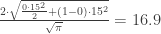



The other issue with the creators claims is the “assumption that social class varies between families but not within families”. While it may seem obvious at first, there are a number of issues. The first is that an individual’s attained social class during adulthood (and thus the social class in which they inhabit) is not identical within families. Two kids may have started off with very similar IQs due to their family environments, but due to various reasons (random chance, developed interests, etc), they moved into different social classes in adulthood, following which their IQs diverged due to the different social classes they now inhabit. The reason why this is relevant is because the statistic that the creator is using to (erroneously) claim that 70% of the variation is within families does not specify the age at which these measurements were taken – it is likely that they were taken in later life, meaning that the social class of the individuals has already diverged.
Moreover, even when children are within the same family at earlier ages, there is reason to argue that their social class is also not identical. Sociologists now understand that social class is a dynamic structure that is not only reproduced by aspects of economic access, resources and opportunity that individuals have access to, but that sociocultural signifiers, subjective experiences, interests and other aspects also contribute to ones social class. As noted by Richardson himself, one’s subjective SES may better reflect the sociocognitive environment that one develops in (Richardson & Jones 2019):
It is self-conscious social status in relation to others in a class structure – i.e. what has been called subjective as opposed to objective social class – that seems to influence a wide range of educational and cognitive outcomes. There is only moderate correlation between that and current SES
And this subjective SES can quite evidently differ between siblings and differentially impact their IQs. Moreover, there are numerous other aspects of social class that can vary within-family such as: school quality (e.g. school resources; Leon & Valdiva 2015), peer effects (Hoxby 2000), teacher and classroom effects (Boyd-Zaharias 1999; Chetty et. al 2015), and societal expectations (Jensen & McHale 2016). Small initial differences in these environmental variables can be magnified through phenotype-environment processes (Beam & Turkheimer 2013) that can create a seemingly large within-family variation that cannot be attributed to social class, but could in fact be the result of it.
Another vitally important thing to note is that even if we accept the concept of social class as measured by socioeconomic status as a simple standardized combination of income, parental education and occupational status, that doesn’t mean that this variable can’t differ in important ways within the family. First note that siblings are not always the same age (the exception is with twins). As a result, the developmental environment in which each child grows up with is not identical. As Richardson noted over a decade ago, children within the family do not experience the same environment (Richardson & Norgate 2005). This is not only because of perceptual experiences, phenotype→environment feedback loops, but because the importance of the timing of developmental experiences means that changes in parental socioeconomic status over the time means that children are exposed to different socioeconomic environments during these critical periods (Sylva 1997). For instance, parental socioeconomic status and as a result maternal stress can differ during the mother’s pregnancies (Richardson 2019), causing differences between the two children’s development.
Social Class or Sociocognitive Preparedness?
We should note that this critique is premised entirely on the idea that Richardson is positing that social class is a gigantic determinant of IQ, to the neglect of other environmental factors. This is an erroneous assumption, as the paper in which Richardson lays out his theory of what IQ tests are a proxy for (Richardson 2002; “What IQ Tests Test”), he argues that ” population variance in IQ scores can be described in terms of a nexus of sociocognitive-affective factors that differentially prepares individuals for the cognitive, affective and performance demands of the test”, that in effect, makes the test a measure of social class. Note that he does not quantify the specific amount of variation that is explained by social class, and that over 50% of the variation (as a minimum using the assumptions questioned above) explainable by social class (meaning a correlation of 0.7) could definitely qualify under his meaning. Regardless, Richardson’s primary explication is in terms of the “nexus of sociocognitive-affective factors” is perfectly compatible with the within vs between population variance described in the video.
There are numerous factors that influence intelligence that Richardson describes that can differ within families, such as “individuals’ psychological proximity to that set” of cultural tools, parental interactions with children (Hart & Risley 1995; Jensen & McHale 2016), affective preparedness, etc. All of these factors can additionally explain the IQ variance, meaning that the critique of Richardson’s explanation of IQ variance does not go through.
Predictive (In)Validity?
The creator of the video also claims that the Bell Curve demonstrated that IQ remains predictive once SES is controlled for and that IQ is a much better predictor that SES. Despite this common claim by Bell Curve fanatics, it has been demonstrated to be incorrect more times than one can count (Fischer et. al 1996; Ragin & Fiss 2016). In fact, a closer analysis of the model Murray and Herrnstein fit shows that they predicted NOT ONE of their poverty cases correctly (Krenz n.d.; see also Dickens et. al 1995, Goldberger & Manski 1995). A more thorough examination of the claims related to the alleged predictive validity of IQ can be found here.

Response to “A Critique of Ken Richardson: Initial Impressions and Social Class”
3700 words
I am now going on my fifth year blogging. In that time, my views have considerably shifted to what I would term HBD racial realism (reductionism of the Neo-Darwinian type which is refuted by a holistic perspective of the organism) to a more holistic, systems approach of the organism and how it interacts with its environment—the gene-environment system.
Many long-time readers may know that I used to be a staunch hereditarian especially when it came to IQ. However, back in the Spring of 2017, I read DNA is Not Destiny (Heine, 2017) and Genes, Brains, and Human Potential (Richardson, 2017a) (in the same month, no less). Heine had me questioning my views while Richardson completely changed them. I would say that the biggest catalysts were chapters 4 and 5 on genes, what they are and how they work in concert with the physiological system were imperative to my view changes. Further, learning more about the history of IQ testing also further lead to these view changes. (See my article “Why Did I Change My Views?” for more information.)
This then leads me to someone on Twitter by the name of “ModernHeresy” who, back in October, asked me which books best represent my views on IQ:
https://twitter.com/ModernHeresy/status/1181341993982668805
I replied, Genes, Brains, and Human Potential (Ken Richardson), On Intelligence (Stephen Ceci) and Inventing Intelligence (Elaine Castles). He then said that he thinks that Jensen et al are right about IQ, but that he will give Richardson’s book an honest chance. Well, I was heavily biased against anti-hereditarian arguments before I read Richardson’s book almost 3 years ago, and now look at me.
In any case, ModernHeresy (MH) had responded to some of Richardson’s arguments in his latest book in a video titled “A Critique of Ken Richardson: Initial Impressions and Social Class“. It seems like a well-researched video with four topics that I will also cover today. MH covers Goddard’s use of the Binet-Simon scales in turning away prospective immigrants who scored lower; the construct validity argument; IQ as a measure of social class; and IQ ‘predicts’ only through test construction. I will respond to each point per section.
Goddard
Goddard was the man who translated Binet’s original test and brought it to America, translating it to English in 1910. He was the director of the Vineland Training School of Feebleminded Boys and Girls in Vineland, New Jersey and he believed that one’s intellectual potential was biologically determined. Goddard used his translated-Binet to attempt to turn away those who he deemed “feebleminded” or “morons” (indeed, he was the one to coin the term; see Castles, 2012; Wilson, 2017; Dolmage, 2018). Goddard is of Kallikak family fame—a pseudonymous name for a family of “feebleminded people”, see Smith and Wehmeyer (2014) for an exposition on how Goddard was wrong about the Kallikaks and telling Deoborah Kallikaks true identity. To Goddard’s credit, though, he did recant some of his views in 1928 stating that “feeblemindedness” was not incurable, as he once thought.
MH then cites Snyderman and Herrnstein (1983) stating that they “thoroughly review the congressional record and testimony is almost no evidence that intelligence tests had any influence over the content or the passage of the 1924 immigration act.” MH then goes on to say that the claim that IQ testing had anything to do with the 1924 immigration act had its roots in the 70s, specifically in Leon Kamin’s The Science and Politics of IQ, which Gould then reiterated in both versions of Mismeasure of Man. (See here for a defense from Kamin and also see Dorfman.) MH then says that
Richardson’s book was published in 2017 this is completely inexcusable and I would argue an indication that Richardson’s work has a lot of its roots and arguments that originated in the 1970s and the formulation of these arguments have basically ignored or at best extremely selectively referenced any work in the almost 50 years since that have challenged them.
This is ridiculous. Snyderman and Herrnstein did nothing of the sort. Gelb et al (1986) write:
The historical record clearly documents that mental testing played a part in the national immigration debate between 1921 and 1924, though certainly in a less direct manner than Snyderman and Herrnstein purportedly sought to uncover.
[…]
In their distorted and simplistic account of the period, Snyderman and Herrnstein failed to account for the interconnections between psychometric, eugenic and political communities. While some historians of psychology have exxagerated the influence of the mental testers on the passage of the Immigration Act of 1924, Snyderman and Herrnstein’s attempt to exonerate the early testers contains flaws at least as serious as any of those they criticize. Important mental testers of the 1910s and 1920s were willing to use their fledgling science to promote immigration restriction. One cannot examine the relevant historical material without concluding that prominent testers promoted eugenic and racist interests and sought to, and in some degree succeeded in, providing those interests with a mantle of scientific respectability.
While Ford (1985) writes that “If the long-standing acceptance of racial, ethnic, and sexual bias with intellectual circles prior to 1924 is considered, Snyderman and Herrnstein’s conclusion becomes invalid.” We know that there is racial, ethnic, and sex bias which are built into the test to get the score distributions the researchers want (Mensh and Mensh, 1991; Hilliard, 2012).
Dolmage (2018: 119) states that “Whenever [Henry Laughlin] testified [to the U.S. Congress], he brought charts, graphs, pedigree charts, and the results of hundreds of IQ tests as evidence of “the immigrant menace. Laughlin plastered the Congress committee room with charts and graphs showing ethnic differences in rates of institutionalization for various degenerative conditions, and he presented data about the mental and physical inferiority of recent immigrant groups.” So, IQ tests were, quite clearly, used to stifle immigration from Eastern and Southern Europe (though this was not specifically on Goddard, this was due directly to his bringing the Binet-Simon test to America and translating it into English).
MH then cites Richardson’s (2002) paper What IQ Tests Test, stating that Richardson cited Leila Zenderland’s (1998) book Measuring Minds, a biography of Goddard. MH cites a passage from Zenderland on Goddard:
While Goddard believed that most of these immigrants were indeed mentally weak, he wondered about the cause. “Are these immigrants of low mentality cases of hereditary defect”, Goddard now asked pointedly, “or cases of apparent mental defect by deprivation?” If the former, they still posed a threat to posterity; if the latter, then Americans need have no fears about the succeeding generations. While Goddard knew of no data to settle this “vital question”, he himself believed it “far more probably that their condition is due to environment than it is due to heredity. Their “environment has been poor” and “seems to account for the result,” he decided.
Such conclusions could hardly be said to support those calling for more restrictive legislation.
MH then says “As we will see later, Richardson cites sources that if read in their entirety frequently contradict his claims.” This is ridiculous. In his 2002 paper, he does indeed cite Zenderland 6 times, but here’s the thing: five of the citations are about Binet; one for the claim that IQ tests are ‘intelligence’ tests like Galton claimed. As I showed above, IQ testing was indeed used to attempt to curtail the number of immigrants into America.
MH then claims that, due to a quote with ellipses in Richardson’s 2002 paper that he was being deceptive not giving the whole quote and that he was
trying to dig up stuff where spearman or Charles Murray or somebody is admitting that something he’s arguing against has major weaknesses. So he finds that quote and thinks ‘Hm pervasive. That makes it sound as if there is a lot of evidence for this, I don’t like that. But I like the part where he says the evidence is circumstantial and the reality remains arguable. So I’ll just cut that part out. Who’s actually going to check this? The vast majority of my readers wouldn’t be caught dead owning The Bell Curve, much less actually reading it in any detail. Besides, I put ellipses, it’s all legal and above board.’
I personally have read The Bell Curve a few times and I’m familiar with the quote; I don’t think that the ellipses, in any way, diminishes Richardson’s point.
Construct Validity
I’ve written in-depth on this subject so I will be quick here. MH states that “it cannot be claimed that IQ tests have construct validity in the strict definitional sense.” He “partially agrees with the criticism” but he only “partially agrees” due to the “correlations” with regard to job performance and scholastic achievement.
Back in September, I wrote an article on test construction, item bias and item analysis. More recently, I wrote on the history of IQ testing and how tests are constructed with the presuppositions of the test’s constructors. Finally, in my most recent article on the ‘meaasurment’ of ‘intelligence’ I noted that first, IQ-ists need to provide a definition for intelligence, then they need to prove that IQ tests measure intelligence (they assume the tests measure what needs to be defined); then, after all is said and done, can IQ-ists then posit about “genetic” causes of intelligence and other psychological traits and variation between racial and ethnic groups. I have also created a syllogism in the modus tollens form showing that IQ tests cannot be construct valid:
Premise 1: If the claim “IQ tests test intelligence” is true, then IQ tests must be construct valid.
Premise 2: IQ tests are not construct valid.
Conclusion: Therefore, the claim “IQ tests test intelligence” is false. (modus tollens, P1, P2)
IQ ‘predicts’ things through test construction; it’s not really a ‘prediction’, in any case. Since IQ tests are related to other kinds of achievement tests—indeed, they are different versions of the same test—the claim that IQ is a predictor of future success is therefore circular (Richardson, 2017b). Indeed, all of the claims that IQ specifically are predictive can be explained by other, less ‘mystical’ ways.
Social class and IQ
MH states that a problem for the “IQ as a measure of social class” argument is the fact that “most of the IQ variation in society is within families … about 70 percent of IQ variation is due to with-in family differences.” MH then quotes Richardson stating that correlations between .6 and .7 have been reported between IQ and maternal encouragement, for example, then stating that Richardson did “not mention the strong caveats Mackintosh presents following his summaries of these studies.” MH then quotes Mackintosh stating that while the correlations between a developing child’s IQ and variables like parental involvement and attitudes and the presence of books, toys and games in the home “the establishment of these correlations alone will never prove that one is direct cause of the other.” MH then states that there are two possibilities: how the child acts can influence elicits certain responses from the parent or that parents influence child development at least as much through their actions toward their children along with the genes they pass on to them.
MH then invokes the “sociologists fallacy” which is the tendency to think of a correlation between a social variable and a phenotype as causal without thinking that genetics mediates the relationship between the social variable and the phenotype in question—which is known as “genetic confounding”, where genes confound the relationship between two variables. However, for the “genetic confounding” claim to have any weight, there must be a mechanism that produces psychological variation, so in lieu of that, the “genetic confounding” claim, and along with it the “sociologist’s fallacy” charge are irrelevant until a mechanism is identified.
Other aspects of social class can, as well, differ between siblings such as teacher quality, teacher treatment, school quality and so on—all of which influence IQ (Ceci, 1990). Furthermore, Richardson never claimed that social class accounts for all of the variations in IQ. Richardson (2002) writes:
It suggests that all of the population variance in IQ scores can be described in terms of a nexus of sociocognitive-affective factors that differentially prepares individuals for the cognitive, affective and performance demands of the test—in effect that the test is a measure of social class background, and not one of the ability for complex cognition as such.
Richardson’s main claim (and which he successfully argues for) is that variation in the sociocognitive affective preparedness nexus accounts for the variation in IQ. IQ is “in effect” (to use Richardson’s words) a measure of social class since social class is a significant determinant of the variables that make up the sociocognitive affective preparedness nexus.
MH then cites Korenman and Winship (1995) who write that:
incredible as it may seem, our sibling analysis suggest that, even though Herrnstein and Murray’s parental SES index is poorly measured and narrowly conceived, it appears in most cases adequate for producing unbiased estimates of the effect of AFQT scores on socioeconomic outcomes.
MH then states that the AFQT (Armed Forces Qualifying Test) “is really just an IQ test” but, as Mensh and Mensh (1991) note, such tests were biased from their beginnings due to how they were constructed and how items were chosen to go along with the presupposed biases of the test’s constructors.
MH then brings up the Wilson Effect, which “is the observation that the heritability of IQ increases by age and by adulthood, the effect of the home environment has almost zero contribution to individual differences in IQ on average” (MH). The Wilson Effect, too, is an artifact of test construction. Richardson (2000: 36) writes:
Another assumption adopted in the construction of tests for IQ is that, as a supposed physical measure like height, it will steadily “grow” with age, tailing off at around late puberty. This property was duly built into the tests by selecting items which a steady proportion of subjects in each age group passed. Of course, there are many reasons why intelligence, however we definne it, may not develop like this. More embarrassing, though, has been the undesired, and unrealistic, side effect in which intelligence appeared to improve steadily up to the age of around eighteen years, and then start to decline. Again, this is all a matter of item selection, the effect easily being reversed by adding items on which older people perform better and reducing those on which younger people perform better. […] That [IQ score differences] are allowed to persist is a matter of prior assumption, not scientific fact. In all these ways, then, we find that the IQ-testing movement is not merely describing properties of people: rather, the IQ test has largely created them.”
In response to the claim that Richardson has never “operationalized” social class, this claim is false. In his most recent paper, Richardson and Jones (2019) cite a whole slew of more recent research to buttress Richardson’s (2002) sociocognitive affective nexus, noting that social class is more about money, cars and things, but also is how we think and feel. Richardson and Jones (2019: 39) write:
Finally, different social conditions also lead to different affective orientations, such as self-confidence and achievement expectancies, that impact on school learning and test performances (Frankenhuis & de Weerth, 2013; Odgers, 2015; Schmader, Johns, & Forbes, 2008). The effects of test anxiety on cognitive performance are well known, and have been estimated to affect up to 15%–20% of school children (Chin, Williams, Taylor, & Harvey, 2017). In addition, feelings of social rejection effect test performances and self-regulation (Stillman & Baumeister, 2013).
In sum, whatever else CA and EA scores measure, they at least partly reflect a socio-psychological population structure in ways probably unrelated to any general cognitive or learning ability.
MH then quotes Richardson citing Hoge and Coladarci (1989) who states that teacher judgments have a higher correlation between teacher’s assessment and future success in life. MH states that since the teachers were presumably well-acquainted with the children and their academic aptitudes that this explains the higher correlation than IQ tests have with future success of students in their life.
… the marginal time cost is small, nearly every child is already in school, but if you’re a parent being told your child needs to be placed in remedial classes, what are you more likely to trust? The judgment of a single random teacher or an IQ test standardized on thousands of children from a representative sample of the population with a test-retest reliability of .9?
The claim that teacher’s judgments can be done in a “fraction of the time” compared to IQ tests is indeed true. I have noted that this is how these tests were constructed originally in the early 1900s, and early test constructors related teacher’s judgments on ‘intelligence’ to their subjective presuppositions, constructing the test on the basis of teacher’s judgments and their own biases.
What explains professional success? IQ or social class? Ceci (1990: 87) notes that “the effects of IQ as a predictor of adult income were totally eliminated … when we entered parental social status, and years of schooling as covariates.” Ceci goes on to write that since education and social class were signficant and positive indicators of adult income “this indicates that the relationship between IQ and adult income is illusory … Thus, it appears that the IQ-income relationship is really the result of schooling and family background, not IQ.” (pg 87). So it one’s social standing (access to schooling and family background) that mediates the IQ-income relationship.
Mensh and Mensh (1991) note that Gould held contradictory views on IQ testing. He noted the racist and social origins of the testing movement, but accepted IQ tests for their utility for certain uses—most likely because they helped to identify his son that had a learning disability. IQ tests are not objective scientific instruments; indeed, how can a human mind (in all of its subjectivity) create an unbiased test? That IQ tests are standardized on thousands of people are irrelevant; the IQ test constructors can build what they want into and out of the test, so claiming that a parent should trust a (biased) IQ test over the judgment of “a single teacher” who has had years of teaching experience is superior—as Hoge and Coladeri (1989) do indeed show.
Lastly, MH cites brain imaging/head measuring studies showing correlations between IQ and the measures (Rushton and Ankney, 2009), while also purportedly showing that this holds among siblings as well (Lee et al, 2019). Schonemann et al (2000) show that brain size does not predict general cognitive ability within families, while pre-registered studies show lower correlations between .12 and .24 (Pietschnig et al, 2015; Nave et al, 2018).
Indeed, a parent’s belief about their child’s GPA (grade point average) remain even “after controlling for siblings’ average grades and prior differences in performance, parents’ beliefs about sibling differences in academic ability predicted differences in performance such that youth rated by parents as relatively more competent than their sibling earned relatively higher grades the following year” (Jensen and McHale, 2015: 469). More arguments showing why these things would differ within families can be found in Richardson and Jones (2019). MH then cites a table of motor vehicle fatalities in Australian army personnel under 40, noting that the death rate in motor vehicle accidents sharply increased the lower one’s IQ score (O’Toole, 1990). I don’t contest the data, I contest MH’s interpreation of it: am I supposed to accept IQ as causal in regard to motor vehicle fatalities? That one is just dumber than average which then causes such fatalities? Or is the social class explanation much stronger—in that one’s access to resources and education influences their IQ scores? MH finally discusses reaction time (RT) in the context of its relationship to IQ. But Richardson’s (2002: 34) sociocognitive affective nexus, too, explains the relationship:
… low-IQ subjects regularly produce RTs equal to those of high-IQ subjects, but with less consistency over trials. This lack of consistency may well reflect poor self-confidence and high test anxiety and their effects on information processing, incursions of extraneous cognitions, sensory distractions and so on.
All in all, MH is implying that IQ’s correlations with brain imaging/skull measurement, the relationship between motor vehicle fatalities and the relationship between RT and IQ all point to the claim that IQ measures intelligence and not social class. This is a strange claim. For the structure and items on IQ (and similar) tests reflect that of the middle class. Indeed, the Flynn Effect rising as the middle-class increases is yet more evidence that IQ is a measure of social class. MH then claims that assuming that IQ=intelligence explains these things better than the assumption that IQ=social class. However, there has been much sociological research into how social class affects health and, along with it would affect scores on achievement tests (which are inherently biased by race, class, and sex; Mensh and Mensh, 1991; Au, 2007, 2008). IQ tests do not measure learning (what many IQ-ists use as a stand-in for ‘intelligence’); what IQ tests do is “sort human populations along socially, culturally, and economically determined lines” (Au, 2008: 151; c.f., Mensh and Mensh, 1991).
Conclusion
I think the video was well-researched and well-cited (to a point, he didn’t discuss all of the critiques that Snyderman and Herrnstein received on their Immigration Act paper), but he failed to prove his ultimate claim: that IQ tests measure intelligence and not social class. Goddard was one of the most well-known eugenicists in the 19th century, and his views had a devastating social impact, not only on European immigrants vying to emigrate to America, on the populace of ‘morons’ and those who were ‘feebleminded’ in America: they were sterilized as they were deemed ‘unfit’ to have and care for children (Wilson, 2017). IQ tests are not construct valid (which MH agrees with) but he still is possessed by the delusion that success at jobs is causally related to IQ (see Richardson and Norgate, 2015). The ‘sociologist’s fallacy’ claim and the genetic confounding claim both fail as you need to identify a causal (genetic) mechanism that is responsible for variation in psychological traits. The observation that IQ score heritability increases as children age is, too, built into the test through item selection. The claim that Richardson does not operationalize social class is false (see Richardson and Jones, 2019). Neuroimaging analyses show lower relationships between brain size and IQ when they are pre-registered; his citation to vehicle fatalities and IQ is irrelevant as is the part about RT and IQ—as social class, too explains the outcomes.
IQ most definitely is a measure of social class, as an analysis of the items on the test will show (see Mensh and Mensh, 1991; Richardson, 2002; Castles, 2012) and not a ‘measure’ of ‘intelligence.’
Correlation and Causation Regarding the Etiology of Lung Cancer in Regard to Smoking
1550 words
The etiology of the increase in lung cancer over the course of the 20th century has been a large area of debate. Was it smoking that caused cancer? Or was some other, unknown, factor the cause? Causation is multifactorial and multi-level—that is, causes of anything are numerous and these causes all interact with each other. But when it comes to smoking, it was erroneously argued that genotypic differences between individuals were the cause of both smoking and cancer. We know now that smoking is directly related to the incidence of lung cancer, but in the 20th century, there were researchers who were influenced and bribed to bring about favorable conclusions for the tobacco companies.
Psychologist Hans Eysenck (1916-1997) was a controversial psychologist researching many things, perhaps most controversially, racial differences in intelligence. It came out recently, though, that he published fraudulent papers with bad data (Smith, 2019). He, among other weird things, believed that smoking was not causal in regard to cancer. Now, why might Eysenck think that? Well, he was funded by many tobacco companies (Rose, 2010; Smith, 2019). He accepted money from tobacco companies to attempt to disprove the strong correlation between smoking and cancer. Between the 1977-1989, Eysenck accepted about 800,000 pounds from tobacco companies. He is not alone in holding erroneous beliefs such as this, however.
Biostatistician Ronald Fisher (1890-1962) (a pipe smoker himself), the inventor of many statistical techniques still used today, also held the erroneous belief that smoking was not causal in regard to cancer (Parascandola, 2004). Fisher (1957) argued in a letter to the British Medical Journal that while there was a correlation between smoking and the acquisition of lung cancer, “both [are] influenced by a common cause, in this case the individual genotype.” He went on to add that “Differentiation of genotype is not in itself an unreasonable possibility“, since it has been shown that genotypic differences in mice precede differences “in the frequency, age-incidence and type of the various kinds of cancer.”
So, if we look at the chain it goes like this: people smoke; people smoking is related to incidences in cancer; but it does not follow that since people smoke that the smoking is the cause of cancer, since an unknown third factor could cause both the smoking and cancer. So now we have four hypotheses: (1) Smoking causes lung cancer; (2) Lung cancer causes smoking; (3) Both smoking and lung cancer are caused by an unknown third factor. In the case of (3), this “unknown third factor” would be the individual genotype; and (4) the relationship is spurious . Fisher was of the belief that “although lung cancer occurred in cigarette smokers it did not necessarily follow that the cancer was caused by cigarettes because there might have been something in the genetic make up of people destined to have lung cancer that made them addicted to cigarettes” (Cowen, 1999). Arguments of this type were popular in the 19th and 20th century—what I would term ‘genetic determinists’ arguments, in that genes dispose people to certain behaviors. In this case, genes disposed people to lung cancer which made them addicted to cigarettes.
Now, the argument is as follows: Smoking, while correlated to cancer is not causal in regard to cancer. Those who choose to smoke would have acquired cancer anyway, as they were predisposed to both smoke and acquire cancer at X age. We now know, of course, that such claims are ridiculous—no matter which “scientific authorities” they come from. Fisher’s idea was that differences in genotype caused differences in cancer acquisition and so along with it, caused people to either acquire the behavior of smoking or not. While at the time such an argument could have been seen as plausible, the mounting evidence against the argument did nothing to sway Fisher’s belief that smoking did not outright cause lung cancer.
The fact that smoking caused lung cancer was initially resisted by the mainstream press in America (Cowen, 1999). Cowen (1999) notes that Eysenck stated that, just because smoking and lung cancer were statistically associated, it did not follow that smoking caused lung cancer. Of course, when thinking about what causes, for example, an observed disease, we must look at similar habits they have. And if they have similar habits and it is likely that those with similar habits have the hypothesized outcome (smokers having a higher incidence of lung cancer, in this case), then it would not be erroneous to conclude that the habit in question was a driving factor behind the hypothesized disease.
It just so happens that we now have good sociological research on the foundations of smoking. Cockerham (2013: 13) cites Hughes’ (2003) Learning to Smoke: Tobacco Use in the West where he describes the five stages that smokers go through: “(1) becoming a smoker, (2) continued smoking, (3) regular smoking, (4) addicted smoking, and, for some, (5) stopping smoking.” Most people report their first few times smoking cigarettes as unpleasant, but power through it to become a part of the group. Smoking becomes somewhat of a social ritual for kids in high-school—with kids being taught how to light a cigarette and how to inhale properly. For many, starting smoking is a social thing that they do with their friends—it can be said to be similar to being social drinkers, they were social smokers. There is good evidence that, for many, their journey as smokers starts and is fully dependent on their social environment than actual physical addiction (Johnson et al, 2003; Haines, et al, 2009).
One individual interviewed in Johnson et al (2003: 1484) stated that “the social setting
of it all [smoking] is something that is somewhat addictive itself.” So, not only is the nicotine the addictive substance on the mind of the youth, so too is the social situation for the youth in which the smoking occurs. The need to fit in with their peers is one important driver for the beginning—and continuance—of the behavior of smoking. So we now have a causal chain in regard to smoking, the social, and disease: youths are influenced/pressured to smoke by their social group which then leads to addiction and then, eventually, health problems such as lung cancer.
The fact that the etiology of smoking is social leads us to a necessary conclusion: change the social network, change the behavior. Just as people begin smoking in social groups, so too, do people quit smoking in social groups (Christakis and Fowler, 2008). We can then state that, on the basis of the cited research, that the social is ultimately causal in the etiology of lung cancer—the vehicle of cancer-causation being the cigarettes pushed bu the social group.
Eysenck and Fisher, two pioneers of statistics and different methods in psychology, were blinded by self-interest. It is very clear with both Eysenck and Fisher, that their beliefs were driven by Big Tobacco and the money they acquired from them. Philosopher Donald Davidson famously stated that reasons are causes for actions (Davidson, 1963). Eysenck’s and Fisher’s “pro-belief” (in this case, the non-causation of smoking to lung cancer) would be their “pro-attitude” and their beliefs lead to their actions (taking money from Big Tobacco in an attempt to show that cigarettes do not cause cancer).
The etiology of lung cancer as brought on by smoking is multifactorial, multilevel, and complex. We do have ample research showing that the beginnings of smoking for a large majority of smokers are social in nature. They begin smoking in social groups, and their identity as a smoker is then refined by others in their social group who see them as “a smoker.” Since individuals both begin smoking in groups and quitting in groups, it then follows that the acquisition of lung cancer can be looked at as a social phenomenon as well, since most people start smoking in a peer group.
The lung cancer-smoking debate is one of the best examples of the dictum post hoc, ergo propter hoc—or, correlation does not equal causation (indeed, this is where the dictum first originated). While Fisher and Eysenck did hold to that view in regard to the etiology of lung cancer (they did not believe that since smokers were more likely to acquire lung cancer that smoking caused lung cancer), it does speak to the biases the two men had in their personal and professional lives. These beliefs were disproven by showing a dose-dependent relationship in regard to smoking and lung cancer: heavier smokers had more serious cancer incidences, which tapered down the less an individual smoked. Fisher’s belief, though, that differences in genotype caused both behavior that led to smoking and the lung cancer itself, while plausible at the time, was nothing more than a usual genetic determinist argument. We now know that genes are not causes on their own; they do not cause traits irrespective of their uses for the physiological system (Noble, 2012).
Everyone is biased—everyone. Now, this does not mean that objective science cannot be done. But what it does show is that “… scientific ideas did not develop in a vacuum but rather reflected underlying political or economic trends” (Hilliard, 2012: 85). This, and many more examples, speak to the biases of scientists. For reasons like this, though, is why science is about the reproduction of evidence. And, for that, the ideas of Eysenck and Fisher will be left in the dustbin of history.
African Neolithic Part 2: Misunderstandings Continue
Last time I’ve posted on this subject, it was dissecting the association between magical thinking and technological progress among Africans proposed by Rinderman. In general, I found it wanting of an up-to-date understanding of African anthropology, either in material culture or belief systems. This time, however, the central subject can’t be dismissed on the matter of ignorance. In fact, in a rather awkward way, his dismissal in on the grounds of how much he knows in bot his field and his own writings.
Henry Harpending, deceased, has been listed by the SPLC as a “white nationalist”, though it is the specific content of his quotes in regards to Africans, in light of his admittedly impressive contributions to SW African anthropology, is the major focus than classifying the nature of his bias. The claims in question are
- He has never meet an African who has a hobby, that is, one with the inclination to work.
- Hunter Gatherers are impulsive, lazy, and violent.
- Africans are more interested in breeding than raising children.
- Africans, Baltimore Aframs, and PNG natives all share the same behavior in regard to points 2 and 3.
- Superstitions are pan-african and the only Herero he’s met that was an atheist had a ethnic German Father.
So Harpending seemingly has the edge given his background in Anthropology with specific experiences with Africans…this only makes the only more painful to articulate.
- This will set the theme for the nature of my responses…his own work contradicts these assertions. The Herero refugee descent from Botswana, the main strain of Bantu-Speaking Africans he had studied, were described and calculated as prosperous in regards to cattle per capita and ownership of rural homesteads that stand apart from typical Botswana farming infrastructure.
Today, they are perceived as one of the wealthiest ethnic groups inBotswana and Namibia. They are known for their large herds, for theirs kill at managing cattle, and for their endogamy and staunch ethnicity even while participating fully in the developing economy and educational system of Botswana.
His research even noted how age five is when Herero begin herding. A similar phenomenon is noted among the Dinka which prompted Dutton to review the literature of their intelligence scores.
- Violence among the Khoi-San groups I’ll admit has been undermined. However, the Hadza, known for their discourage mean of conflict, express this through much lower rates of violent deaths compared to most others. The general consensus is that there is a mix, with the general trend towards higher rates but with cautious interpretation into the causes. On the charge of Laziness, however, is once again unfounded by his work on the lesser resources faced by mobile bands of foragers compared to sedentary ones on labor camps. The same link on the Hadza also pinpoints the hours spent in HG life working and accounts for the difficulty of those hours.
- Harpending actually made a model of cads versus dads that he actually attributed to non-genetic factors. Otherwise, we are left with his work on the oddity of “Herero Households”.
If women cannot provision themselves and their offspring without
assistance, then the “cad/breeder” corner of Fig. 2 is not feasible, and we are left with “dad/feeder.” Draper and Harpending argue that this is true of the Ju/’hoansi, and other mobile foragers in marginal habitats. Among swidden agriculturalists, on the other hand, female labor is more productive, and men can afford to do less work. The theory thus predicts that such populations will be more likely to fall into the “cad/breeder” equilibrium, as in fact they seem to do. Although this theory is couched in Darwinian terms, Harpending and Draper do not see genetic evolution as the engine that accounts for variation within and among societies. Instead, they suggest a facultative adaptation: humans have “evolved the ability to sense household structure in infancy” and to alter their developmental trajectories in response to what is learned during this early critical period (1980, p. 63).There does not seem to be any durable group of associated individuals that we could usefully characterize as a household among the Herero. If forced we would say that the Herero have two parallel types of households. The “male household” is the homestead, consisting of an adult male, his wives, sisters, and other relatives, and it is defined by the herd and the kraals that he maintains for the herd. The “female household” is a woman and the children for whom she has responsibility, localized in a hut or hut cluster within a larger homestead. These aregynofocal households, rather than matrifocal households, since matrifocal implies mother and offspring while the Herero unit is a woman and children under the care of that woman. These children may be her own, her grandchildren, children of relatives, or even children leased from other tribes to work on the cattle. Men do not appear prominently in daily domestic life. They are gone at first light pursuing their own interests and careers with cattle, with hunting parties, or with other stereotyped male activities. Similarly, women are not prominently present at male areas like the wells where the cattle are watered. There is, then, not a Herero household, but rather there is a Herero male household that includes cattle and female households, and these females may be wives, or sisters, or other female relatives. The female households are the loci of domestic production and consumption.
However, it does not follow that the lack of interpersonal interaction means the lack of acknowledgement in parenthood within households. One is by association.
We interviewed 161 adult Herero (112 females, 49 males) intensively about the residence of themselves, their siblings with whom they share a mother or a father and about their legal children (children born in marriage or children in whom they had purchased parental rights). None of the men we interviewed whose fathers were still alive (n = 10) considered his residence to be in a homestead different from his father’s. Only two of the men had sons with residences elsewhere –one was a child who had been purchased but was living with the mother and the other was a child borne by a wife from whom he was now divorced. We also heard of very few men ascertained in several hundred shorter demographic interviews that were residing in a homestead other than their fathers’. Most of the men(24/39) with deceased fathers had their own homesteads. Brothers who had both the same mother and father were more likely to stay together, however, than brothers who had different mothers.
The other comes from Harpending’s own blog post regarding his Herero friend who claims the children of his new wife as being of his household despite not actually conceiving them. Note, he also describes the man as “prosperous”.
- I sadly lack data on Bantu rates of violence, swearing I once found data showing it to be low compared to that of the Khoi-san. If anybody has quantified data like in the link regarding the Hadza then that would be appreciated. In regards to parenting however it doesn’t reflect that by comparing non-resident fathers. Regarding Africans, here’s a perspective from a female perspective.
- This point once again warrants the mention of superstitions still being quite common in non Western societies like China in regards to evil spirits and luck. Likewise, traditions are known to be modified or dropped among Herero in major urban centers. The Herero Harpending encountered that he labeled “employees” nonetheless grew up near the study areas.
Before I end this, I want to cover some further discrepancies by another author who refers to his work, Steve Sailer.
The small, yellow-brown Bushmen, hunters who mated more or less for life and put much effort into feeding their nuclear families, reminded Henry of his upstate New York neighbors. If fathers didn”t work, their children would go hungry.
In contrast, the Bantu Herero (distant relatives of American blacks) were full of surprises. In general, black African men seemed less concerned with bringing home the bacon to provision their children than did Bushmen dads.
This doesn’t deviate too far from what Harpending explains. That comes later.
In black African farming cultures, women do most of the work because agriculture involves light weeding with hoes rather than heavy plowing. Men are less expected to contribute functionally to their children’s upkeep, but are expected to be sexy.
So technically this is correct but only to a certain degree in regards to division of labor. It’s particular to farming schemes where root/tuber agriculture is done, and in those areas forest clearing is done by males.
One parallel is that Baumann views climatic and environmental factors as closely
associated with differences in the participation of the sexes in agriculture. He observes that the northern boundary of women’s predominance in agriculture is constrained by the limits of the tropical forest region, and that the boundary of female agriculture also tends to coincide with that between root crops and cereal grains. Baumann’s view of the economies of labor is also similar to our own. He emphasizes that land clearing is more difficult in the forest than in the savannah, and that males often perform clearing in the forest zones in spite of the predominance of female labor, whereas soil preparation is more difficult in the savannah than in the forest. He notes the higher male participation in agriculture in the savannah region of the Sudan than in the West African and Congo forest regions, and more generally, that women are much more likely to participate in root cultivation than in cereal cultivation.
Not mention other activities such as crafts and trading. Baumann’s old scheme as it is is still simplistic. More research shows that labor between sexes shift depending on circumstances. See this on Igbo yam farming or West African Cocoa farming. This trend of shifting continues into the modern day.
In many places in Africa, traditionally there has been a
strict division of labor by gender in agriculture. This
division of labor may be based on crop or task, and both
types of division of labor by gender may occur
simultaneously. Women may mobilize male labor for some
tasks involved in their crops and men frequently mobilize
women’s labor for crops that they control. These divisions
are not static and may change in response to new
economic opportunities.
Likewise, male development in connection to their father is represented in this early anthropological text through inheritance of property and apprenticeship. Collective Fatherhood through the extended family is also recognized, with actual absence being highly due to migrant labor in Southern African countries.
The “Sexy” part is rather presumptuous and absent from the text, where it is in fact the woman that is scrutinized uphold standards in the chapter of Ibo courtship, which seems to be widespread. The simple and lazy role reversal is obvious, as it assumes that female labor undermined the general trend of patriarchy since they weren’t always dependent on the male.
So with all this said, what is there to make of it?: As far as direct connections to the Herero go, Harpending didn’t show any particular malice. Any such was more towards western phenomenon that he draws parallels with. As far as his conference comments, obvious bias is just that. His blog posts don’t even read as such, clearly contradicting it comments of industry among Africans according to his experience for one matter.
It may sadly suggest the type of filter scene through experience in this “field”.
“Definitions” of ‘Intelligence’ and its ‘Measurement’
1750 words
What ‘intelligence’ is and how, and if, we can measure it has puzzled us for the better part of 100 years. A few surveys have been done on what ‘intelligence’ is, and there has been little agreement on what it is and even if IQ tests measure ‘intelligence.’ Richardson (2002: 284) noted that:
Of the 25 attributes of intelligence mentioned, only 3 were mentioned by 25 per cent or more of respondents (half of the respondents mentioned ‘higher level components’; 25 per cent mentioned ‘executive processes’; and 29 per cent mentioned ‘that which is valued by culture’). Over a third of the attributes were mentioned by less than 10 per cent of respondents (only 8 per cent of the 1986 respondents mentioned ‘ability to learn’).
As can be seen, even IQ-ists today cannot agree upon a definition—indeed, even Ian Deary admits that “There is no such thing as a theory of human intelligence differences—not in the way that grown-up sciences like physics or chemistry have theories” (quoted in Richardson, 2012). (Also note that attempts of validity are circular, relying on correlations with other, similar tests; Richardson and Norgate, 2015; Richardson, 2017b.)
Linda Gottfredson, University of Delaware sociologist and well-known hereditarian, is a staunch defender of JP Rushton (Gottfredson, 2013) and the hereditarian hypothesis (Gottfredson, 2005, 2009). Her ‘definition’ of intelligence is one of the most-oft cited ones, eg, Gottfredson et al (1993: 13) notes that (my emphasis):
Intelligence is a very general mental capability that, among other things, involves the ability to reason, plan, solve problems, think abstractly, comprehend complex ideas, learn quickly and learn from experience. It is not merely book learning, a narrow academic skill, or test-taking smarts. Rather, it reflects a broader and deeper capability for comprehending our surroundings-“catching on,” “ making sense” of things, or “figuring out” what to do.
So ‘intelligence’ is “a very general mental capability”, its main ‘measure’ IQ tests (knowledge tests), but ‘intelligence’ “is not merely book learning, a narrow academic skill, or test-taking smarts.” Here’s some more hereditarian “reasoning” (which you can contrast with the hereditarian “reasoning” on race—just assume it exists). Gottfredson also argues that ‘intelligence’ or ‘g’ is learning ability. But, as Richardson (2017a: 100) notes, “it will always be quite impossible to measure ability with an instrument that depends on learning in one particular culture“—which he terms “the g paradox, or a general measurement paradox.”
Gottfredson (1997) also argues that the “active ingredient” in IQ testing is the “complexity” of the items—what makes one item more difficult than another, such as a 3×3 matrix item being more complex than a 2×2 matrix item and giving some examples of analogies which she believes to show a type of higher, more complex cognition in order to figure out the answer to the problem. (Also see Richardson and Norgate, 2014 for further critiques of Gottfredson.)
The trouble with this argument is that IQ test items are remarkably simple in their cognitive demands compared with, say, the cognitive demands of ordinary social life and other activities that the vast majority of children and adults can meet adequately every day.
For example, many test items demand little more than rote reproduction of factual knowledge most likely acquired from experience at home or by being taught in school. Opportunities and pressures for acquiring such valued pieces of information, from books in the home to parents’ interests and educational level, are more likely to be found in middle-class than in working-class homes. So the causes of differences could be causes in opportunities for such learning.
The same could be said about other frequently used items, such as “vocabulary” (or word definitions); “similarities” (describing how two things are the same); “comprehension” (explaining common phenomena, such as why doctors need more training). This helps explain why differences in home background correlate so highly with school performance—a common finding. In effect, such items could simply reflect the specific learning demanded by the items, rather than a more general cognitive strength. (Richardson, 2017a: 91)
IQ-ists, of course, would then state that there is utility in such “simple-looking” test items, but we have to remember that items on IQ tests are not selected based on a theoretical cognitive model, but are selected to give the desired distributions that the test constructors want (Mensh and Mensh, 1991). “… those items in IQ tests have been selected because they help produce the expected pattern of scores. A mere assertion of complexity about IQ test items is not good enough” (Richardson, 2017a: 93). “The items selected for inclusion [on Binet’s test] were those that in the judgment of the teachers distinguished bright from dull students” (Castles, 2012: 88). It seems that all hereditarians do is “assert” or “assume” things—like the equal environments assumption (EEA), the existence of race, and now, the existence of “intelligence”. Just presuppose what you want and, unsurprisingly, you get what you wanted. The IQ-ist then triumphs that the test did its job—sorting high- and low-quality thinkers on the basis of their IQ scores. But that’s exactly the problem: prior assumptions on the nature of ‘intelligence’ and its distribution dictate the construction of the tests in question.
Mensh and Mensh (1991: 30) state that “The [IQ] tests do what their construction dictates; they correlate a group’s mental worth with its place in the social hierarchy.” That is, who is or is not “intelligent” is already presupposed. There has been ample admission of such presumptions affecting the distribution of scores, as some critics have documented (e.g., Hilliard, 2012’s documentation of test norming for two different white cultural groups in South Africa and that Terman equalized scores on his 1937 revision of the Stanford-Binet).
Herrnstein and Murray (1994: 1) write that:
That the word intelligence describes something real and that it varies from person to person is as universal and ancient as any understanding about the state of being human. Literate cultures everywhere and throughout history have had words for saying that some people are smarter than others. Given the survival value of intelligence, the concept must be still older than that. Gossip about who in the tribe is cleverest has probably been a topic of conversation around the fire since fires, and conversation, were invented.
Castles (2012: 83) responds to these assertions stating that “the concept of intelligence is indeed a “brashing modern notion.” 1” Herrnstein and Murray, of course, are in the “Of COURSE intelligence exists!” camp, for, to them, it conferred survival advantages and so, it must exist and we can, therefore, measure it in humans.
Howe (1997), in his book IQ in Question, asks us to imagine someone asking to construct a vanity test. Vanity, like ‘intelligence’, has no agreed-upon definition which states how it should be measured nor anything that makes it possible to check that we are measuring the supposed construct correctly. So the one who wants to assess vanity needs to construct a test with questions he presumes tests vanity. So if the questions he asks relates to how others perceive vanity, then the ‘vanity test’ has been successfully constructed and the test constructor can then believe that he’s measuring “differences in” vanity. But, of course, selecting items on a test is a subjective matter; there is no objective way for this to occur. We can say, with length for instance, that line A is twice as long as line B. But we could not, then, state that person A is twice as vain as person B—nor could we say that person A is twice as intelligent as person B (on the basis of IQ scores)—for what would it mean for someone to be twice as vain as someone else, just like what would it mean for someone to be twice as intelligent as someone else?
Howe (1997: 6) writes:
The measurement of intelligence is bedeviled by the same problems that make it virtually impossible to measure vanity. It is of course possible to construct intelligence tests, and the tests can be useful in a number of ways for assessing human mental abilities, but it is wrong to assume that such tests have the capability of measuring an underlying quality of intelligence, if by ‘measuring’ we have in mind the same operations that are involved in the measurement of a physical quality such as length. A psychological test score is no more than an indication of how well someone has performed at a number of questions that have been chosen for largely practical reasons. Nothing is genuinely being measured.
But if “A psychological test score is no more an indication of how well someone has performed at a number of questions that have been chosen largely for practical reasons”, then it follows that knowledge exposure explains outcomes in psychological test scores. Richardson (1998: 127) writes:
The most reasonable answer to the question “What is being measured?”, then, is ‘degree of cultural affiliation’: to the culture of test constructors, school teachers and school curricula. It is (unconsciously) to conceal this that all the manipulations of item selection, evasions about test validities, and searches for post hoc theoretical underpinning seem to be about. What is being measured is certainly not genetically constrained complexity of general reasoning ability as such,
Mensh and Mensh (1991: 73) note that “In reality — which is precisely the opposite of what Jensen claims it to be — test discrimination among individuals within any group is the incidental by-product of tests constructed to discriminate between groups. Because the tests’ class and racial bias ensures that some groups will be higher and others lower in the scoring hierarchy, the status of an individual member of a group is as a rule predetermined by the status of that group.”
In sum, what these tests test is what the test constructors presume—mainly, class and racial bias—so they get what they want to see. If the test does not match their presuppositions, the test gets discarded or reconstructed to fit with their biases. Thus, definitions of ‘intelligence’ will always be, as Castles (2012: 29), “intelligence is a cultural construct, specific to a certain time and place.” The definition from Gottfredson doesn’t make sense, as the “test-taking smarts” is the main “measure” of ‘intelligence’, and so intelligence’s “main measure” is the IQ test—which presupposes the distribution of scores as developed by the test constructors (Mensh and Mensh, 1991). Herrnstein and Murray’s definition does not make sense either, as the concept of “intelligence” is a modern notion.
At best, IQ test scores measure the degree of cultural acquisition of knowledge; they do not, nor can they, measure ‘intelligence’—which is a cultural concept which changes with the times. The tests are inherently biased against certain groups; looking at the history and construction of IQ testing will make that clear. The tests are middle-class knowledge tests; not tests of ‘intelligence.’
The “World’s Smartest Man” Christopher Langan on Koko the Gorilla’s IQ
1500 words
Christopher Langan is purported to have the highest IQ in the world, at 195—though comparisons to Wittgenstein (“estimated IQ” of 190), da Vinci, and Descartes on their “IQs” are unfounded. He and others are responsible for starting the high IQ society the Mega foundation for people with IQs of 164 or above. For a man with one of the highest IQs in the world, he lived on a poverty wage at less than $10,000 per year in 2001. He has also been a bouncer for the past twenty years.
Koko is one of the world’s most famous gorillas, most-known for crying when she was told her cat got hit by a car and being friends with Robin Williams, also apparently expressing sadness upon learning of his death. Koko’s IQ, as measured by an infant IQ test, was said to be on-par or higher than some of the (shoddy) national IQ scores from Richard Lynn (Richardson, 2004; Morse, 2008). This then prompted white nationalist/alt-right groups to compare Koko’s IQ scores with that of certain nationalities and proclaim that Koko was more ‘intelligent’ than those nationalities on the basis of her IQ score. But, unfortunately for them, the claims do not hold up.
The “World’s Smartest Man” Christopher Langan is one who falls prey to this kind of thinking. He was “banned from” Facebook for writing a post comparing Koko’s IQ scores to that of Somalians, asking why we don’t admit gorillas into our civilization if we are letting Somalian refugees into the West:
“According to the “30 point rule” of psychometrics (as proposed by pioneering psychometrician Leta S. Holingsworth), Koko’s elevated level of thought would have been all but incomprehensible to nearly half the population of Somalia (average IQ 68). Yet the nation’s of Europe and North America are being flooded with millions of unvetted Somalian refugees who are not (initially) kept in cages despite what appears to be the world’s highest rate of violent crime.
Obviously, this raises the question: Why is Western Civilization not admitting gorillas? They too are from Africa, and probably have a group mean IQ at least equal to that of Somalia. In addition, they have peaceful and environmentally friendly cultures, commit far less violent crime than Somalians…”
I presume that Langan is working off the assumption that Koko’s IQ is 95. I also presume that he has seen memes such as this one floating around:
There are a few problems with Langan’s claims, however. (1) The notion of a “30-point IQ point communication” rule—that one’s own IQ, plus or minus 30 points, denotes where two people can understand each other; and (2) bringing up Koko’s IQ and the comparing it to “Somalians.”
It seems intuitive to the IQ-ist that a large, 2 SD gap in IQ between people will mean that more often than not there will be little understanding between them if they talk, as well as the kinds of interests they have. Neuroskeptic looked into the origins of the claim of the communication gap in IQ, found it to be attributed to Leta Hollingworth and elucidated by Grady Towers. Towers noted that “a leadership pattern will not form—or it will break up—when a discrepancy of more than about 30 points comes to exist between leader and lead.” Neuroskeptic comments:
This seems to me a significant logical leap. Hollingworth was writing specifically about leadership, and in childen [sic], but Towers extrapolates the point to claim that any kind of ‘genuine’ communication is impossible across a 30 IQ point gap.
It is worth noting that although Hollingworth was an academic psychologist, her remark about leadership does not seem to have been stated as a scientific conclusion from research, but simply as an ‘observation’.
[…]
So as far as I can see the ‘communication range’ is just an idea someone came up with. It’s not based on data. The reference to specific numbers (“+/- 2 standard deviations, 30 points”) gives the illusion of scientific precision, but these numbers were plucked from the air.
The notion that Koko had an “elevated level of thought [that] would have been all but incomprehensible to nearly half the population of Somalia (average IQ 68)” (Langan) is therefore laughable, not only for the reason that a so-called communication gap is false, but for the simple fact that Koko’s IQ was tested using the Cattell Infant Intelligence Scales (CIIS) (Patterson and Linden,1981: 100). It seems to me that Langan has not read the book that Koko’s handlers wrote about her—The Education of Koko (Patterson and Linden, 1981)—since they describe why Koko’s score should not be compared with human infants, so it follows that her score cannot be compared with human adults.
The CIIS was developed “to a downward extension of the Stanford-Binet” (Hooper, Conner, and Umansky, 1986), and so, it must correlate highly with the Stanford-Binet in order to be “valid” (the psychometric benchmark for validity—correlating a new test with the most up-to-date test which had assumed validity; Richardson, 1991, 2000, 2017; Howe, 1997). Hooper, Conner, and Umansky (1986: 160) note in their review of the CIIS, “Given these few strengths and numerous shortcomings, salvaging the Cattell would be a major undertaking with questionable yield. . . . Nonetheless, without more research investigating this instrument, and with the advent of psychometrically superior measures of infant development, the Cattell may be relegated to the role of an historical antecedent.” Items selected for the CIIS—like all IQ tests—“followed a quasi-statistical approach with many items being accepted and rejected subjectively.” They state that many of the items on the CIIS need to be updated with “objective” item analysis—but, as Jensen notes, items emerge arbitrarily from the heads of the test’s constructors.
Patterson—the woman who raised Koko—notes that she “tried to gauge [Koko’s] performance by every available yardstick, and this meant administering infant IQ tests” (Patterson and Linden, 1981: 96). Patterson and Linden (1981: 100) note that Koko did better than human counterparts of her age in certain tasks over others, for example “her ability to complete logical progressions like the Ravens Progressive Matrices test” since she pointed to the answer with no hesitation.
Koko generally performed worse than children when a verbal rather than a pointing response was required. When tasks involved detailed drawings, such as penciling a path through a maze, or precise coordination, such as fitting puzzle pieces together. Koko’s performance was distinctly inferior to that of children.
[…]
It is hard to draw any firm conclusions about the gorilla’s intelligence as compared to that of the human child. Because infant intelligence tests have so much to do with motor control, results tend to get skewed. Gorillas and chimps seem to gain general control over their bodies earlier than humans, although ultimately children far outpace both in the fine coordination required in drawing or writing. In problems involving more abstract reasoning, Koko, when she is willing to play the game, is capable of solving relatively complex problems. If nothing else, the increase in Koko’s mental age shows that she is capable of understanding a number of the principles that are the foundation of what we call abstract thought. (Patterson and Linden, 1981: 100-101)
They conclude that “it is specious to compare her IQ directly with that of a human infant” since gorillas develop motor skills earlier than human infants. So if it is “specious” to compare Koko’s IQ with an infant, then it is “specious” to compare Koko’s IQ with the average Somalian—as Langan does.
There have been many critics of Koko, and similar apes, of course. One criticism was that Koko was coaxed into signing the word she signed by asking Koko certain questions, to Robert Sapolsky stating that Patterson corrected Koko’s signs. She, therefore, would not actually know what she was signing, she was just doing what she was told. Of course, caregivers of primates with the supposed extraordinary ability for complex (humanlike) cognition will defend their interpretations of their observations since they are emotionally invested in the interpretations. Patterson’s Ph.D. research was on Koko and her supposed capabilities for language, too.
Perhaps the strongest criticism of these kinds of interpretations of Koko comes from Terrace et al (1979). Terrace et al (1979: 899) write:
The Nova film, which also shows Ally (Nim’s full brother) and Koko, reveals a similar tendency for the teacher to sign before the ape signs. Ninety-two percent of Ally’s, and all of Koko’s, signs were signed by the teacher immediately before Ally and Koko signed.
It seems that Langan has never done any kind of reading on Koko, the tests she was administered, nor the problems in comparing them to humans (infants). The fact that Koko seemed to be influenced by her handlers to “sign” what they wanted her to sign, too, makes interpretations of her IQ scores problematic. For if Koko were influenced what to sign, then we, therefore, cannot trust her scores on the CIIS. The false claims of Langan are laughable knowing the truth about Koko’s IQ, what her handlers said about her IQ, and knowing what critics have said about Koko and her sign language. In any case, Langan did not show his “high IQ” with such idiotic statements.
China’s Project Coast?
1250 words
Project Coast was a secret biological/chemical weapons program developed by the apartheid government in South Africa started by a cardiologist named Wouter Basson. One of the many things they attempted was to develop a bio-chemical weapon that targets blacks and only blacks.
I used to listen to the Alex Jones show in the beginning of the decade and in one of his rants, he brought up Project Coast and how they attempted to develop a weapon to only target blacks. So I looked into it, and there is some truth to it.
For instance, The Washington Times writes in their article Biotoxins Fall Into Private Hands:
More sinister were the attempts — ordered by Basson — to use science against the country’s black majority population. Daan Goosen, former director of Project Coast’s biological research division, said he was ordered by Basson to develop ways to suppress population growth among blacks, perhaps by secretly applying contraceptives to drinking water. Basson also urged scientists to search for a “black bomb,” a biological weapon that would select targets based on skin color, he said.
“Basson was very interested. He said ‘If you can do this, it would be very good,'” Goosen recalled. “But nothing came of it.”
They created novel ways to disperse the toxins: using letters and cigarettes to transmit anthrax to black communities (something those old enough to be alive during 911 know of), lacing sugar cubes with salmonella, lacing beer and peppermint candy with poison.
Project Coast was, at its heart, a eugenics program (Singh, 2008). Singh (2008: 9) writes, for example that “Project Coast also speaks for the need for those involved in scientific research and practice to be sensitized to appreciate the social circumstances and particular factors that precipitate a loss of moral perspective on one’s actions.”
Jackson (2015) states that another objective of the Project was to develop anti-fertility drugs and attempt to distribute them into the black population in South Africa to decrease birth rates. They also attempted to create vaccines to make black women sterile to decrease the black population in South Africa in a few generations—along with attempting to create weapons to only target blacks.
The head of the weapons program, Wouter Basson, is even thought to have developed HIV with help from the CIA to cull the black population (Nattrass, 2012). There are many conspiracy theories that involve HIV and its creation to cull black populations, though they are pretty farfetched. In any case, though, since they were attempting to develop new kinds of bioweapons to target certain populations, it’s not out of the realm of possibility that there is a kernel of truth to the story.
So now we come to today. So Kyle Bass said that the Chinese already have access to all of our genomes, through companies like Steve Hsu’s BGI, stating that “there’s a Chinese company called BGI that does the overwhelming majority of all the sequencing of U.S. genes. … China had the genomic sequence of every single person that’s been gene types in the U.S., and they’re developing bio weapons that only affect Caucasians.”
I have no way to verify these claims (they’re probably bullshit), but with what went on in the 80s and 90s in South Africa with Project Coast, I don’t believe it’s outside of the realm of plausibility. Though Caucasians are a broad grouping.
It’d be like if someone attempted to develop a bioweapon that only targets Ashkenazi Jews. They could let’s say, attempt to make a bioweapon to target those with Tay Sach’s disease. It’s, majorly, a Jewish disease, though it’s also prevalent in other populations, like French Canadians. It’d be like if someone attempted to develop a bioweapon that only targets those with the sickle cell trait (SCT). Certain African ethnies are more like to carry the trait, but it’s also prevalent in southern Europe and Northern Africa since the trait is prevalent in areas with many mosquitoes.
With Chinese scientists like He Jiankui CRISPR-ing two Chinese twins back in 2018 to attempt to edit their genome to make them less susceptible to HIV, I can see a scientist in China attempt to do something like this. In our increasingly technological world with all of these new tools we develop, I would be surprised if there was nothing strange like this going on.
Some claim that “China will always be bad at bioethics“:
Even when ethics boards exist, conflicts of interest are rife. While the Ministry of Health’s ethics guidelines state that ethical reviews are “based upon the principles of ethics accepted by the international community,” they lack enforcement mechanisms and provide few instructions for investigators. As a result, the ethics review process is often reduced to a formality, “a rubber stamp” in Hu’s words. The lax ethical environment has led many to consider China the “Wild East” in biomedical research. Widely criticized and rejected by Western institutions, the Italian surgeon Sergio Canavero found a home for his radical quest to perform the first human head transplant in the northern Chinese city of Harbin. Canavero’s Chinese partner, Ren Xiaoping, although specifying that human trials were a long way off, justified the controversial experiment on technological grounds, “I am a scientist, not an ethical expert.” As the Chinese government props up the pseudoscience of traditional Chinese medicine as a valid “Eastern” alternative to anatomy-based “Western” medicine, the utterly unscientific approach makes the establishment of biomedical regulations and their enforcement even more difficult.
Chinese ethicists, though, did respond to the charge of a ‘Wild East’, writing:
Some commentators consider Dr. He’s wrongdoings as evidence of a “Wild East” in scientific ethics or bioethics. This conclusion is not based on facts but on stereotypes and is not the whole story. In the era of globalization, rule-breaking is not limited to the East. Several cases of rule-breaking in research involved both the East and the West.
Henning (2006) notes that “bioethical issues in China are well covered by various national guidelines and regulations, which are clearly defined and adhere to internationally recognized standards. However, the implementation of these rules remains difficult, because they provide only limited detailed instructions for investigators.” With a large country like China, of course, it will be hard to implement guidelines on a wide-scale.
Gene-edited humans were going to come sooner or later, but the way that Jiankui went about it was all wrong. Jiankjui raised funds, dodged supervision and organized researchers in order to carry out the gene-editing on the Chinese twins. “Mad scientists” are, no doubt, in many places in many countries. “… the Chinese state is not fundamentally interested in fostering a culture of respect for human dignity. Thus, observing bioethical norms run second.”
Countries attempting to develop bioweapons to target specific groups of people have already been attempted recently, so I wouldn’t doubt that someone, somewhere, is attempting something along these lines. Maybe it is happening in China, a ‘Wild East’ of low regulations and oversight. There is a bioethical divide when it comes to East and West, which I would chalk up to differences in collectivism vs individualism (which some have claimed to be ‘genetic’ in nature; Kiaris, 2012). Since the West is more individualistic, they would care about individual embryos which eventually become a person; since the East is more collectivist, whatever is better for the group (that is, whatever can eventually make the group ‘better’) will override the individual and so, tinkering with individual genomes would be seen as less of an ethical charge to them.


 NotPoliticallyCorrect